Quick answer: If your RV propane detector is going off with a loud, steady alarm, treat it as a real leak. Get everyone out, avoid anything that could spark, and shut the tank valve if you can do so safely. A short, repeating chirp usually means something else, such as low battery voltage or a detector that has reached the end of its life.
Why Is My RV Propane Detector Going Off?
Treat any full alarm as a real propane leak until you prove otherwise. Most alarms turn out to have a simple cause, but you cannot safely guess which one you have while you are still inside the RV.
An RV propane alarm that keeps going off usually comes down to one of four causes:
- A real LP leak. This could come from a fitting, a line, an appliance, a pilot that went out or a burner left slightly open.
- Low 12V battery voltage. On some models, low house battery voltage triggers a malfunction alarm.
- An end-of-life signal. Many RV detectors are built to last about 5 years. After that, they warn you to replace them.
- Vapors from household products. Aerosols, hairspray, alcohol and some cleaners can set off the sensor.
Continuous alarm vs. chirp: A continuous, loud alarm is the detector telling you it sensed gas. An intermittent chirp or short beep is usually a status signal, such as low voltage, a malfunction or end of life. The exact sounds vary by model, so check the manual for yours.
What Should You Do Right Away When the Propane Alarm Sounds?
Get out first and investigate later. These steps follow official propane safety guidance from the Connecticut Public Utilities Regulatory Authority and the Propane Education & Research Council.
- Get people and pets out of the RV. If the propane smell is strong, leave right away and tell others nearby to leave too.
- Avoid all ignition sources. Don’t smoke, strike matches or light candles. Put out any open flames.
- Don’t flip switches or use electrical devices inside. Light switches, phones, doorbells and other electrical equipment can create sparks. Don’t start the generator or run appliances.
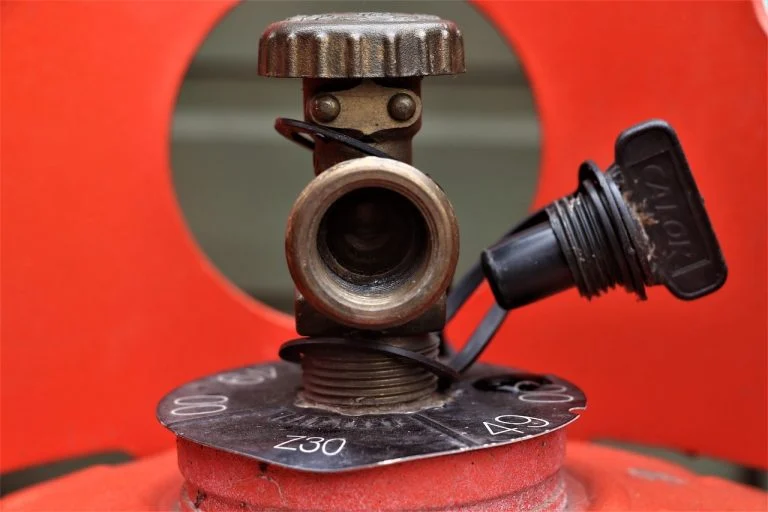
- Shut the tank valve if you can do it safely. Turn the LP tank or cylinder valve clockwise to close it. Skip this step if the smell is strong near the tank.
- Open doors and windows on your way out, but only if you can do it quickly without delay.
- Call for help from a safe distance. Call your propane company or a certified RV technician from well away from the RV, such as a neighbor’s site. Call 911 if the smell is strong or you can’t control the situation.
Never turn the gas back on after you shut it off for a safety concern. Have your propane company or a technician check the system first.
Never ignore the smell of propane, even if the alarm is silent. Detectors can fail, and a silent detector does not mean the air is safe.
Is It Safe to Stay in Your RV After the Propane Alarm Went Off?
No, not until you know the cause. If the alarm was a full alarm and you have not found a clear, harmless source, stay out with the LP off. Wait for a professional to check the system before you sleep in the RV or use gas appliances again.
Is It a Real Leak or a False Alarm?
Decision rule: If the alarm stops after you shut off the LP and air out the RV, assume it was a real leak. Get it found and fixed before you turn the gas back on. A quiet detector after shutoff is not proof of a false alarm. It may only mean the gas cleared.
Propane has no natural odor. Propane companies add a chemical called mercaptan to give it a “rotten egg” smell, so you can notice a leak. If you smell it, you have gas in the air.
Some detectors also filter out brief puffs of gas. The MTI Safe-T-Alert 25-741 manual says the unit runs a recheck cycle before it alarms. It sounds the alarm only if high gas levels remain during the recheck. So a full alarm on a unit like this usually means gas stayed in the air, not just a passing whiff.
Signs It Is a Real Leak
- You smell rotten eggs, inside or near the RV.
- The alarm is loud and continuous, not a short chirp.
- A pilot light on the water heater, furnace or fridge has gone out.
- A stove burner knob is slightly open.
- The alarm comes back after you turn the LP back on.
Signs It Is the Detector, Not the Gas
- The sound is an intermittent chirp, not a full alarm.
- The alarm started while the house battery was low or nearly dead.
- The date on the back of the unit is about 5 years old or more.
- Someone just used hairspray, an aerosol or a strong cleaner nearby.
- There’s no gas smell at all.
Even if all the signs point to the detector, follow the safety steps first. Confirm the cause before you assume it’s safe.
What Do the Beeps and Lights Mean on an RV LP Detector?
Each signal points to a different problem. Use this table as a general guide, then confirm the pattern in your model’s manual.
| Signal | What it usually means | What to do |
|---|---|---|
| Continuous loud alarm | Gas detected at alarm level | Follow the safety steps: get out, no sparks, shut the LP, call for help |
| Intermittent chirp | A status warning, not a gas alarm, on many models | Check battery voltage and the unit’s date; read the manual |
| Low-voltage or malfunction alarm | Battery voltage too low, or an internal fault | Charge the battery or plug in to shore power, then recheck |
| End-of-life signal | Detector has reached its service life (about 5 years on MTI units) | Replace the detector |
Patterns vary by model. MTI Safe-T-Alert detectors, for example, come in 20, 30 and 40 series, and each manual lists its own sounds and lights. Find the model number on the unit’s label, then look up that manual.
What Does It Mean When the Detector Chirps Every 30 Seconds?
A chirp on a steady, repeating schedule is usually a status signal, not a gas alarm. Depending on the model, it can point to end of life, low voltage or a malfunction. Check the date on the back of the unit and your battery voltage. Then match the chirp and light pattern to your manual.
How Do You Stop the RV Propane Alarm From Beeping?
Fix the cause, not the sound. Air out the RV for vapor alarms, charge the battery for low-voltage alarms, and replace the unit for end-of-life signals. For a full alarm, follow the safety steps and have the system checked. Don’t disable the detector.
Can a Low RV Battery Set Off the Propane Detector?
Yes, on some models. Most RV propane detectors run on the 12V house battery. When voltage drops too far, the detector may sound a malfunction alarm instead of working normally.
Here is what two MTI manuals say:
- The Safe-T-Alert 30 series manual says the alarm operates normally down to 8 VDC.
- The Safe-T-Alert 20 series manual says low voltage activates the malfunction alarm.
Other brands and models may use different thresholds, so check your manual.
If you suspect a low-battery LP detector alarm, and there’s no gas smell:
- Check the battery voltage with a multimeter or your RV’s battery monitor.
- Check the battery disconnect switch. A switch that is off or partly on can starve the detector of power.
- Charge the battery or plug in to shore power so the converter can bring the voltage up.
- Recheck the detector. If it still alarms with good voltage, treat it as a possible leak or a failing unit.
What Everyday Products Can Trigger a False Propane Alarm?
Yes, cleaning products and hairspray can set off an RV propane detector. The sensor sits near the floor, and some vapors can trigger it. Common culprits include:
- Hairspray and other aerosol sprays
- Isopropyl (rubbing) alcohol
- Floor cleaners and other strong household cleaners
- Similar products that release vapors near floor level
Tip: Spray and clean with the windows open, and stay away from the detector. Mopping the floor right next to it is a common trigger.
Warning: Never cover, tape or unplug the detector to stop nuisance alarms. A disabled detector can’t warn you about a real leak. If false alarms keep happening, look for the cause or replace the unit.
How Do You Know When to Replace an RV Propane Detector?
Plan to replace it about every 5 years. MTI Safe-T-Alert manuals say to replace the propane alarm 5 years after retail purchase. An end-of-life signal starts after about five years, and the date is printed on the back of the unit.
To check yours, turn off power to the detector if your model allows it, and look at the back for the date stamp. If you bought a used RV, assume the detector is as old as that date, not as old as your ownership.
A passing test does not prove the sensor works. On MTI Safe-T-Alert units, the test/reset button tests the alarm’s electrical functions but does not check the sensor. An old detector can beep on test and still fail to sense gas.
What Should a Replacement Detector Meet?
The ANSI A119.2 language quoted in a Monaco owner’s manual requires an LP gas detector in any RV that has an LP gas appliance and an electrical system. The detector must be listed for RV use under UL 1484 and installed according to its listing.
- Buy a unit listed for RV use under UL 1484.
- Match the mounting style (flush or surface) and wiring to your current setup.
- Follow the installation instructions that come with it.
- Write the install date somewhere easy to see.
Where Should a Propane Detector Be Mounted in an RV?
Mount it low, near the floor. LP is heavier than air, so it sinks and collects low. NFPA’s fuel gas detection standard places LP gas detectors entirely within 18 inches of the floor, in the same room as the gas-burning appliances. Always follow your detector’s own instructions for exact placement.
When Should You Call an RV Technician?
Call a certified RV technician or your propane company when:
- The alarm comes back after the propane is turned back on.
- You smell gas, with or without an alarm.
- You can’t find an obvious cause, such as a low battery, an old unit or a fresh burst of hairspray.
- The gas was shut off for a safety concern and needs to be turned back on.
A technician can run a professional leak-down or pressure test on the LP system. This test checks whether the lines and fittings hold pressure, and it can find leaks that are too small to smell.
If you suspect the regulator, such as uneven flames or appliances that won’t stay lit, see our guide to RV propane regulator problems [INTERNAL LINK: RV propane regulator problems article].
RV Propane Detector FAQ
Does pressing the test button prove my RV propane detector works?
No. On MTI Safe-T-Alert units, the test/reset button checks the alarm’s electrical functions but does not check the sensor. An old detector can beep on test and still fail to sense gas. Check the date on the back of the unit and replace it about every 5 years.
Can I turn the propane back on after the alarm stops?
Not on your own. If you shut off the gas for a safety concern, have your propane company or a certified RV technician check the system first. A quiet detector after shutoff does not prove it was a false alarm. It may only mean the gas cleared.
Can I unplug or cover my RV propane detector to stop false alarms?
No. Never cover, tape or unplug the detector. A disabled detector can’t warn you about a real leak. If false alarms keep happening, find the cause, such as low battery voltage, nearby vapors from sprays or cleaners, or an old unit. If you can’t find a cause, replace the detector.
What does a propane leak smell like in an RV?
A propane leak smells like rotten eggs. Propane has no natural odor, so propane companies add a chemical called mercaptan to make leaks easier to notice. If you smell it inside or near your RV, treat it as a real leak, even if the detector is silent.
What type of propane detector does an RV need?
An RV needs an LP gas detector listed for RV use under UL 1484 and installed according to its listing. ANSI A119.2 language quoted in a Monaco owner’s manual requires one in any RV that has an LP gas appliance and an electrical system. Match the mounting style and wiring to your current setup.