The most common Coach House RV problems are water leaks, electrical faults, HVAC failures, water heater trouble, slide-out issues, tire wear and poor insulation. Most can be fixed with careful checks and basic tools. Coach House has built motorhomes since 1985, and the steps below apply to its house systems on any model.
Which Coach House Models and Chassis Does This Cover?
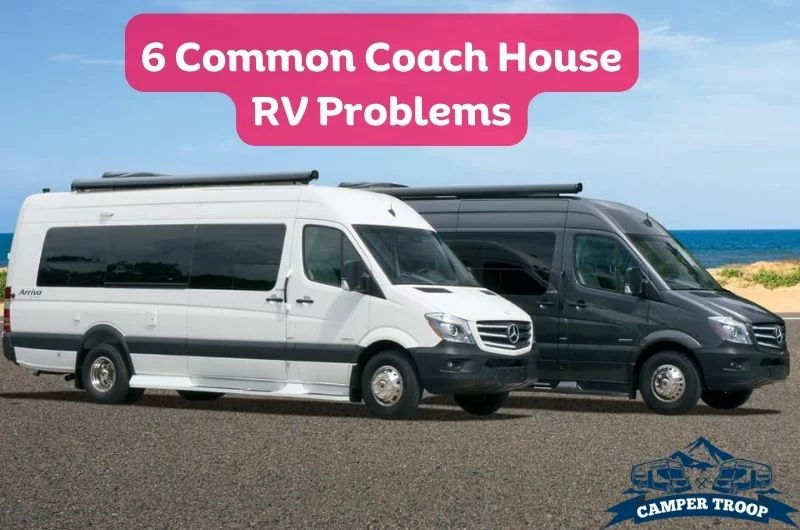
Coach House builds on several chassis. According to Sarasota Magazine, the lineup looks like this:
- Platinum and Platinum IV: Ford E-450 cutaway
- Platinum II: Mercedes-Benz Sprinter 3500
- Platinum III: Ford Transit
- Arriva: Type B camper van
The six problems below involve the “house” side of the RV: plumbing, wiring, HVAC, water heater, slides and tires. Engine, transmission and other chassis problems are separate. Take those to a Ford or Mercedes-Benz dealer that services your chassis.
Are There Recalls on Coach House Motorhomes?
Yes. NHTSA recall 18V-142 covers 2003-2018 Coach House Platinum and Arriva motorhomes. NHTSA recall 22V-358 covers 2021-2022 model-year units. To check your RV for any open recall, enter your VIN at nhtsa.gov/recalls. Do this before you start a repair. A recall fix is done at no cost to you.
6 Most Common Problems with Coach House RV and Their Possible Solutions:
01: Problems With The Water System
One of the most serious concerns with a Coach House RV may lie in the faulty water system. It can lead to mold growth and a few other severe consequences for the vehicle.
Usually, it happens due to leaks or because the plumbing pipes develop cracks over time. Issues with the water pump or regulator can also cause the water system to fail. Water can also get in from outside through worn roof, window and seam sealant.
The most common signs of water system issues are leaking water, soft or stained spots, and mold growth. Check these things:
- Look for any kind of loose connection in places like the faucets, supply lines, or showerheads. The connection can also be damaged, so look out for those.
- See if there are any plumbing issues. If the pipes are damaged or cracked, or if any pipes are leaking somewhere.
- Don’t forget about the water pump in the system, as it can also result in water system failure.
- If the leak shows up after rain, inspect the roof seams, vents, windows and trim. Look for cracked, lifted or missing sealant.
Once you check these things, you can move on to fixing the problems. These are the fixes to try out –
- For any kind of loose connection, you simply have to tighten it using a wrench or plier.
- If the components leak or are damaged, the best solution is to replace them.
- With the water pump or regulator, you can opt to have them repaired by an expert. But if it costs too much, it’s best to replace them.
- Reseal any cracked roof or window seams with a sealant made for your roof material. If the wall or floor already feels soft, have an RV technician check for hidden water damage.
Read Also: Common Problems with Entegra RV | Consider Before Buying
02: Electrical issues in the RV
Electrical problems are another issue you can’t ignore. Your Coach House RV may have wiring faults that cut power to part or all of the coach.
These typically happen because of faulty wires, breakers, and fuses. Running too many appliances at once can also overload the system. Over time, the battery or inverter may wear out and cause problems too.
If your lights, fan, refrigerator, oven, or any other appliance isn’t working properly, that indicates an electrical issue. Before you touch any wiring, unplug shore power, turn off the generator and disconnect the batteries. Then troubleshoot in this order:
- Start by checking the fuses and circuits. See if the circuit breaker has tripped or if the fuses have blown out.
- Next, check all the wiring and connections in the electrical system. They can be corroded, or they can simply come loose.
- Lastly, check up on the battery and inverter systems of your RV. They can go bad over time or get external damage that causes electrical issues.
To fix the problem, you can try out the following options –
- If it’s a blown-out fuse, you just need to replace it with a new one. Make sure to get the proper replacement fuse with the correct ratings.
- For a tripped circuit breaker, flip the switch back to “On.”
- For any loose connection, you must use a plier or screwdriver to tighten the connection.
- To fix corroded wires, using a wire brush or even a contact cleaner can help eliminate the corrosion.
- Finally, if you have a bad battery or inverter, the best solution is to replace them and get a new one.
Why does a breaker keep tripping? Usually the circuit is overloaded, such as when the AC, microwave and another heavy load run at the same time. Turn some loads off and reset it. If it still trips with little running, there may be a short or a failing appliance. Stop resetting it and have an RV technician find the fault.
Read Also: 15 Common Problems with Crossroads RV (Practical Solutions)
03: Flawed HVAC system
When the HVAC system fails, the RV gets too hot or too cold because heating, ventilation or air conditioning stops working.
Clogged air filters or a faulty thermostat are the usual causes.
A refrigerant leak in the air conditioner can also cause it, because a lower level of coolant leads to poor temperature control.
One of the telling signs of an HVAC system failure is an uncomfortable temperature in the RV. As soon as you think the temperature isn’t right in the RV, check for the following things.
- Straight up, check the air filters, and look for any kind of clogging from dust and debris.
- Then, find the thermostat in the system and see if it’s functioning properly.
- Check for refrigerant leaks or lower levels of coolant in your HVAC system.
This should give you a clear idea of what’s going wrong with the HVAC system. Then, follow the fixes accordingly.
- Well, the easy fix for a clogged air filter is to clean it according to the Coach House RV manual for your model.
- If the filter is somehow damaged, you have to replace it with a new one to fix the issue.
- For a faulty wall thermostat, check its settings and batteries (if it has them). If it still doesn’t work, replace the thermostat.
- Refrigerant leaks need a professional technician. Don’t try to recharge the system yourself.
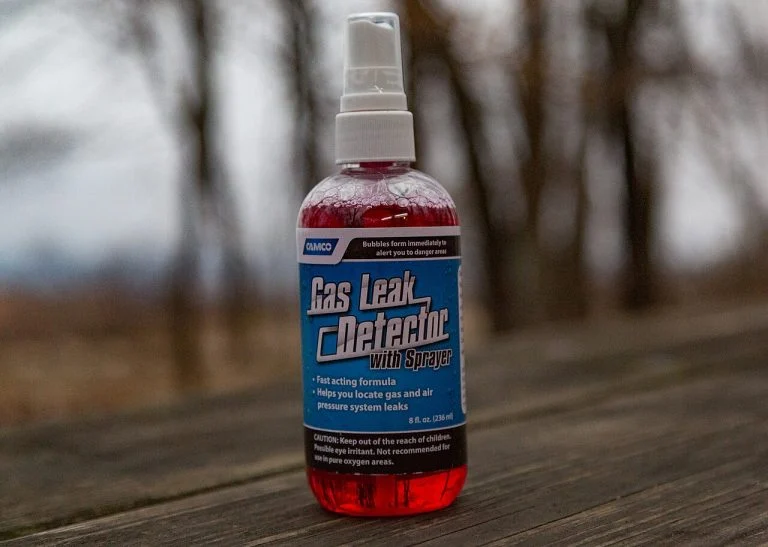
If the furnace won’t light and you smell gas, or your LP leak detector alarms, turn off the propane at the tank. Open the doors and windows, and don’t use switches or flames. Have a technician check the gas system before you use it again.
Read Also: 9 Common Problems with Alpha Wolf RV (Troubleshooting Tips)
04: Malfunctioning RV slide
If your Coach House RV has a slide-out, it may jerk, get stuck or move out of alignment.
The usual causes are worn or broken parts in the slide mechanism. Electrical issues like blown fuses or faulty wiring can also stop the slide.
Here’s what to check to find the problem:
- First, check the mechanism for the RV slide and see if there’s any wear, tear, or damage.
- Also, check the alignment of the mechanism.
- Next, ensure every electrical connection with the slide is secured. This includes fuses and switches as well.
- Finally, check the slide-out track and see if anything obstructs the slide’s movement.
Based on the issues, you can go for the following solutions in each scenario –
- Replacing the components in the slide-out mechanism is your only option with wear, tear, or damage.
- If the alignment of the mechanism seems off, you can always re-align it yourself or call a professional.
- To fix any electrical connection, you can either tighten it in case of a loose connection or replace it in case of a damaged connection.
- Clear and clean the tracks if anything blocks them. Then lubricate them only with the product your slide maker recommends. Some systems, such as Lippert/Schwintek in-wall slides, should not be greased.
Read Also: 6 Most Common Problems with Nexus RV (Troubleshooting Tips)
05: Tire problems
Tire problems build up over time and can lead to damage or a blowout, so they need regular checks.
Overinflating or underinflating the tires is a common cause. Wheel misalignment also causes poor handling and uneven wear. Carrying more weight than the RV is rated for puts extra stress on the tires, so stay within your cargo capacity.
A clear indication of problems with the tire is poor vehicle handling or the RV not running smoothly. As soon as you face something like that, go ahead and check your tires for the following issues –
- Use a tire pressure gauge to see if the tire is at the right pressure for your RV.
- Look closely at the treads for tears and wear. Measure the tread depth. Per federal tire rules, 2/32 inch is the lowest allowed depth, not a target. Front (steer) tires should stay at 4/32 inch or more.
- Check if the tires on your RV are uneven or not.
Based on these factors, here are the fixes for the problem –
- If the tire pressure isn’t right, you have to either inflate it or deflate it to correct the tire pressure.
- Replace tires before they wear down to 2/32 inch, or 4/32 inch on the front.
- For an unbalanced or misaligned wheel, have a tire shop balance and align it.
Read Also: 7 Most Common Problems with Chinook RV (Solutions Included)
06: Faulty water heater
The water heater may fail to light, shut off on its own, or heat water unevenly.
It all boils down to issues with the ignition system, sediment buildup in the heater tank, and a faulty thermostat in the heater. These things can result in the water heater failing to work properly.
Many RV water heaters, including Suburban SW-series models, use direct spark ignition (DSI) with an ON/OFF switch instead of a standing pilot light. Check your manual to see which type you have. If it’s not heating water properly, look for these things:
- Make sure the propane is on and the water heater switch is on. On a DSI unit, listen for the clicking spark when it tries to light.
- Drain the tank and look for sediment buildup (steps below).
- See if the water heater thermostat is working properly or not.
After checking each of these components, you can figure out what’s wrong. Then, try the fixes below based on that –
- On a DSI unit, turn the switch off and back on to retry ignition. Only older pilot-type units are relit by hand, following the manual.
- To get rid of sediment buildup, flush the tank completely.
- Most RV gas water heaters, such as Suburban SW models, have a fixed thermostat and an ECO (energy cut-off) safety switch. You can’t recalibrate them. If the water temperature is wrong, replace the faulty thermostat/ECO part or call a technician.
How to drain and flush the water heater:
- Turn off the water heater’s electric and gas supply.
- Let the water cool.
- Turn off the water pump and city water.
- Open a hot faucet or the pressure relief valve to relieve pressure.
- Remove the drain plug or anode rod (Suburban units) and let the tank drain.
- Rinse the tank until the water runs clear.
- Reinstall the plug or anode rod and refill the tank before turning the heater back on.
To winterize, drain the tank this way and set the bypass valves so antifreeze doesn’t fill the water heater.
Read Also: 5 Common Avenger RV Problems – Troubleshooting Guide
What About Poor Insulation?
Poor insulation shows up as drafts, cold floors, condensation on walls or windows, and an AC or furnace that runs constantly. Check window and door seals, slide-out seals and roof vents first, since gaps there let the most air through. Replace worn weatherstripping and reseal gaps. Insulated window covers and vent cushions also help in hot or cold weather.
Tips For Coach House RV Maintenance to avoid common issues
Prevention costs less than repairs. These habits help avoid the problems above:
- Follow a proper cleaning process in your RV as per the owner’s manual recommendation.
- Inspect roof, window and seam sealant regularly and reseal any cracks.
- Check the different components from time to time for wear and tear, and replace parts that are about to fail.
- Test your LP leak detector and smoke alarm on the schedule in your manual.
- Always keep the electrical components in the RV in check to avoid fire hazards.
- Drive the RV now and then. Tires that sit in one spot for a long time can develop flat spots.
- Refer to the owner’s manual for the regular maintenance process.
When Should You Call an RV Technician?
Fuses, breakers, filters, loose fittings and tire pressure are good DIY jobs. Get a certified RV technician or your dealer for these:
- Any propane smell or LP detector alarm
- A breaker that keeps tripping with little load
- Refrigerant leaks in the AC
- Soft floors or walls that point to hidden water damage
- A slide that is stuck out or badly out of alignment
- Any open recall on your VIN
Engine, brake and transmission problems go to a Ford or Mercedes-Benz chassis dealer, not an RV shop.
Frequently Asked Questions
What are the most common Coach House RV problems?
The most common Coach House RV problems are water leaks, electrical faults, HVAC failures, water heater trouble, slide-out issues, tire wear and poor insulation. Most involve the house side of the RV and can be fixed with careful checks and basic tools. Engine and transmission problems belong to the Ford or Mercedes-Benz chassis dealer.
What is the minimum tread depth for RV tires?
Under federal tire rules, 2/32 inch is the lowest allowed tread depth on an RV tire. Treat it as a limit, not a target. Front (steer) tires should stay at 4/32 inch or more. Replace tires before they reach these depths, and check tire pressure with a gauge on a regular basis.
Why does my RV circuit breaker keep tripping?
An RV circuit breaker usually keeps tripping because the circuit is overloaded. Running the AC, microwave and another heavy load at the same time is a common cause. Turn some loads off and reset the breaker. If it still trips with little running, there may be a short or a failing appliance. Have an RV technician find the fault.
How do I drain and flush an RV water heater?
To drain and flush an RV water heater, turn off its gas and electric supply and let the water cool. Shut off the water pump and city water. Open a hot faucet or the pressure relief valve. Remove the drain plug or anode rod, rinse until the water runs clear, then reinstall and refill before turning it on.
Should I grease the tracks on my RV slide-out?
Only lubricate slide-out tracks with the product your slide maker recommends. Some systems, such as Lippert/Schwintek in-wall slides, should not be greased at all. First clear and clean the tracks of anything that blocks them. If the slide is stuck out or badly out of alignment, call an RV technician.
Why does my Coach House RV leak after it rains?
A leak that shows up after rain usually comes from worn sealant on the roof, windows or seams. Inspect roof seams, vents, windows and trim for cracked, lifted or missing sealant. Reseal with a sealant made for your roof material. If a wall or floor already feels soft, have an RV technician check for hidden water damage.