Quick answer: An RV furnace that clicks but won’t light is trying to start but not completing ignition. Check the power switch, breaker or fuse, battery voltage, thermostat, and propane supply first. Then check airflow, vents, and the igniter. After three failed tries, many furnaces lock out and need a reset. If you smell gas, leave immediately.
RV furnaces are a great way to keep you and your family warm on a cold trip. That makes it especially annoying when yours won’t ignite just when you need it most.
A step-by-step check can help you find the cause. Follow this guide to learn what to do when your RV furnace is clicking but not lighting.
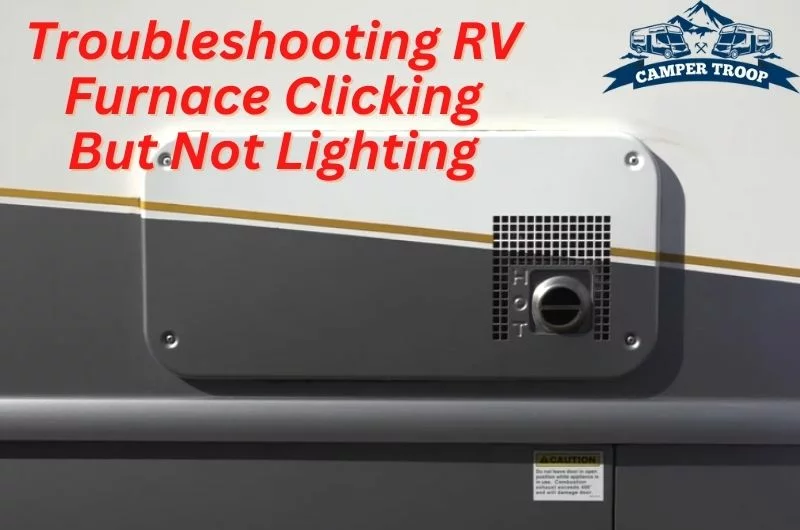
Why Is My RV Furnace Clicking But Not Lighting?
Clicking with no flame means one part of the startup sequence is failing. Common causes include low voltage, no propane, air in the gas line, blocked airflow, or a worn or dirty igniter.
A furnace has to complete these stages in order:
- The thermostat calls for heat.
- The blower runs and proves there is enough airflow.
- The furnace sends gas to the burner.
- The ignition system lights the gas, and the furnace confirms there is a flame.
How Many Times Will an RV Furnace Try to Ignite Before It Locks Out?
Suburban and Dometic furnaces typically make three ignition tries before lockout. After three failures, a Suburban furnace closes the gas valve, runs the blower for about three minutes, and locks out.
Why Does My RV Furnace Blow Cold Air and Then Shut Off?
Cold air followed by a shutdown often means the blower ran but the burner never lit or did not stay lit. The air stays cold because there is no flame. Running the blower by itself will not make the furnace produce heat.
How Do I Reset an RV Furnace After Lockout?
Reset the furnace by clearing the lockout, then let it try again. The method depends on the brand:
- Suburban: Turn the power off and back on to clear the lockout.
- Dometic: A hard lockout needs a thermostat reset, or turn the power switch off and on.
- Other brands: Follow the reset steps in your furnace manual.
A reset only clears the lockout. It does not fix the cause. If the furnace locks out again, stop resetting it and work through the steps below.
Read Also: Where Is Suburban Rv Furnace Reset Button And How To Reset?
How Do I Troubleshoot an RV Furnace Clicking But Not Lighting? 8 Steps
When your RV furnace clicks a few times and does not ignite, something needs attention. First, you need to find out what is causing the problem.
Safety first: If you smell propane, do not start these steps. Leave the RV and get expert help. Before you touch any furnace part, turn off the power and propane and let the furnace cool.
Step-1: Check The Power Button
Check that the furnace power switch is on, since it can be turned off by accident. The location varies by model. On Dometic DF Series furnaces with an access door, it is inside the door. On doorless models, it is usually on top of the housing, against the wall.
You can also examine the breaker. If it has tripped, reset it. If it keeps tripping, have a professional inspect your furnace.
Step-2: Check If You Have Enough Gas Or Battery Power
Your furnace needs both propane and electrical power to ignite. Make sure you have enough gas in your tank and that the tank valve is open all the way.
Low battery voltage can also keep a furnace from lighting. A battery can look fine at rest, then sag once the blower starts. For a better test, use a multimeter to measure voltage at the furnace while the blower runs. Compare the reading with the minimum listed in your furnace manual. Charge or replace the battery if necessary, and inspect the wiring if the battery is fine but the furnace reading is low.
Step-3: Check The Thermostat
Make sure your thermostat is in heat mode and set higher than the current inside temperature. Turning on the fan or blower alone will not force the furnace to heat. The blower must prove airflow, and the furnace still needs gas and a successful ignition.
Read Also: 3 Prominent Reasons Why RV Furnace Runs with Thermostat Off
Step-4: Check The Gas Line
If the furnace is not getting propane, it won’t light. Look for visible damage along the parts of the gas line you can reach. Then see whether your stove lights and holds a steady flame. If it does, propane is reaching the RV, and the problem may be closer to the furnace.
If you notice any sign of a leak, evacuate immediately and ask for expert support. You can smell the gas if there is a leak, and you may also hear a faint hissing sound.
Step-5: Check for Fuse
A blown fuse cuts off power to the furnace and can cause ignition failure. Fuse locations vary, so check the furnace manual and the RV’s main power panel. Some Dometic models use a 15-amp breaker installed in the main panel instead.
Inspect the fuse and test it with a multimeter. If it is blown, replace it with one of the same rating. If fuses keep blowing, have an RV technician check the wiring and voltage connections.
Step-6: Check The Ignitor Itself
When the metal arms of the ignitor are broken or damaged, the furnace won’t ignite. A gap that is too wide or too small can also stop the spark from working. Compare the gap with the specification in your furnace manual, and replace the ignitor if necessary.
Carbon buildup can also cause trouble. With the power and propane off and the furnace cool, gently clean any buildup from the electrode or flame sensor as your manual directs. Replace the part if it is cracked or badly worn. If the burner lights and then quickly goes out, a dirty flame sensor is one possible cause.
Step-7: Check The Exterior Vents And Burner Tube
Blocked vents and burner tubes can disrupt airflow and combustion. With the furnace off and cool, look for insect nests, debris, snow, or ice at the exterior vents. Clear anything you can safely reach. If you find a nest or debris inside the burner tube, have a technician clean it and check the burner.
Step-8: Test The Sail Switch And Limit Switch
The sail switch confirms that the blower is moving enough air. The limit switch is a safety device that responds to overheating. If either circuit stays open, the furnace will not complete a normal startup.
First, clear any blocked return-air openings and heat ducts. To test a switch, turn off the power, disconnect its wires, and use a multimeter set to continuity. On most designs, a cool limit switch should show continuity, and a sail switch should change state when you move the sail by hand. Check your manual for your model. Never bypass either switch to get heat.
What Do Dometic Red LED Fault Codes Mean?
Dometic furnaces usually show fault codes as flashes of a red LED on the control board. Some newer systems can also display codes on compatible digital thermostats, such as the Comfort Control Center 2.
| Red LED | Meaning | Where to look |
|---|---|---|
| Steady on | Internal board failure | Control board |
| 1 flash | Limit switch or airflow problem | Vents, ducts, blower, and switches |
| 2 flashes | Flame sense fault | Flame sensor, electrode, and wiring |
| 3 flashes | Ignition lockout | Propane supply, air in the lines, and igniter |
| 4 or 5 flashes (some boards) | High or low voltage | Battery, converter, wiring, and connections |
How Do I Know If the Control Board Failed?
On a Dometic board, a steady red LED indicates an internal board failure. On any furnace, rule out power, fuses, airflow, propane, and the igniter before you blame the board. If those all check out, have a technician confirm the failure before you buy a new one.
Read Also: Dometic RV Furnace Troubleshooting | Fix Common Problems
How Do I Get Air Out of RV Propane Lines?
Air can get into the lines after a tank refill, tank swap, or storage. To push it out, use the stove first:
- Make sure you do not smell gas.
- Open the propane tank valve slowly.
- Light a stove burner, following the stove’s instructions.
- Keep trying until the burner holds a steady flame.
- Turn the stove off, then call for heat at the thermostat.
- If the furnace locks out, reset it and let it try again.
Do not loosen a gas fitting to bleed air from the line.
How Do I Safely Test for a Propane Leak?
A soapy water test can help you check accessible fittings when you do not smell gas. If you do smell gas, skip this test, leave the RV, and get expert help.
- Turn off all flames and propane appliances.
- Mix dish soap and water.
- Open the tank valve slowly.
- Brush the solution onto the fittings you can reach.
- Watch for bubbles that form or grow.
- If you see bubbles, treat it as a leak. Close the tank valve if it is safe to do so, move away, and call for service.
Never use a flame to look for a leak.
Can a Bad Propane Regulator Stop the Furnace From Lighting?
Yes. A failing regulator can leave the furnace without the gas pressure it needs. Suspect the regulator if several propane appliances perform poorly at the same time. Accurate testing requires a manometer and your RV’s pressure specification, so this job is best left to a qualified RV or propane technician.
How Does Cold Weather Affect Propane and Furnace Ignition?
Propane must turn from liquid to vapor before your furnace can burn it. It vaporizes more slowly as temperatures drop, and a low tank has less liquid surface to produce vapor. In severe cold, a nearly empty tank may not supply enough gas, so start with a fuller tank or switch to one.
Read Also: Why Suburban RV Furnace Won’t Light At Extreme Temperature?
How Long Will a 20-Pound Propane Tank Run an RV Furnace?
A 30,000-BTU furnace can run for about 14 hours of continuous operation on a full 20-pound tank. The tank holds roughly 4.5 to 4.7 gallons, or about 410,000 to 430,000 BTU.
| Furnace size | Estimated continuous run time on a full 20-pound tank |
|---|---|
| 20,000 BTU per hour | About 21 hours |
| 30,000 BTU per hour | About 14 hours |
| 40,000 BTU per hour | About 10.5 hours |
These figures count burner run time only. A furnace cycles on and off, so a tank can last longer on the calendar. Colder weather, a higher thermostat setting, and poor insulation will use it faster.
When Should I Stop and Call a Certified RV Technician?
Stop DIY work and call a certified RV technician if any of these apply:
- You smell gas, hear a leak, or see bubbles during a soapy water test.
- A carbon monoxide or propane alarm has sounded. Get outside first.
- Fuses keep blowing or the breaker keeps tripping.
- The furnace keeps locking out after you check the basics.
- The limit switch keeps opening.
- The repair involves the gas valve, burner assembly, or regulator pressure.
- The control board appears to have failed.
- You see soot, scorch marks, or melted wiring.
Here we discussed step by step what to do when the furnace of your RV is clicking but not igniting. Hopefully, these steps solve the issue for you. Feel free to contact an expert if you need help.
However, when you can’t get your RV furnace fixed immediately, you must stay warm for the night!
How To Stay Warm In A Furnace Emergency
If your furnace dies out of nowhere and you can’t solve the issue immediately, use the safest option available. Here are some tips:
- Layers and blankets: Wear multiple layers of dry clothing, and use blankets or sleeping bags.
- A warmer place to stay: If you can’t keep everyone warm, move to a heated building or other safe shelter.
- Indoor-rated portable heater: Use one only if it meets all the safety conditions below.
- Battery-powered light: Do not burn candles for heat. CPSC advises using flashlights or battery-operated candles instead of burning candles during outages.
Is It Safe to Use a Portable Propane Heater Inside an RV?
Most portable propane heaters are not safe inside an RV. Only use one that meets all of these conditions:
- The manufacturer designed it for indoor use.
- It has an oxygen depletion sensor (ODS).
- You provide the ventilation the manufacturer requires.
- You shut it off before sleeping.
Never bring a grill, camp stove, or outdoor-only heater inside your RV for heat.
How Do I Protect Against Carbon Monoxide When Using Backup Heat?
Make sure your carbon monoxide and propane alarms work before you use any backup heat. CPSC’s 2026 winter guidance for homes says to test CO alarms monthly and replace batteries if needed. If an alarm sounds, get outside immediately and call 911. Follow the alarm maker’s instructions for your RV units.
Cold is a serious issue. If you fail to keep yourself warm in extreme conditions, you might suffer from hypothermia, which is lethal for any age. Use multiple cloth layers or anything near you to keep you and your loved ones warm!
Read Also: Why RV Furnace Shuts off After 30 Seconds & How to Fix it?
FAQs.
We hope that the above part was useful for you. In this segment, we answer some frequently asked questions.
Why is my RV furnace simply clicking and not lighting?
Clicking with no flame means the furnace is not completing ignition. Common causes include low voltage, no propane, air in the gas line, blocked airflow, or a worn or dirty igniter. Suburban and Dometic furnaces typically make three ignition tries before they lock out.
How long will a 20-pound propane tank run an RV furnace?
A full 20-pound tank holds roughly 4.5 to 4.7 gallons, or about 410,000 to 430,000 BTU. A 30,000-BTU furnace would burn that in about 14 hours of continuous operation, and a smaller furnace would last longer. Your furnace cycles on and off, so the tank can last longer on the calendar.
Where can I find the furnace fuse?
Fuse locations vary by model, so check the furnace manual and the RV’s main power panel. Some Dometic models use a 15-amp breaker installed in the main panel. Once you’ve found the fuse, inspect the wires to determine whether they’re damaged or discolored.
Will the furnace work without a fuse?
No. If the fuse or breaker that feeds the furnace is blown or missing, the furnace loses power. The blower motors and the control circuits are powered by electricity rather than gas, so gas and electric furnaces both need electricity.
In Conclusion
If you’ve reached this point, you know how to work through the steps and what to do in a furnace emergency. Keep in mind that propane appliances need care, and you must be cautious during any inspection.
If the troubleshooting seems complicated, leave it to expert hands. Knowing what to do in an emergency is never a bad investment. Before a long trip in cold conditions, plan a safe backup heat option and test your CO and propane alarms.