Quick answer: A Suburban RV furnace usually won’t ignite because of low 12-volt power, no propane flow, restricted airflow, a blocked vent, or a bad ignition part. Check the thermostat, fuse, battery, and tank first. If you smell propane, leave the RV immediately. Never try to light a direct-spark furnace by hand.
A working furnace is essential for comfortable cold-weather RV travel. When a Suburban RV furnace stops igniting, the symptoms can help you find the cause and avoid replacing good parts.
Common causes include a low propane supply, a malfunctioning ignition system, a clogged burner assembly, blocked vents, low battery voltage, and an open safety switch. Extreme cold can bring a weak propane or battery supply to light, so this guide also covers cold-weather failures.
What Should You Do If You Smell Gas in Your RV?
Stop troubleshooting and get out. Follow these propane safety steps:
- Put out all flames and smoking materials.
- Get everyone out of the RV immediately.
- Do not use switches, thermostats, or phones in the affected area.
- Shut off the gas at the tank only if it is safe to do so.
- Call for help from a safe location.
- Keep the gas off until a qualified person has checked the system.
Why Do You Need Working Gas and CO Detectors?
Propane odor is an important warning, but it is not reliable on its own. The odor can fade, some people cannot smell it well, and it may not wake a sleeping person.
Use a working LP gas detector as well. Mount or keep it where its manufacturer specifies.
Test your carbon monoxide detector before you troubleshoot a furnace, too. If either alarm sounds, get everyone outside and do not keep testing the furnace.
How Long Do RV Propane Detectors Last?
It depends on the brand. Some RV maintenance guides cite about 7 years or more, but the date on your own detector is the one to follow. Check it now, and replace the detector when it reaches that date.
What Are the Warning Signs of Carbon Monoxide?
Propane safety guidance lists these warning signs of carbon monoxide:
- Eye irritation
- Headaches
- Dizziness
- Sleepiness
- Excessive moisture on the inside of windows
If you notice these signs, ventilate immediately by opening windows and doors. Get everyone into fresh air and shut the furnace off. Call 911 if anyone feels sick. Do not use the furnace again until a qualified technician has checked it.
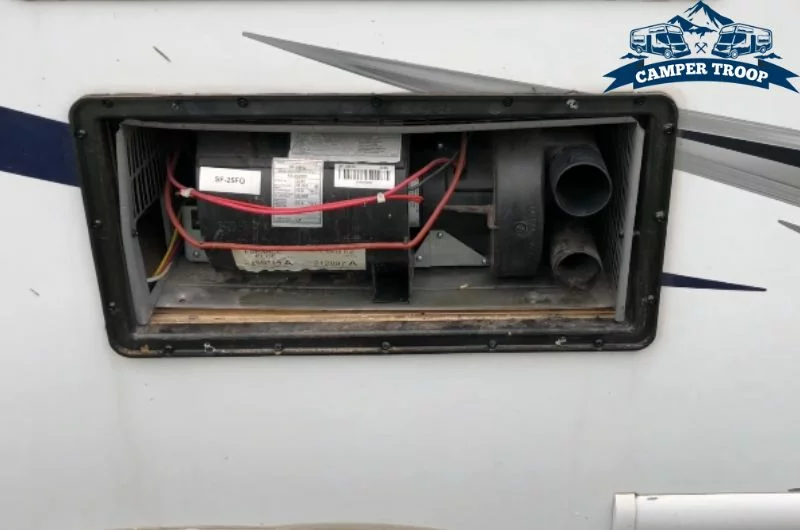
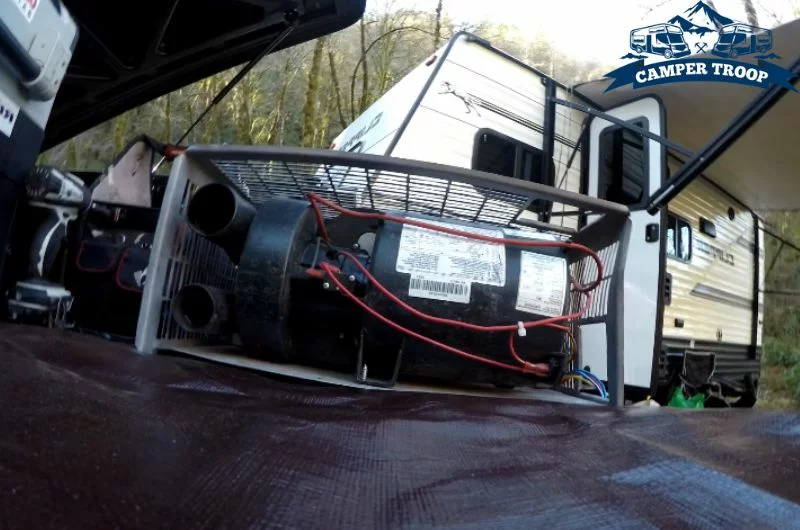
How Does a Suburban RV Furnace Light?
A Suburban furnace must prove airflow before it tries to ignite. This safety sequence helps keep unburned propane out of the furnace. The sequence works like this:
- The thermostat calls for heat.
- The blower starts.
- Airflow from the blower closes the sail switch, which tells the control board that airflow is proven.
- The control board runs the ignition sequence, and the electrode provides the spark.
- Flame sensing confirms that the burner lit.
What Happens If the Furnace Fails to Light?
A Suburban furnace makes three tries to light. If all three fail, the board closes the gas valve, runs the blower for about three minutes, and then locks out.
This explains why the fan can run with no heat after a failed start. The blower may simply be finishing its run before lockout.
An airflow failure works differently. If the sail switch does not confirm airflow within 30 seconds, the board locks out and shuts down the blower.
How Do You Reset a Suburban RV Furnace After a Lockout?
Cycle the furnace’s power to clear a Suburban lockout. On Dometic furnaces, a hard lockout needs a thermostat reset, or the power switch turned off and back on.
Do not keep resetting a furnace that fails again and again. Repeated lockouts mean something still needs to be found and fixed. Do not reset it at all if you smell propane.
Does a Suburban RV Furnace Have a Reset Button?
Do not count on finding one. Not every RV furnace has a reset button, and a Suburban lockout is cleared by cycling the power. Some furnaces may have a reset on the control board or inside the unit, so check the manual for your exact model.
Read Also: Where Is Suburban RV Furnace Reset Button And How To Reset?
Can You Light a Suburban RV Furnace by Hand?
No, not a furnace that uses electronic ignition and has no pilot. If the ignition fails, shut the furnace off and have the fault diagnosed and repaired by a certified RV technician. Use a safe alternative heat source until then. If you own an older furnace, follow only the lighting instructions in the manual for that exact model.
Why Won’t My RV Furnace Light? Diagnose It by Symptom
Start with what the furnace does when the thermostat calls for heat. These are places to look, not proof that a part has failed.
| Symptom | What to check first |
|---|---|
| Nothing happens and the blower stays off | Thermostat settings, furnace switch, fuse or breaker, 12-volt supply, loose wires, a sail switch stuck closed |
| Blower runs but there is no click or flame | Battery voltage, blocked airflow, sail switch, limit switch, lockout |
| Blower starts, then shuts down within about 30 seconds | Battery voltage, blocked airflow, sail switch not confirming airflow |
| Clicking but no flame | No gas reaching the burner, or a damaged electrode (look for cracks in the ceramic) |
| Lights on the second or third try | Air in the propane line, low voltage, a dirty or worn electrode |
| Lights briefly, then goes out | Propane supply, flame sensing parts, battery voltage, airflow |
| Runs a short time, then shows an airflow or limit fault | Blocked vents, closed registers, restricted ducts, then the limit switch |
| Blower runs for a few minutes with no heat, then stops | Lockout after three failed ignition tries |
Why Won’t My RV Furnace Turn On at All?
A furnace that shows no sign of life may have a power drop, a blown fuse, a bad thermostat, or a damaged control board. Check the thermostat, fuse, and 12-volt supply first, because they are the easiest to rule out. Dirt or debris can also foul the sail switch, so inspect it if power checks out.
Why Is My RV Furnace Blowing Cold Air and Not Igniting?
Cold air means the blower is running but the burner has not lit. RV Repair Club says a blower that runs without the furnace lighting is usually a low 12-volt issue.
A weak battery may still spin the blower, but not fast enough to close the sail switch and start ignition. The blower may also be finishing its run after three failed tries. Check the 12-volt supply first, then confirm that propane is reaching the furnace. If both are good, check the airflow and safety switches.
Why Does My RV Furnace Light on the Second Try?
The furnace is allowed three tries, so a later success means the sequence is working but the first try fell short. Air in the line after a tank change is a possible cause if it happens only once. If it keeps happening, check the battery voltage and inspect the electrode.
Why Does My Suburban SF-35 Light Briefly and Then Go Out?
Flame sensing has to confirm that the burner lit. A flame that appears and then dies points to an unstable gas supply, low voltage, an airflow problem, or dirty or damaged flame sensing parts. Work through those in order, and check the manual for your exact SF-35 version.
Why Does My RV Furnace Run for a Short Time and Then Shut Off?
Look at airflow, voltage, and the thermostat. The timing gives you a clue:
- The blower stops within about 30 seconds: The sail switch may not be confirming airflow. Check battery voltage and blocked airflow first.
- The furnace heats for a while, then quits: Suspect an open limit switch. Restricted airflow is the usual cause, so check vents, registers, and ducts.
- The furnace runs in repeated short bursts: Check the thermostat first, since a bad one can cause short cycling.
Read Also: Why RV Furnace Shuts Off After 30 Seconds & How to Fix it?
What Tools and Parts Do You Need for These Checks?
The basic checks take only a few common tools. Buy replacement parts only after you confirm the fault.
- For electrical checks: A multimeter and the manual for your exact furnace model.
- For battery terminals: Baking soda, water, a toothbrush, and a clean, soft towel.
- For wiring repairs: A wire cutter, a way to strip wire, insulated connectors sized for the wire gauge, and replacement wire of the same gauge or thicker.
- For cleaning: A soft brush or low-pressure air.
- Possible parts: A fuse of the correct rating, electrode, flame sensing parts, sail switch, limit switch, or control board. Use the furnace’s full model number when you order.
How Do You Fix a Suburban RV Furnace That Won’t Ignite?
Work from the easiest and most likely causes to the hardest. Stop at any point if you smell propane or are unsure about a step.
Solution 01: Check the Thermostat, Fuse, and Breaker
Set the thermostat to heat and raise it above the current room temperature. Then make sure the furnace power switch is on and check the furnace fuse or breaker.
If a fuse blows again after you replace it, stop and look for a wiring fault. Do not install a larger fuse.
A malfunctioning thermostat can also cause short cycling. If the furnace runs in short bursts, checking the thermostat is the easiest first step.
Read Also: 3 Prominent Reasons Why RV Furnace Runs with Thermostat Off
Solution 02: Check the Battery Voltage
Low voltage can stop ignition even when the blower runs. Measure the voltage with a multimeter, ideally while the blower is running. RV Repair Club advises checking 12-volt power at the module board, since that shows what the furnace is actually receiving. If the voltage is low, fully charge the battery and try again.
What Voltage Does an RV Furnace Need to Run?
One RV repair source says most RV furnaces will not work below 10.5 volts. Treat that as a rough guide and check the manual for your model.
Can a Low Battery Keep an RV Furnace From Lighting?
Yes. A weak battery may spin the blower too slowly to close the sail switch, so ignition never starts. Charge the battery fully and test again before you replace any parts.
Does Being Plugged In Guarantee Good 12-Volt Power?
No. The furnace still depends on its 12-volt circuit when the RV is on shore power, and a good reading elsewhere does not prove that enough voltage reaches the furnace. Measure at the board with shore power connected, then again with it disconnected:
- Low both ways: Look for corroded terminals, loose connections, or damaged wiring. Then have the battery and converter checked.
- Good on shore power, low on battery: The battery is the first suspect.
- Good on battery, low on shore power: Have the converter checked.
Solution 03: Clean the Corroded Battery Terminals
Did you check the battery terminals closely?
If not, then check for corrosion in the battery terminals. Electrical corrosion can happen over time. While checking the terminals, look for gray, white, and greenish material buildup.
Corrosion can keep enough power from reaching the furnace, which prevents it from igniting. Often, cleaning the terminals is good enough to restore an effective connection.
Let’s learn how to clean the corroded battery terminals by reading the steps below.
- Step 01: Prepare a mixture of water and baking soda.
- Step 02: Disconnect the connections of the corroded terminals.
- Step 03: Apply the mixture over the corroded part. Get a toothbrush and gently scrub. This will help in removing the corroded material.
- Step 04: Now, grab a clean and soft towel. Wipe off the baking soda-water mixture thoroughly.
- Step 05: Reconnect the connections of the terminals. Finally, check whether power is being delivered to the RV’s internal light, furnace, and thermostat.
Solution 04: Fix the Damaged Wire
Does the problem still exist?
Check for loose connections or damaged wires between the furnace ignition system and the battery. Disconnect 12-volt power before you touch the wiring.
If the connection is loose, you can do the following:
- Clip off the damaged end
- Strip the wire
- Secure it with an insulated connector sized for that wire gauge
- Tighten the connection
Replacing, splicing, or patching an entire damaged wire might not be practical. If the wire is only corroded at a connection, cleaning it may be enough.
You can use a water and baking soda mixture. Soak a soft bristle toothbrush in the mixture and scrub gently. A cleaner connection helps the furnace get the power it needs to ignite.
Here are the steps for replacing a section of damaged wire.
- Step 01: Using a wire cutter, snip out the damaged or corroded section.
- Step 02: Carefully strip the protective coating from the 2 exposed wire ends.
- Step 03: Get the new section of wire. Make sure its gauge matches the current wire or is thicker. Then carefully strip the coating from both ends.
- Step 04: Join the wires with insulated connectors sized for that wire gauge, and gently tug each joint to test it. If you are not comfortable making the repair, have a technician do it.
Read Also: How to Light a Suburban RV Oven? (Things You Need to Know)
Solution 05: Check for Gas Supply and Tanks
A Suburban RV furnace burns LP (propane) gas, not gasoline. It cannot light without a steady supply, so make sure the tank has propane and the valve is open.
Is the furnace still not working with an adequate gas level? Use these checks:
- Test another LP appliance. If the stove also burns weakly or not at all, suspect the supply. A working stove does not prove that the pressure is correct, but it does make an empty tank less likely.
- Inspect the regulator and connections. Look for damage, ice, or corrosion at the regulator, and for loose or damaged fittings and hoses.
- Leave line pressure to a technician. Testing it takes the right gauge and the correct spec for your system.
How Do You Get Air Out of RV Propane Lines?
Run a stove burner after a refill or tank change. This may help clear air from the line before you try the furnace.
- Make sure you do not smell gas. If you do, stop and follow the propane safety steps above.
- Light a stove burner.
- Let it run until the flame is steady.
- Turn off the burner and try the furnace.
How Do You Reset the Excess-Flow Valve on an RV Propane Tank?
If your tank has an excess-flow device, opening the valve quickly may trip it and reduce the flow, which can keep the furnace from lighting. Follow your propane supplier’s directions if they differ from these steps:
- Close the tank valve.
- Wait a moment.
- Open the valve slowly.
- Try the furnace again.
How Do You Check a Dual-Tank Automatic Changeover Regulator?
Start by confirming that both tanks have propane. Then test each side on its own, so a problem on one side cannot hide behind the other:
- Make sure you do not smell gas.
- Read the changeover indicator using the directions for your regulator, because indicators differ.
- Look for damage, ice, or corrosion on the regulator and hoses.
- Close one tank valve, slowly open the other, and try the stove.
- Repeat with the tanks swapped.
If only one side works, the problem is likely with that tank, its valve, or that side of the regulator. If neither side works and both tanks have propane, have a technician test the regulator and line pressure.
What If You Suspect a Propane Leak?
Never search for a suspected leak with a flame. If you think gas is leaking, follow the propane safety steps above and have the system repaired before you use it.
Spare cylinders: Do not keep filled spares inside the living space of an RV or trailer. If you carry a cylinder in a vehicle, a sensible precaution is to keep it upright with the valve closed, give the vehicle fresh air, and take the cylinder out soon after you arrive. Check your propane supplier’s directions and current state, tunnel, and campground rules.
Solution 06: Clear Blocked Vents and Ducts
The furnace needs clear intake, exhaust, and heat ducts to run safely. Use these steps:
- Turn the furnace off and let the exterior vent cool.
- Look in the outside intake and exhaust openings for insect nests, debris, snow, or ice.
- Gently remove anything you can reach without damaging the parts behind it.
- Inside the RV, open the heat registers and move bedding, storage bins, or other items away from them.
- Check any ducts you can reach for kinks, crushing, or disconnected sections.
If a nest or blockage sits deep in the furnace, have a technician remove it. Do not run the furnace with a blocked vent.
Solution 07: Ensure Proper Cleaning of the Furnace
The proper functioning of RV furnaces significantly relies on adequate maintenance. Most furnaces collect dust over time, and a Suburban RV furnace is no exception. Periodic cleaning and inspection help prevent ignition problems.
Follow the below steps.
Step 01: Turn the furnace off, disconnect 12-volt power, close the propane valve, and let the unit cool.
Step 02: Open the access cover. Use a soft brush or low-pressure air to remove dirt and debris from near the ignitor.
Step 03: Gently clean around the electrode and flame sensing parts. Do not apply excessive pressure, bend the parts, or chip the ceramic.
Step 04: Look over the burner assembly for soot, rust, nests, or other debris. If the burner has to come out, follow the manual for your model or call a technician, because the work can disturb gas connections.
Step 05: Reassemble the furnace, restore power and gas, and watch a full start. If the electrode or flame sensing parts are cracked or broken, they need to be replaced.
How Do You Check the Switches, Ignitor, and Control Board?
Test parts only after power, propane, and airflow check out. Turn off the furnace and disconnect 12-volt power before you remove any wire. Label each wire so it goes back in the same place. Test values and procedures vary, so follow the manual for your model.
How Do You Know If an RV Furnace Sail Switch Is Bad?
A sail switch is a likely suspect in either of these cases:
- The blower starts, then shuts down. The blower has to run first, because its airflow closes the switch. A switch that does not close stops ignition, and the board locks out and stops the blower if airflow is not confirmed within 30 seconds.
- The blower will not start. Power is the first thing to check, but a sail switch stuck closed can also prevent the blower from starting.
Neither symptom proves the switch has failed. It is a stronger suspect if voltage and airflow are good and the switch fails the continuity test below.
Where Is the Sail Switch, and How Do You Test It?
The sail switch sits in the blower’s airflow path, because moving air has to close it. Its exact position varies by model, so use the parts diagram in your manual.
Lint, pet hair, or other debris can keep the switch from moving freely. Remove the debris, then check that the sail moves without binding. With the wires off, a multimeter set to continuity should show the switch changing state when the sail is moved by hand.
Remember that a good switch cannot close without enough airflow. Check battery voltage and the blower before you replace it.
Read Also: Where is Atwood Furnace Reset Switch & How to Reset?
How Do You Spot a Failing Blower Motor or Weak Blower Wheel?
Suspect the blower when voltage is good and the vents are clear, but airflow is still weak. A blower that moves too little air may not close the sail switch, even if the switch itself is fine.
- Measure the voltage while the blower is running, and rule out low power first.
- Open the registers and check that air is moving at each one.
- With the furnace off and 12-volt power disconnected, look for lint or debris on any part of the blower wheel you can reach.
- If the blower grinds, squeals, or runs slowly with good voltage, shut it off and have a technician inspect the motor and wheel.
What Causes an Airflow or Limit Fault?
RV furnace safety controls include the sail switch and the limit switch. The limit switch monitors furnace temperature. An open limit switch can stop heating and cause a lockout, and restricted airflow is the usual cause.
A failed limit switch can also keep the ignitor from firing, so you may not hear the furnace try to light.
Check the vents and ducts first. If airflow is good, have the switch inspected before you replace it. A continuity test on a cool furnace can help, but a replacement switch will not cure a blocked duct.
What Are the Symptoms of a Bad Suburban RV Furnace Ignitor?
No single symptom proves that the ignitor has failed. Clicking with no flame often means no gas is reaching the burner. A damaged electrode is another possibility, such as cracked ceramic that may let the spark ground out.
A furnace that stops abruptly, cycles on and off, or blows cold air can also have a power, gas, or airflow problem. Rule those out first, along with the sail and limit switches. Then inspect the electrode for cracks, dirt, and damaged wiring.
A breaker or fuse that keeps tripping needs a different approach. Treat it as a possible wiring fault, and do not keep resetting it.
How Do You Diagnose a Bad Gas Valve or Solenoid?
Leave the test to a certified RV technician, because it involves the gas system. Your job is to narrow down the cause. The valve becomes a stronger suspect when all of these are true:
- Another LP appliance works normally.
- Voltage and airflow are good.
- The furnace clicks and tries to light, but no flame appears.
- The electrode is clean and undamaged.
Write down what you checked and give it to the technician. Do not bypass the valve or open any gas connection yourself.
How Do You Know If the Control Board Is Bad?
Treat the control board as a last suspect. It may be at fault if power, gas, airflow, and the switches all check out but the ignition sequence still does not run correctly. Testing its outputs, including the ignitor relay, involves live circuits, so have a technician confirm the fault before you buy a board.
Check compatibility before you order. Some older Suburban furnaces need a wiring kit to convert to the current three-try ignition board, so a replacement board may not be a direct swap.
How Do You Read Control Board Lights or Fault Codes?
Use the manual for your exact furnace model. If your board has a diagnostic light or fault codes, the manual is the place to confirm what each one means. Do not rely on a chart for a different furnace, because the same light pattern may not mean the same thing. If your manual lists no codes, use the symptom table above.
Why Won’t a Suburban RV Furnace Light in Extreme Cold?
Extreme cold puts stress on the two things the furnace needs most: propane vapor and 12-volt power. The safety sequence still has to complete, so a weak supply of either can stop ignition.
A failure on a cold night is not always caused by the cold. A faulty sail switch, limit switch, or ignitor can show up at any temperature. If these cold-weather checks do not help, go back to the symptom table above.
- Propane supply: The furnace burns propane vapor. Deep cold may make it harder for a tank to supply enough vapor, especially when the tank is low. Keep the tank as full as you can, because the furnace cannot light if the propane runs out.
- Battery voltage: Keep the battery fully charged. A weak battery may not spin the blower fast enough to close the sail switch.
- Snow and ice: Clear the exterior vents, tank area, and regulator. A tank cover can help shield the equipment from weather.
- Gas line problems: Moisture in a line may freeze in very cold, wet weather. Long storage or flood exposure may leave dirt or debris in the system. Do not open or clean LP lines yourself, and never use a flame to thaw any part of the gas system. If you suspect a frozen line, blockage, or contamination, have a certified RV technician check the system.
Does Winterizing Your RV Help the Furnace Light?
Winterizing protects the water system. It is not a repair for a furnace that won’t ignite, but it still matters if you store or travel with your RV in freezing weather. Follow this order:
- Drain the fresh water tank and water heater.
- Bypass the water heater.
- Pump RV antifreeze through every hot and cold line.
- Before using the water system again, flush the antifreeze out with fresh water.
See this RV winterizing guide for more detail.
What If the Furnace Only Fails at High Altitude?
Start with your manual, because any altitude limits or adjustments are specific to the model. Run the same 12-volt, propane, and airflow checks first. If the furnace lights normally at low elevation and struggles only up high, tell a technician about that pattern. Do not adjust the burner or gas parts yourself.
Where Can You Find the Right Manual for Your Furnace?
Find the model number on the furnace label or in your RV’s documents, and then get the manual for that exact model. Suburban makes more than one furnace line, including SF, SFQ, and NT models, so access panels, part locations, and test procedures may not match another unit. Use the full model number when you order parts.
Should You Repair or Replace the Furnace?
Repair is usually the first thing to price when the fault is a single confirmed part. Costs vary by model, region, and shop, so ask for a written quote that separates parts and labor. These rules can help:
- Do the free checks first. Settings, fuses, battery charge, tank level, and vent clearing can solve the problem without new parts.
- Confirm the fault before buying. Replacing parts by guesswork can cost more than a diagnosis.
- Compare the full cost. Get a replacement quote too if the unit needs several major parts, has heat or corrosion damage, or parts are hard to find.
Could a Repair Affect the Furnace Warranty?
It might, so check before you replace anything on a newer furnace. Most Suburban furnaces carry a two-year limited warranty on parts and labor for the original owner, and routine maintenance is not covered. Read the terms for your unit, and ask Suburban or an authorized dealer whether your planned repair would affect coverage.
When Should You Call a Professional?
Consider seeking professional assistance for your Suburban RV furnace ignition problem when you have attempted basic troubleshooting steps but the issue persists. If you need clarification on diagnosing or fixing the problem yourself, or if there is a potential gas or electrical issue, it’s best to have a qualified RV technician inspect and repair the furnace.
Unusual noises during ignition also call for a technician. Immediately turn off the furnace, since the noise could indicate a mechanical issue or obstruction. Do not use the furnace again until a qualified RV technician resolves the problem.
How Often Should the RV Gas System Be Checked?
A yearly gas leak check by a qualified technician is a sensible plan. For the furnace itself, follow the service schedule in the manual for your model. For general background, see this RV gas furnace operation and maintenance article.
Final Words
Proper maintenance of the Suburban RV furnace helps prevent ignition failure during travels. Regularly inspecting and cleaning the system, checking propane levels, and addressing potential issues promptly can save countless headaches on the road.
Check the furnace’s electrical connections routinely, and do your preventive maintenance after the summer. If you have a newly installed furnace, test it thoroughly before you head out into bitter cold or heavy snow.
Follow the symptoms, start with the simple checks, and never take chances with propane. If those checks do not solve it, have a qualified technician repair the furnace or advise you on replacing it.
Read Also: What To Do When RV Furnace Clicking But Not Lighting?
Frequently Asked Questions
Why is my RV furnace clicking but not lighting?
Clicking with no flame often means no gas is reaching the burner. A damaged electrode is another possibility, such as cracked ceramic that may let the spark ground out. Confirm the tank has propane and the valve is open, then inspect the electrode. Stop and leave the RV if you smell propane.
How many times does a Suburban RV furnace try to light before locking out?
A Suburban furnace makes three tries to light before it locks out. If all three fail, the control board closes the gas valve, runs the blower for about three minutes, and then locks out. That is why the fan can run with no heat after a failed start.
Should I install a larger fuse if my RV furnace keeps blowing fuses?
No, do not install a larger fuse. A fuse that blows again after you replace it points to a possible wiring fault. Stop and look for damaged or loose wiring, and use a replacement fuse of the correct rating. If you are not comfortable making the repair, have a technician do it.
Does a working stove mean my RV furnace is getting enough propane?
No, a working stove does not prove that the propane pressure is correct. It only makes an empty tank less likely. If the stove burns weakly or not at all, suspect the supply. Leave line pressure testing to a technician, since it takes the right gauge and the correct spec for your system.
Can dirt keep a Suburban RV furnace from igniting?
Yes, dust and debris can contribute to ignition problems. With the furnace off, 12-volt power disconnected, the propane valve closed, and the unit cool, use a soft brush or low-pressure air near the ignitor. Clean gently around the electrode and flame sensing parts, and replace them if they are cracked or broken.