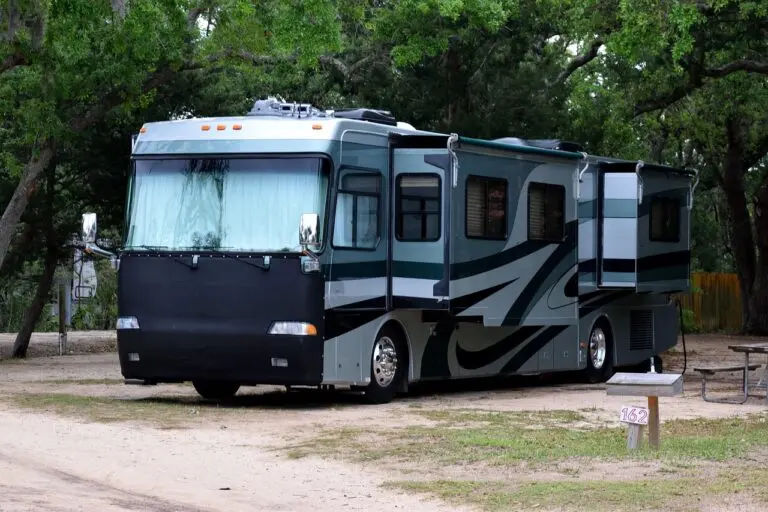
The air governor sits on the engine-driven air compressor or is mounted remotely near it. It has air lines running to the supply tank and to the compressor unloader. You’ll only find one on vehicles with air brakes, such as diesel pusher RVs, trucks and buses. Here’s what it does, how to spot it and how to tell when it’s failing.
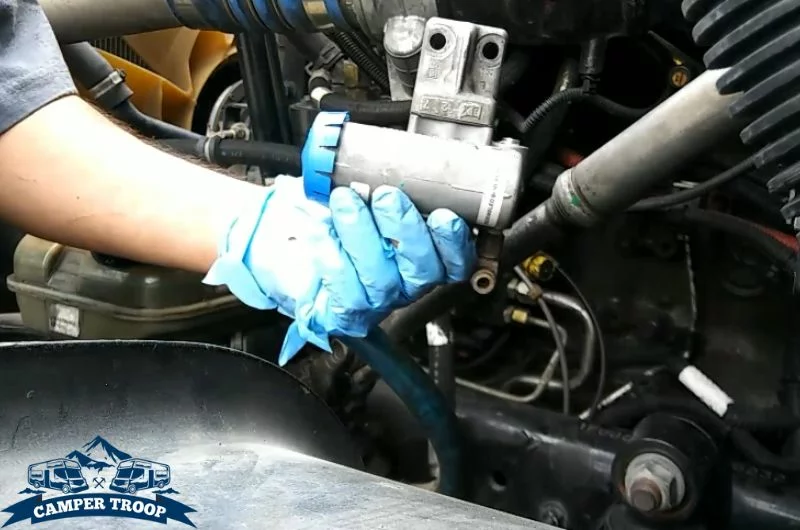
What is an Air Governor and How Does it Work?
An air governor tells the air compressor when to pump and when to stop. It keeps the air brake tanks within a set pressure range. It does not control engine speed or engine temperature.
The governor senses tank pressure. When pressure reaches the cut-out point, about 125 psi on typical systems, it sends air to the compressor unloader and the compressor stops pumping. When pressure drops to the cut-in point, about 100 psi, it lets the compressor pump again, according to the Oregon CDL air brakes manual. These states are called “unloaded” (not pumping) and “loaded” (pumping). Exact values come from your chassis maker’s specs.
Where Is the Air Governor Located?
The governor is mounted on the air compressor or remotely near it. The common Bendix D-2 can be set up either way. It is not on the throttle body or under the intake manifold.
On a diesel pusher, the compressor is on the engine at the rear of the coach. You’ll usually reach the governor through the rear engine access. Look for a small metal valve with air lines going to the supply tank and to the compressor unloader.
Most gas cars and gas Class A or Class C RVs use hydraulic brakes. They have no air compressor, so they have no air governor.
Read Also: Manual Trailer Jack Won’t Go Up or Down: How to Repair It?
What to Look for When Finding an Air Governor?
You don’t need to connect any hose or remove the air filter housing. Use these checks in order.
Start at the Air Compressor
Find the engine-driven air compressor first. The governor is either bolted to it or mounted close by.
Follow the Air Lines
If you don’t see it on the compressor, trace the air lines. One runs from the governor to the supply tank. Another runs to the compressor unloader.
Know What It Looks Like
A D-2 style governor is a small metal valve body with threaded air ports. It has no wires and no outside lever. It works on air pressure alone.
Keep an Eye on Manual
Your chassis manual or air system diagram shows the exact mounting spot. This saves time on coaches where the governor is remotely mounted.
Read Also: How to Reset Power Outlet Without Reset Button?
What Do the Air Governor’s Ports Do?
Common air governors like the Bendix D-2 have three port types, all 1/8-inch NPT, per the Bendix D-2 instructions:
- Reservoir ports (3): Let the governor sense air tank pressure.
- Unloader ports (3): Send air to the compressor unloader to stop pumping, and release it so pumping resumes.
- Exhaust port (1): Vents air. Never plug it.
Unused ports are plugged. The governor does not connect to the engine’s air intake or a mass airflow sensor.
Read Also: How to Replace an RV Shower Pan? [Step By Step Process]
How Do You Test an Air Governor?
This is the same cut-in and cut-out check used in the CDL air brake test. You only need the dash air gauge.
- Park on level ground and chock the wheels.
- Start the engine and run it at fast idle.
- Watch the air gauge. Note the pressure when the compressor stops pumping. This is cut-out, about 125 psi.
- Step on and off the brake pedal to lower tank pressure.
- Note the pressure when the compressor starts pumping again. This is cut-in, about 100 psi.
- Compare both readings to your manufacturer’s specs.
Also check build-up time. Dual air systems should build from 85 to 100 psi within 45 seconds at operating RPM. If air builds too slowly, don’t drive until it’s fixed.
What Are the Signs of a Bad Air Governor?
A failing governor shows up as air pressure problems, not as a poorly running engine. Watch for:
- The compressor never stops pumping.
- Cut-out or cut-in pressure is outside spec.
- The safety valve pops off. It sits in the first tank the compressor fills and usually opens at 150 psi. If it releases air, something is wrong and a mechanic should fix it.
- Air pressure builds slowly.
Can You Adjust or Replace an Air Governor?
The cut-out setting is changed with an adjusting screw under a cover. The gap between cut-in and cut-out is fixed and cannot be adjusted. Because these are your brakes, leave adjustment to a qualified air brake technician working to the manufacturer’s spec.
Bendix says to inspect the D-2 at least every 6 months or 1,500 operating hours, whichever comes first, and to run leakage tests at both cut-in and cut-out (Bendix service data). If it doesn’t work as described or leaks too much, replace it with a new or remanufactured unit, or repair it with genuine parts. Don’t just clean it.
Before any service on air brake parts:
- Park on level ground.
- Chock the wheels.
- Drain the air tanks so no stored pressure is left.
- Shut off the engine.
- Wear eye protection.
If you aren’t trained on air brakes, have a qualified air brake technician replace the governor and re-test the system.
Read Also: Hot and Neutral Reversed But Wired Correctly: How to Fix It?
FAQs.
Here are quick answers to common questions about finding and checking an air governor.
How do I access the air governor?
You don’t need to remove the engine air filter housing. Reach the governor at the air compressor or wherever it is remotely mounted. On a diesel pusher, that usually means the rear engine access. First park on level ground, chock the wheels, drain the air tanks and shut off the engine.
How do I know if my air governor needs to be replaced?
Look for air pressure problems: the compressor won’t stop pumping, cut-out or cut-in pressure is outside spec (about 125/100 psi), the safety valve pops off, or air builds slowly. If the governor doesn’t work as described or leaks too much, replace or repair it. If you’re doubtful, have a qualified air brake technician check it.
Are all air governors the same?
No. Designs and mounting vary by vehicle and maker. The Bendix D-2 is a common type that can mount on the compressor or remotely near it. Use the part and pressure settings your chassis maker specifies.
What does an air governor look like?
A D-2 style governor is a small metal valve body with air ports and no wires or outside lever. Inside are a piston, an exhaust stem, an inlet/exhaust valve and a pressure-setting spring, with an adjusting screw under a cover. It keeps air tank pressure in a set range, about 100 to 125 psi on typical systems.
Final Thoughts
Look for the air governor on or near the air compressor, not near the throttle body. On a diesel pusher, start at the rear engine access and follow the air lines to the supply tank and unloader. If you can’t find it, check your chassis manual.
Check cut-in and cut-out during your regular air brake checks. If pressures are off, the compressor won’t stop, or the safety valve pops, have a qualified air brake technician fix it before you drive.
Read Also: Rhinoflex Vs Revolution: Which One Should You Pick and Why?