Quick answer: Most Northern Lite truck camper problems come from setup and upkeep. The camper is a fiberglass slide-in with no engine or tires. The usual trouble spots are house batteries, 12V wiring, propane appliance igniters, frozen plumbing, aging sealant, and an overloaded truck. Most fixes start with checking batteries, truck payload, tie-downs, and seals.
If you are planning camping trips, the Northern Lite Truck Camper can be your best friend. Its quality interior design and four-season fiberglass build have kept the company in business for over 30 years. Still, Northern Lite owners do run into issues from time to time.
The most common things to watch are the house batteries, the 12V electrical system, and the propane appliances. You also need to watch freeze protection, seals and sealant, and matching the camper’s weight to your truck’s payload rating.
In this article, we cover common Northern Lite truck camper problems, along with their causes, symptoms, and fixes. We also explain truck fit, winter use, warranty, and safety. Keep reading to find out more.
What Is a Northern Lite Truck Camper?
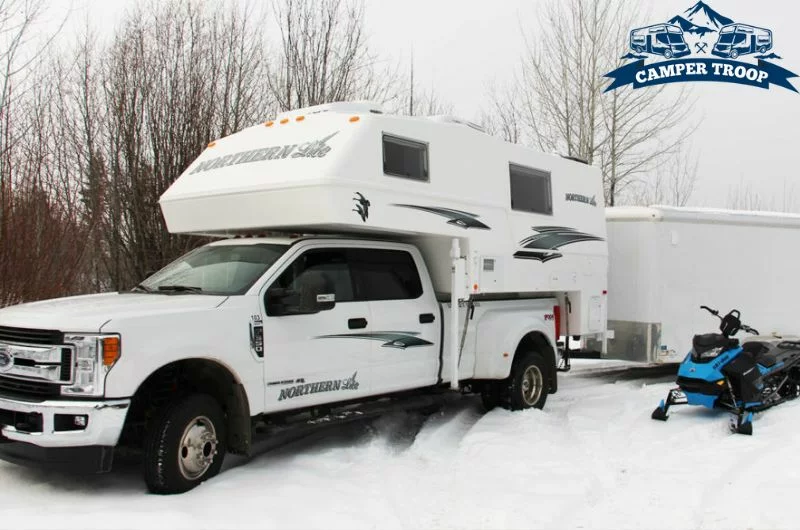
A Northern Lite is a slide-in truck camper with a two-piece molded fiberglass shell, often called a clamshell. It has no engine, no drive system, and no wheels. A pickup truck carries it in the bed.
This matters for troubleshooting. Problems with starting, driving, or tires belong to the truck. Problems with lights, pumps, the furnace, the fridge, or the water heater belong to the camper.
Where Are Northern Lite Truck Campers Made?
Northern Lite is based in Kelowna, British Columbia, Canada. Company brochures cite a 1989 founding. The company says it has built four-season truck campers for over 30 years.
What Models Does Northern Lite Offer?
The 2027 Northern Lite lineup includes three series:
- Limited Edition: The flagship four-season series.
- Sportsman Plus: Marketed by Northern Lite as the lightest true four-season camper.
- The 610: A four-season camper built for domestic half-ton trucks like the F-150, Silverado/Sierra 1500, and RAM 1500.
Floorplans are named by size, such as the 8-11, 8-11ex, 9-6, and 10-2.
How Much Does a Northern Lite Truck Camper Weigh?
It depends on the model and options. Northern Lite weighs each camper at the factory and posts its actual weight inside the unit. Use that posted number, not a brochure estimate. Then add the weight of water, propane, batteries, gear, and passengers.
What Size Truck Do I Need for a Northern Lite Camper?
Your truck’s payload rating is the key limit. Northern Lite tells buyers to check truck payload first. It sets these minimum truck sizes:
| Model | Minimum truck |
|---|---|
| The 610 | Domestic half-ton (F-150, Silverado/Sierra 1500, RAM 1500) |
| 8-11 | 3/4-ton |
| 9-6 | 3/4-ton |
| 10-2 | One-ton |
Follow these steps to match a camper to your truck:
- Find the payload number on your truck’s door-jamb sticker.
- Read the actual camper weight posted inside the camper.
- Add water, propane, batteries, gear, tie-downs, and passengers.
- Make sure the total stays under the truck’s payload rating.
- Check that your truck tires’ load rating can carry the weight.
- Weigh the loaded truck at a public scale to confirm.
Suspension upgrades such as airbags or helper springs can reduce sag and sway. They do not raise the payload rating on the door sticker.
What Are The Common Problems With Northern Lite Truck Campers?
Northern Lite Truck Campers are practical, minimalist choices for life on the road. If you want your camper to keep working well, you should know which problems you might face. Some general issues to watch for are:
- House Battery Issues
- Propane Appliance Ignition Issues
- 12V Electrical Problems
- Truck Tire and Payload Issues
- Inconsistent Water Heating and Frozen Lines
- Leaks, Seals, and Worn Parts
6 Common Problems with Northern Lite Truck Camper & Their Solutions:
Like any truck camper, the Northern Lite has some weak points and limits. Below are the more common issues and the steps you can take to fix them.
Problem 1: Battery Issues
The camper runs its 12V systems from its own house batteries. These are separate from the truck’s starting battery. Northern Lite battery boxes hold two Group 27 batteries in the 8-11ex and 10-2, and two Group 24 batteries in the 9-6.
A dead house battery shuts down the camper’s 12V systems. That includes lights, fans, the water pump, and furnace controls. It does not stop the truck, which uses its own starting battery. You can use a voltmeter to check the charge.
What Causes Battery Issues On The Northern Lite Truck Camper?
Several things can cause camper battery trouble. Some common ones are:
- Low electrolyte levels in flooded lead-acid batteries
- The wrong battery type or size for the battery box or charger
- Corroded or loose terminals and cables
- Overcharging or undercharging, which damages the battery over time
- Small 12V loads that drain the batteries during storage
How Do You Fix Battery Issues On The Northern Lite Truck Camper?
Use these strategies, depending on the situation.
Strategy 1: Check the Voltage
Open the camper’s house-battery box. Use a voltmeter to check each battery’s voltage. Then clean and tighten the terminals, since corrosion and loose cables cause voltage drops. For flooded lead-acid batteries, check the electrolyte level and top up with distilled water if needed.
Strategy 2: Replace the Battery
If a battery will not hold a charge, replace it. Buy the size your battery box fits, which is Group 27 or Group 24 depending on the model. Disconnect the negative cable first and reconnect it last.
Which House Battery Type Should You Choose?
- Flooded deep-cycle: The lowest upfront cost. Needs water checks and venting.
- AGM: Sealed and needs no water. It costs more than flooded batteries.
- Lithium (LiFePO4): Lighter, with more usable capacity. It costs the most upfront. It may need a compatible converter or charger settings.
How Do You Keep the House Batteries Charged?
You have three main options. Shore power charges the batteries through the camper’s converter. The truck’s alternator can charge them while you drive, if the charge line is wired and working. Solar panels add charge when you are parked off-grid.
How Much Does It Cost To Fix Battery Issues On A Northern Lite Truck Camper?
The first strategy costs little beyond a voltmeter, a terminal brush, and distilled water.
The second strategy means buying new batteries. Prices vary by type. Flooded batteries cost the least, AGM costs more, and lithium costs the most. Compare current prices for the Group 27 or Group 24 size your camper uses.
Read Also: 5 Most Common Problems with Cedar Creek Cottages
Problem 2: Ignition Issues
The camper has no engine or vehicle ignition. “Ignition” problems here mean the burner igniters in the propane appliances. These include the furnace, fridge, and water heater. When an igniter fails, the appliance clicks or tries to light but does not stay lit.
What Causes Ignition Issues on Northern Lite Truck Campers?
Common causes of propane appliance ignition trouble include:
- Low house-battery voltage, since igniters and control boards need 12V
- An empty propane tank or a closed tank valve
- Air in the propane lines after a tank swap
- Dirty, worn, or misaligned igniter electrodes
- Blocked burner tubes or vents, such as from insects or debris
How To Fix Ignition Issues On A Northern Lite Truck Camper?
Start with the simple checks, then move to the appliance itself.
Strategy 1: Check Power and Propane
Check the house-battery voltage first. Confirm the propane tank has fuel and the valve is open. Light a stove burner to purge air from the lines. Then follow the troubleshooting steps in the appliance maker’s manual.
Strategy 2: Visit your Dealer or an RV Technician
If the appliance still won’t light, stop and call a qualified RV technician or your dealer. Igniters, gas valves, and control boards involve propane, and mistakes can be dangerous.
How Much Does It Cost To Fix Ignition Issues On A Northern Lite Truck Camper?
The basic checks cost nothing. A propane refill costs your local rate. If you need a technician, expect hourly labor plus parts. Rates vary by shop, so ask for a quote first.
Read Also: 5 Common Issues with Sandstorm Toy Hauler: How to Fix Them?
Problem 3: Electricity Problems
The camper’s 12V sockets, lights, and pumps run from the house-battery bank, not the truck’s starting battery. That bank holds a limited amount of energy.
If you run many devices at once, or run them for long periods without recharging, the batteries can’t keep up. Voltage drops, and devices may shut off or act strangely.
What Causes Electricity Problems On The Northern Lite Truck Camper?
With electrical issues, first find the point that is causing the problem. Only then can you take the right steps to fix it.
- Power use is higher than the batteries can supply.
- Dust, moisture, or fluid causes shorts or corrosion
- Damaged wiring, a loose connection, or a failed circuit
- Low battery charge or a blown fuse
How To Fix Electricity Problems On Northern Lite Truck Campers?
Electrical problems can feel overwhelming. If you try to fix one yourself, stick to the basics.
Strategy 1: Check Battery Charge and Fuses
First, check the house-battery voltage and recharge if it is low. Many 12V problems trace back to the batteries. Next, check the fuses and breakers. If your power use is simply more than the batteries can supply, cut back on loads or add charging, such as solar or a working alternator charge line.
Strategy 2: Replace faulty sockets or ports
If a socket or port is faulty, disconnect power and replace it. You can also hire an RV technician to do the work.
How Much Does It Cost To Fix Electricity Problems On Northern Lite Truck Campers?
Your costs fall into two main categories:
Cost Of Parts:
Fuses, sockets, and USB ports are usually low-cost parts. The price depends on quality. Charging upgrades such as solar cost more.
Labor Cost:
If you hire a professional, expect an hourly labor charge. Rates depend on the shop and where you live.
Read Also: Common Rockwood RV Problems & Solutions
Problem 4: Tire Issues
A slide-in truck camper has no tires or wheels. The truck’s tires carry the whole load. That makes truck tire load ratings and payload a key part of owning a Northern Lite.
An overloaded truck wears its tires faster. It can also handle poorly and brake longer.
What Causes Tire Issues On The Northern Lite Truck Camper?
Common causes of truck tire and handling trouble with a camper on board include:
- Total weight over the truck’s payload rating
- Truck tires with a load rating too low for the camper
- Low tire pressure for the load being carried
- Worn or sagging truck suspension
- Uneven loading inside the camper
How To Fix Tire Issues On A Northern Lite Truck Camper?
- Weigh the loaded truck at a public scale.
- Compare the result to the payload and axle ratings on the door-jamb sticker.
- Set tire pressure for the load, using the tire maker’s guidance.
- If needed, move to tires with a higher load rating.
- If the truck sags or sways, consider suspension upgrades. Remember that they do not raise the payload rating.
- If you are still over the limit, carry less or choose a bigger truck or a lighter camper.
How Much Does It Cost To Fix Tire Issues On A Northern Lite Truck Camper?
Your costs fall into two main categories.
Cost Of Parts:
A scale ticket is low-cost. Tires with a higher load rating and suspension upgrades cost more. The price depends on the brand and your truck.
Labor Cost:
Tire mounting and suspension work are usually done by a tire or truck shop. Labor rates vary by shop, so get a quote first.
Problem 5: Inconsistent Water Heating
RV water heaters run on propane, electricity, or both. If the heater loses its power source, its fuel, or its water flow, hot water becomes spotty.
This is a minor issue in summer. In winter, it can become a big one, because frozen lines can stop water flow completely.
What Causes Inconsistent Water Heating On A Northern Lite Truck Camper?
Several things can cause this problem. Common ones include:
- Frozen pipes or fittings in cold weather
- Low house-battery voltage, an empty propane tank, or no shore power for the electric element
- Loose connectors and wiring
- A failed igniter (propane) or heating element (electric)
How To Fix Water Heating Problems On Northern Lite Truck Campers?
Different causes need different fixes.
Strategy 1: Check the Wire and Connector
Turn off power and propane first. Open the access panel for the water heater and check that all wires and connectors are tight. Then check the right power source for your heater type:
- Propane mode: Check propane supply, 12V voltage, and whether the burner lights.
- Electric mode: Confirm shore power, the breaker, and the heater switch. Never run the electric element with an empty tank.
Strategy 2: Thaw Lines Safely
If the lines are frozen, warm the camper interior slowly with the furnace and open the cabinet doors near the plumbing. Do not use an open flame on pipes. Once water flows, look for cracked fittings before you refill the system. Then reset the heater by turning its power off and back on.
How Much Does It Cost To Fix Inconsistent Water Heating On Northern Lite Truck Campers?
Tightening connections costs nothing. Wires, fittings, and valves are usually low-cost parts. A new igniter, heating element, or control board costs more. A cracked water heater tank from freezing is the most expensive fix, which is why freeze protection matters.
Read Also: Common Arctic Fox Truck Camper Problems & Solutions
Problem 6: Problems with Leaks, Seals, and Worn Parts
Any camper with seams, windows, roof vents, and fixtures can leak when sealant ages or a part wears out. The Northern Lite’s two-piece shell has fewer seams than many stick-built campers. Its joints, windows, and openings still need regular checks.
What Causes Leaks and Worn Parts On The Northern Lite Truck Camper?
Common causes include:
- Sealant that dries, cracks, or pulls away over time
- Road vibration loosening fixtures and hardware
- Worn window, door, or vent seals
How To Fix Leaks and Worn Parts On The Northern Lite Truck Camper?
- Inspect the shell seam, windows, door, roof vents, and any roof-mounted fixtures.
- Look inside for water stains, damp spots, or soft areas near openings.
- Remove cracked or loose sealant and clean the surface.
- Reseal with a sealant that is compatible with fiberglass and the existing material. Ask your dealer or Northern Lite if you are unsure.
- Replace worn seals and tighten loose hardware.
How Much Does It Cost To Fix Leaks and Worn Parts On Northern Lite Truck Campers?
Sealant and small seals are low-cost. Catching a leak early is much cheaper than repairing water damage later. Before you pay for a repair, check whether it is covered by the warranty.
How Do You Prevent Condensation Inside a Fiberglass Camper?
Condensation forms when warm, moist inside air meets a cold surface. Breathing, cooking, and showering all add moisture. In a small fiberglass shell, it can build up fast in cold weather.
- Run the roof vent fan when cooking or showering.
- Crack a window slightly to let moist air escape.
- Use a small dehumidifier or moisture absorber.
- Wipe down windows and cold corners in the morning.
- Keep bedding and cushions dry to prevent mold.
How Should You Mount and Tie Down a Northern Lite?
Correct mounting protects both the camper and its warranty. Northern Lite recommends Torklift tie-downs with Fastgun turnbuckles.
Under the camper, use 1-inch plywood with a 3/8-inch soft rubber mat. Using horse stall mats instead voids the warranty.
- Check turnbuckle tension before each trip and after the first miles.
- Look for loose, bent, or rusted tie-down hardware.
- Make sure the camper sits fully forward and centered in the bed.
How Do You Avoid Jack Problems When Loading and Unloading?
Jacks lift the camper on and off the truck. Most jack trouble comes from uneven lifting or poor footing.
- Load and unload on firm, level ground.
- Raise and lower all jacks evenly, a little at a time.
- Use pads under the jack feet on soft ground.
- Check jack mounting bolts for looseness.
- Never stand or crawl under a raised camper.
Can You Use a Northern Lite Camper in Winter?
Yes. Northern Lite builds four-season campers. It says they are tested to -20°C (-4°F) with water on board. They can be used in colder temperatures without water.
For freeze protection:
- Below that tested temperature, travel without water in the system.
- Keep the furnace running and the house batteries charged.
- Before storage, drain the tanks, water heater, and lines, and winterize per your owner’s manual.
- Bypass the water heater when adding RV antifreeze, if your system has a bypass.
What Is the Warranty on a Northern Lite Truck Camper?
Every Northern Lite comes with a 6-year structural warranty. Improper mounting can void it. For example, using horse stall mats under the camper instead of 1-inch plywood with a 3/8-inch soft rubber mat voids the warranty.
Appliances such as the furnace, fridge, and water heater are often covered by their own makers. For warranty help, contact your Northern Lite dealer or the manufacturer through northern-lite.com. Keep your purchase records and photos of any damage.
Is Northern Lite Better Than Lance or Arctic Fox?
It depends on your truck and how you camp. Northern Lite stands out for its two-piece molded fiberglass shell, its four-season focus, and its factory-weighed campers. Lance and Arctic Fox use different construction methods and offer different floorplans.
Use these decision rules when you compare brands:
- Payload first: Pick the camper whose loaded weight fits your truck’s payload rating.
- Winter use: If you camp in deep cold, compare each brand’s stated cold-weather ratings.
- Construction: Ask how each shell is built and where its seams are.
- Warranty and service: Compare the warranty terms and how close the nearest dealer is.
For known issues with one rival, see our guide to Arctic Fox truck camper problems.
Are Northern Lite Truck Campers Worth the Money?
They can be, if you want a four-season fiberglass camper and your truck has enough payload. The 6-year structural warranty and posted factory weight are real advantages. They make less sense if your truck is under the minimum size for the model you want.
What Safety Warnings Apply to DIY Repairs?
- Propane: If you smell gas, shut off the tank, open windows and doors, and avoid flames or switches. Leave gas valve and line repairs to a qualified technician.
- Detectors: Test the LP and carbon monoxide detectors often. Never disable them.
- Batteries: Wear eye protection and gloves. Flooded batteries vent hydrogen gas, so keep sparks away. Do not short the terminals with tools.
- Electrical: Disconnect shore power and the batteries before working on wiring. Hire a pro for 120V work.
- Jacks: Never work under a camper that is held up only by its jacks.
Conclusion
Some people are skeptical about living in an RV while on the road. Those who have embraced it know how practical the idea is.
You don’t have to worry about finding a place for the night, and you can save money you would otherwise spend on hotels.
Like any camper, a Northern Lite has issues to manage. Most of them are simple: keep the house batteries healthy, protect the plumbing from freezing, check the seals, mount it correctly, and stay within your truck’s payload. Do that, and your trips will go much more smoothly.
Read Also: Common Tiffin Allegro Breeze Problems & Solutions
Frequently Asked Questions
Do Northern Lite campers leak?
They can, like any camper, when sealant ages or seals wear out. The two-piece fiberglass shell has fewer seams than many stick-built campers. The shell seam, windows, door, and roof vents still need regular checks. Look for stains or soft spots, and reseal with a fiberglass-compatible sealant.
Do airbags or helper springs increase truck payload for a Northern Lite?
No. Airbags or helper springs can reduce sag and sway. They do not raise the payload rating on your truck’s door-jamb sticker. If the loaded truck is over that rating, carry less weight, choose a bigger truck, or pick a lighter camper.
What size house batteries does a Northern Lite camper use?
The battery box holds two Group 27 batteries in the 8-11ex and 10-2 models. The 9-6 holds two Group 24 batteries. These house batteries run the camper’s 12V systems and are separate from the truck’s starting battery. Buy the size your battery box fits when you replace them.
Will a dead camper battery stop my truck from starting?
No. The camper’s house batteries are separate from the truck’s starting battery. A dead house battery shuts down the camper’s 12V systems, such as lights, fans, the water pump, and furnace controls. The truck still starts. Check the house-battery voltage with a voltmeter, then recharge or replace the battery.
Why won’t my Northern Lite furnace or water heater light?
The most common causes are low house-battery voltage, an empty or closed propane tank, or air in the lines after a tank swap. Check the voltage, confirm you have propane, and light a stove burner to purge air. If the appliance still won’t light, call a qualified RV technician.
How do you thaw frozen water lines in a Northern Lite?
Warm the camper slowly with the furnace and open the cabinet doors near the plumbing. Never use an open flame on pipes. Once water flows, check for cracked fittings before refilling. A water heater tank cracked by freezing is the most expensive fix, so drain and winterize before storage.