Quick answer: Reported Sandstorm toy hauler problems vary by model year. NHTSA records include axle trouble, frame or body cracks, slide-out seals, and a 2023-2024 recall for an overheating 50-amp wire. Owners should also check floors, windows, doors, generators, water heaters, and toilets, and leave propane, structural, and refrigerant repairs to technicians.
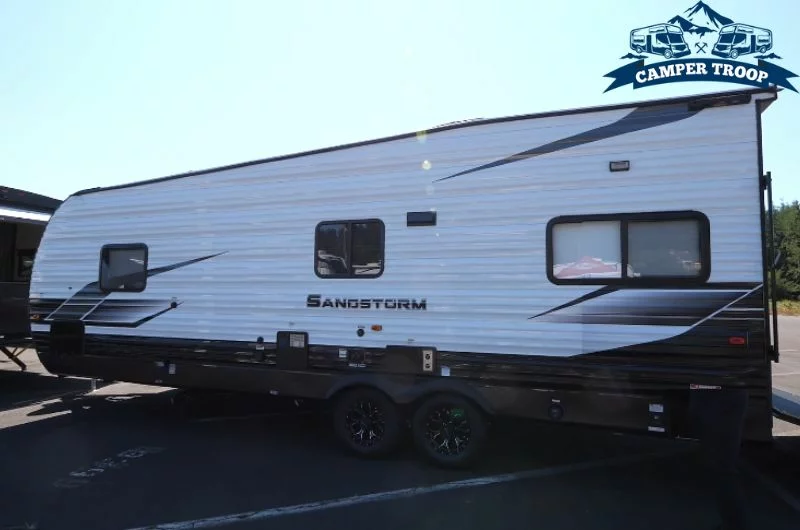
The Sandstorm is a toy hauler built by Forest River. Its main draw is extensive cargo capacity. But like any RV, it can develop problems and needs regular checks.
This guide explains what to check, what you can safely handle yourself, and when to call a qualified RV technician.
What Problems Are Documented on the Sandstorm Toy Hauler?
The clearest documented problem is a safety recall on certain 2023-2024 trailers. Beyond that, NHTSA complaint records mention an axle problem, frame or body cracks, a slide-out seal, heater debris, and a melting backsplash.
Treat these complaints as individual owner reports. They do not prove a defect, and they do not show how often a problem happens. Issues can also differ by model year and floor plan.
Is Your Sandstorm Affected by the 50-Amp Wire Recall?
It may be if you own a 2023 or 2024 model. NHTSA recall 23V739000 covers certain Sandstorm trailers with an undersized wire between the 50-amp inlet and the transfer switch. The wire can overheat and melt, which increases the risk of fire.
Dealers replace it with a heavier-gauge wire at no cost. If your trailer is included, schedule the repair and ask the dealer whether you should use 50-amp power before it is done. If you smell burning or see melted wiring, stop using shore power and have the trailer inspected.
5 Sandstorm Toy Hauler Issues to Check and How to Fix Them:
Before you start your journey with the Sandstorm Toy Hauler, it’s necessary to get familiar with some of the probable problems with the vehicle.
These checks are general RV checks, so they can apply to any model year or floor plan. Your trailer’s manual comes first if it gives different instructions.
1. Is the Floor Soft or Damaged?
A soft spot, visible damage, or movement near a wall or corner calls for a professional structural inspection. Floor thickness alone is not a reason to replace a floor.
Walk the garage and living areas slowly. Look for soft areas, cracks, stains, and gaps where the floor meets the wall. Stop loading the area until someone qualified has checked it.
Load limits matter just as much in a toy hauler. Specs change by year and floor plan, so use the weight labels and manual for your exact trailer, and stay within the stated limits:
- GVWR: the most the trailer may weigh when fully loaded.
- Cargo carrying capacity: how much weight you can add for gear, water, and toys.
- Garage floor rating: if your manual lists one, follow it. If it doesn’t, ask Forest River or your dealer before loading a heavy machine.
2. Are the Windows and Door Loose?
Here comes a matter of security. Even if everything inside of your RV is good enough, loose windows and doors can give you a hard time during an outdoor activity at unknown spots.
Besides that, if the door or windows appear too loose, you’ll face some complications during harsh weather, especially in the storms.
This is often a basic DIY job. A wrench, a drill, and a screwdriver can be enough to tighten loose hardware. Tighten gently, because too much force can strip screws or distort a frame. If the part is still loose, or you see water stains or failed seals, have a technician inspect it.
Read Also: 5 Most Common Problems with Arctic Fox Fifth Wheel
3. Why Would the Generator Overheat?
Poor airflow can make an RV generator overheat quickly. One Generac RV generator manual links poor airflow to serious operating problems, fire, and injury.
Do not add vents or ducts as a DIY fix. Follow the airflow and compartment requirements in the manual for your installed generator, and have a qualified technician review any change.
Carbon monoxide is the biggest danger. The same manual warns that generator cooling air must never be used for heating or allowed into the vehicle interior. It contains deadly carbon monoxide and other poisonous, flammable, or explosive gases.
Run through these checks before using the generator:
- Test the CO detector and replace it if it fails or has expired.
- Make sure the exhaust is clear of snow, walls, tall grass, and other objects.
- Keep the compartment free of stored items and debris.
- Check the oil level and air filter.
- Reduce the electrical load if you are running several large appliances.
- Follow the service intervals in the generator’s manual.
If the CO alarm sounds, shut off the generator, get everyone outside into fresh air, and call 911 if anyone feels ill. Do not restart the generator until the cause is found.
4. Why Is the Water Heater Not Working Properly?
An RV water heater that won’t heat, or takes much longer than usual, usually needs a step-by-step check of its fuel, power, and water path. Start with the simple items:
- Gas supply: confirm the propane cylinder has fuel and its valve is open.
- Electric mode: confirm the switch is on and the breaker has not tripped.
- Bypass valve: make sure it is not still set for winter storage.
- Igniter: note whether the burner tries to light or a fault light comes on.
- Heating element: suspect it if gas mode works but electric mode does not.
- Anode rod: if your model has one, inspect it as the manual directs.
If those checks don’t solve it, take the trailer to a qualified RV technician. Any repair on the gas side should be followed by a leak check.
What are the signs an RV water heater needs to be replaced? Warning signs include a leaking tank, heavy corrosion, or repeat failures after parts have been replaced. Ask the technician to compare the repair quote with the cost of a replacement.
5. Clogged or Jammed Toilet
Just like other traditional RVs, this can happen to your Sandstorm Toy Hauler. Insufficient water usage to break solid things down may cause clogged toilets. Besides, using excessively thick toilet paper can lead to the same issue.
Follow these steps to clear a basic clog:
- Stop flushing so the bowl does not overflow.
- Put on gloves and eye protection.
- Use a toilet tank wand to break up the clog, following the product instructions.
- Dump the tank at an approved site if it has enough liquid to drain.
- Flush with plenty of water and check that it drains normally.
- Store the hose used for this job away from your drinking water hose.
The problem can also be somewhere else in the system. If the clog stays, have a seasoned plumber or RV technician diagnose it. Avoid rigid tools that can damage the toilet seal or tank.
To help prevent clogs, use toilet paper labeled RV-safe or septic-safe, and use plenty of water with each flush. After dumping, rinse the tank with the built-in flush system if your trailer has one. Stay nearby while it runs so the tank does not overfill.
Read Also: 7 Common Wolfpack Toy Hauler Problems with Quick Solutions!
How Do You Test for Propane Leaks in an RV?
A proper propane leak test uses a manometer and a pressure-drop test, so it is best left to a trained technician. NRVTA’s technician procedure uses a three-minute pressure-drop test. It then uses a non-chlorinated, non-ammonia leak detector on every connection touched during repairs.
The system should be pressure-tested before and after propane work. A tutorial or a new connector does not replace those tests.
Where Should You Check for Propane Leaks on an RV?
Inspect the cylinder connections, pigtail hoses, regulator, and any fitting that was recently disturbed. One RV retailer notes that exposed pigtail hoses can wear or crack from UV exposure, freezing weather, and road debris.
What Should You Do If You Smell Propane?
- Put out any flames and do not operate electrical switches.
- Close the propane cylinder valves if you can do so safely.
- Get everyone out and away from the trailer.
- Call 911 or your propane supplier from a safe distance.
- Keep the system off until a qualified technician clears it.
How Do You Know If an RV Propane Regulator Is Bad?
You can’t confirm a bad regulator by looking at it. Weak flames, or appliances that won’t stay lit, can point to a gas supply problem. Have a technician measure the system pressure before you replace parts.
Why Is My RV AC Not Cooling or Blowing Cold Air?
Common causes of an RV AC that runs but does not cool include a dirty air filter, dirty condenser or evaporator coils, inadequate power, a failed capacitor, and low refrigerant from a leak.
Clean the air filter first, then confirm the trailer has adequate power. Capacitor and coil work should go to a qualified technician if you aren’t trained for it. Refrigerant and compressor repairs need a certified technician.
Why Won’t My RV Air Conditioner Turn On?
Start with power and controls. Confirm the trailer is connected to power or the generator is running. Check the breakers, then confirm the thermostat is set to cool and below the room temperature. If it still won’t start, call a technician rather than opening the unit.
How Do You Tell a Black Tank Leak From a Bad Sensor?
A leak leaves physical signs, such as odor, moisture, or stains. A sensor problem shows the wrong tank level with no sign of liquid outside the tank.
- Look for wet spots or stains around the toilet, the dump valve, and under the trailer.
- Dump and flush the tank, then check the level reading again.
- If the reading stays high with no leak signs, residue on the tank walls or a faulty sensor may be the cause.
- If you find signs of a leak, stop using the tank and book an inspection.
Tank repair or replacement is usually a job for an RV shop, because the tank may be hard to reach and the work involves sewage.
Which Sandstorm Repairs Are Safe to DIY?
Simple cleaning, tightening, and inspection are usually fine for owners. Anything involving propane, refrigerant, high-voltage wiring, or the structure belongs with a qualified technician.
| Job | Who should do it |
|---|---|
| Tighten loose window or door hardware | Owner |
| Clean or replace the AC air filter | Owner |
| Check generator oil and air filter | Owner, following the manual |
| Clear a basic toilet clog | Owner |
| Propane leak testing and hose or regulator work | Qualified technician |
| Refrigerant and compressor repairs | Certified technician |
| Generator compartment or ventilation changes | Qualified technician |
| Soft floor or frame and body cracks | Professional structural inspection |
| Black tank repair or replacement | RV shop |
| 50-amp wire recall | Forest River dealer |
How Much Does It Cost to Replace an RV Water Heater?
The only reliable price is a current written quote for your trailer. Cost depends on the heater model, the labor involved, and whether nearby plumbing or gas lines need work. Get quotes from more than one RV shop if you can.
The same advice applies to other Sandstorm repairs. Here is what tends to change the quote:
| Repair | What affects the quote |
|---|---|
| Floor | Size of the damaged area, water damage, and structural repairs |
| Windows and doors | Whether it needs adjustment, new seals, or a new unit |
| Generator | Diagnosis time, parts, and generator model |
| AC unit | Cleaning, electrical parts, refrigerant leak repair, or full replacement |
| Black tank | Access to the tank, leak location, and tank availability |
How Do You Check Recalls, Warranty Coverage, and File a Complaint?
- Find your VIN on the trailer’s label or registration.
- Search for recalls on NHTSA’s website using that VIN.
- Read your warranty documents before paying for a repair. Coverage can depend on the trailer’s age and whether you are the first owner.
- Contact a Forest River dealer and keep written records of the problem and each repair visit.
- File a safety complaint with NHTSA if you believe the problem is a safety defect.
What Should You Inspect on a Used Sandstorm Toy Hauler?
Start with the VIN and recall history, then have the structure and safety systems checked before you pay. An independent RV inspector can help if you aren’t comfortable judging these items yourself.
- Proof that any open recall, including 23V739000 on affected trailers, was completed.
- Axles, frame, and body for damage or cracks.
- Slide-out seals, roof seals, and signs of water damage.
- Garage floor condition and weight labels.
- Generator service records and a working CO detector.
- Propane hoses and a recent leak test.
- Water heater, AC, toilet, and tank operation.
Before buying, ask a Forest River dealer whether your model is still in production and whether the parts you may need are available.
Are These Problems Unusual for a Toy Hauler?
There is no reliable data here to show that the Sandstorm has more or fewer problems than competing toy haulers. Complaint counts are not failure rates. Toilets, water heaters, generators, and AC units also need care on any RV that has them, so judge each trailer by its condition, records, and recall status.
How to Prevent Sandstorm Toy Hauler Problems?
There is a common proverb, “prevention is better than cure.” Regular checks can help you catch small problems before they become expensive ones.
So let’s check them out:
- Try to keep your Sandstorm Toy Hauler as light as possible. Before incorporating anything heavier, make sure to get familiar with your RV’s max load capacity.
- If possible, keep other sources of heat away from your Sandstorm’s generator, and keep its compartment clear so air can move as the manual requires.
- Keep the thermostat, propane levels, and heating elements under your observation so that none of the crucial parts ends up with serious issues.
- Children often throw solid substances inside the toilet. Try to be aware of it to prevent clogging or jamming.
Read Also: 5 Most Common Problems with Cedar Creek Cottages
Frequently Asked Questions
Here are short answers to a few more questions about Sandstorm Toy Hauler issues:
Can a black tank leak cause issues with the Sandstorm Toy Hauler?
Yes. A black tank leak on any RV is a sanitation problem and can damage nearby parts of the trailer. Stop using the tank, then have the tank, fittings, and valve inspected. The right repair depends on where the leak is.
Why is the propane hose of my Sandstorm Toy Hauler causing issues?
Exposed propane pigtail hoses can wear or crack from UV exposure, freezing weather, and road debris. If you smell gas or see damage, close the cylinder valves and stop using the system. A qualified technician should replace the part, pressure-test the system before and after the work, and leak-check every connection touched.
What are the common symptoms of Sandstorm Toy Hauler AC issues?
The usual symptom is an AC that runs but does not cool. Common causes include a dirty air filter, dirty condenser or evaporator coils, inadequate power, a failed capacitor, and low refrigerant from a leak.
Clean the filter and confirm power first. Refrigerant and compressor repairs need a certified technician.
What if the Sandstorm Toy Hauler’s battery causes problems?
Over time, an RV battery tends to get weaker and can die. Improper charging and inconsistent power supply can also cause battery issues.
If you have little mechanical knowledge, call a qualified technician to diagnose the issue first.
Read Also: Common Rockwood RV Problems & Solutions
Conclusion
Every RV model has its own limitations, pros, and cons. The Sandstorm Toy Hauler is no exception.
Start with the most urgent item: check your VIN for open recalls.
Loose hardware, dirty filters, and basic clogs are often manageable at home. Propane, refrigerant, structural damage, and generator ventilation changes should go to a qualified technician.
Rely on the manuals and weight labels for your exact trailer to avoid potential damage and safety issues. Stay safe and happy travels!
Read Also: Common Northern Lite Truck Camper Problems & Solutions