Quick answer: Four problems Rockwood RV owners often report are AC units that stop cooling, 12V electrical faults, roof leaks and doors that don’t close or seal right. Most start small: a tripped breaker, a loose battery wire, cracked roof sealant or an unlevel camper. Catch them early, and most are cheap to fix.
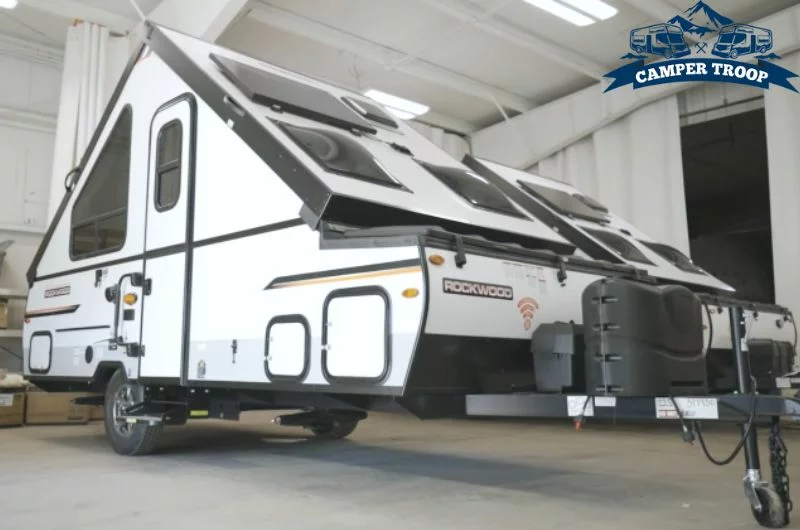
Rockwood is a Forest River brand known mainly for lightweight towables: travel trailers, fifth wheels and pop-up campers. It is a practical, mid-market brand, not a luxury one. Like other RVs, a Rockwood lets you enjoy nature up close while you explore open roads, rivers and new landscapes on your own schedule.
Unfortunately, a few common problems with Rockwood RVs could ruin your outdoor trip. They include door problems, leaky roofs, electrical issues and faulty AC.
Below, we cover the causes, symptoms, fixes and typical costs for each problem. We also cover who makes Rockwood, other systems to watch, recalls and warranty, and what to check before you buy a used Rockwood.
Who Makes Rockwood RVs?
Forest River makes Rockwood RVs. Rockwood was founded in 1972 in Millersburg, Indiana, has built pop-up campers since 1975, and has been owned by Forest River since 1996. Rockwood RVs are still made in Millersburg, according to Camping World’s Rockwood brand guide.
Current Rockwood lines include:
- Fifth wheels: Signature
- Travel trailers: Signature, Ultra Lite, Mini Lite, Roo and Geo Pro
- Hard-side pop-ups: Hard Side Series and Extreme Sports Package
- Tent campers: Off the Ground, Freedom, Limited and High Wall
This matters for troubleshooting. A canvas tent camper, a hybrid like the Roo and a full fifth wheel have very different roofs, doors and systems. Always check the owner’s manual for your exact model and year.
Are Rockwood RVs Good Quality?
Rockwood RVs are popular, mass-produced lightweight towables. Like most RVs at their price level, build quality can vary from unit to unit. There is no single reliability score that settles the question. Your best guide is the condition of the specific camper in front of you.
Keep these trade-offs in mind:
- Light weight helps towing, but lighter builds need careful upkeep, especially roof seals and doors.
- A large dealer network makes parts and service easier to find than with small brands.
- Most of the problems in this guide are not unique to Rockwood. Owners of many travel trailer brands deal with the same AC, electrical, roof and door issues.
What Are the Common Problems With Rockwood RV?
The designs, sizes and features of Rockwood RVs vary a lot, so problems vary by model too. Still, owners often bring up the same four issues:
- Faulty AC
- Electrical Problems
- Leaky Roof
- Door Issue
How Do You Troubleshoot and Fix Rockwood RV Problems?
When a problem appears, start by finding the cause. One symptom can have several causes, so the fix may change. Check the simple, cheap causes first before you buy parts.
1. Rockwood RV’s AC issue
Let’s start with the AC, a problem RV owners run into often. A bad AC won’t stop you from traveling, but it makes camping in hot weather much less comfortable.
The most common signs are that the AC is not working right or has stopped completely. Sometimes it runs but does not cool well.
Another sign is that the inside temperature keeps climbing during the day even though the thermostat is set lower. If the AC runs nonstop but can’t hold the set temperature, something is limiting its cooling.
What Causes AC Problem On Rockwood RV?
There are many possible causes. Some need only minor adjustments. Others need parts replaced.
For example, the AC may struggle if air is getting pulled through gaps around the filter or ceiling assembly, or if spray-in foam is blocking the airflow path.
Carefully trimming away the blocking foam can fix that. Other causes of AC trouble include:
- A leak around the AC unit or roof opening
- A hole in the filter, or a dirty filter
- The baffle is not set properly
- The condenser is blocked or broken
- An electrical issue, such as a tripped breaker, bad capacitor or faulty control board
- A bad compressor or faulty cooling fan
Why Is My Rockwood Camper AC Not Cooling? Step-by-Step Checks
Work through these checks in order. They go from easiest to hardest.
- Check power. Make sure you are on shore power or a generator big enough to run the AC. Check the AC breaker in the power center and reset it once if it tripped. If it trips again, stop and call a technician.
- Check the thermostat. Confirm it is set to cool, the set point is below room temperature, and the fan setting is right. If the display is blank, check the 12V fuse that feeds it.
- Clean or replace the filter. Remove the ceiling shroud filter. Wash or replace it if it is dirty or has holes.
- Check airflow inside. Look for foam, insulation or a loose baffle blocking the return or supply air.
- Inspect the coils on the roof. With power off, remove the rooftop shroud. Clear leaves and debris from the condenser coil and gently clean dust from the coils.
- Listen to the unit. If the fan runs but the compressor won’t start, or the unit hums and clicks off, a bad capacitor is a common suspect. Capacitors can hold a dangerous charge even with power off. Have a qualified technician test or replace it unless you are trained to do it.
- Call a pro for refrigerant or compressor problems. Rooftop RV AC units are sealed systems. Leaks and compressor failures need a technician.
How To Fix The AC Problem On A Rockwood RV?
As the previous section shows, different causes need different fixes. Here are three strategies that address the airflow and leak problems.
Strategy 1:
If spray foam is blocking the air path and gaps around the filter are pulling in air from the wrong place, use a knife to carefully cut away the excess foam. Then make sure the filter seats fully with no holes.
Strategy 2:
If there is a leak between the top of the trailer and the inside ceiling, Rockwood AC issues are likely to appear. Repairing the leak, often by tightening or resealing the AC gasket area, may solve the problem.
Strategy 3:
If the baffle between the intake and output is not in the right position, cool air flows straight back into the intake side. Setting the baffle properly can fix the issue.
How Much Does It Cost To Fix AC Problems On A Rockwood RV?
The cost depends on what failed. A clogged filter or blocked airflow may cost little or nothing to fix yourself. Part replacements cost more. Here are typical rooftop RV AC repair costs from Micro-Air:
| Repair | Typical cost |
|---|---|
| Capacitor | $150–$400 |
| Thermostat | $150–$350 |
| Fan motor | $200–$600 |
| Control board | $200–$500 |
| Refrigerant leak | $300–$700+ |
| Compressor failure | $600–$1,500+ |
| Full rooftop unit replacement (installed) | $800–$2,500+ |
A mobile technician’s service call adds $75–$250. If the compressor fails, replacing the whole unit often makes more sense than repairing it.
Read Also: 7 Common Wolfpack Toy Hauler Problems with Quick Solutions!
2. Rockwood Electrical Problems
An RV is your home on wheels. Just like at home, electrical issues in an RV are fairly common. Take them seriously and act as soon as you can.
You can fix some issues yourself, such as changing a fuse or resetting a switch on the power converter. Others are bigger, like when the AC or refrigerator stops working.
If you understand the basics of how your RV’s electrical system works, most problems won’t be a big headache. Here are some basic guidelines for Rockwood electrical problems.
Shore Power vs. 12V: Know Which System You Are Working On
Your Rockwood has two electrical systems:
- 120V AC (shore power or generator): runs the air conditioner, outlets, microwave and often the converter. This voltage can kill. Unplug from shore power and turn off the generator before you open any 120V panel or outlet.
- 12V DC (battery): runs lights, water pump, fans, furnace controls and slide motors. It is lower risk to touch, but a short can still cause burns or start a fire.
If outlets in the bathroom, kitchen or outside are dead, check for a tripped GFCI outlet and press its reset button. Call a qualified RV electrician if you smell burning, see melted or scorched wires, feel a tingle from the RV body, or a breaker keeps tripping.
What Causes Electrical Problems On Rockwood RV?
There can be many reasons, but the most obvious cause of a 12V problem is a bad battery. The house battery powers the lights and many other 12V devices. Common simple causes include:
- Loose wire
- Dead battery
- Corroded or broken battery terminal
How To Fix An Electrical Problem On A Rockwood RV?
Since each problem is different, the fix will not always be the same. Below are a few strategies to help you resolve the issue.
Strategy 1:
Start by checking the battery terminals for corrosion. Also check that the cables are not hooked up backward. The red cable goes to the positive (+) post, and the black cable goes to the negative (−) post. To disconnect, remove the negative cable first, then the positive. To reconnect, attach the positive cable first and the negative cable last. Clean any corrosion, tighten the terminals, and use liquid tape to protect exposed connections.
Strategy 2:
Disconnect the battery when you store the RV, as Roamly’s storage guide recommends. Small 12V loads like detectors and control boards can drain a connected battery over weeks.
Many RVs have a battery disconnect switch, which makes this quick. Where the switch sits, and whether your unit has one, depends on the model and year. Check your owner’s manual or ask your dealer. If there is no switch, disconnect the cables at the battery, negative first.
Strategy 3:
Make sure no circuit is drawing too much power and the battery voltage is not too low. Use a multimeter to check battery voltage. Inspect fuses and breakers, and replace a blown fuse only with one of the same rating.
How Much Does It Cost To Fix Electrical Issues On A Rockwood RV?
It is hard to estimate the cost of an electrical repair until you know the cause. A blown fuse or loose terminal costs very little. A failed battery, converter or control board costs more. Find the cause first, then price the repair.
Read Also: 5 Most Common Problems with Cedar Creek Cottages
3. Rockwood Roof Leaks, Including Around Roof Cable Entries
Roof leaks are one of the most damaging problems an RV owner can face. Deal with them fast, before water rots the wood, ruins insulation or causes mold.
Leaks often start where something passes through the roof, such as antenna, Wi-Fi booster or solar cables, vents and the AC. Water that gets in there can drip out far from the entry point, for example above a control panel or around the microwave. Waiting to fix it will damage other parts of the RV.
What Causes Leak Problems On Rockwood RV?
There can be many causes of roof leaks, but cracked sealant is the most likely one. Other causes include:
- Leaking caulk
- Physical damage that creates a hole
- Vents, skylights or cable entries that pierce the roof
- Aging
How To Fix Roof Leaking On Rockwood RV?
Follow these steps to stop a Rockwood roof leak:
- Get safe access. Use a sturdy ladder. Check your manual to see if the roof can bear weight before you walk on it.
- Inspect every opening. Look closely around the antenna, cable entry points, vents, the AC, skylights and the rubber seals along the edges.
- Look for cracks, gaps and lifted sealant. Also check the roof membrane itself for tears or soft spots.
- Clean and dry the area. Remove loose, cracked sealant and dirt so new sealant can bond.
- Use a sealant that matches your roof. RV roofs may be EPDM rubber, TPO, fiberglass or aluminum. A product made for one material may not work on another, Camping World notes. On flat horizontal seams, a self-leveling lap sealant labeled for your roof type is a common choice.
- Check inside afterward. Watch the ceiling after the next rain. Soft or stained ceiling panels can mean hidden damage that needs a pro.
Tent and hybrid campers like the Roo also have canvas and bunk-end seals. Check those for tears and gaps, too.
How Much Does It Cost To Fix The Leak Issues On A Rockwood RV?
Costs range widely. Camping World’s roof repair cost guide gives these typical ranges:
| Roof repair | Typical cost |
|---|---|
| Spot sealant repair | $150–$700 |
| Full reseal or roof coating | $400–$1,500+ |
| Leak repair, including structural damage | $200–$2,000+ |
A full roof membrane replacement usually costs thousands of dollars, not around $1,000. Only an inspection gives an accurate price. If you catch a small leak early and seal it yourself, you may only pay for the sealant.
Read Also: 5 Common Issues with Sandstorm Toy Hauler: How to Fix Them?
4. Rockwood RV Door Issue
Door issues include a door that does not sit or latch correctly. Without a working door, the RV is never secure, and you may not be able to leave it unattended. Fix this quickly.
What Causes the Door Issue?
One common cause is loose white plastic clamps, also called tabs. Another is a camper that is not level side to side, which can throw the door out of line with its frame.
How to Fix the Door Issue?
To fix the issue, the camper needs to be very level. If it is not level side to side, the roof may lean slightly and put pressure on the rivets. On pop-ups, the roof height must also be even all the way around. Once the camper is level, tighten or replace loose clamps and check that the door closes and latches smoothly.
How Much Does it Cost to Fix the Door Issue?
If you have to replace the door, check the latest price of the camper door on Amazon. A fold-down turn knob or new clamps will not cost much. A mechanic’s labor cost varies by shop and location.
Read Also: Common Northern Lite Truck Camper Problems & Solutions
What Other Rockwood Systems Should You Watch?
The four problems above get the most attention, but these systems can also fail on any travel trailer or fifth wheel:
- Slide-outs: Watch for slides that move unevenly, stall or let water in. Keep the seals clean and the slide path clear. Check that the battery is fully charged, since weak 12V power can make slide motors struggle.
- Plumbing: Look under sinks and around the toilet and water pump for drips. Winterize before freezing weather to avoid cracked lines and fittings.
- Water heater: If you get no hot water, check the bypass valves, the power or gas switch, and the breaker or fuse. Gas burner problems belong with a technician.
- Furnace: A furnace that runs but won’t light often points to low battery voltage or a propane supply issue. Clear any blocked outside vents. Have a pro handle burner or gas valve repairs.
- Frame, axles and tires: Look for uneven tire wear, which can mean an axle or alignment problem. Check tire pressure before every trip and inspect the frame for rust or cracks.
How Do You Check for Rockwood Recalls and Use the Forest River Warranty?
Check for recalls by entering your RV’s VIN in the recall lookup tool on NHTSA.gov. Recalls depend on model and year, so check your exact unit, not just the brand. Recall repairs are done at no cost to the owner.
Warranty coverage for Rockwood RVs comes from Forest River. What is covered, and for how long, depends on your model, year and warranty documents. Many issues in this guide, such as roof sealant upkeep, are often treated as owner maintenance rather than defects. Read your warranty booklet before you assume a repair is covered.
To file a claim:
- Find your VIN, purchase date and warranty paperwork.
- Take clear photos and notes of the problem, with dates.
- Contact your selling dealer or an authorized Forest River dealer first. If you need more help, contact Forest River customer service.
- Get approval before paying for repairs you expect to be covered, and keep all receipts and service records.
What Preventive Maintenance Stops Most Rockwood Problems?
Regular checks catch small problems before they become expensive. Use this checklist:
- Roof: Inspect seams, vents, the AC and cable entries at the start and end of each season and after any branch strike or hailstorm.
- AC: Clean the filter often during cooling season. Clear debris from the rooftop coils before summer.
- Battery: Keep terminals clean and tight. Check voltage with a multimeter. Disconnect or switch off the battery in storage.
- Electrical: Test GFCI outlets and smoke, CO and propane detectors.
- Doors and slides: Level the camper at every stop. Clean and treat slide seals.
- Tires and running gear: Check pressure before each trip. Look for uneven wear and frame rust.
- Plumbing: Look for drips. Winterize before freezing temperatures.
Is a Rockwood RV Still Worth Buying?
A Rockwood can be a good choice if you want a lightweight towable from a large manufacturer with wide dealer support. The problems in this guide are manageable for owners who keep up with maintenance. If you don’t want to inspect a roof or check battery terminals, budget for regular dealer service.
Before you buy a used Rockwood, inspect:
- Roof and ceiling: cracked sealant, soft spots, stains or sagging ceiling panels
- Floors and walls: soft floor near doors and slides, or wall bulges that suggest water damage
- AC: run it on shore power and confirm it blows cold air
- Electrical: test lights, outlets, GFCIs and the converter; check the battery’s age and condition
- Doors and slides: open and close everything; watch for binding or gaps
- Water heater, furnace and plumbing: run each one and look for leaks
- Tires, axles and frame: tire age and wear, rust and cracks
- Paperwork: service records and an NHTSA recall check by VIN
If you are not confident checking these yourself, hire an independent RV inspector before you buy.
Conclusion
Like any other RV, a Rockwood will run into issues at some point. When they show up in the middle of a trip, it is an unpleasant experience.
You can save yourself trouble by knowing the common problems and doing preventive maintenance. Some problems, like refrigerant leaks, gas appliance repairs and 120V wiring, need a professional’s help.
In this article, we covered simple fixes for the AC, electrical, roof and door problems Rockwood owners often face. If you have one of these problems, start with the easy checks. With the right fix, your RV should be back on the road soon.
Read Also: Common Arctic Fox Truck Camper Problems & Solutions
Frequently Asked Questions About Rockwood RV Problems
Where is the battery disconnect switch on a Rockwood RV?
The location depends on your model and year, and some Rockwood units may not have a switch at all. Check your owner’s manual or ask your dealer for the exact spot. If your camper has no switch, disconnect the cables at the battery. Remove the negative cable first, then the positive.
Should I disconnect my RV battery when in storage?
Yes. Disconnecting the battery during storage helps keep it from draining. Small 12V loads like detectors and control boards can slowly drain a connected battery over weeks. Use the battery disconnect switch if your RV has one. If not, remove the negative cable first, then the positive cable.
Why are the outlets in my Rockwood camper not working?
Dead outlets in the bathroom, kitchen or outside are often caused by a tripped GFCI outlet. Find the GFCI outlet and press its reset button. Also check the breakers in the power center. Call a qualified RV electrician if a breaker keeps tripping, you smell burning or you see scorched wires.
Why won’t my Rockwood furnace light?
A furnace that runs but won’t light often points to low battery voltage or a propane supply problem. Make sure the battery is charged and propane is reaching the furnace. Clear any blocked outside vents. Leave burner or gas valve repairs to a qualified technician.
Why is my Rockwood slide-out struggling to move?
A weak 12V battery is a common reason slide motors struggle. Make sure the battery is fully charged before you run the slide. Keep the slide path clear and the seals clean. If the slide still moves unevenly, stalls or lets water in, have it inspected by a technician.