Quick answer: The most common Predator 3500 generator problems are hard starting, no power output, sudden power loss, automatic shutdowns, overheating, and weak running. Start with the simple checks: oil level, fresh fuel, fuel valve, choke, spark plug, and electrical load. Have a technician handle internal electrical faults.
If the TV and oven in your RV keep cutting out while you camp, the generator may be turning itself off. Knowing the common Predator 3500 generator problems can help you find the cause faster.
You can handle many basic checks yourself. Stop and get help if the fix means opening the generator’s electrical components. Always shut the generator off and let it cool before you inspect it.
What Are Some Common Predator 3500 Generator Problems?
Many generator issues share one symptom. The electric gadgets inside the RV, such as the TV, oven, fridge, and kitchen appliances, act strangely or lose power. If you notice this, work through the problems below.
1. Why Won’t My Predator 3500 Start?
A Predator 3500 that will not start usually needs a basic check of oil, fuel, choke, spark, or battery power. Work from the easiest item to the hardest.
- Check the oil. This model has a low-oil shutoff with an indicator light. Park the generator on level ground and check the oil.
- Check the fuel. Confirm that the tank has gas and that any fuel valve is open. Replace old fuel, including ethanol-blended gas that has been sitting for a long time.
- Set the choke. Use the choke for a cold start, then move it off as the engine warms. A warm engine often needs little or no choke. Follow the exact sequence in your manual.
- Check the battery. If the electric start will not crank the engine, check the battery charge and connections. The starter is the separate device that turns the engine’s crankshaft. It is not the engine itself.
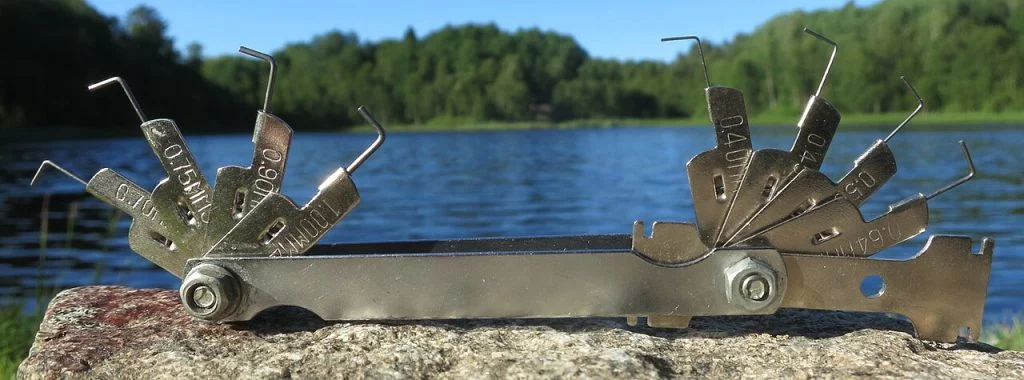
- Inspect the spark plug. Remove it when the engine is cool. Replace it if it is fouled, damaged, or badly worn. Set the gap to the spec in your manual.
- Check the fuel filter and carburetor. If your unit has a fuel filter or screen, look for debris. Gunk, grime, varnish, or dust can also clog the carburetor and cause extra cranks.
Clean the carburetor only if you are comfortable taking it apart. Use a cleaner made for carburetors and follow its label. Otherwise, have a small-engine technician clean or replace it.
2. Why Is My Predator 3500 Running but Not Producing Power?
If the engine runs but you have no power, first find out whether the fault is in the generator or the RV. Check for a tripped breaker, an overload warning, or a bad connection before you suspect an internal failure.
- Turn off or unplug every load.
- Check the generator panel for a tripped breaker or warning light. Follow the reset steps in your manual.
- Plug a small device that you know works directly into a generator outlet.
- If the device works, check the RV cord, adapter, breakers, and any transfer switch.
- If the device does not work, stop and contact a technician or Harbor Freight support.
The Predator 3500 Super Quiet is sold as an inverter generator. That matters because generic advice for a conventional generator often focuses on an automatic voltage regulator (AVR). An inverter generator uses electronic power conversion, so a no-output fault can involve the inverter module or related wiring.
Shock warning: Do not open the generator or probe internal parts while it is running. Electronic parts can hold a charge after shutdown. A voltage tester screwdriver cannot tell you whether internal capacitors are good, so leave this diagnosis to a qualified technician.
Read Also: 4 Common Problems with Allison Transmission Shift Selector
3. Why Did My Predator 3500 Suddenly Lose Power?
Sudden power loss can have several causes, so start by noting whether the engine stopped. The answer narrows the search.
- Engine stopped: Check fuel, oil, heat, and any safety warning.
- Engine still running: Check for an overload, a tripped breaker, or a loose power connection.
- Power cut out when a large appliance started: The startup surge may have exceeded the generator’s limit.
With the generator off and cool, look for loose or damaged cables that you can reach without opening the electrical housing. Stop using the generator if you see melted, burned, or frayed wiring.
4. Why Does My Predator 3500 Keep Shutting Off?
A Predator 3500 that keeps shutting off is often responding to low oil, too much load, or a fuel problem. Check these causes in order:
- Low oil: Check the indicator light and oil level with the generator on level ground.
- Overload: Turn off large appliances, follow the manual’s reset steps, and add loads back one at a time.
- Fuel supply: Check the fuel level, fuel valve, and fuel age.
- Heat: Clear anything that blocks airflow around the generator.
- Carbon monoxide warning: Treat any CO warning as a safety event. Get everyone into fresh air and do not restart the generator until you correct the cause.
If it still shuts off after these checks, ask a technician to test the electrical system. Do not replace electronic parts by guesswork.
Read Also: 5 Common Micro Air Easy Start Problems [Solutions Included]
5. Why Is My Predator 3500 Overheating?
Check for blocked airflow and too much electrical load first. Then let the generator cool and inspect the exhaust area for heavy carbon buildup.
The muffler is part of the engine’s exhaust system, not the spark plug. A spark arrestor can also collect soot. If yours is dirty, follow the manual’s steps for removing and cleaning it. Replace it if it is broken. If overheating continues, have the generator inspected.
6. Why Is My Predator 3500 Running Weak or Dying?
Weak running usually points to a fuel, air, spark, or load problem. A severely dirty carburetor is one possible cause, especially if old fuel sat in the generator.
Reduce the load, then check the fuel, choke position, air filter, spark plug, and spark arrestor. If cleaning does not solve a carburetor problem, a replacement carburetor assembly may be the next step.
Read Also: Problems with Andersen No Sway Weight Distribution Hitch
What Should You Check for Each Predator 3500 Symptom?
Use this chart to choose your first step. These are possible causes, so confirm the problem before you buy parts.
| Symptom | Possible cause | What to do |
|---|---|---|
| Electric start will not crank | Weak battery or loose connection | Charge the battery and check its connections |
| Cranks but will not start | Low oil, closed fuel valve, stale fuel, wrong choke setting, bad spark plug, or dirty carburetor | Check each item in that order |
| Starts, then dies | Low oil, choke position, stale fuel, or dirty carburetor | Check oil and fuel, then adjust the choke as the engine warms |
| Runs but has no power | Tripped breaker, overload, RV connection problem, or inverter fault | Remove loads, reset, and test a small device at the generator |
| Shuts off under load | Overload, low oil, or heat | Reduce the load, check the oil, and clear the airflow path |
| Overheats | Blocked airflow, overload, or exhaust buildup | Shut down, let it cool, and inspect it |
| Runs weak or surges | Stale fuel, dirty carburetor, dirty air filter, worn spark plug, or clogged spark arrestor | Reduce the load and inspect these parts |
| CO warning or CO alarm | Unsafe carbon monoxide levels | Get to fresh air, keep the generator off, and call for emergency help if anyone feels sick |
What Are the Predator 3500 Specs?
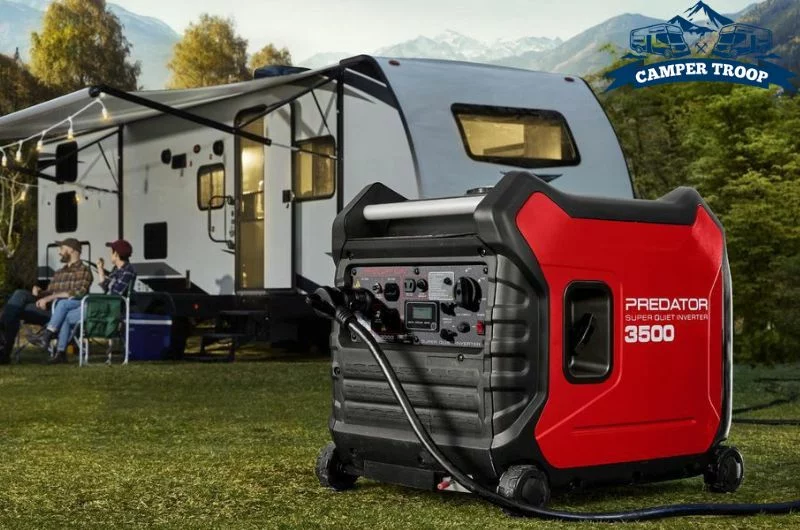
The Predator 3500 Super Quiet with CO Secure is a 120V portable generator with 3,000 running watts. These specs come from Harbor Freight’s listing for item 72899 and Consumer Reports. Other versions may differ, so check the label on your unit.
| Spec | Listing |
|---|---|
| Running power | 3,000 watts |
| Starting power | 3,500 watts |
| Voltage | 120V only |
| Engine | 212cc |
| Fuel tank | 3 gallons |
| Noise rating | 56 dBA |
| Weight | 112 lbs |
| Outlets | 3 |
| Starting | Electric start |
| Safety features | Low-oil shutoff with indicator light and CO Secure Technology |
| Other features | Fuel gauge, hour meter, wheels, and included RV adapter |
How Much of an RV Can a Predator 3500 Power?
A Predator 3500 can power RV loads that stay within 3,000 running watts. At 120 volts, that is 25 amps. A 30-amp RV connection can theoretically carry 3,600 watts, so the generator cannot supply the full capacity of a 30-amp service.
Use these steps to calculate your load:
- Find the watts on each appliance label or manual.
- If the label lists amps, multiply amps by 120. A 10-amp device uses about 1,200 watts.
- Add the running watts of everything that may run at the same time.
- Add the extra startup demand of the largest motor-driven appliance.
- Keep the running total below 3,000 watts and the startup total below 3,500 watts.
Leave some margin instead of planning right up to the limit. Do not run high-demand appliances at the same time unless your numbers clearly allow it.
Can a Predator 3500 Run an RV Air Conditioner?
It may run one RV air conditioner, but the answer depends on that unit’s running watts and startup surge. There is no single answer for every AC. Check the AC’s label or manual and compare its demand with the generator’s 3,000 running watts and 3,500 starting watts.
Turn off other large loads before you start the AC. A soft starter can reduce the startup surge, which may help a borderline setup. It does not create more generator capacity or significantly change what the AC needs once it is running.
How Long Will a Predator 3500 Run on a Full Tank?
Harbor Freight lists over 11 hours at 25% load for item 72899. A full tank will not last two days. Runtime gets shorter as you add load.
Shut the generator off and let it cool before you refuel. Spilled gas on a hot engine is a fire risk.
How Do You Connect a Predator 3500 to an RV Safely?
Connect the RV with the generator off, using the included RV adapter or the connection method shown in your manual. Harbor Freight lists an RV adapter with item 72899, but setups vary by RV and generator version.
- Place the generator outdoors in a dry, safe location.
- Turn off the RV’s air conditioner and other large loads.
- Inspect the cord and adapter. Do not use damaged or wet equipment.
- Connect the RV power cord while the generator is off.
- Start the generator and let it settle.
- Add loads one at a time, starting with the largest one you plan to use.
Follow the manual’s grounding instructions. If you have a 50-amp RV, use a properly rated adapter and expect far less power than a 50-amp hookup provides. Ask a qualified RV electrician if your connection or grounding setup is unclear.
How Far Should a Generator Be from an RV?
Keep the generator outdoors and at least 20 feet from the RV’s windows, doors, and vents. The CPSC advises running portable generators at least 20 feet from a house, and the same distance is a sensible minimum for an RV. Point the exhaust away from your RV and any other occupied space.
- Never run the generator inside the RV, a storage compartment, a garage, or a tent.
- Avoid porches and carports, as the CPSC advises. Keep it out from under awnings for the same reason.
- Install working CO alarms in the RV. Test battery-operated or battery-backup alarms monthly.
- Do not assume overnight use is safe because the tank is full. Fuel level has no effect on carbon monoxide risk.
Does the Predator 3500 Have Carbon Monoxide Shutoff?
Harbor Freight lists item 72899 with CO Secure Technology, but not every Predator 3500 may have this feature. Check your generator’s label and manual to confirm that it has CO Secure and how the shutoff works.
Do not rely on a generator safety feature to protect the people inside your RV. You still need the 20-foot distance, safe exhaust direction, and working CO alarms inside.
Can You Run a Predator 3500 in the Rain?
No. Do not run a Predator 3500 exposed to rain. Ready.gov says to keep generators dry and protected from rain or flooding, and not to touch them when wet.
Do not move it inside the RV or a storage bay to keep it dry. If you need rain protection, use a tent or cover that its maker says is designed for a running portable generator. It must keep airflow open and let exhaust escape. A tarp or homemade enclosure can trap heat and carbon monoxide.
How Should You Maintain and Store a Predator 3500?
Follow the oil type, change interval, and service schedule in your owner’s manual. These details can vary by version, so the manual for your exact item number is the best source. Use the hour meter to track service.
| When | What to do |
|---|---|
| Before each use | Check oil and fuel, clear debris, and inspect cords |
| At each interval in the manual | Change the oil and service the air filter, spark plug, and spark arrestor |
| Each month | Test battery-operated or battery-backup CO alarms |
| Before long-term storage | Prepare the fuel system as the manual directs, keep the battery charged, and store the generator clean and dry |
| After storage | Use fresh fuel, recheck the oil, and test the generator outdoors before your trip |
Stale fuel can leave deposits in small carburetor passages. Do not leave untreated gas in the generator during long storage. Check the manual for its fuel limits, including ethanol content.
When Should You Call a Technician or Harbor Freight?
Call for help if the basic checks fail or if the problem involves the inverter, internal wiring, burned parts, fuel leaks, or repeat shutdowns. Stop using the generator if you smell fuel or see damage.
Before you open the generator or buy parts, check your warranty paperwork and contact Harbor Freight support with your item number and purchase details. Ask whether the repair could affect coverage. You can also search the CPSC recall list using your exact model information.
FAQs.
If these problems do not match your issue with the Predator 3500 generator, the following answers might help.
How long can you run a Predator 3500 generator without cutting it off?
Harbor Freight lists over 11 hours at 25% load for item 72899. A full tank will not last two days, and runtime gets shorter as the load increases. Shut the generator off and let it cool before refueling.
Can you run a Predator 3500 generator in the rain?
No. Do not run a Predator 3500 exposed to rain. It is a portable generator that must run outdoors, so do not run it inside the RV body or a storage compartment. Keep it dry and protected, use only a cover or tent designed for a running generator, and do not touch it when it is wet.
Is it okay to run a Predator 3500 generator all night?
A portable generator releases carbon monoxide when it runs, and a full fuel tank does nothing to reduce that risk. Any overnight use requires outdoor placement at least 20 feet from windows, doors, and vents, exhaust pointed away from occupied spaces, and working CO alarms.
Will a Predator 3500 run a camper?
It can power camper loads that stay within its limits. Harbor Freight lists item 72899 at 3,000 running watts and 3,500 starting watts, so add up your appliance loads first. It is rated at 56 dBA, which is quiet but not noiseless.
Read Also: What Causes Tecma Rv Toilet Red Light? (Explained)
Conclusion
Despite these problems, one of the Predator 3500’s strengths is its quiet operation. Harbor Freight rates item 72899 at 56 dBA. That is quiet, but it is not noiseless.
A fault does not always mean you need a new generator. Start with oil, fuel, choke, spark, and load. If those checks do not solve the problem, go to a technician or contact Harbor Freight support.
And remember, ignoring a faulty RV generator is a bad idea. It can create serious hazards, so get it fixed and never compromise on carbon monoxide safety.
Read Also: How Much Can A Chevy Suburban 2500 Tow? (Capacity Chart)