Quick answer: Allison shift selector problems can come from a misaligned lever or cable, low or poor fluid, dirty fluid, leaks, or electrical faults such as low battery voltage or loose connectors. If a Check Trans light appears or the selector will not engage, have the codes read before replacing parts.
Like every component of your RV’s transmission system, the gear shift selector needs care, even when it comes from a well-known manufacturer like Allison Transmission. A problem in this area may show up as a transmission that seems stuck in one gear or shifts later than it should.
What are the common Allison Transmission shift selector problems? Start with misaligned gears, bad or low transmission oil, dirty transmission fluid, and leaks. These issues can affect how shifting feels, but none of them proves that the selector itself has failed.
The sections below show how to narrow down each issue, what you can safely check yourself, and when to call a certified Allison service outlet.
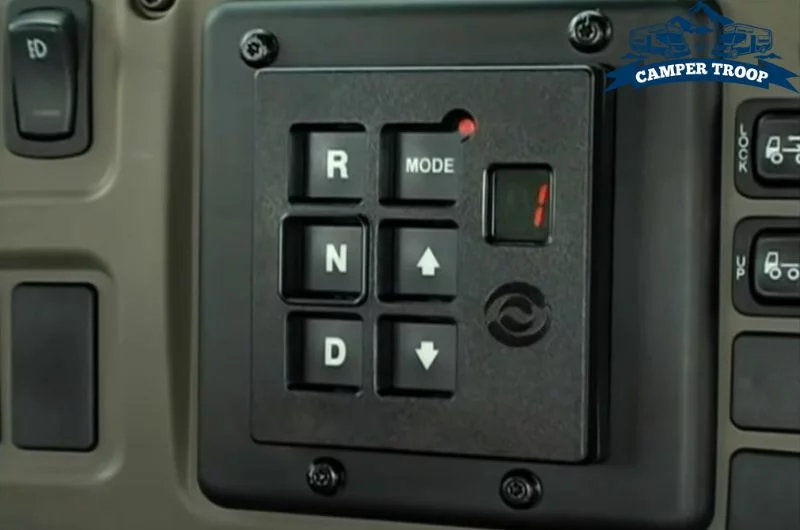
Why Is My Allison Transmission Shift Selector Not Working?
The cause depends on what the selector is doing and how it connects to the transmission. Use the symptom as a starting point, not as a final diagnosis.
| What you notice | Check first | Next step |
|---|---|---|
| Blank or dead selector | Battery condition, fuses, visible connectors, and grounds | Have the electrical system and control module tested if the basics look fine |
| Lever position does not match the gear | Shift cable or linkage, if your selector has one | Have the adjustment checked against the service information for your transmission |
| Will not leave neutral | Starting and shifting procedure, parking brake, display, and warning lights | Record any message and contact an authorized Allison location |
| Delayed or rough shifts | Fluid level, fluid condition, and leaks | Have any stored codes read |
| Check Trans light is on | Selector display and how the RV is driving | Have the codes read before replacing parts |
Which Type of Allison Shift Selector Do You Have?
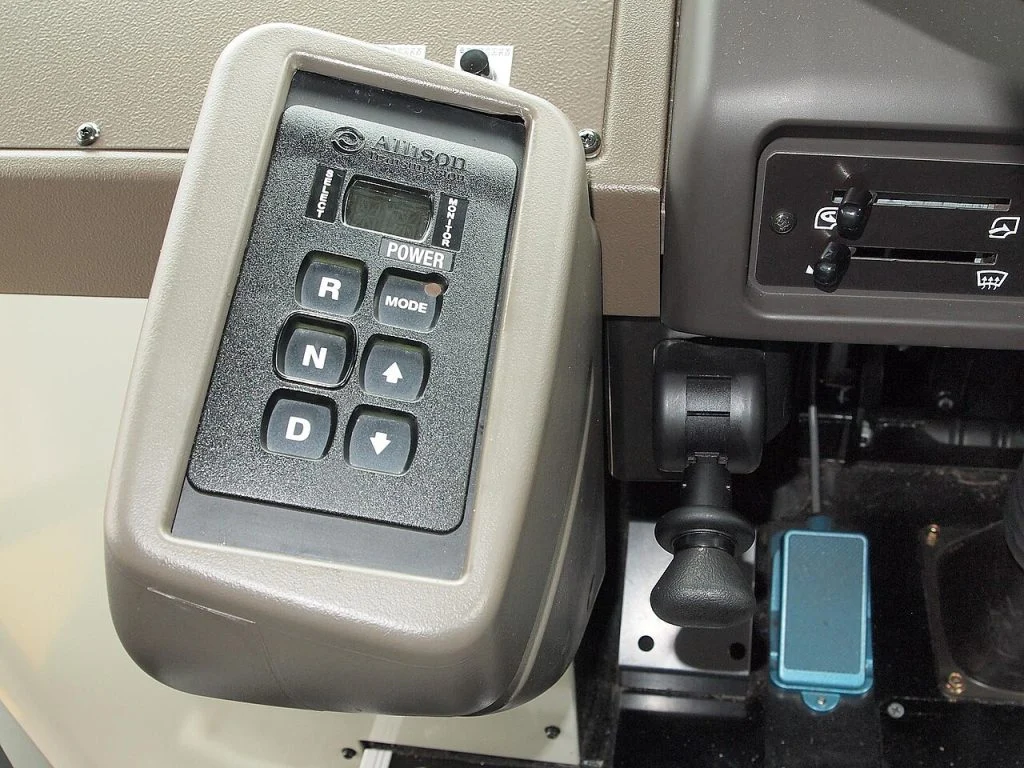
Depending on the chassis, your motorhome may have a push-button, lever, or strip-style selector. Identify the style and the way it connects to the transmission before you start troubleshooting.
| Connection | What to inspect | What it changes |
|---|---|---|
| Cable-operated | Cable condition, binding, loose ends, and lever alignment | A mechanical adjustment or cable repair may be part of the fix |
| Electronic | Power, grounds, connectors, wiring, display messages, and stored codes | There is no shift cable to adjust, so diagnosis focuses on the electrical and control systems |
If you are not sure which type you have, check your chassis manual or ask an authorized Allison location.
Which Allison Series Is in Your Motorhome?
Check your chassis documents or the transmission’s identification information. Allison’s on-highway lineup includes the 1000, 2000, 3000, and 4000 Series. Selector hardware and procedures can differ, so do not assume that a fix for one motorhome applies to yours.
What Causes Allison Transmission Shift Selector Problems, and How Do You Fix Them?
Without a working shift selector, you may not be able to choose the range you need. Treat any selector problem as a reason to stop guessing and start checking.
Here are four areas to look at, along with practical next steps.
1. Misaligned Lever and Gears
Misalignment means the lever position and the selected gear may not match. This check applies to a selector linked by a mechanical cable. An electronic selector has no shift cable to adjust.
If the problem started right after transmission or chassis work, tell the shop that did the job. Ask them to recheck anything they disconnected or adjusted.
Look for visible cable damage, binding, or loose ends. Do not adjust the cable by guesswork. Have a qualified technician inspect the selector cable and the overall transmission system, using the service information for your unit.
2. Poor or Low Transmission Oils
Delayed shifting is one symptom that makes it worth checking the transmission oil. It does not automatically mean the selector is bad.
Bad transmission oils may be one factor, but delayed shifts can have other causes. Check the level using the correct procedure for your transmission. Add fluid only if that check shows it is low.
If the level is correct and the delay continues, have the system diagnosed instead of adding more fluid.
If you are not comfortable doing the check, get expert support.
Read Also: RV AC Soft Start Vs Easy Start Kit | Which One is Worth it?
3. Dirty Transmission Fluid
Shaking during a gear shift does not prove there is a selector problem. Dirty or contaminated fluid is one possibility to rule out, along with other transmission and driveline issues.
If you suspect contamination, have a technician inspect the fluid. They can tell you whether a fluid and filter service makes sense or whether something else needs attention.
When fluid is added or replaced, use clean equipment and a fluid approved by Allison Transmission. Approved fluid is a maintenance requirement, not a cure for rough shifts.
4. Significant Leakage
Treat any significant transmission fluid leak as a problem to fix, whether or not the selector is acting up. A leak can lower the fluid level, so check the level before driving farther.
A level check can show that fluid is low, but it cannot show where the fluid went. Look for fresh fluid around and below the transmission. Do not assume your unit has a dipstick, since the check method can vary.
The right repair depends on the source of the leak. Never crawl under an RV that is not safely supported.
Leak repair costs vary, so get a written estimate. Consult a professional if the leak is heavy or you cannot find its source.
Read Also: How to Turn On Backup Camera Sound: 3 Must-try Methods!
Could the Selector Problem Be Electrical?
Yes, especially with an electronic selector. A blank display, an unresponsive button, or an on-and-off fault are good reasons to check the electrical basics before buying a new selector.
- Low battery voltage: Test the batteries and charging system.
- Loose connectors: Look for connectors that are loose, corroded, or not fully seated.
- Damaged wiring: Look for chafed, pinched, or melted wires, especially after recent dash or chassis work.
- Poor grounds: Have ground connections checked for corrosion and tightness.
- Control module faults: Leave this diagnosis to a technician with the right diagnostic tools.
Why Won’t My Allison Transmission Shift Out of Neutral?
First confirm that you are following the starting and shifting procedure in your chassis manual. Safety interlocks may block a shift until required conditions are met. If the procedure is correct, the cause may be electrical, fluid-related, or inside the transmission control system.
- Keep the RV stopped and set the parking brake.
- Check the manual for the required sequence, including service brake and parking brake use.
- Write down anything shown on the selector display and note any warning lights.
- Check for obvious battery or connection problems you can reach safely.
- If it still will not engage, stop trying and call for service.
Warning: Never bypass a safety interlock or force a lever into gear.
What Should You Do If the Selector Fails on the Road?
Get to a safe place if the RV can still move under control. Then stop troubleshooting from the driver’s seat and arrange service.
- Turn on your hazard lights and move as far from traffic as you safely can.
- Set the parking brake. Use wheel chocks if you can place them safely.
- Photograph the selector display and any dash warnings.
- Look for visible fluid loss without going under the RV.
- Call roadside assistance or an authorized Allison location. Have your chassis and transmission details ready.
Do not keep driving with a transmission that will not hold a gear or respond properly.
Can You Tow a Motorhome With an Allison Transmission?
Yes, but use a recovery method approved for your chassis. Do not let anyone tow the motorhome with the drive wheels on the ground until the chassis manual or a qualified Allison service location confirms that it is safe.
Give the dispatcher the motorhome’s length, weight, chassis, and drive configuration so they can send suitable equipment. Before the tow begins, ask the operator these questions:
- Will the drive wheels be lifted off the ground?
- Does the driveshaft need to be disconnected?
- Is the truck rated for this motorhome’s weight?
- How will the transmission and driveline be protected during the tow?
What Does the Check Trans Light Mean on an Allison Transmission?
Treat the Check Trans light as a warning that the transmission system needs attention. The light alone does not tell you which part has failed, so it is not a reason to replace the selector.
Note what the RV was doing when the light came on and what the selector display showed. Selector messages vary, so do not assume that a symbol or blank display means the same thing on every unit. Check your operator’s manual and arrange a diagnostic check.
How Do You Read Allison Transmission Codes From the Shift Selector?
Use the steps in the operator’s manual for your exact transmission and selector, where code display is supported. There is no single sequence you should assume will work on every selector. If yours does not support it, a technician can read the codes with diagnostic equipment.
Allison HUB offers free access to a library of operator’s manuals for current products. The manuals cover shift selectors, prognostics, diagnostics, and care and maintenance. If you have an older unit and cannot find a match, ask an authorized Allison location.
Write down every code exactly as shown before anyone clears it. Those details can help the technician trace the fault.
How Do You Check Allison Fluid Level Without a Dipstick?
Follow the fluid-level procedure in the operator’s manual for your exact transmission. The manual is the place to confirm the method, the required fluid temperature, and how the RV must be parked and running during the check.
Do not add fluid based on a guess. Too little and too much are both problems. If the manual’s check does not give a clear result, have a technician confirm the level.
How Often Should Allison Transmission Fluid Be Changed in a Motorhome?
There is no single mileage rule for every Allison transmission. Change intervals depend on the application and the fluid. To find yours, use Allison’s Fluid + Filter Calculator on the Allison HUB or its published change recommendations (#1099BB).
Add fluid only when a correct level check shows that it is low. Adding fluid between changes is not a substitute for scheduled service.
Which Fluid Does Allison Approve?
Allison recommends TES 668 approved fluids for on-highway 1000, 2000, 3000, and 4000 Series transmissions. TES 295/468 and TES 389 remain approved for on-highway use, and Allison suggests considering TES 668 at the next service. Confirm that the exact product is on Allison’s approved list before you buy it.
What If My Allison Transmission Shift Selector Offers Annoying Sounds?
It is hard to identify the real problem by sound alone, because an RV has many possible sources of noise.
Even when a noise seems to come from the shifter area, that does not confirm a problem with your Allison transmission. Sound can travel through the chassis and dash.
Note what the sound is like, where it seems to come from, and when it happens. For example, does it occur only in neutral, during a shift, or while moving? A short phone recording can help a technician.
There is no single reason for these sounds. Get expert advice, and arrange service before driving farther if the noise comes with fluid loss, a warning light, or shifting trouble.
Read Also: 4 Common Problems with Winegard Air 360 and Their DIY Hacks
Should You Troubleshoot It Yourself or Go to a Certified Allison Shop?
Do the simple visual and procedure checks yourself. Leave adjustments, module testing, and internal transmission work to a qualified technician.
| Reasonable DIY checks | Go to a certified Allison outlet |
|---|---|
| Review the starting and shifting procedure | The selector will not engage after the correct procedure |
| Write down display messages and codes | The Check Trans light stays on or returns |
| Check batteries and visible connections | Wiring is damaged or a module fault is suspected |
| Do a fluid-level check as the manual directs | The fluid is contaminated or the leak source is unclear |
| Inspect a reachable shift cable for visible damage | The cable needs adjustment or replacement |
To find an authorized location, use the Sales + Service Locator on Allison’s website.
How Much Does It Cost to Replace an Allison Shift Selector?
There is no reliable published price that fits every motorhome, and the Allison parts, service, and publications pages checked for this article do not list selector replacement prices. Get a written quote from an authorized Allison location, and confirm the diagnosis before you pay for a new selector.
| Quote item | What to ask |
|---|---|
| Diagnostics | Is there a diagnostic fee, and does it apply to the repair? |
| Parts | What is the exact part number, and is it new or remanufactured? |
| Labor | How many hours are included, and what is the hourly rate? |
| Programming | Is programming or calibration needed, and is it included? |
| Related repairs | Could wiring, cable, or transmission-level work change the total? |
Does a Replacement Selector Need Programming?
Do not assume that it is plug-and-play. Ask the service location whether your replacement needs programming or calibration before you order it.
How Do You Confirm Compatibility and Warranty?
Record the part number from your current selector, along with your transmission model and serial number and the chassis VIN. Have an authorized location confirm the match. Check your chassis and transmission warranty documents before any work starts, and ask for the parts and labor warranty in writing.
Frequently Asked Questions
Still have questions about Allison transmission shift selector problems? These quick answers can help.
When my Allison transmission shift selector slips gear?
A slipping feel does not prove that the selector is at fault. Check the fluid level with the procedure in your operator’s manual, look for leaks, and have any stored codes read. If the problem continues or a Check Trans light appears, contact an authorized Allison location.
How can I rest assured that my Allison transmission is going out?
You cannot confirm that from symptoms alone. Persistent noises, fluid leaks, and slow response are warning signs worth checking, but they can have other causes.
If you notice any of them on your RV, contact an authorized Allison location for a diagnosis as soon as possible.
In order to avoid Allison transmission shift selector issues, how often should I add transmission fluid?
Add fluid only when a correct level check shows that it is low. Change intervals depend on the application and fluid, so there is no single mileage rule. Use Allison’s Fluid + Filter Calculator or its change recommendations (#1099BB) to find the right interval.
How much will it cost to replace my Allison transmission shift selector?
The Allison parts, service, and publications pages checked for this article do not list selector replacement prices. Get a written quote from an authorized location. You can find one with the Sales + Service Locator on Allison’s official website.
Read Also: 5 Common Micro Air Easy Start Problems [Solutions Included]
Wrapping Up!
Work through the problem one step at a time. Identify your selector type, record any messages or codes, check the electrical basics, and verify the fluid level with the correct procedure.
If the selector will not engage, the transmission does not respond normally, or a warning light stays on, contact an authorized Allison location. Do not replace parts until the fault is confirmed.
Read your operator’s manual to learn your Allison transmission system. Use approved fluid, follow the service interval for your application, and fix leaks promptly.
Read Also: Problems with Andersen No Sway Weight Distribution Hitch