Quick answer: The main Andersen no-sway hitch problems to check are incorrect chain tension, friction cone wear, squeaking, poor fit, and loads that exceed a rating. Inspect the friction cone before each tow, set chain tension to Andersen’s instructions, and confirm your loaded tongue weight. No published failure-rate data was found for this hitch.
Many of these issues can be traced with a few checks. This guide explains what each symptom can mean, what Andersen says to do, and when to stop towing until the problem is fixed.
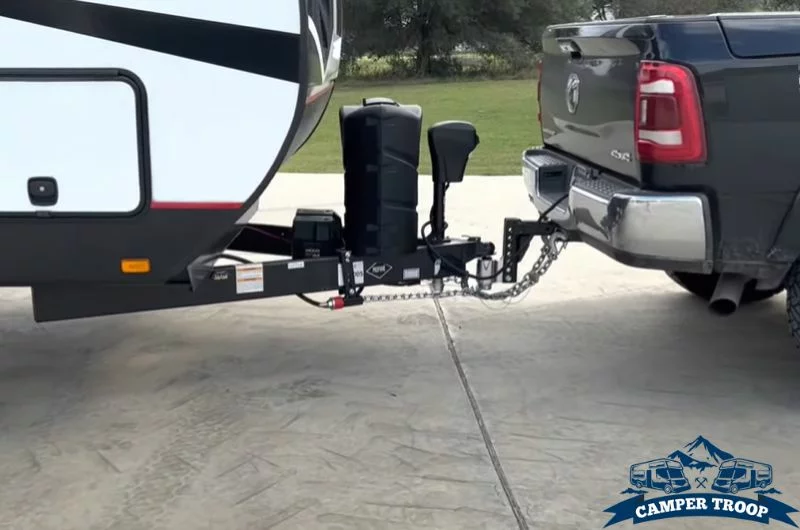
What Are The Common Problems Of Andersen No Sway Weight Distribution Hitch?
Owners should check for loose chain tension, continued sway, friction cone wear, noise, fit limits, and weight limits. Some issues relate to Andersen’s chain and friction-cone design, such as friction cone wear and break-in liner creep. Others, such as overloading, can affect any towing setup.
| Symptom | What to check | What to do |
|---|---|---|
| Trailer still sways | Chain tension, tongue weight, crosswinds, passing traffic | Correct the tension and confirm that tongue weight is not negative |
| Reduced sway control | Friction cone condition | Replace the cone if it meets Andersen’s criteria |
| Squeaking | Cone and tapered housing | Clean both with rubbing alcohol, then replace the cone if needed |
| Red shavings or liner creep | Miles since installation | Expect a little during the first several hundred miles |
| Hitch does not fit or suit the rig | Trailer type, receiver, ball, drop or rise, and ratings | Confirm compatibility or choose different equipment |
Why Does The Hitch Feel Loose?
Start with chain tension. Andersen lists it among the items to check if a trailer sways. Sway control can also loosen over bumps when a trailer has negative tongue weight, which means the trailer pushes up on the ball instead of down.
A correct installation helps distribute weight, but it cannot make up for every load or road condition. Results still depend on tongue weight, loading, and vehicle ratings.
If you are not sure how to install the Andersen hitch correctly, go through the product manual. If the manual does not answer your question, check the company website or contact Andersen.
Read Also: 4 Common Problems with Winegard Air 360 and Their DIY Hacks
Why Does The Trailer Still Sway?
A trailer can still sway with this hitch installed, especially if the connection is loose. Andersen’s FAQ also names crosswinds and passing traffic as causes of sway.
Work through these checks:
- Chain tension: Set it according to the installation instructions.
- Friction cone: Inspect it before each tow.
- Tongue weight: Confirm the loaded figure. Negative tongue weight needs correcting before you tow.
- Driving conditions: Do not count on any hitch to guarantee stability at high speed on rough roads. Slow down when wind, traffic, or the road surface unsettles the trailer.
If your hitch connection is loose, correct it before driving. A qualified hitch or RV technician can check the setup if you cannot find the cause.
Read Also: 4 Common Problems with Allison Transmission Shift Selector
When Should You Replace The Friction Cone?
Replace the friction cone based on its condition, not a set date. Andersen’s replacement criteria are:
- The cone shows abnormal wear.
- The ball sinks more than 1/8 inch.
- Sway control drops.
Why Is The Hitch Squeaking?
For squeaking, Andersen says to clean the cone and tapered housing with rubbing alcohol. If that does not help, replace the cone.
What If The Hitch Does Not Fit Or Support Your Rig?
Tightening the connection will not solve a compatibility problem. Some Andersen hitches cannot fit or support certain RVs or trucks. If yours is not compatible, you will need different equipment, so check Andersen’s current return terms.
This is why you must confirm the unit’s compatibility before making a purchase. Andersen’s website lists the mounts and accessories for its no-sway weight distribution hitches.
Once you have selected a hitch for your vehicle, read the handbook carefully before towing.
Read Also: 5 Common Micro Air Easy Start Problems [Solutions Included]
What If Your Load Exceeds The Hitch Rating?
Check the weight of both truck and trailer before you install a weight distribution hitch. Inspecting the hitch connection will not reveal an overload, so confirm your loaded tongue weight and compare it with the hitch, trailer, and tow vehicle ratings.
The lowest-rated component sets your towing limit. The hitch’s ratings do not increase the limits of your tow vehicle or trailer.
Why Does The Hitch Seem To Shift Or Twist?
Some movement of the liner can be normal on a new hitch. Andersen describes liner creep during the first several hundred miles as normal break-in, and it says a few red shavings are also normal during that period.
Do not assume that continued movement after break-in is normal. Inspect the friction cone, check chain tension, and contact Andersen if the cause is unclear.
Read Also: 6 Most Common Problems with Predator 3500 Generator
How Does The Andersen No-Sway Hitch Work?
The Andersen hitch uses chains and a friction cone instead of the steel bars found on spring-bar hitches. Chain tension is set with tension nuts and red springs. The friction cone sits in a tapered housing and plays a direct role in sway control, which is why a worn cone can reduce it.
The hitch shifts only part of the tongue weight. Andersen says about 30% of a 900 lb tongue weight is transferred forward, or roughly 270 lb. The rest stays on the tow vehicle’s rear axle.
What Are The Andersen Hitch Ratings And Sizes?
Andersen’s published ratings differ by page, so confirm the limit for your exact hitch with Andersen. Until you do, the lower figures are the cautious ones to use. Neither set of figures overrides a lower rating on your truck, trailer, receiver, or ball.
| Item | Andersen’s listing |
|---|---|
| Product page maximums | 16,000 lb gross trailer weight and 1,600 lb tongue weight |
| FAQ maximums | 14,000 lb gross trailer weight and 1,400 lb tongue weight |
| Receiver sizes | 2, 2.5, or 3 inch |
| Drop or rise | 4, 6, or 8 inch |
| Ball sizes | 2 or 2-5/16 inch |
| Listed price, SKU 3341 | $834.99 on November 8, 2026 |
Sizes and price come from Andersen’s product page, which also describes this hitch as designed for compatible bumper-pull travel trailers.
How Do You Set Up The Hitch And Chain Tension?
Confirm your weights and fit first, then set chain tension using Andersen’s procedure. Use the current manual for ball height, shank position, and torque values. Do not borrow those numbers from another hitch.
- Weigh the loaded truck and trailer. A certified scale gives you measured numbers instead of estimates.
- Confirm your loaded tongue weight and compare it with every rating in the setup.
- Match the receiver size, drop or rise, and ball size to your truck and trailer.
- Install the hitch using the manual’s ball height, shank, and torque instructions.
- Hand-tighten the tension nuts with the 1-1/4 inch socket.
- Add 3-4 more threads with a wrench.
- Adjust both nuts in half-turn steps until the red springs show slight compression and a small bulge.
- Inspect the friction cone before each tow.
Do You Need A Weight Distribution Hitch?
Not every truck owner who tows needs one. Andersen’s guidance is to use a weight distribution hitch when the trailer weighs more than half the tow vehicle’s GVWR, or when signs such as rear sag or light steering appear.
When Should You Stop Towing?
Pull over when it is safe and do not continue until the cause is corrected if you find any of these:
- The trailer keeps swaying and you cannot identify why.
- The hitch connection or chain tension is loose.
- The friction cone shows abnormal wear, or the ball sinks more than 1/8 inch.
- Sway control has clearly dropped.
- The trailer has negative tongue weight.
- Your loaded weights exceed the lowest rating in the setup.
Should You Switch To A ProPride, Recurve, Or Spring-Bar Hitch?
Fix the setup before you replace the hitch. A new hitch will not correct negative tongue weight or a load that exceeds your truck or trailer ratings.
- Keep the Andersen if the sway stops after you correct chain tension, the friction cone, or tongue weight.
- Ask Andersen for help first if the sway continues after those checks and your weights are within every rating.
- Compare alternatives if Andersen confirms the hitch does not suit your trailer. Give each manufacturer your measured weights and trailer details, then compare their written ratings and fit requirements.
What Should You Confirm With Andersen Before Towing?
Some answers depend on your exact equipment or on Andersen’s current manual. Get these confirmed by Andersen rather than relying on forum advice:
- Whether your trailer’s surge brakes, coupler, frame, or propane tank layout is compatible.
- Whether your short-bed or short-wheelbase tow vehicle needs any special setup.
- Whether you should grease the hitch ball with this friction-based design.
- How to handle backing, tight turns, and steep driveways, and whether to disconnect or adjust anything first.
- Whether helper springs could meet your needs instead of a weight distribution hitch.
- Current warranty coverage, return options, and replacement part availability.
Frequently Asked Questions
Here are short answers to common questions about the Andersen no-sway hitch.
What is Andersen’s no sway weight distribution hitch?
It is a weight distribution hitch for compatible bumper-pull travel trailers. It uses a chain and friction-cone design to help distribute weight and control sway. Results still depend on tongue weight, loading, and vehicle ratings, so it does not guarantee a stable tow in every condition.
Are Andersen Weight Distribution Hitches Necessary?
Not for every truck owner who tows. Andersen’s guidance is to use a weight distribution hitch when the trailer weighs more than half the tow vehicle’s GVWR, or when signs such as rear sag or light steering appear. Andersen describes this hitch as designed for compatible bumper-pull travel trailers, so it is not a general requirement for towing one car behind another.
Do Andersen Weight Distribution Hitches Fail?
No published failure-rate data was found, so it is not accurate to say these hitches often fail. Parts do wear, however. Andersen says to inspect the friction cone before each tow and replace it if it shows abnormal wear, the ball sinks more than 1/8 inch, or sway control drops.
Conclusion
Most troubleshooting on an Andersen no-sway hitch comes down to three things: chain tension, friction cone condition, and accurate loaded weights. Check those first, and use Andersen’s instructions for each adjustment.
If the trailer still sways or the hitch does not suit your rig, stop and find the cause before your next tow. Remember that the lowest-rated component in your setup sets the limit.
Read Also: What Causes Tecma Rv Toilet Red Light? (Explained)