Quick answer: A properly equipped Chevy Suburban 2500 can tow 9,400 to 9,600 lb with a weight-distributing hitch, based on confirmed 2011 and 2013 ratings. Without that hitch, the 2013 limit drops to 5,000 lb. Your real limit may be lower once GVWR, GCWR, payload, and tongue weight are counted.
The Chevy Suburban 2500 often comes up when RV owners look for an SUV that can pull a trailer camper. But the maximum number on a chart is only part of the answer. Your truck’s setup and everything you load into it also matter.
Below, you’ll find the confirmed ratings by year, the limits that can lower them, and a simple way to work out a safe trailer weight.
Quick Chart of Chevy Suburban 2500 Towing Capacity
Chevrolet sold five Suburban 2500 model years from 2009 to 2013. This chart shows the ratings that could be confirmed. The 2011 owner’s manual and 2013 published specs support the figures shown.
| Brand | Year | Minimum Towing Capacity (Weight-Distributing Hitch) | Maximum Towing Capacity (Weight-Distributing Hitch) |
| Chevy Suburban 2500 | 2009 | Not confirmed | Not confirmed |
| Chevy Suburban 2500 | 2010 | Not confirmed | Not confirmed |
| Chevy Suburban 2500 | 2011 | 9400 Pounds | 9600 Pounds |
| Chevy Suburban 2500 | 2012 | Not confirmed | Not confirmed |
| Chevy Suburban 2500 | 2013 | 9400 Pounds | 9600 Pounds |
If you own a 2009, 2010, or 2012 model, use the trailering section of that year’s owner’s manual. Do not assume it matches the 2011 or 2013 numbers.
Why Was 2012 Missing From the Chart?
The 2012 Suburban 2500 was a real model year, so it now has its own row. Its tow rating could not be confirmed from the sources used for this article. The chart says so instead of guessing.
Read Also: Problems with Andersen No Sway Weight Distribution Hitch
Chevy Suburban 2500 Towing Capacity
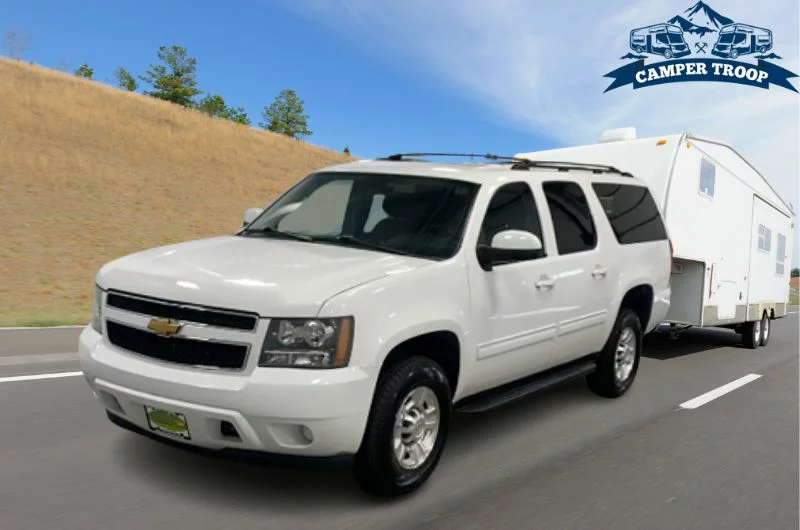
The confirmed tow rating for the 2011 and 2013 Suburban 2500 is 9,400 to 9,600 lb with a weight-distributing hitch. This rating applies to trailers in general. It is not a special rating for campers.
The hitch makes a big difference. A 2013 Suburban 2500 LS 2WD is listed at 9,600 lb on a weight-distributing hitch, but only 5,000 lb on a dead-weight hitch.
Which Suburban 2500 Setup Gets Which Rating?
Published specs confirm the 9,600 lb rating for the 2013 LS 2WD. The sources used here do not match the 9,400 lb rating to one specific engine, drivetrain, and axle ratio. Check the tow chart in your owner’s manual for your exact combination.
| Spec | 2013 LS 2WD | 2013 LT 4WD |
| Towing, weight-distributing hitch | 9,600 lb | Not confirmed |
| Towing, dead-weight hitch | 5,000 lb | Not confirmed |
| Payload | 2,450 lb | 2,181 lb |
| GVWR | 8,600 lb | Not confirmed |
| GCWR | 16,000 lb | Not confirmed |
What Year Did Chevy Stop Making the Suburban 2500?
The Suburban 2500 ended after the 2013 model year. If you want one now, you will need to buy a used truck from a dealer or private seller.
If possible, you can visit Chevrolet’s official website for further inquiries.
When Will GM Offer a Suburban HD to the General Public Again?
No verified source used for this article gives a date for a Suburban HD aimed at general buyers. Treat release rumors with caution, and look for an announcement directly from Chevrolet.
Which Limits Can Keep You Below the Maximum Tow Rating?
The tow rating is only one limit. You must stay within all of the limits below, and the tightest one decides what you can safely pull.
- GVWR (Gross Vehicle Weight Rating): The most the truck can weigh, including passengers, cargo, and tongue weight.
- GCWR (Gross Combined Weight Rating): The most the loaded truck and loaded trailer can weigh together.
- Payload: How much weight the truck can carry, including people, gear, and tongue weight.
- Tongue weight: The downward force the trailer puts on the hitch.
- Rear axle rating: The most weight the rear axle can support.
The 2011 owner’s manual limits tongue weight to 1,000 lb with a weight-carrying hitch and 1,500 lb with a weight-distributing hitch. Tongue weight also cannot push the truck over its GVWR or rear axle rating.
What Is the GCWR of a Suburban 2500?
The 2013 Suburban 2500 LS 2WD is listed with a 16,000 lb GCWR. Other years and setups may differ.
This number shows why you can’t max out everything at once. If that truck were loaded to its full 8,600 lb GVWR, only 7,400 lb would remain for the trailer (16,000 – 8,600). That is well below the 9,600 lb tow rating.
Where Can You Find the Exact Rating for Your Suburban?
Use the documents and labels tied to your specific truck. Used-car listings and general charts can miss differences in equipment.
- Owner’s manual: Check the trailering section for tow ratings and hitch limits.
- Door-jamb labels: Look for your truck’s GVWR, axle ratings, and occupant and cargo limit.
- GM trailering guide: If you can find one for your model year, use it to compare engine, drivetrain, and axle combinations.
- Certified scale: Weigh the loaded rig to get real numbers instead of estimates.
Can a Chevy Suburban 2500 Tow a Camper?
Yes, if the truck is properly equipped and the camper fits within its limits. A camper lets you enjoy the outdoors without giving up your comforts, so it pays to match it to your truck correctly.
With a weight-distributing hitch, a properly equipped Suburban 2500 is rated for 9,400 to 9,600 lb. The loaded rig must still stay within the GVWR, rear axle, tongue weight, and GCWR limits.
Camper weights vary too much to rely on an average. Use the actual weight rating of the trailer you plan to tow, then compare it with your truck’s numbers.
It’s also wise to avoid a camper that weighs close to the tow rating of your Suburban. Towing near the limit can cause problems, and a trailer often gets heavier once it is packed for a trip.
Read Also: 6 Most Common Problems with Predator 3500 Generator
Why is the Chevy Suburban 2500 Still A Popular Option?
Even though it is only available used, the Chevy Suburban 2500 still appeals to buyers who like its classic design and want an SUV with a high tow rating.
Here are the confirmed specs that matter most for towing:
- Tow rating: 9,400 to 9,600 lb with a weight-distributing hitch on 2011 and 2013 models.
- Engine output: 352 horsepower and 382 lb-ft of torque on the 2013 model.
- Payload: 2,450 lb on the 2013 LS 2WD and 2,181 lb on the 2013 LT 4WD.
- Fuel tank: About 39 gallons on the 2013 model.
Don’t assume an older Suburban 2500 has hitch guidance cameras, trailer profiles, trailer tire monitoring, or rear traffic alerts. Those features could not be confirmed for these model years. Check the actual truck and its original equipment list before you buy.
Read Also: What Causes Tecma Rv Toilet Red Light? (Explained)
What Size Camper Can a Chevy Suburban 2500 Tow?
The right camper size depends on loaded weight, not length alone. Classic travel trailers, teardrop trailers, toy haulers, and other towable RVs can vary widely in weight, even at similar lengths.
Make sure you don’t exceed the manufacturer’s limits for your exact truck. The 9,400 to 9,600 lb rating is a ceiling, and your safe number may be lower. Your owner’s manual is the best place to start.
You must count every pound. An RV trailer carries essential gear, and all of it adds to the actual towing weight.
Counting the total weight is the only way to learn the camper’s real weight and measure how well it matches your Chevy Suburban 2500.
What Is the Difference Between Dry Weight and GVWR on a Camper?
Dry weight is roughly what the camper weighs before you add cargo, water, and other trip items. Loaded weight is what it actually weighs when packed. The trailer’s GVWR is the most it is allowed to weigh when fully loaded.
Shop by the trailer’s GVWR, not its dry weight. That way, your plan still works when the camper is fully loaded.
How Much RV Trailer Can Your Suburban 2500 Safely Tow?
Your safe trailer weight is the lowest result from your truck’s limits, minus a safety margin. Follow these steps:
- Find your truck’s tow rating, GVWR, GCWR, payload, and tongue weight limit.
- Add up passengers, cargo, and hitch hardware. Add that total to the truck’s empty weight.
- Subtract the loaded truck weight from the GCWR.
- Compare that result with the tow rating, and use the lower number.
- Take off your safety margin to get a target trailer GVWR.
- Check that the trailer’s tongue weight fits within your remaining payload, the hitch limit, and the GVWR.
- Weigh the fully loaded rig at a certified scale before a long trip.
Worked Example: 2013 Suburban 2500 LS 2WD
This example uses the listed 2013 LS 2WD ratings. The 700 lb truck load and 1,000 lb tongue weight are made-up numbers for illustration. Replace them with your own.
| Item | Math | Result |
| Estimated empty truck weight | 8,600 lb GVWR – 2,450 lb payload | 6,150 lb |
| Loaded truck before trailer | 6,150 lb + 700 lb | 6,850 lb |
| Trailer room under GCWR | 16,000 lb – 6,850 lb | 9,150 lb |
| Lower of GCWR room or 9,600 lb tow rating | Compare both | 9,150 lb |
| Target with 10% margin | 9,150 lb x 0.90 | About 8,235 lb |
| Payload left after people, gear, and tongue | 2,450 lb – 700 lb – 1,000 lb | 750 lb left |
| Truck weight with tongue load | 6,850 lb + 1,000 lb | 7,850 lb, under 8,600 lb GVWR |
In this example, a camper with a GVWR of about 8,200 lb or less fits the plan. The 1,000 lb tongue weight is also under the 1,500 lb weight-distributing limit from the 2011 manual. Confirm the limit for your own model year.
How Close to the Tow Rating Should You Go?
A simple planning rule is to keep the trailer’s GVWR at least 10% below your lowest calculated limit. This is a conservative rule of thumb, not a GM requirement. Leave more room for mountain routes, hot weather, or an older truck.
Read Also: Why 15 Amp Fuse Keeps Blowing In Rv: How to Fix it?
Do You Need a Weight-Distributing Hitch to Tow With a Suburban 2500?
Yes, on a 2013 Suburban 2500 you need one to tow more than 5,000 lb. For other model years, check the owner’s manual before you tow on a dead-weight hitch.
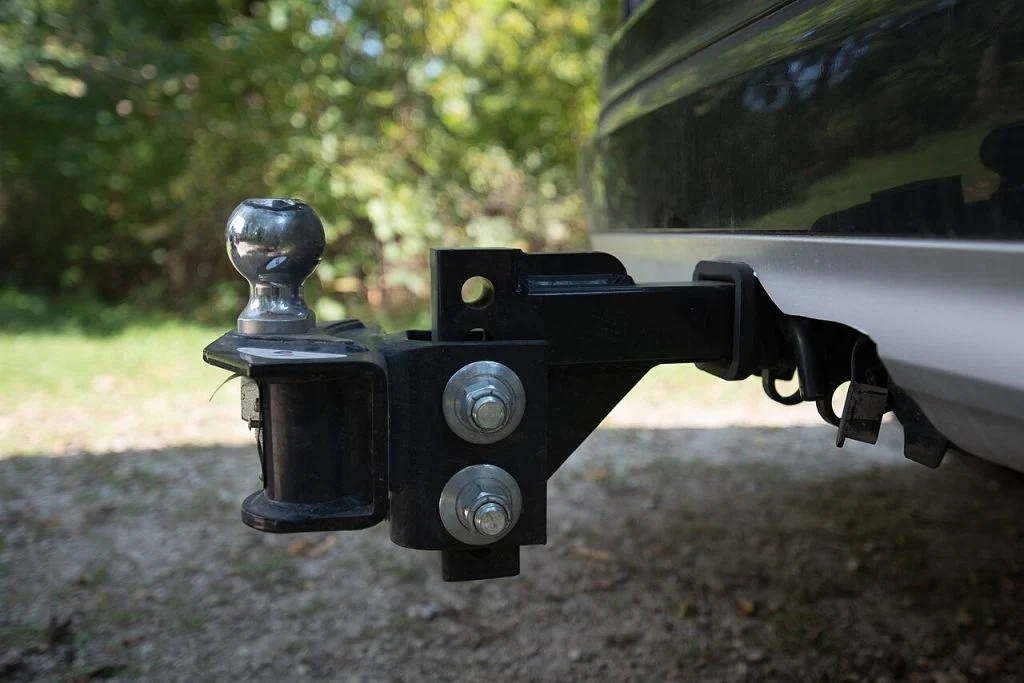
- Hitch rating: Check the receiver, ball mount, ball, and weight-distribution parts. The lowest rating is your hitch limit.
- Weight distribution: This type of hitch spreads tongue weight across the truck and trailer axles. Set it up using the hitch maker’s instructions.
- Sway control: This resists side-to-side trailer movement. Some weight-distributing hitches include it, and others need a separate device.
- Trailer brakes: Check that the camper’s brakes work and that the truck has a working brake controller. Rules vary, so check the owner’s manual and the laws in each state on your route.
How Far Can a Suburban 2500 Go While Towing?
Plan on far fewer miles per tank than the truck’s listed range. Cars.com lists the 2013 Suburban 2500 LT 4WD at 10 mpg city, 15 mpg highway, and 12 mpg combined, with a 39-gallon tank. At 12 mpg, that works out to about 468 miles without a trailer.
Towing mileage depends on trailer weight, speed, wind, and hills. To plan, multiply your tank size by your own measured towing mpg. For illustration only, 8 mpg would give about 312 miles on a full tank, before leaving any fuel in reserve.
What Should You Inspect Before Buying a Used Suburban 2500?
Even the newest Suburban 2500 is now about 13 years old, so its condition matters as much as its rating. Have a trusted mechanic inspect the truck before you buy, and focus on these areas:
- Records: Ask for service history and run the VIN through the NHTSA recall lookup.
- Labels and setup: Confirm the door-jamb ratings, drivetrain, and axle ratio.
- Towing hardware: Look for cracks, rust, bent parts, and damaged trailer wiring.
- Drivetrain and cooling: Check for leaks, dirty fluids, overheating, and rough shifting.
- Brakes, suspension, and tires: Look for worn parts, sagging, and old tires. Check each tire’s date code.
- Frame and body: Check underneath for heavy rust or signs of crash repair.
What Are the Alternatives if You Can’t Find a Good Suburban 2500?
Look at other full-size SUVs and 3/4-ton pickups, and compare them by their actual ratings. A newer vehicle is not automatically a stronger tow vehicle, so run the same steps shown above.
- Choose a full-size SUV if you need enclosed passenger space and your loaded trailer fits its limits.
- Choose a 3/4-ton pickup if payload and tongue weight are your tightest limits.
- Choose a lighter camper if the truck you already own comes up short.
Frequently Asked Questions
Here are short answers to a few more common questions about the Chevy Suburban 2500:
How much horsepower and torque does the Chevy Suburban 2500 have?
The 2013 Suburban 2500 is listed with 352 horsepower and 382 lb-ft of torque. That added torque helps with pulling a heavy trailer.
Engine output does not set your tow limit, though. Use the tow rating, GVWR, GCWR, payload, and tongue weight limits for your exact truck.
What’s the approximate fuel tank capacity required for my Chevy Suburban 2500 to tow trailers?
Cars.com lists a fuel tank of about 39 gallons for the 2013 Suburban 2500. Towing does not call for a special tank size.
Towing can cut your range, so plan your fuel stops before you leave.
Why Did Chevrolet discontinue manufacturing the Chevy Suburban 2500?
The Suburban 2500 ended after the 2013 model year. No verified statement from Chevrolet explaining the decision could be found, so treat any single reason with caution.
How long does the Chevy Suburban 2500 last?
There is no verified lifespan figure in years or miles. It depends on maintenance, climate, and how much heavy towing the truck has done.
On a used truck, service records and a full inspection tell you more than the odometer alone.
Conclusion
A Chevy Suburban 2500 rated to tow 9,400 to 9,600 lb still can’t pull just anything. Get to know your truck’s exact limits so it can handle your camper without problems.
Before you tow, make sure the camper isn’t overloaded. Too much weight can make the rig harder to control and put extra strain on your Suburban.
Make it a habit to count everything you load, then confirm the total at a scale. Use the lowest limit you find, and leave yourself some margin.
Read Also: Complete Guide on How to Jack Up a Travel Trailer in 4 Steps