Quick answer: If your RV water pump keeps cycling with every tap closed, pressure is escaping somewhere. The usual causes are a plumbing leak, a dripping toilet or faucet valve, a bad city water inlet check valve, trapped air, or a faulty pressure switch. Run a static leak test first. Then check the valves, bleed the air, and test the switch.
Why does my RV water pump keep cycling on and off?
Most RVs use a 12V demand pump. It turns on when line pressure drops and turns off when it reaches its shut-off pressure. If the pump turns on by itself with no water running, pressure is leaking away. The cause is a leak, a valve letting water flow back, trapped air, or a pressure switch that isn’t working right.
Start by matching what you hear to the likely cause:
| Symptom | Likely cause | Check first |
|---|---|---|
| Cycles on and off with all taps closed | Leak or a valve letting pressure escape | Static leak test, toilet valve, city water inlet check valve |
| Pulses or chatters while a faucet runs | Flow restriction, no bypass, or pressure-switch setting | Aerators, shower head, inline filter |
| Runs nonstop and never shuts off | Air in lines, empty tank, bad switch, or bypass set above shut-off | Tank level, strainer, air bleed, pressure switch |
Is it normal for an RV water pump to cycle?
Some cycling is normal while you use water, especially at low flow on a pump without a bypass. A short burst now and then while a tap is open is not a fault. Repeated restarts with every fixture closed are not normal. That pattern means pressure is escaping.
How do you tell if the cycling is a leak or a pump problem?
A static test tells you whether the plumbing holds pressure. Do it before you touch the pump.
- Make sure the fresh tank has water and the city water hose is disconnected.
- Close every faucet, the shower, the outside shower, and the toilet.
- Turn the pump on and let it build pressure and shut off.
- Listen and time how often it restarts. Write it down so you can compare after each fix.
- Turn the pump off. Check under the sinks, behind the water heater access panel, at the toilet valve, at the outside shower, at the low-point drains, and at the pump fittings.
- Watch the toilet bowl water level and the outside shower head for slow drips.
Decision rule: If the cycling stops when you close a fixture’s supply valve, the leak is downstream of that valve. If no water shows anywhere and the pump still cycles, look at the check valves, air, and the pump itself.
What common leaks make an RV water pump cycle?
The RV Dealers Association (RVDA) lists outlet-side plumbing leaks, leaky valves or toilet, and a bad city water or tank fill valve as causes of a pump that runs with the faucets closed. RVDA also recommends tightening loose plumbing, strainers, and pump hardware first, because road vibration often loosens them.
City water inlet check valve
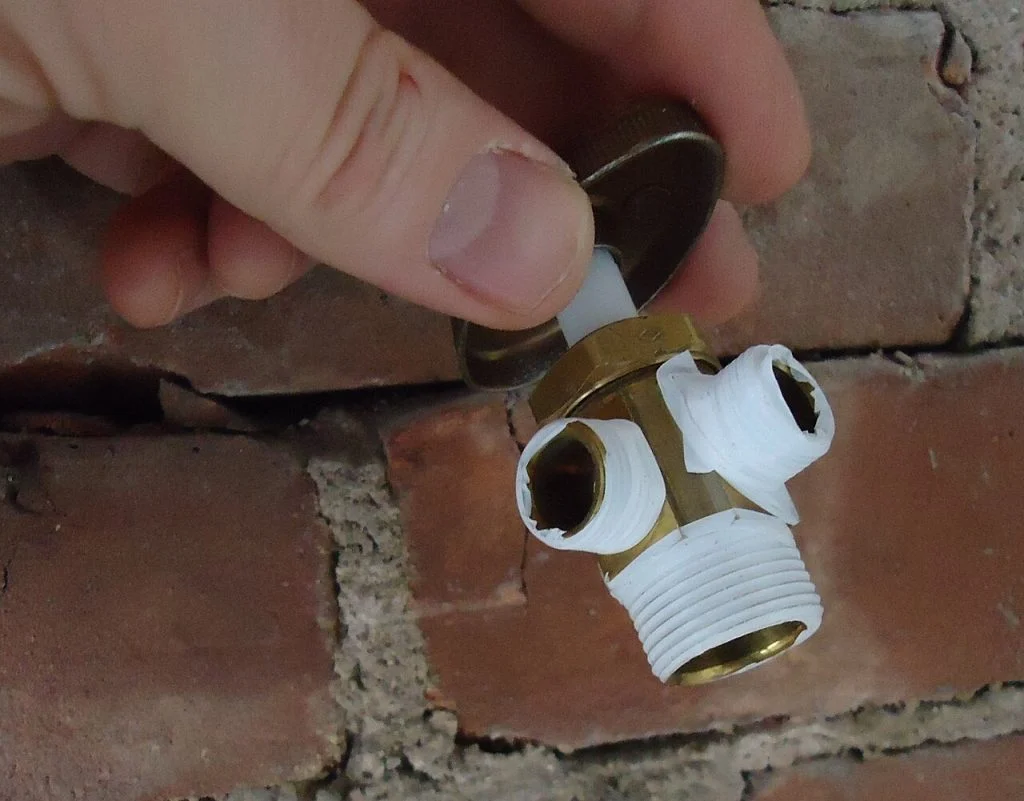
Yes, a bad city water check valve can make the pump cycle. The check valve keeps pump pressure from escaping out the city water inlet. When it fails, water seeps backward and the pump restarts to make up for it. A worn tank fill valve can do the same.
Test: Run the pump with no hose connected. Look for water dripping from the city water connection. Any drip means the check valve is leaking and needs cleaning or replacement.
Toilet and faucet valves
A toilet valve that seeps into the bowl is a common hidden leak. If the bowl water level rises slowly while the pump is on, the valve is passing water. Faucets with worn cartridges can also drip just enough to trigger restarts.
Water heater and bypass valves
Check the water heater bypass valves and the water heater relief valve. Both sit out of sight and can drip slowly. Look for wet spots behind the water heater access panel and around the outside relief valve.
Also tighten the pump head screws. Per RVDA, inspect the pressure switch diaphragm for rupture or pinching. A damaged diaphragm can’t hold pressure.
Can air in the lines cause the pump to cycle?
Yes. RVDA notes that air trapped on the outlet side, such as in the water heater, or in the pump head can keep the pump from shutting off cleanly. You’ll often hear sputtering faucets or a pump that runs longer than usual.
How do I get air out of my RV water lines?
- Fill the fresh tank and turn on the pump.
- Open one faucet at a time, cold side first, then hot.
- Let each one run until the water flows steady with no spitting.
- Do the shower, the toilet, and the outside shower the same way.
- Close everything and see whether the pump shuts off and stays off.
Check the fresh tank level and the pump’s inlet strainer too. A low tank or a clogged strainer lets the pump suck air. RVDA notes a clogged strainer can cause rough operation and failure to prime.
Why does the pump pulse or chatter when a faucet is on?
Pulsing while a tap runs usually means the pump can’t push water out fast enough, so it reaches shut-off, stops, and restarts. RVDA lists restrictive plumbing, clogged faucet aerators and shower heads, and inline water filters as causes of rapid cycling.
- Clean aerators and shower heads. Unscrew them and remove debris or hard-water buildup.
- Move filters off the main line. RVDA says a water filter or purifier should go on a separate feed line, not inline with the whole system.
- Look for kinked or pinched lines near the pump and behind cabinets.
Bypass vs. non-bypass pumps
A bypass pump recirculates some water inside the pump at low demand. That smooths flow and cuts down on on-off pulsing at a trickle. Pentair describes the Shurflo Revolution 4008 as an automatic-demand pump with an internal bypass. A non-bypass pump tends to pulse more at low flow.
Does an accumulator tank stop RV water pump cycling?
An accumulator tank reduces cycling at low flow, but it does not fix a leak. It stores pressurized water, so small draws come from the tank before the pump has to start. That means fewer starts and steadier flow. Set the pre-charge using the tank maker’s instructions. Don’t guess a pressure number.
How do you test and adjust the pressure switch?
Safety first: Turn off 12V power to the pump and open a faucet to relieve water pressure before you work on it. If you aren’t comfortable with 12V wiring, have an RV tech do this step.
Testing the switch
- Check for voltage at the pressure switch.
- Bypass the switch briefly to see if the motor runs. If it runs, the motor is fine and the switch is suspect. If it doesn’t, look at the motor and wiring.
- Inspect the switch diaphragm for rupture or pinching.
- If the pump never shuts off, check whether the bypass pressure is set higher than the shut-off pressure. RVDA flags this as a cause of a pump that won’t stop.
How do I adjust the pressure switch on an RV water pump?
Some pumps have an adjustment screw on the pressure switch. Turn direction and range differ by model, so follow your pump’s manual. Make small changes and retest after each one.
Never go above the rated shut-off pressure. For example, the 12V Shurflo 4008-101 is rated at 55 PSI shut-off. Replace the switch instead of adjusting it if the diaphragm is damaged, the contacts are burned, or the pump still won’t shut off at its rated setting.
Could low voltage or worn pump parts be the cause?
Yes. RVDA says voltage at the pump and from the charging system should be within ±10% of rated. Low voltage can keep the pump from building full pressure. Check battery charge, the charging system, and the ground connection for corrosion or looseness.
Inside the pump, RVDA lists these faults that can stop it from shutting off or holding pressure:
- Debris holding the pump valves open
- Swollen rubber valves
- Loose drive assembly or pump head screws
Decision rule: If the plumbing passes the static test and voltage is good, but the pump still cycles, inspect or rebuild the pump head (check valve and valve assembly) or replace the pump.
When should you replace the RV water pump?
Replace the pump when it still cycles after you’ve ruled out leaks, air, the switch, and voltage. Also replace it if it is unusually noisy, leaks from the housing, or won’t build pressure.
Match the new pump’s voltage, flow rate (GPM), and shut-off pressure to the original. Here is how two Shurflo Revolution models compare, per Pentair:
| Model | Voltage | Flow | Max amps | Shut-off pressure |
|---|---|---|---|---|
| Shurflo 4008-101-E65 | 12 VDC | 3 GPM | 7.5 A | 55 PSI |
| Shurflo 4028-100-E54 | 12 VDC | 2.3 GPM | 5 A | 50 PSI |
Pentair says the 4008 is thermally protected and can run dry without damage. Even so, don’t leave any pump running on an empty tank. For brand-specific access, see our guides on where the water pump is on a Forest River RV and what to do when a Forest River water pump is not working.
Quick troubleshooting checklist
- Check the fresh tank level and clean the inlet strainer.
- Bleed air from every faucet, hot and cold, including the outside shower.
- Run a static leak test with all fixtures closed and time the restarts.
- Check the city water inlet for drips while the pump runs.
- Inspect the toilet valve, water heater bypass valves, and relief valve.
- Clean aerators and shower heads, and move filters to a separate feed line.
- Test the pressure switch and confirm the bypass isn’t set above shut-off.
- Confirm pump voltage is within ±10% and the ground is clean and tight.
- Tighten pump head screws and inspect or rebuild the valve assembly.
- Replace the pump with one matching voltage, GPM, and shut-off pressure.
Frequently Asked Questions
Why does my RV water pump turn on by itself when no water is running?
Your RV water pump turns on by itself because line pressure is escaping. The pump restarts to bring pressure back up. Common causes are a plumbing leak, a toilet or faucet valve that seeps, a bad city water inlet check valve, trapped air, or a faulty pressure switch. Start with a static leak test.
Can a running toilet make an RV water pump cycle?
Yes. A toilet valve that seeps water into the bowl is a common hidden leak that makes the pump restart. Turn the pump on with every fixture closed and watch the bowl. If the water level rises slowly, the toilet valve is passing water and needs repair or replacement.
Can a water filter cause an RV water pump to cycle or pulse?
Yes. An inline water filter can restrict flow, so the pump reaches shut-off pressure, stops, and restarts while a faucet runs. RVDA recommends placing a water filter or purifier on a separate feed line instead of inline with the whole system. Clogged aerators and shower heads can cause the same pulsing.
Can low battery voltage make an RV water pump cycle?
Yes. Low voltage can keep the pump from building full pressure, so it may not shut off cleanly. RVDA says voltage at the pump should be within ±10% of its rating. Check the battery charge and the charging system. Also check the ground connection for corrosion or looseness.
Should I replace or rebuild a cycling RV water pump?
Rebuild or replace the pump only after the plumbing passes a static leak test and voltage checks out. If it still cycles, inspect or rebuild the pump head’s check valve and valve assembly. Replace the pump if it leaks from the housing, is unusually noisy, or won’t build pressure.