If your Dometic RV refrigerator is not cooling but the freezer is, check the simple things first. Make sure the thermostat is not on a low setting and the RV is level. Then look for blocked exterior vents, dirty coils, or a slipped temperature sensor. If none of those fix it, the thermistor or the cooling unit may be failing.
Before you start, rule out a safety problem. Look for yellow residue at the back of the fridge or an ammonia smell. If you find either one, turn the fridge off and skip to the recall section below.
How Cold Should the Dometic RV Refrigerator Be?
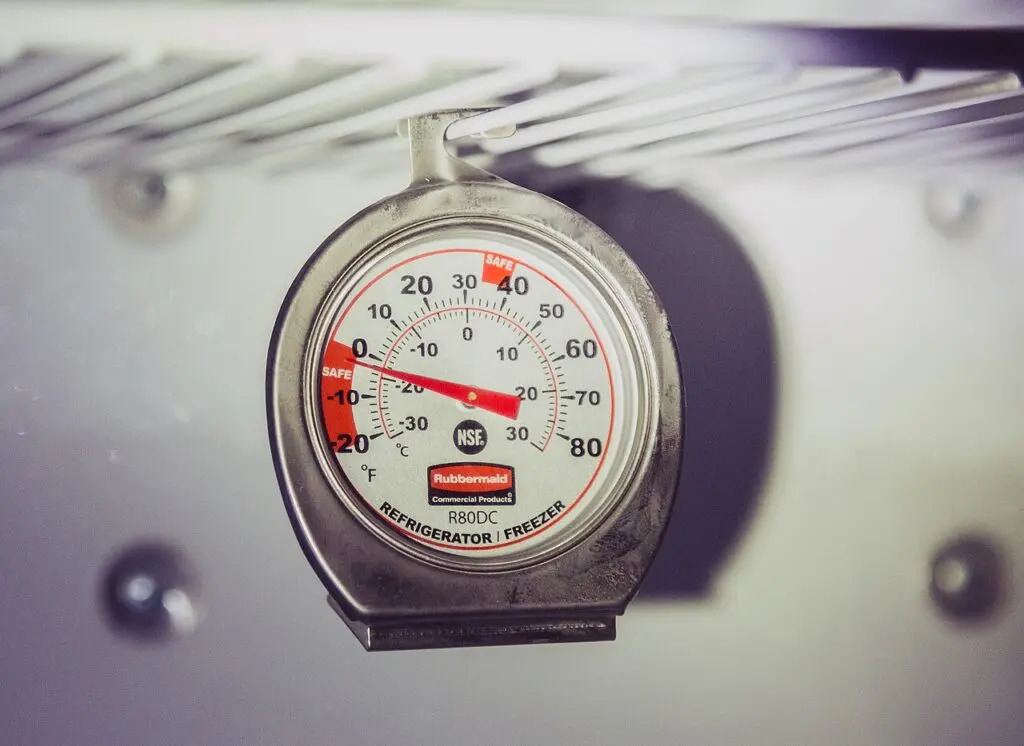
For food safety, keep the fresh-food compartment at 40°F or below and the freezer at 0°F. This is the FDA’s guidance.
Dometic’s own spec is looser. Its Americana absorption refrigerators should reach 43°F or below in the fridge and 15°F or below in the freezer when the unit is installed to spec. That number describes how the appliance should perform. It is not a food-safety target.
On adjustable models, the thermostat runs from 1 to 5, and 5 is the coldest setting. Some models have no adjustable thermostat at all, including the RM2351, RM2451, RM2551, DM2652 and DM2852.
Use a refrigerator thermometer to get an accurate reading. Dometic says the most accurate test is to measure the temperature of a liquid, such as a glass of water left in the fridge, rather than the air.
Read Also: Dometic RV Refrigerator Reset: 4 Steps to Get It Done!
What Causes the Dometic RV Refrigerator Not Cooling But Freezer Is?
Start by checking the thermostat setting. Setting 1 is the warmest, so a low setting can leave the fresh-food section too warm even while the freezer stays cold. Dometic recommends starting the fridge at the coldest setting.
If the setting is right and the fridge still runs warm, these are the usual suspects:
- RV not level
- Blocked vent
- Messy condenser coil
- Slipped temperature sensor
- Defective thermistor
- Faulty cooling unit
These notes apply to absorption fridges, which run on LP gas or 120V. If your RV has a Dometic residential or compressor fridge, the causes are different. See the residential guide linked below.
Read Also: Why is My Dometic RV Refrigerator Fins Freezing? (Solutions)
Troubleshooting Dometic RV Refrigerator Not Cooling But Freezer Is
Work through these fixes in order. The quick checks come first, and the expensive repairs come last.
1. Level the RV
Yes, an absorption fridge needs to be level to work properly. Dometic’s operating instructions warn that if the fridge runs off-level while the RV is parked, liquid ammonia collects in parts of the evaporator tubing. That can keep it from cooling.
To fix it, level the RV whenever you park with the fridge running. Then give the fridge time to recover.
2. Unblock the Exhaust Vent
An absorption fridge vents its heat through exterior vents behind the unit. If those vents are blocked, the heat stays trapped and the fridge can lose its cooling power.
Take the exterior vent cover off and look for dust, leaves, nests or other debris. Clear out anything you find with a soft brush, then vacuum up what is left.
Read Also: Dometic RV Fridge Not Working On Electric? Causes & Fixes
3. Clean the Condenser Coil
The condenser coil carries heat out of the fridge. When it is caked with dirt, it cannot shed that heat well, and the fridge compartment warms up.
To clean it:
- Turn the fridge off and unplug it.
- Remove the rear access panel.
- Loosen the dust with a brush.
- Vacuum the coil clean.
4. Adjust the Temperature Sensor
On many models, a temperature sensor clips onto the cooling fins inside the fridge. If it slips out of place, the fridge may read the temperature wrong and not cool enough.
Turn the unit off and clip the sensor firmly back where it belongs. Then turn the fridge on and check the temperature again after a few hours.
5. Replace or Repair the Thermistor
A thermistor is a temperature-sensing part. On models that use one, it reports the compartment temperature to the fridge’s controls. A damaged thermistor can send bad readings, and the fridge may stop cooling as it should.
If you are not comfortable testing electrical parts, have a technician confirm whether the thermistor needs to be replaced.
Read Also: What Causes Dometic Fridge Check Light On: Hot To Fix it?
6. Repair/Replace the Cooling Unit
Check the cooling unit last, once every other fix has failed. It is the core of an absorption fridge and does the actual cooling. When it starts to fail, the fridge cannot keep up.
Cooling unit work needs a professional. A technician can tell you whether a repair will work or the whole unit needs to be replaced.
Read Also: 7 Common Residential RV Refrigerator Problems [Solved]
How Do I Know If My Dometic Cooling Unit Is Bad or Recalled?
Dometic’s recall page lists these warning signs:
- Leakage or staining at the back of the fridge
- Yellow residue at the back or sides
- An ammonia smell
- A fridge that is not cooling properly
If you notice any of these, turn the fridge off right away. Leave it off until it has been repaired and any recall work is done.
If your unit is part of the recall, follow these rules until it is fixed:
- Do not run it on LP gas.
- Close the manual gas valve at the back, but do not disconnect the gas supply.
- Do not run it on electricity while you are driving or sleeping.
The recall fix is a free Secondary Burner Housing Kit. To check your recall status or find a service center, call Dometic at 888-446-5157.
When Should You Call an RV Technician?
Call a certified RV technician in any of these cases:
- You see yellow residue or smell ammonia.
- The fridge stays above 40°F after you have checked the setting, leveled the RV, cleaned the vents and coils, and reseated the sensor.
- You suspect the thermistor or the cooling unit and are not comfortable testing electrical or gas parts.
Read Also: RV Refrigerators Not Cooling In Hot Weather – How To Fix?
Frequently Asked Questions
What is the coldest setting on a Dometic RV refrigerator?
On adjustable Dometic models, 5 is the coldest setting and 1 is the warmest. The thermostat runs from 1 to 5, and Dometic recommends starting the fridge at the coldest setting. Some models have no adjustable thermostat at all, including the RM2351, RM2451, RM2551, DM2652 and DM2852.
Where should the temperature sensor be on a Dometic RV fridge?
On many Dometic models, the temperature sensor clips onto the cooling fins inside the fresh-food compartment. If it slips out of place, the fridge can misread the temperature and not cool enough. Turn the unit off, clip the sensor firmly back onto the fins, then check the temperature again after a few hours.
What is the most accurate way to check an RV fridge’s temperature?
The most accurate way is to measure the temperature of a liquid, not the air. Dometic suggests leaving a glass of water in the fridge and placing a refrigerator thermometer in it. Air readings change quickly when the door opens, so a liquid reading gives you a truer picture of how cold the fridge really is.
Is 43°F cold enough for an RV refrigerator?
No, 43°F is not a food-safety target. It is Dometic’s performance spec for its Americana absorption fridges when installed to spec. For food safety, the FDA advises keeping the fresh-food compartment at 40°F or below and the freezer at 0°F. If your fridge stays above 40°F after basic checks, keep troubleshooting.