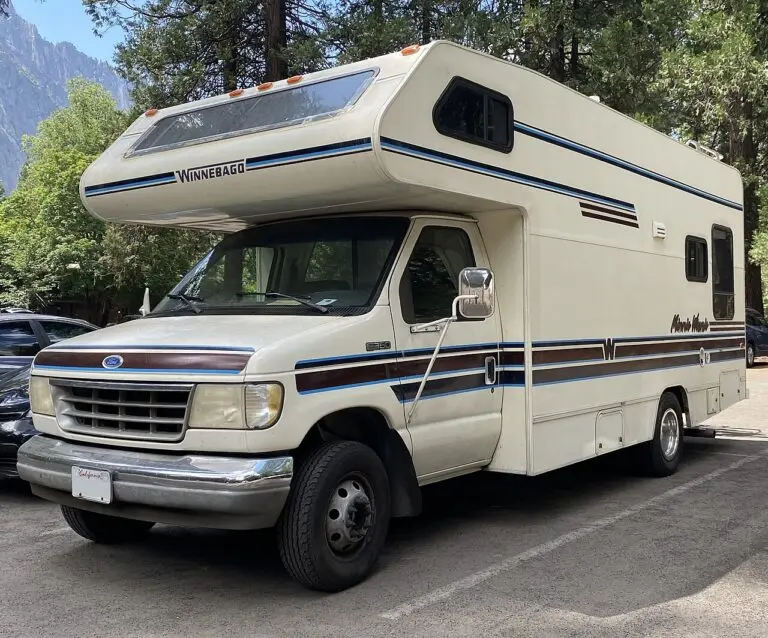
Common Jayco Seneca problems include roof leaks from failed sealant around vents and seams, wood rot that follows those leaks, engine overheating, weak batteries, loose wiring, and slide-outs that stick or stall. Most of these can be caught early with regular roof and seal checks. You should also check your VIN for open NHTSA recalls.
Jayco has been building RVs in Middlebury, Indiana, since 1968. The Seneca is its diesel Super C motorhome. Like any RV, it has weak spots. Below are the six problems to watch for and how to fix each one.
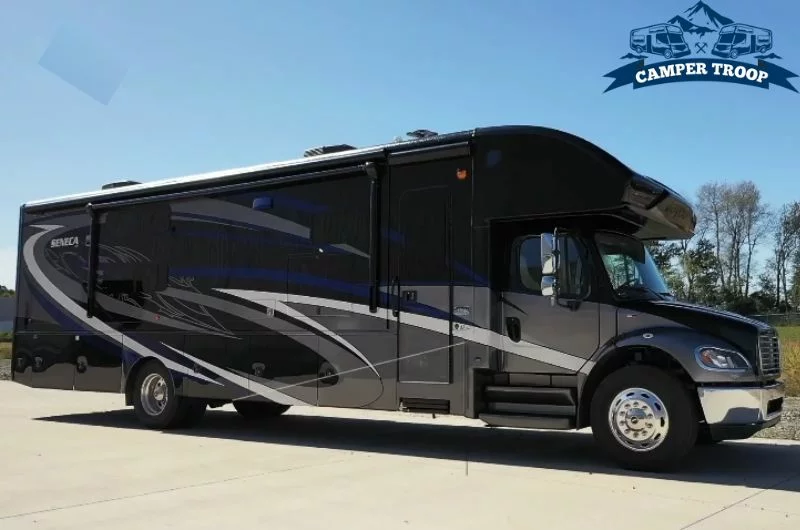
What Are The Common Problems With Jayco Seneca?
These are the issues Seneca owners most often need to deal with. Fix them early, and they are less likely to cause more damage.
- Leaky Roof
- Dry Rot
- Engine Overheating
- Battery Failure
- Wiring Harness
- Slide-Out Problems
What Chassis Is The Jayco Seneca Built On?
The Jayco Seneca is built on a Freightliner chassis with a Cummins 6.7L diesel engine. The exact chassis depends on the model year. Engine and drivetrain problems depend on the chassis, so know which one you have before you troubleshoot. Jayco’s specs list these setups:
| Model year | Chassis | Engine |
|---|---|---|
| 2026–2027 | Freightliner S2RV Plus | Cummins ISB 6.7L diesel, 360 HP, 800 lb-ft |
| 2021 | Freightliner S2RV | Cummins 6.7L diesel |
| 2015 | Freightliner M2 | Cummins 6.7L diesel, 340 HP |
Current models also use an Allison 3000 MH automatic transmission. They have a 31,000 lb GVWR and a 100-gallon fuel tank.
How Do You Troubleshoot And Fix Jayco Seneca’s Problems?
Here is what causes each problem and how to handle it before it gets worse.
Problem 1: Leaky Roof
Roof leaks are a well-known issue in Class C and Super C RVs, and the Seneca is no exception. If you see water inside every time it rains, your roof has a leak that needs attention. Watch for these signs:
- Wet walls
- Wet stains
- Mold buildup in the RV
- Electrical short circuit
What kind of roof does a Jayco Seneca have?
The Seneca has a one-piece, seamless, crowned fiberglass roof. Jayco builds it with its Stronghold VBL laminated construction and bead-foam insulation, rated up to R-24 in the roof. Older models such as the 2015 also had a seamless fiberglass roof. It is not a rubber roof, and fiberglass does not rust.
What causes the Leaky roof in Jayco Seneca?
Because the roof itself is one seamless piece, most Seneca leaks come from failed sealant. Check these areas first:
- Around roof vents, fans and skylights
- Around the A/C unit, antennas and other roof fixtures
- Along the roof-to-wall seams and end caps
- Cracks from hail, tree branches or heavy weight left on the roof
Sealant dries out and cracks over time from sun and weather. Find out what caused the gap so you can stop it from happening again.
How to fix the leaky roof in Jayco Seneca?
- Check your owner’s manual to see if the roof is rated to walk on. If not, work from a sturdy ladder.
- Work only on a dry roof, and have someone hold the ladder.
- Clean the area around the leak and remove all dirt.
- Remove loose or cracked old sealant.
- Let the surface dry fully.
- Apply a sealant that is approved for fiberglass roofs over the gap.
Self-leveling sealant is made for flat surfaces like vent flanges. Non-sag sealant is made for vertical seams. Contact Jayco or your dealer to confirm which sealant works with your roof, and follow their instructions.
To prevent leaks, inspect all roof sealant before and after each camping season. Also check it after any hail or tree strike.
Read Also: Jayco Propane Regulator Recall: Everything You Need To Know
Problem 2: Dry Rot
Dry rot is a fungus that breaks down wood. In an RV, it usually starts after a leak lets water reach wood in the floor, cabinets or the framing around windows and roof openings. Signs include soft spots, water stains and a musty smell of rotten wood.
Dry rot fungus does not attack rubber. Cracked rubber seals, sealant and tires are also called “dry rot,” but that is aging from UV and ozone, not fungus. Treat cracked sealant as a roof leak problem (see Problem 1).
What causes dry rot on Jayco Seneca?
Dry rot starts when airborne fungal spores settle on damp wood. Once wood moisture goes above about 20%, the spores can take hold and spread. Common causes include:
- Water getting in through roof, window or vent leaks
- Water pooling on the roof or around openings
How to fix the dry rot issue in Jayco Seneca?
To fix dry rot, remove the rotted wood and stop the water that caused it. Follow these steps:
Step 1: Find and stop the leak
Reseal the vent, seam or window that let the water in. If you skip this step, the rot will come back.
Step 2: Remove the affected wood
Cut out all soft, rotted wood so the damage cannot spread further.
Step 3: Replace and protect
Let the area dry fully. Then install new wood and protect it from moisture.
How much does it cost to fix Dry rot in Jayco Seneca?
Fixing dry rot can be costly. The cost goes up the longer the damage goes unnoticed. If the rot reaches the floor or wall structure, take the RV to a dealer or RV repair shop.
Read Also: How to Fix Jayco Slide-out Problems – Try These 4 Easy Ways
Problem 3: Engine Overheating
Engine overheating can happen in any diesel motorhome, including the Seneca. It usually points to a cooling system problem. Warning signs include:
- Melted plastic, and resins in your RV
- Burning smell
- Leakage of oil
- Leakage of coolants
What causes engine overheating in Jayco Seneca?
Check these causes, starting with the most likely:
- Low coolant or a coolant leak
- Faulty water pump
- Bad gasket
- Exhaust manifold problems
When should you stop driving?
Pull over safely and shut off the engine as soon as the temperature gauge reaches the red zone or a warning light comes on. Driving an overheated engine can cause serious damage. Never open the coolant cap while the engine is hot.
How to fix engine overheating in Jayco Seneca?
Once the engine is cool, check the coolant level and look for leaks. Then check that the water pump works, the gaskets are sealing, and there are no holes in the exhaust. The Seneca uses a Cummins diesel on a Freightliner chassis, so a diesel truck or chassis service center is usually better for engine repairs than an RV shop.
Problem 4: Battery Failure
A failing battery won’t hold a charge for long, even after a full charge. Your Seneca has two battery systems. The chassis battery starts the engine. The house batteries run the lights and appliances in the living area. Find out which one is failing first. Symptoms include:
- Low on fluid (flooded lead-acid batteries only)
- Leakage
- Corrosion
- Swollen battery
What causes battery failure in Jayco Seneca?
Battery failure is usually caused by age or an electrical problem you haven’t found yet. Common causes include:
- Electrical malfunction
- Overcharging or undercharging the RV
- Old age
How to fix battery failure in Jayco Seneca?
Before you replace a battery, check the connections, cables and charging system. A new battery will fail too if the real problem is a charger or a short. When you replace a battery, use the same type. Lithium batteries need a charger set up for lithium, so don’t swap lead-acid for lithium without checking your charging system.
Low voltage or dimming headlights while driving point to the chassis battery or alternator. Get this checked right away, because you could lose power on the road. Wear eye protection and gloves when you handle batteries.
Read Also: Causes And How To Fix Jayco Fridge Not Working
Problem 5: Wiring Harness
The wiring harness can also get damaged or loose. A wiring harness or cable harness is a group of electrical wires which are bundled together to form a harness. A wiring harness is used to send power to a device or transmit any electrical signal.
What causes wiring harness problems in Jayco Seneca?
A bad harness can cause slide-out problems and other electrical faults. Common causes include:
- Wear and tear
- Old age
- Infrequent maintenance
- Fluctuating temperature
How to fix the wiring harness in Jayco Seneca?
- Turn off shore power and disconnect the batteries before you touch any wiring.
- If the slide-out isn’t working, check its wiring harness first.
- Do basic circuit checks to find the fault.
- Replace any damaged harness.
- Make sure the ground wire is firmly connected to the metal frame, and clean the ground contact.
Read Also: Common Jayco Seismic Problems & Solutions
Problem 6: Slide-Out Problems
Slide-out problems are common in RVs and usually come from a mechanical or power fault. A slide that won’t move can end a camping trip, and one that’s stuck out means you can’t drive.
What causes slide-out problems in Jayco Seneca?
- Motor burnout
- Lubrication problems
- Foreign object
- Power malfunction
How to fix slide out in Jayco Seneca?
First, check for power. Make sure the batteries are charged, and look for a blown fuse or tripped breaker. Then look for anything blocking the slide, like debris or items inside the RV. Also check the wiring harness (see Problem 5).
If the slide moves but drags, it may need lubrication. RVcare Slide-out silicone lube is made for this job. Spray it on the slide tracks. You can also use it on interior slides and window tracks.
How do you retract a stuck slide-out manually?
Most RV slide systems have a manual override, such as a hand crank or a release for the motor. The steps depend on the slide mechanism, so follow the override procedure in your Seneca owner’s manual. If you can’t find it, call Jayco or your dealer before forcing the slide, because forcing it can damage the motor or the gears.
Are There Any Recalls On The Jayco Seneca?
Yes. NHTSA has issued several recalls covering the Seneca:
- 20V-796: 2015–2020 models, leveling system brackets
- 22V-053: 2021–2022 models, loose tie rod clamps
- 22V-121: 2019–2022 models, tire valve stem extensions
- 23V-102: 2022–2023 models, certification labels
- 26V-416: 2027 models, seat critical fasteners (reported June 30, 2026)
Enter your VIN at nhtsa.gov/recalls to see if your Seneca has an open recall. Recall repairs are done by a dealer at no cost. For recall or warranty questions, call Jayco customer service at 1-800-283-8267.
If your Seneca is still under warranty, contact your Jayco dealer before you start any DIY repair. Ask how your coverage applies so you don’t risk a covered claim.
Conclusion
Jayco is one of the leading RV brands in the USA, but the Seneca can still have problems like any other motorhome. Most trouble starts with roof leaks from failed sealant, which can lead to water damage and rot.
You can fix most of these problems yourself if you catch them early. Leave major rot, engine repairs and recall work to a dealer or chassis service center. If you are not confident enough to do the job yourself, seek professional help.
Read Also: Common Jayco Pinnacle Problems & Solutions
Frequently Asked Questions
Is the Jayco Seneca a good motorhome?
The Jayco Seneca is a diesel Super C motorhome built on a Freightliner chassis with a Cummins 6.7L engine and a seamless fiberglass roof. Like any RV, it has weak spots, such as sealant leaks, slide-outs and batteries. Regular roof and seal checks catch most of these problems early.
What sealant should I use on a fiberglass RV roof?
Use a sealant that is approved for fiberglass roofs. Self-leveling sealant is made for flat surfaces like vent flanges. Non-sag sealant is made for vertical seams. Before you buy, contact Jayco or your dealer to confirm which sealant works with your Seneca’s roof, and follow their instructions.
How often should you check the roof sealant on a Jayco Seneca?
Inspect all roof sealant before and after each camping season. Also check it after any hail or tree strike. Sealant dries out and cracks over time from sun and weather. Catching a gap early stops leaks before water reaches the wood and causes rot.
Can I replace lead-acid RV batteries with lithium batteries?
Only if your charging system supports lithium. Lithium batteries need a charger set up for lithium, so don’t swap lead-acid for lithium without checking your charging system first. In most cases, replace a failed battery with the same type. Also check the connections, cables and charger before you replace anything.
Who should repair engine problems on a Jayco Seneca?
A diesel truck or chassis service center is usually better than an RV shop for Seneca engine repairs. The Seneca uses a Cummins diesel engine on a Freightliner chassis. Leave major engine work, recall repairs and serious rot damage to a dealer or a chassis service center.
Should I contact Jayco before doing DIY repairs on my Seneca?
Yes, if your Seneca is still under warranty. Contact your Jayco dealer before you start any DIY repair, and ask how your coverage applies. This helps you avoid putting a covered claim at risk. You can reach Jayco customer service at 1-800-283-8267.