Quick answer: The Jayco Journey is an Australian caravan made by Jayco Australia. Common owner complaints include water leaks, roof and seal leaks, weak electric brakes, rough unfinished edges, door and window issues, a noisy water pump and uneven tire wear. Most of these trace back to worn seals, poor wiring or grounds, or tire and axle problems.
Every caravan and travel trailer has problems, so it helps to know the usual ones and how to fix them. The Jayco Journey is no different. Some problems are minor. Others can cost you a lot of money if you ignore them.
When you find an issue with your Jayco Journey, act on it early. This guide covers the most common problems, what causes them, how to fix them and when to hand the job to a dealer or qualified technician.
Which Jayco Journey Does This Guide Cover?
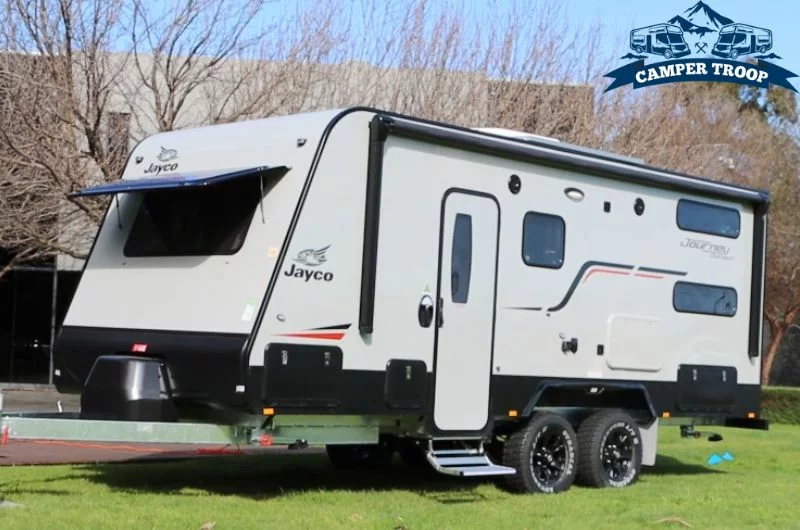
The Jayco Journey is a caravan range built by Jayco Australia. It is not a US Jayco travel trailer model. If you own a Jayco built for the US market, check the US model name on your VIN plate before using this guide.
The Journey range comes in several forms:
- Full-height caravans with fixed walls and roof.
- Pop-tops with a roof that raises at camp.
- Outback versions built for rough roads.
- All-Terrain versions.
This guide covers general problems owners raise across the range. It does not single out specific model years. Build quality and parts can change from year to year, so always check your van’s build date and owner’s manual.
What Is the Difference Between the Jayco Journey and the Journey Outback?
The main difference is the suspension. The standard Journey sits on tandem axles with load-sharing leaf-spring suspension. The Journey Outback uses Jayco’s JTECH independent suspension and is built for rougher roads. This matters when you check tire wear and axle alignment on a used van, because the two setups wear and adjust differently.
What Are The Common Problems With The Jayco Journey?
It’s normal to run into some issues with any caravan, including the Jayco Journey. Below are the problems owners commonly raise. Several are covered in detail in the next section.
- Water leakage
- Faulty braking system
- Unfinished edges
- Leaky/cracked roof
- The door comes inside the caravan
- Oil spots beside the kitchen area
- Noisy water pump
- Scrubbed out tires
- Wear and tear on the exterior
Jayco Journey Problems at a Glance
Use this table to see where to start. Costs vary a lot by location, parts and how far the damage has spread, so get a written quote before any big repair. If your van is still under warranty, talk to a Jayco dealer first.
| Problem | Likely causes | DIY difficulty | Relative cost |
|---|---|---|---|
| Water leakage | Worn seals, loose fittings, damaged pipes, pump or tank faults | Easy to hard (depends on source) | Low to high |
| Weak or failed electric brakes | Poor grounds, thin wire, corroded connections, controller fault, worn brake parts | Moderate; use a technician for brake parts | Moderate |
| Unfinished edges | Rough finishing, wear over time | Easy | Low |
| Leaky or cracked roof | Old sealant, failed roof seals, punctures, storm damage | Moderate to hard | Moderate to high |
| Door issues | Loose hinges, misaligned latch or striker | Easy to moderate | Low |
| Oil spots near the kitchen | Cooking splatter, stains, possible leak behind panels | Easy (cleaning) to moderate | Low |
| Noisy water pump | Loose mounting, air in lines, clogged strainer, worn pump | Easy to moderate | Low to moderate |
| Scrubbed tires | Wrong pressure, overloading, axle alignment | Easy (pressure) to hard (alignment) | Low to high |
| Stuck windows | Dirt in tracks, dry seals, bent frames | Easy | Low |
| Rusting gas cover handle | Moisture, worn coating | Easy | Low |
Is the Jayco Journey a Good Caravan?
Many of the problems above, like seal leaks, brake wiring faults and tire wear, are common to caravans in general. They are not unique to the Journey. Most can be prevented or caught early with regular checks. Whether a specific van is a good buy depends on its condition, how it has been maintained and whether any warranty still applies.
How Do You Troubleshoot and Fix Jayco Journey Problems?
Now that you know the possible problems, you can troubleshoot them in order. Below are the causes, symptoms and fixes for each major issue.
Before you start: if your van is under warranty, report the defect to an authorised Jayco dealer or repair agent before you repair it yourself. See the warranty section below.
Read Also: 4 Common Jayco Eagle Problems & Solutions
Problem 1: Water Leakage
Water leakage is one of the most serious problems with any caravan or travel trailer, and the Jayco Journey is no exception.
Ongoing leaks can cause a lot of damage. For example, you may notice soft or stained flooring and corrosion in different parts of the van.
What Causes Water Leakage On Jayco Journey?
Leaks come from two places. Plumbing leaks come from the water pump, pipes, fittings or tank. Body leaks let rain in through the roof, windows, doors or walls.
Common sources of water leaks include:
- Broken water pipe.
- Damaged roof seals and loose sealant.
- Faulty window or door seals.
- Cracks and gaps on the walls.
Quick test: if the leak only shows up when it rains, look at the body seals. If it shows up when the water pump runs, look at the plumbing.
How To Fix Water Leakage On Jayco Journey?
Start by finding the source of the leak. Then fix that source, not just the wet spot.
- Check where the water comes from by checking all the possible leakage sources.
- Next, check the water pump, its fittings and the tank for damage or drips.
- Repair the roof seams if they go bad or there are significant gaps.
- Replace the door and window sealants if they are leaking.
- If the water pump becomes faulty, replace it with a new one.
- Finally, repair or replace the leaky water pipe.
- If the kitchen sink or its drain leaks, tape can stop it for a short time. Plan a proper repair or replacement.
How Much Does It Cost To Fix Water Leakage On Jayco Journey?
The cost depends on what causes the leak and how much damage the water has done. Resealing a window is a small job. Replacing a pump or tank costs more. Rotted floors or walls cost the most. Get a written quote, and check your warranty status first.
Read Also: Common Jayco Outback Problems & Solutions
Problem 2: Faulty Brake Control System
Brake problems on the Jayco Journey often show up as electric brakes that feel weak or stop working. These faults can sit in the brake controller in the tow vehicle, in the wiring or in the brake parts at the wheels.
A common symptom is braking that gets weaker over time. Any brake problem needs to be fixed right away.
Safety warning: if the caravan brakes feel weak, pull, lock up or do not work at all, stop towing. Do not drive on until they are fixed. Have a qualified technician handle work on brake drums, shoes, magnets and bearings.
What Causes A Faulty Brake Control System On A Jayco Journey?
First, know how the system works. The standard Jayco Journey sits on tandem axles, so it has four wheels. Caravan electric brakes are separate drum brake assemblies, one at each braked wheel. Each has its own magnet. A fault can affect one wheel or all of them.
Possible causes include:
- Poor electrical connection
- Broken wires.
- Corroded connection.
- Undersized brake cabling
- Broken brake component.
- Faulty brake controller.
How To Fix A Faulty Brake Control System On A Jayco Journey?
First, check the electrical side of the brake system. The brakes cannot work properly with a bad connection.
Low voltage at the brake magnets is a symptom, not the fault itself. It usually comes from wire that is too thin, poor grounds or a controller problem. Fix the cause. Do not try to “add voltage” to the magnet.
- Check the voltage at the brake connection to see whether enough is reaching the brakes.
- If voltage is low, check the controller output, the wire gauge and every ground connection.
- Check whether there is a corroded connection.
- Clean and repair the corroded connection.
- Check the brake cabling.
- Replace undersized brake cabling with wire of the gauge your brake or controller maker recommends.
- Check all the brake components and parts.
- Check for broken wires.
- Repair or replace it based on the type of damage.
- Replace the brake component if there is severe damage.
- Test the brake controller.
- Replace or repair the controller based on its condition.
How Much Does It Cost To Fix A Faulty Brake Control System On A Jayco Journey?
The repair cost varies because many different faults can cause brake problems. Cleaning a corroded ground costs little. A new controller, new wiring or new brake assemblies cost more. Ask a brake technician for a written quote that lists parts and labor separately.
Read Also: Common Jayco North Point Problems & Solutions
Problem 3: Unfinished Edges
Unfinished edges are one of the most visible issues owners mention. Some owners don’t expect to find rough edges in a Jayco. Check the woodwork around the bunk beds and cabinets.
Rough edges make the interior look less tidy. If you have children, sharp or splintered edges can also hurt them.
What Causes Unfinished Edges On The Jayco Journey?
Owners notice unfinished edges at different stages of ownership. Some edges may be rough when the van leaves the factory.
Over time, finished edges can also wear, chip or peel from use, bumps and moisture.
How To Fix Unfinished Edges On Jayco Journey?
First, check the condition of the edges. Then choose your repair. Light roughness can often be sanded smooth and sealed. Edge trim or edge banding can cover exposed board.
If an edge is badly chipped or swollen from water, repairing it may not be enough. Make or buy new edge pieces and fit them in place. If the van is new and under warranty, report rough edges to your dealer first.
How Much Does It Cost To Fix Unfinished Edges On Jayco Journey?
This is usually one of the cheaper fixes. Sandpaper, sealant and edge trim cost little, and most owners can do the work themselves. Costs rise if water has damaged the board and panels need replacing.
Read Also: Common Jayco White Hawk Problems & Solutions
Problem 4: Leaky Roof
A leaky roof is another frustrating problem. It gets worse in heavy rain or after damage. Roof leaks are a common caravan problem across many brands, not only the Journey.
The most common sign is water dripping from the ceiling when it rains. You may also see cracks, stains or bubbling on the inside of the roof.
What Causes a Leaky Roof On A Jayco Journey?
Harsh weather is a major cause of roof leaks and cracks. Sun, heat, cold and hail all wear down sealant and seals.
The roof needs regular maintenance to stay sealed. Skipping it is another common cause of leaks. Other possible causes are:
- Unexpected damage.
- Poor roof seals.
- Puncture in the roof membrane.
How To Fix a Leaky Roof On A Jayco Journey?
Roof care is the best defense. Use a caravan or travel trailer cover in storage, especially through very hot or rainy seasons.
To fix a leak, follow these steps:
- Clean the roof.
- Check the damage.
- Apply a sealant made for your roof material to cracks and failed seams. Large cracks may need a professional repair.
- Use the rubberized leak stopper if you find tiny holes in the roof. You can also use tape as well.
- Replace the roof seals if they are damaged.
Safety tip: only walk on the roof if your owner’s manual says it can take your weight. Use a stable ladder and avoid wet roofs.
How Much Does It Cost To Fix A Leaky Roof On A Jayco Journey?
It depends on how bad the leak is and how long water has been getting in. Resealing a few seams is a small job. Replacing roof sections or repairing rotted framing is a big one. If you catch leaks early and fix simple causes yourself, you will save a lot of money.
How Do You Fix the Other Common Jayco Journey Problems?
These issues are usually smaller, but they are worth fixing before they get worse.
Why Does the Door Swing Inward or Not Close Properly?
A door that pushes inward or will not latch is usually out of alignment. Check these in order:
- Tighten any loose hinge screws.
- Check that the latch lines up with the striker plate. Adjust the striker if needed.
- Inspect the door seal. A torn or flattened seal lets the door sit wrong and lets water in.
- Make sure the van is level. A twisted body can stop the door from closing.
If the frame itself is bent or the door still won’t close, see a dealer.
What Causes Oil Spots Beside the Kitchen?
Spots near the kitchen are often cooking splatter that has soaked into the wall or benchtop. Clean them with a mild degreaser that is safe for your surface. Use a splash guard when you cook. If spots keep coming back from behind a panel, look for a leak from plumbing or the appliances, and have the gas appliances checked by a licensed gas fitter if you smell gas.
How Do You Fix a Noisy Water Pump?
- Check the pump mounts. Loose screws or worn rubber mounts let the pump rattle against the floor.
- Make sure the tank has water. A pump running dry is loud and can be damaged.
- Bleed air from the lines by opening each tap until water runs smoothly.
- Clean the inlet strainer or filter.
- If the pump cycles on and off with all taps closed, look for a leak. If it still runs rough, replace it.
Why Are My Caravan Tires Wearing Unevenly?
Scrubbed or uneven tires usually point to one of three causes:
- Wrong tire pressure. Check pressure cold, before each trip, using the figure on the tire placard or in your manual.
- Overloading. Weigh the loaded van and stay within its rated limits. Spread weight evenly side to side.
- Axle alignment. A bent axle or worn suspension part can make tires scrub. The standard Journey’s tandem leaf-spring setup and the Outback’s JTECH independent suspension are checked differently, so use a shop that knows your suspension type.
Tire wear on the inner or outer edge only is a strong hint of an alignment problem. Get it checked before it ruins a new set of tires.
How Do You Free Stuck Windows?
Clean dirt and grit out of the window tracks and hinges. Wipe rubber seals with a product made for rubber, so they don’t stick to the frame. Check that the window stays or winders are not bent. Never force a stuck window, because acrylic windows can crack.
How Do You Fix a Rusting Gas Cover Handle and Exterior Wear?
Light rust on a handle can be removed with a wire brush, then sealed with a rust-proof paint or coating. If the handle is weak or badly rusted, replace it. For general exterior wear, wash the van regularly, check decals and trim, and reseal any gaps you find. Small gaps on the outside often turn into leaks on the inside.
How Do You Set Up and Test Caravan Electric Brakes?
Weak brakes are often a setup problem, not a broken part. Set and test your controller every time you hitch up a different load.
- Hitch up and connect the plug. Check that the controller shows a trailer connected.
- Set the controller gain using the controller maker’s instructions.
- On a quiet, level, dry road, drive slowly and use the manual lever to apply only the caravan brakes.
- Adjust the gain until the caravan brakes are firm but do not lock the wheels.
- Test again with the foot brake. The van should slow smoothly without pushing the tow vehicle.
If the brakes stay weak at high gain settings, go back to the wiring checks above. If one side pulls, a single brake assembly may be faulty. Have it checked by a technician.
What Are the Legal Brake Requirements for a Caravan?
The Jayco Journey is built for Australian roads, so Australian rules apply there. They depend on the trailer’s gross trailer mass (GTM). According to RACQ’s guide to trailer brakes:
| Gross trailer mass (GTM) | Brake rule |
|---|---|
| 750 kg (about 1,653 lb) or less, single axle | No brakes required |
| Under 2,000 kg (about 4,409 lb) | Brakes on at least one axle; override brakes allowed |
| Over 2,000 kg (about 4,409 lb) | Electric brakes plus a breakaway system required |
Above 750 kg, brakes must act on both wheels of at least one axle. Check your state road authority for local rules. If you tow in the US, check your state’s own trailer brake laws.
Do I Need a Breakaway System on My Caravan?
In Australia, yes, if your caravan’s GTM is over 2,000 kg. A breakaway system applies the caravan brakes if it comes loose from the tow vehicle. Its battery must keep the brakes working for at least 15 minutes. Check the breakaway battery charge before each trip.
How Often Should You Inspect and Reseal a Caravan Roof?
The best way to stop a caravan roof from leaking is to catch failing sealant early. Follow the resealing schedule in your Jayco owner’s manual. As a practical routine:
- Before and after each travel season: inspect roof seams, hatches, vents, the air conditioner seal and window seals.
- After hail, storms or a branch strike: check the roof right away.
- When you clean the van: look for cracked, lifting or shrinking sealant.
- Inside the van: check ceilings and corners for stains, soft spots or musty smells.
- Pop-tops: also check the canvas and roof seals each time you set up.
Reseal any spot where sealant has cracked or pulled away. Remove loose old sealant first, and use a product made for your roof material.
What Does Jayco’s Warranty Cover, and Is It Transferable?
Jayco Australia offers two warranties:
- 2-year manufacturing warranty. This transfers to later owners.
- 5-year structural warranty. This covers only the original buyer.
How Do You Make a Jayco Warranty Claim?
- Note the problem as soon as you see it. Take dated photos.
- Contact an authorised Jayco dealer or repair agent. You can also call Jayco on 1800 331 601, or 03 8792 2136 in Victoria.
- Do not get repairs done elsewhere first. Jayco does not cover repairs by unauthorised repairers unless it has approved them.
Bought used? To transfer the 2-year warranty, email proof of purchase and registration showing the VIN to info@jayco.com.au.
How Do You Check for Jayco Journey Recalls?
Check for recalls before you buy and once in a while after. Search for your model on the Australian government’s product safety recall site, productsafety.gov.au. You can also give your VIN to an authorised Jayco dealer and ask whether any recall or service notice applies to your van. Recall fixes are normally done at no cost through the dealer.
What Should You Check Before Buying a Used Jayco Journey?
Use this checklist on any used Journey. Bring a flashlight and a moisture meter if you have one.
- Water damage: press on floors and walls near windows, doors and the roof. Look for stains, soft spots and musty smells.
- Roof and seals: look for cracked or lifting sealant around hatches, vents and seams.
- Brakes: ask for brake service records. Test the brakes with a controller before you pay. Check the breakaway battery if the van is over 2,000 kg GTM.
- Tires and axles: look for uneven wear. Ask whether it is a standard Journey (tandem leaf springs) or an Outback (JTECH independent suspension).
- Doors and windows: open and close each one. Check that they seal and latch.
- Plumbing: run the water pump. Listen for noise and look for drips under sinks.
- Warranty: check the build date. Ask if the 2-year warranty is still active and transferable. The 5-year structural warranty will not transfer to you.
- Recalls: check the VIN for open recalls.
- Weight: confirm the GTM on the compliance plate fits your tow vehicle’s limits.
If you are not sure about what you see, pay a qualified caravan inspector to check the van before you buy.
Conclusion
Take your time to fix any of the Jayco Journey Problems. Start with the basic causes, like seals, connections and tire pressure. Many issues have more than one symptom, so confirm the cause before you replace parts.
Don’t ignore a problem while you wait. Inspect it and note the symptoms as soon as they appear. If the van is under warranty, report the defect to an authorised Jayco dealer or repair agent before doing repairs yourself. Jayco does not cover repairs by unauthorised repairers unless it has approved them.
Simple jobs like cleaning window tracks, sealing edges and checking tire pressure are fine to do yourself. For brakes, gas and major roof repairs, call a qualified professional.
Read Also: Common Jayco Caravan Problems & Solutions
Frequently Asked Questions
How can I tell if a caravan leak comes from the plumbing or the roof?
Notice when the leak appears. If water only shows up when it rains, check the body seals around the roof, windows, doors and walls. If it shows up when the water pump runs, check the plumbing, including the pump, pipes, fittings and tank. Fix the source, not just the wet spot.
Will fixing my Jayco Journey myself affect the warranty?
It can. Jayco does not cover repairs done by unauthorised repairers unless it has approved them. If your van is still under warranty, take dated photos of the problem and report it to an authorised Jayco dealer or repair agent before you do any repairs yourself or use another shop.
Why do my caravan brakes have low voltage at the magnets?
Low voltage at the brake magnets is a symptom, not the fault itself. It usually comes from brake wire that is too thin, poor or corroded grounds, or a brake controller problem. Check the controller output, wire gauge and every ground connection. Fix the cause instead of trying to add voltage.
What does tire wear on only one edge mean on a caravan?
Wear on only the inner or outer edge of a tire is a strong hint of an axle alignment problem. A bent axle or worn suspension part can make tires scrub. Get it checked by a shop that knows your suspension type before the problem ruins a new set of tires.
Why does my caravan water pump keep turning on with the taps closed?
A pump that cycles on and off with all taps closed usually means there is a leak somewhere in the water system. Check the pipes, fittings, tank and areas under the sinks for drips. If you find no leak and the pump still runs rough, it may need to be replaced.
Which Jayco Journey repairs should I leave to a professional?
Leave brakes, gas and major roof repairs to a qualified professional. This includes work on brake drums, shoes, magnets and bearings, and any gas appliance checks by a licensed gas fitter. Simple jobs like cleaning window tracks, sealing edges and checking tire pressure are fine to do yourself.