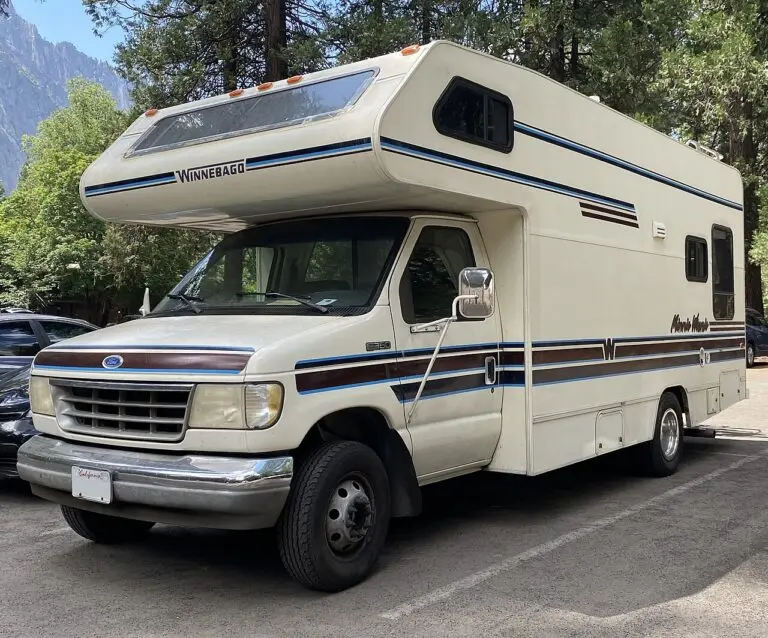
Quick answer: Winnebago Paseo problems usually involve the house battery and 12V electrical system, cold-weather freezing, air conditioning, brakes, roof and window seals, and tight living space. The Paseo is a Class B van on the Ford Transit chassis. The 2017 model has two NHTSA recalls: an unfused solar charging port and faulty Kidde fire extinguishers. Both are fixed for free.
The Winnebago Paseo is a good motorhome for travelers and people who love adventure. It has some useful features, but it also has some problems. Most of them are not too hard to solve. So, what are the common Winnebago problems, and how do you fix them?
This guide covers the issues Paseo owners most often need to deal with: freezing in winter, air conditioning, brakes, electrical and battery faults, loose sealants, limited space, towing, engine overheating, heat inside the van, plumbing, and propane appliances. It also lists the official recalls.
These Paseo problems have solutions. So, don’t be afraid. Below, you’ll find the symptoms, how serious each problem is, and what to do about it.
What Is the Winnebago Paseo?
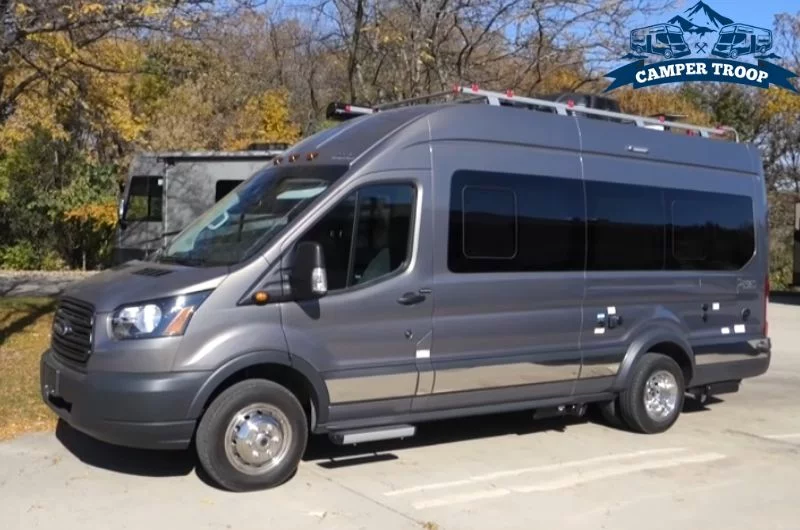
The Winnebago Paseo is a Class B motorhome, also called a camper van. Winnebago announced it in September 2016 as its first Class B built on the Ford Transit van chassis. It came in one floorplan, the 48P.
Knowing these basics helps you fix problems faster. Some parts belong to Ford (engine, brakes, transmission, dash AC). Others belong to Winnebago (house electrical, plumbing, appliances, cabinets). The right shop and the right warranty depend on which side the problem is on.
What Chassis Is the Winnebago Paseo Built On?
The Paseo is built on the Ford Transit van chassis. That means any Ford dealer that services Transit vans can work on the engine, brakes, suspension and other driving parts.
The Paseo is a motorhome only. It does not come in passenger or cargo versions. Those are trims of the Ford Transit van itself, not of the Paseo.
What Engine Does the Winnebago Paseo Have?
The Paseo uses Ford’s 3.5-liter EcoBoost V6 gas engine with a 6-speed automatic transmission. Routine engine care follows Ford’s Transit maintenance schedule, not an RV-specific one.
How Long Is a Winnebago Paseo 48P?
The 48P is a single van-length floorplan. For the exact length, height and weight ratings, check the original Winnebago brochure for your model year or the labels inside the van. Use the label numbers, not online listings, when you plan campsites, bridges or towing.
Is the Winnebago Paseo Still Made?
Check Winnebago’s current model lineup to confirm. Most shoppers today find the Paseo on the used market. If you’re buying one, run the VIN through NHTSA’s recall lookup and ask the seller for service records. A used Paseo can carry any of the problems in this guide, so inspect it closely before you buy.
Are There Any Recalls on the Winnebago Paseo?
Yes. NHTSA lists two recalls that cover the 2017 Winnebago Paseo. Both repairs are free.
- Recall 18V546000 (reported August 17, 2018): This covers certain 2016–2019 Winnebago motorhomes, including the 2017 Paseo. The auxiliary solar charging port circuit has no fuse. If you connect a solar panel that exceeds the circuit’s capacity, the risk of fire goes up. Dealers install an inline 15-amp fuse for free. (NHTSA recall data)
- Recall 17V782000 (reported December 7, 2017): This covers Kidde fire extinguishers supplied in the 2017 Paseo. They can clog or need too much force to use, and the nozzle can come off. Kidde replaces them for free.
Recalls can also be issued for the Ford Transit chassis. Those are handled by Ford dealers, not Winnebago. Enter your full VIN at NHTSA’s recall site to see every open recall for both the coach and the chassis. Do this before every big trip and after buying a used van.
Winnebago Paseo Problems at a Glance
Use this table to decide what to tackle first. Severity is about safety and trip impact. Cost is a rough tier, because real prices depend on your area, parts and shop.
| Problem | Severity | DIY or shop? | Relative cost |
|---|---|---|---|
| Freezing in winter | Low to medium (high if water lines burst) | DIY | Low |
| Air conditioning | Medium | DIY for filters; shop for refrigerant or unit | Moderate to high |
| Unresponsive brakes | High (safety) | Shop | Moderate |
| Electrical faults | Medium (high for 120V or fire risk) | DIY for fuses and breakers; shop for wiring | Low to high |
| Battery problems | Medium | DIY for testing and charging; shop for system changes | Low to high |
| Loose sealants / leaks | Medium to high (hidden water damage) | DIY for small spots; shop for damage | Low to high |
| Limited space | Low | DIY | Low |
| Towing discomfort | Medium to high (safety) | DIY setup; shop for hitch work | Low to moderate |
| Overheated radiator fluid | High (engine damage) | DIY checks; shop for repairs | Low to high |
| Heat inside the van | Low to medium | DIY | Low |
| Plumbing and water system | Medium | DIY for most | Low to moderate |
| Propane, furnace, water heater, fridge | High if gas leak | Shop for gas work | Moderate |
What Are The Common Problems With Winnebago Paseo?
The Winnebago Paseo is a comfortable motorhome. Still, it can give you trouble, especially as it ages. These are the issues you’re most likely to deal with if you use it for a long time.
Here are some of the common problems with Winnebago Paseo:
- Freezing of Engine, Lights, and Other Parts in Winter
- Less Efficient Air Cooler
- Unresponsive Brakes
- Malfunction of Electrical Equipment
- Battery Problems (slow charge & quick drain)
- Loose Sealants
- Limited Space
- Towing Discomfort
- Overheated Radiator Fluid
- Less Heat Resistant
- Plumbing and Water System Issues
- Propane, Furnace, Water Heater and Refrigerator Issues
There is no large public dataset that ranks Paseo problems by how often they happen. To see real owner reports, search your model year in NHTSA’s complaint database and in Paseo owner forums. Look for problems that many owners report, not one-off stories.
How Do You Troubleshoot And Fix Winnebago Paseo Problems?
Troubleshooting these problems isn’t rocket science. You can spot some Winnebago Paseo problems just by looking. But you need technical knowledge to find hidden issues.
Take the RV to a repair shop for braking problems, 120V electrical work and propane issues. Apart from these, you can fix many problems yourself. Let’s look at the symptoms, seriousness and causes of each one.
Problem 1: Freezing in Winter
Freezing in cold weather is easy to spot. Moisture inside the van, trouble starting the engine, ice on the wipers and headlights, and frost over the engine area are the most common symptoms.
For the van itself, it’s usually a mild problem. Frozen water lines are more serious, because they can crack pipes, fittings and the water pump. Freezing only happens in cold weather, so you don’t have to worry about it in summer.
What Causes Freezing Problems On Winnebago Paseo?
Freezing generally happens in winter. Here’s a quick overview of the reasons behind it.
- Parking the car outside on a cold night.
- Not cleaning the ice daily during the winter season.
- A cold engine accelerates the freezing issue.
- Leaving water in the tanks, pump and lines when the van sits in freezing weather.
How To Fix Freezing In Winter On Winnebago Paseo?
Fixing the freezing issue on a Winnebago Paseo is simple. You can do it yourself. Here are some methods.
- Warming up the engine before driving.
- Use a defroster to clear moisture.
- Put the interior heat on high to remove the moisture inside the vehicle.
- Start up the engine every 24 hours.
How Do I Winterize a Class B Camper Van?
Winterizing means removing water from the plumbing so it can’t freeze and crack anything. Follow the steps in your coach manual first. A general process looks like this:
- Turn off the water heater and let it cool. Never drain it while it’s hot or under pressure.
- Dump and flush the black and gray tanks.
- Drain the fresh water tank and open the low-point drains.
- Drain the water heater and set its bypass valves, if your van has them.
- Blow out the lines with low-pressure compressed air, or pump RV antifreeze (the pink, non-toxic kind) through the system.
- Open each faucet, hot and cold, until antifreeze or air comes out. Include the shower and toilet.
- Pour a little RV antifreeze into each drain to protect the P-traps.
Never put automotive antifreeze in your fresh water system. It is toxic.
Read Also: Common Winnebago Revel Problems & Solutions
Problem 2: Air Cooler Issues
This is a bit of a tricky issue, but it’s easy to identify. Signs of air conditioning trouble are weak cooling, a unit that wears out early, and electrical faults.
The Paseo can have two cooling systems: the Ford dash AC that runs off the engine, and a separate coach air conditioner for camping. Figure out which one is failing before you call a shop. A Ford dealer handles the dash AC. An RV technician handles the coach unit.
Air conditioning problems are serious because they can be costly to fix. They’re less likely in a newer Paseo but can happen often in an older one.
What Causes Air Conditioning Issues On Winnebago Paseo?
The cause of AC trouble can be hard to find, but checking the system regularly helps you catch it early.
- Dirty or clogged filters lower efficiency
- Refrigerant level shortage
- Faulty electrical system
- Outside temperatures higher than the unit can handle
- Low voltage from weak shore power or a long, thin extension cord (coach AC)
How To Fix An Air Cooler On Winnebago Paseo?
A faulty air conditioner makes it hard to relax. Fix it before it gets worse. Start with the simple checks, then move to a technician.
- Clean or replace the filters.
- Check the breaker and confirm you have good shore power or generator power.
- Ask an expert technician to fix the air conditioner.
- Have a technician fix any loose wiring.
- Replace the air conditioner if the technician says it can’t be repaired.
How Much Does It Cost To Fix The Air Conditioner Of Winnebago Paseo?
AC repair can be one of the pricier fixes on this list. A filter cleaning costs little. A refrigerant recharge costs more. Replacing a full unit costs the most. The price also depends on whether it’s the Ford dash AC or the coach unit, and on your local labor rates. Get a written quote that lists parts and labor separately before you approve the work.
Read Also: Common Winnebago Aspect Problems & Solutions
Problem 3: Unresponsive Brakes
Brake wear is normal on any heavy van, and a fully loaded motorhome works its brakes hard. The NHTSA recalls listed for the 2017 Paseo involve the solar charging port and fire extinguishers, not the brakes. Still, worn brakes are a real safety risk. A loud squealing or grinding noise and a delayed response are the most common signs.
It’s a very serious issue if the brakes don’t respond quickly. Brake problems usually happen when the brakes are old and not properly cared for.
What Causes Braking Problems On Winnebago Paseo?
Find brake problems fast. Otherwise, they can cost you more than money. Here are the usual causes.
- Using old brakes
- Parking the vehicle on a sloped spot
- Stuck piston inside the caliper
- Rusty brakes
- Old or low brake fluid
- Driving over the van’s weight rating, which overworks the brakes
How To Fix Braking Issues On Winnebago Paseo?
Don’t try to fix the brakes on your own without the right knowledge. These steps will help:
- Clean out the dirt and check for rust to avoid a slow braking response
- Inspect the rotors and pads.
- Call an experienced mechanic to solve this braking problem.
- Regular maintenance helps a ton in keeping the brakes in good shape.
Because the brakes are part of the Ford Transit chassis, a Ford dealer or any shop that services Transit vans can do the work.
How Much Does It Cost To Fix The Brakes Of Winnebago Paseo?
Brake costs depend on what needs replacing. Pads alone are the cheapest job. Rotors, calipers and brake lines add more. Labor is often a bigger part of the bill than the parts.
- Parts
Basic pads cost the least. Better pads and rotors cost more but may last longer under a heavy load.
- Labor Charge
Labor charges change depending on where the shop is and how much work is needed. Ask for a written quote first.
Read Also: How To Fix Winnebago Slide Out Problems
Problem 4: Electrical Problems
Electrical problems usually show up in lights, fans, fuses, circuit breakers, the TV and the microwave. Equipment stops working right. Loose wiring and low batteries are the most common causes.
This is a serious problem because you can’t use your equipment when you need it. It often happens when circuits aren’t maintained, and the failures tend to repeat.
What Causes Electrical Problems On Winnebago Paseo?
There are several reasons behind electrical problems. You may find one of these causes in your Paseo.
- Bad battery condition
- Faulty breakers connection to pedestal
- Faulty disconnectors
- Broken electrical equipment
- Blown or expired fuses
- An unfused auxiliary solar charging port on 2016–2019 models covered by recall 18V546000
How To Fix Electrical Problems On Winnebago Paseo?
Many 12V electrical issues are simple. You can solve some of them yourself. For anything beyond fuses and breakers, ask a qualified RV electrician.
- Switch OFF and ON the breakers in the circuit panel.
- Keep the batteries fully charged, clean and dry to prevent sulfation.
- Replace the faulty fuse with a new one with the same amp rating.
- Ask a dealer to install the free recall fuse if you use the solar charging port.
- Lastly, install new batteries for maximum output.
Is It Safe to Work on 120V Shore Power Yourself?
Not unless you’re trained. The 120V system (shore power, outlets, AC, microwave) can kill you. Follow these rules:
- Unplug the shore power cord and turn off the generator and inverter before opening any panel.
- Never replace a fuse or breaker with a higher rating. That can start a fire.
- Use a surge protector or voltage monitor at campground pedestals.
- If a breaker keeps tripping, find the cause. Don’t keep resetting it.
- Call a qualified RV electrician for any 120V wiring repair.
How Much Does It Cost To Fix The Electrical Issues Of Winnebago Paseo?
Electrical problems involve many different parts, so costs vary a lot. A blown fuse is cheap. An alternator, converter or inverter repair costs much more.
- Parts
A fuse kit is one of the cheapest fixes. Costs rise fast if the TV, microwave or another appliance is broken.
- Labor Charge
Labor depends on how long it takes to trace the fault. Hidden wiring problems take the longest. Recall repairs are free.
Read Also: Common Winnebago Trend Problems And Solutions
Problem 5: Battery Problems
Battery issues matter because the batteries power the Paseo’s electrical parts. Watch for slow charging, crusty buildup on the terminals and a charge that drains fast.
It becomes a severe problem if you don’t have a backup power source. Good care makes batteries last longer.
What Is the Difference Between the Chassis Battery and the House Battery?
A motorhome has two battery systems. The chassis battery starts the Ford engine and runs the vehicle. The house battery runs the coach: lights, fans, water pump and other 12V items. If the engine won’t start, check the chassis battery. If the lights dim at camp, check the house battery.
House batteries come in three main types:
- Flooded lead-acid: Lowest upfront cost. Needs water top-ups and venting. Should not be drained deeply.
- AGM: Sealed and maintenance-free. Costs more than flooded batteries.
- Lithium (LiFePO4): Lighter and handles deeper use. Costs the most upfront. It needs a charger, converter and solar controller set up for lithium, so check compatibility before you switch.
Why Is My RV House Battery Draining So Fast?
Fast draining usually comes from hidden loads or an aging battery. Check these in order:
- Parasitic loads, such as the propane detector, radio memory, clocks and control boards. They draw power even when everything looks off.
- The battery disconnect switch left on during storage.
- Loose or corroded terminals.
- A converter or charger that isn’t charging fully.
- An old battery that has lost capacity, often from sulfation.
How To Fix Battery Problems On Winnebago Paseo?
The battery is one of the most important parts of this vehicle. Take good care of it for the best results.
- Replace the dead battery with a new one.
- Never overcharge the battery
- Don’t run the engine if you don’t need it.
- Keep the batteries charged during storage to avoid sulfation. Don’t leave them partly charged or unused for long periods.
- Do regular maintenance
Is It Bad to Store an RV Battery on Concrete?
No. Setting a modern plastic-cased battery on concrete does not cause sulfation, and it doesn’t prevent it either. Sulfation comes from leaving a battery partly charged or unused for long periods. To store a battery, keep it charged, clean and dry. The surface it sits on doesn’t matter.
How Much Does It Cost To Replace The Battery Of Winnebago Paseo?
Battery replacement cost depends mostly on the battery type and on the shop. A chassis battery is a standard automotive part. House batteries vary more.
- Parts
Flooded lead-acid batteries cost the least. AGM costs more. Lithium costs the most and may need charger upgrades.
- Labor Charge
A simple battery swap takes little labor. Switching to lithium takes more, because the charging system may need changes.
Problem 6: Loose Sealants and Water Leaks
Sealant on the roof, vents and windows dries out and cracks over time. Water then gets in and can rot wood and grow mold before you see it. Signs include stains on the ceiling, soft spots, a musty smell and damp cabinets.
Inspect the seals regularly with these steps:
- Check every roof vent, fan, antenna, solar mount and AC unit for cracked or lifted sealant.
- Check the window and door seals for gaps.
- Look inside cabinets and corners for stains after rain.
- Clean the area and remove loose sealant.
- Apply a sealant made for your roof material. Ask your dealer which one matches.
If you find soft wood or mold, take the van to a shop. Hidden damage often goes further than it looks.
Problem 7: Limited Space
The Paseo is a van, so space is tight. Storage, the bathroom and the sleeping area are all smaller than in a Class C or Class A. This isn’t a defect. It’s the trade-off for a van that’s easier to drive and park.
- Use soft bags and collapsible kitchen gear.
- Pack for the trip, not for every possible need.
- Watch your weight. A full load affects braking and handling.
- If you need room for more people, consider a larger RV class before buying.
Problem 8: Towing Discomfort
Towing with a loaded camper van can feel unstable. Common causes are a trailer or car that is too heavy, poor tongue weight, a hitch at the wrong height or underinflated tires.
- Find your towing and combined weight ratings on the van’s labels and in Ford’s Transit documents. Stay under them.
- Weigh the van fully loaded at a truck scale.
- Use a hitch rated for the load and keep the trailer level.
- Set tire pressure to the label values.
Problem 9: Overheated Radiator Fluid
Engine overheating is most likely when climbing grades, towing or idling in heat. Watch for a rising temperature gauge, a warning light, steam or a sweet coolant smell.
If it overheats, pull over safely and turn off the engine. Never open the radiator or coolant cap while the engine is hot. Hot coolant can burn you.
- Check the coolant level when the engine is cold.
- Look for leaks under the van and at the hoses.
- Clear bugs and debris from the radiator front.
- Use the coolant type Ford specifies for your Transit.
- Have a Ford dealer check the fan, water pump and thermostat if it keeps happening.
Problem 10: Low Heat Resistance Inside the Van
Vans heat up fast in the sun because metal walls and large windows let heat in. Even with AC, the inside can stay warm on hot days.
- Use reflective window covers, especially on the windshield.
- Park in shade and face the windshield away from the afternoon sun.
- Run roof vent fans to pull hot air out.
- Start the AC before the van gets hot, not after.
Problem 11: Plumbing and Water System Issues
Common plumbing problems include a water pump that cycles or won’t run, leaking fittings, wrong tank sensor readings and cracked lines after a freeze.
- Pump runs on its own: Look for a leak or an open faucet. Check the pump’s fuse if it won’t run at all.
- Sputtering faucets: Air in the lines or a clogged pump strainer. Clean the strainer.
- Wrong tank readings: Debris on the sensors. Flush the tanks well.
- Leaks after winter: Check every fitting and line before your first trip. Winterize properly each fall (see Problem 1).
Problem 12: Propane, Furnace, Water Heater and Refrigerator Issues
Gas appliances can fail to light, shut off early or run weak. Common causes are a low battery (control boards need 12V), an empty or closed propane tank, a dirty burner or blocked exterior vents.
- Check battery voltage and the propane level first.
- Clear spider webs and debris from outside vents.
- Level the van when running an absorption refrigerator, if that’s the type you have.
- Test your propane and carbon monoxide detectors before each trip.
Warning: If you smell propane, turn off the tank, open the doors, don’t use any switches or flames, and leave the van. Have a qualified RV technician find and fix the leak.
How Do You File a Warranty or Recall Claim on a Winnebago Paseo?
Send each problem to the company that built that part:
- Engine, brakes, transmission, dash AC: Contact a Ford dealer. These are Ford Transit chassis parts.
- Coach parts (cabinets, house wiring, plumbing, seals): Contact a Winnebago dealer or Winnebago customer care.
- Appliances: Some carry their own warranty from the appliance maker. Check the papers that came with the van.
- Recalls: Recall repairs are free even if your warranty has ended. Bring your VIN and the recall number.
Keep photos, dates and repair orders for every claim. If you bought the van used, ask the dealer whether any warranty transfers to you.
Conclusion
Most Winnebago Paseo problems aren’t hard to solve. You just need to know which system is failing and who should fix it. Keep the Winnebago coach documents and Ford’s Transit owner’s manual on hand, and check NHTSA for open recalls.
Hopefully, this guide to common Winnebago Paseo problems has given you a clear idea of the issues and their solutions.
Watch the symptoms to find the real cause. Then fix the simple things yourself. For brakes, 120V electrical work and propane, always get an expert’s help.
Read Also: Common Winnebago Micro Minnie Problems & Solutions
Winnebago Paseo Problems: Frequently Asked Questions
Which Winnebago Paseo problems need a professional?
Brakes, 120V electrical work and propane problems need a professional. These carry real safety risks, including brake failure, electric shock, fire and gas leaks. You can handle simpler jobs yourself, such as cleaning AC filters, replacing fuses with the same amp rating, testing and charging batteries, resealing small spots and winterizing the plumbing.
Who fixes a Winnebago Paseo, Ford or Winnebago?
It depends on the part. A Ford dealer handles the engine, brakes, transmission and dash AC, because those are Ford Transit chassis parts. A Winnebago dealer or Winnebago customer care handles coach parts like cabinets, house wiring, plumbing and seals. Some appliances carry their own warranty from the appliance maker.
Are Winnebago Paseo recall repairs free after the warranty ends?
Yes. Recall repairs are free even if your warranty has ended. Bring your VIN and the recall number to the dealer. Coach recalls go to a Winnebago dealer, and Ford Transit chassis recalls go to a Ford dealer. Check NHTSA’s recall site with your full VIN to see every open recall.
Does the Winnebago Paseo have two air conditioners?
The Paseo can have two cooling systems. One is the Ford dash AC that runs off the engine. The other is a separate coach air conditioner for camping. Figure out which one is failing before you call a shop. A Ford dealer fixes the dash AC, and an RV technician fixes the coach unit.
Can I switch my Winnebago Paseo to lithium house batteries?
You can, but check compatibility first. Lithium (LiFePO4) batteries are lighter and handle deeper use, but they cost the most upfront. They need a charger, converter and solar controller set up for lithium. Because the charging system may need changes, switching to lithium takes more labor than a simple battery swap.
What should I do if I smell propane in my Paseo?
Turn off the propane tank, open the doors and leave the van. Don’t use any switches or flames, because a spark can ignite the gas. Then have a qualified RV technician find and fix the leak. Test your propane and carbon monoxide detectors before each trip to catch problems early.