The bottom of an RV slide-out usually bows out because the mechanism is out of sync, the rails or slide floor are damaged, or the slide was run while the coach wasn’t level. Less often, low power, poor lubrication, hydraulic leaks or debris play a part. Start with the simple checks below before you pay for a repair.
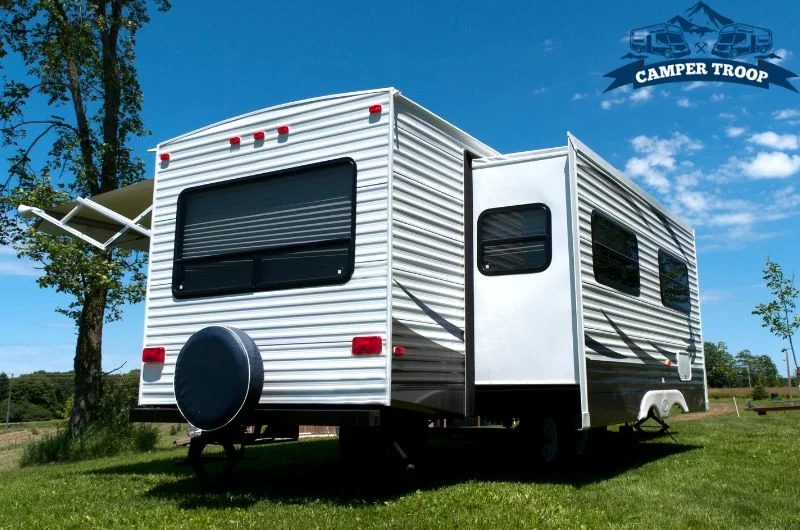
What Causes the Bottom of an RV Slide to Bow Out?
Most bowing comes from one end or edge of the slide moving differently from the rest. These are the usual causes to check.
1. Motors Out of Sync or Uneven Coach
Cable and in-wall slides, such as Lippert’s Schwintek system, use two motors. If they fall out of sync, one side moves ahead of the other and the slide racks or twists. Running a slide while the RV isn’t level and stable can also stress the box.
2. Damaged Rail System
The rail system keeps the slide aligned with the RV floor. If it is damaged, the slide can’t extend evenly.
Rails can twist or their sides can bend. When that happens, the mechanism no longer supports the slide evenly, and the bottom can bow out.
Read Also: Blowing Out RV Water Lines vs Antifreeze: What is Effective?
3. Water Damage in the Slide Floor or Wall
Leaks through worn seals can soak the slide floor or lower wall. Wet wood weakens, and screws and fasteners can pull loose. Signs include soft spots in the slide floor, stains, bubbling or separated wall skin, and loose or missing screws along the bottom edge.
4. Low Power
The RV uses power from the main (house) battery to extend and retract the slide. A weak battery or a tripped fuse or breaker can make the slide stall or move poorly, which adds strain on the mechanism.
The slide fuse or breaker is in the RV’s 12V fuse/breaker box, on the circuit board or on the power line. It is not inside the battery. Lippert’s In-Wall (Schwintek) controller runs on 8–18V DC, with 12V recommended, and uses a 30-amp fuse or breaker. At low voltage it draws more current, so the manual advises charging the battery or connecting shore power or a generator first.
5. Wrong or Missing Lubrication
Some slide mechanisms need their gears lubricated. Others should not be lubricated at all, per their maker. Too little or too much lubricant can cause wear and corrosion on the parts that hold the slide in line.
6. Hydraulic Leaks
This applies to hydraulic slides. A leaking valve, pump or line can keep the slide from holding its position evenly.
Read Also: RV Converter Fan won’t Shut Off: 3 Probable Reasons & Fixes!
Which Slide System Does Your RV Have?
The fix depends on the system. Check your owner’s manual or the label on the slide controller.
- In-wall/cable (such as Schwintek): motors in the side walls. Bowing or racking often points to motors out of sync.
- Electric rack-and-pinion or through-frame: rails under the slide floor. Look for bent rails and loose fasteners.
- Hydraulic: pump, valves and rams. Look for fluid leaks and leave repairs to a pro.
Is It Safe to Use a Slide That’s Bowing Out?
Stop running the slide if it binds, grinds, moves at an angle or stops partway. Forcing it can turn a sync problem into bent rails or a torn wall. Don’t travel with a slide that won’t fully retract and lock. Use the manual override to bring it in, put the transit bars back if your RV has them, and have it checked before you drive.
How to Fix the Bottom of an RV Slide Bowing Out
Work through these steps in order. Stop at the step that solves it.
1. Level and Stabilize the RV
Park on the most level, solid surface you can find. Set the leveling jacks or stabilizers so the coach can’t move. Remove transit bars before extending, and put them back after retracting.
2. Check Power
Charge the battery or plug in to shore power or a generator. Check the slide fuse or breaker in the 12V fuse/breaker box and reset or replace it if needed.
3. Resync a Schwintek (In-Wall) Slide
One full in-and-out cycle does not reset the system. Lippert’s resync procedure for in-wall slides is:
- Fully extend the slide until both motors stop on their own.
- Retract the slide 1–2 inches.
- Extend fully again.
- Repeat until both motors stop at the same time (often 2–3 times).
- Fully extend and fully retract once to confirm.
Resyncing fixes motors that are out of step. It does not fix bent rails or other mechanical damage.
4. Inspect the Slide Thoroughly
Inspect the rails, gears, window, seals and the bottom of the slide box. Press on the slide floor for soft spots and look for loose screws, stains or bubbling wall skin.
Check if the sealant is leaking or has dried out. Replace worn seals and wipers. Lippert says its slide-outs need little seal treatment: clean off dirt, road salt and debris with mild soap and water, and keep the slide closed when not in use. Other brands may call for a seal treatment.
Check the brakes to see if the brake arms have slipped out of place. If a brake is out of position, it needs a mechanical repair, which can be costly and time consuming.
Read Also: How To Tell If Your RV Tank Heaters Are Working?
5. Measure the Sag
With the slide extended, measure from the RV wall to the edge of the slide at several points, from top to bottom on each side.
If the numbers don’t match, the difference shows how far the slide is out and where. Write these down. They help a technician, or tell you whether a resync made a difference.
6. Lubricate Only If Your Manual Says To
Some slides need their gears lubricated, and some makers advise against lubricating certain mechanisms. The right product and schedule depend on your RV and slide system, so follow the slide manual. Lubricate when it calls for it and after long storage.
Read Also: Why Pop Up Camper Door Won’t Stay Closed & How to Fix it?
FAQs.
How Do I Open or Close the Slide Manually?
The in/out wall switch is the normal way to run the slide. Manual override depends on the system. On Lippert In-Wall (Schwintek) controllers C-1, C-2 and D-0, press the controller’s mode button six times quickly, then hold it on the seventh press for 5 seconds. The extend/retract switch then moves both motors. To exit, hold the mode button until the LEDs blink together, then resync the motors. Other systems have their own steps, so check your slide manual.
Is It Safe to Manually Correct My RV’s Adjustment Hardware?
Adjustment steps differ by slide system, and a wrong setting can affect how the slide seals and retracts. Only adjust what your slide manual covers, and leave the rest to an RV technician. Hydraulic slides run under high pressure, so send those repairs to a qualified repair depot.
How Can I Align My RV Slide Out?
Alignment steps depend on the slide system and are in the manufacturer’s manual. On Schwintek in-wall slides, a crooked slide may just have motors out of sync, which the resync procedure fixes. If the slide is still out of line after a resync, have a technician adjust it.
When to Call an RV Technician (and Will DIY Void Your Warranty?)
Leveling, checking power, resyncing, cleaning seals and measuring are safe owner jobs. Call a technician if the slide is still bowed after a resync, if rails are bent, if the slide floor is soft or rotted, or if a hydraulic slide is leaking.
Doing your own repair generally won’t void your warranty. Under the federal Magnuson-Moss Warranty Act, a company usually can’t deny coverage just because you fixed something yourself or used a third-party shop or part, unless the warranty provides that part or service for free. It can still refuse to cover damage your repair caused. If your RV is under warranty, contact the dealer before major work.
Read Also: 6 Reasons Why an Awning Window Won’t Close All The Way