Quick answer: The most common Winnebago Fuse problems are solar charging that stops working, clearance or tail lights that go dark, a house battery that won’t charge on shore power, and tire trouble. The Fuse also has three NHTSA recalls: the solar port fuse, the transfer switch wiring and the wheel studs. Most fixes start with fuses, breakers and connections.
RVs are large and complex, so problems can feel stressful if you’re driving one for the first time. Owners with years of RV travel already know the common drawbacks.
Some issues are big and need a professional. Others are common and have a simple fix. Common issues with the Winnebago Fuse include faulty solar charging, malfunctioning tail lights, house battery charging issues and tire issues.
Below, we cover the causes, symptoms and simple fixes for each problem. We also cover the Fuse recalls, how to check your VIN, which warranty likely applies, and when to call a dealer instead of doing it yourself.
What Is the Winnebago Fuse?
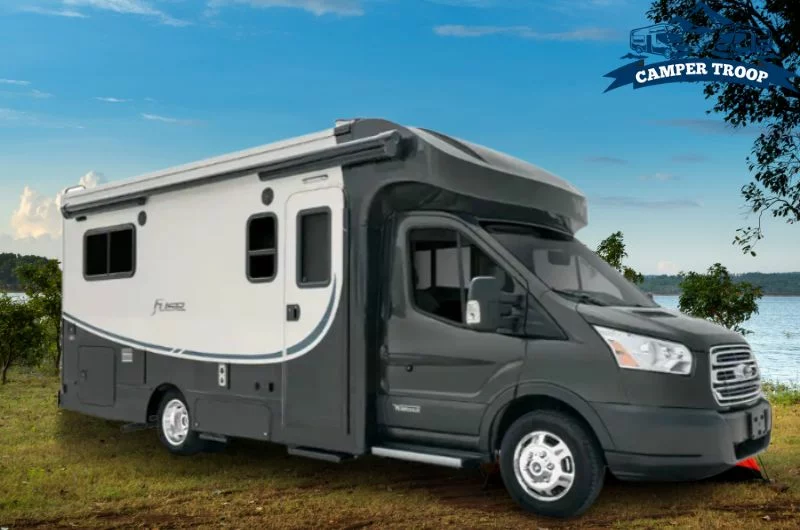
The Winnebago Fuse is a Class C motorhome built on the Ford Transit chassis. That means two companies built your RV. Ford built the cab, engine, drivetrain and chassis. Winnebago built the living area and house systems, such as the solar port, house battery, converter and transfer switch.
NHTSA recall records list Fuse model years 2015 through 2019. This matters because a problem can be a “house” problem or a “chassis” problem, and that affects who fixes it and which warranty may apply.
Is the Winnebago Fuse still being made?
Check Winnebago’s current lineup or ask a Winnebago dealer for the latest production status. The recall records cited in this article cover 2015 to 2019 Fuse models, so most Fuse owners today are driving a used unit. Plan for normal wear on tires, batteries and seals.
What Are The Common Problems With The Winnebago Fuse RV?
RVs come in many designs, sizes and features. More systems and long use make any RV prone to issues. Here are the problems Fuse owners run into most often.
- Solar Charging Panel Not Working
- Clearance/Tail Lights Not Working
- House Battery Not Charging on 110V (Shore Power)
- Tire Problem
This table shows where to look first for each problem and whether a recall is linked to it.
| Problem | First things to check | Related recall | System |
|---|---|---|---|
| Solar not charging | Charge controller, breaker, fuses, connections | 18V546 (2016-2019 Fuse): inline 15-amp fuse on solar port | Winnebago house system |
| Clearance/tail lights out | Bulbs, fuses, ground wire, plug pins | None listed in this article | Chassis and body lighting |
| House battery not charging on shore power | Breaker, converter, battery disconnect, corrosion | 16V598 (2015-2017 Fuse): loose transfer switch connection | Winnebago house system |
| Tire and wheel trouble | Pressure, age, cracks, load, lug nuts | 19V568 (2018-2019 Fuse with code 63W aluminum wheels): wheel studs too long | Ford chassis / tires |
Are There Any Recalls on the Winnebago Fuse?
Yes. The Fuse has at least three NHTSA safety recalls. Recall repairs are free at a dealer. Check your VIN even if you bought the RV used, because a past owner may not have had the work done.
| Recall | Fuse models affected | Problem | Free fix |
|---|---|---|---|
| 16V598000 | 2015-2017, built May 6, 2014 to April 22, 2016 | Loose electrical connection to the automatic transfer switch (ATS) can build heat and cause a fire | Dealer tightens the connection or replaces the ATS box and switch |
| 18V546000 | 2016-2019, built Nov. 18, 2014 to July 13, 2018 | Auxiliary solar charging port circuit was not fused, which can raise fire risk if panels draw too much current | Dealer installs an inline 15-amp fuse |
| 19V568000 | 2018-2019 on the 2018 Ford Transit chassis with aluminum wheel feature code 63W, built Nov. 28, 2017 to Nov. 20, 2018 | Wheel studs may be too long for the lug nuts to secure the wheel, so a wheel could come off | Dealer replaces the studs with shorter ones (Winnebago campaign 159) |
Sources: recall 16V598000 (3,826 Winnebago and Itasca RVs), recall 18V546000 (about 6,700 Winnebago motorhomes; owner notices began June 5, 2019) and recall 19V568000 (112 Fuse motorhomes).
How do you check your Fuse for recalls by VIN?
- Find your 17-character VIN. It is on the lower driver-side windshield and on your title and registration.
- Go to the NHTSA recall lookup at nhtsa.gov/recalls and enter the VIN.
- The VIN search mostly covers chassis recalls. For Winnebago house recalls, call Winnebago customer service at 1-800-537-1885 or ask a Winnebago dealer.
- Book any open recall with a dealer. Recall work is free.
How Do You Troubleshoot and Fix Winnebago Fuse RV Problems?
Find the cause before you buy parts. The method may differ by problem, but the goal is the same: fix the real issue, not the symptom.
Many issues have simple fixes you can do yourself. Others are harder. Try the simple checks first, and get a qualified mechanic or RV technician for major repairs.
Safety first: The Fuse has both 12-volt DC and 120-volt AC systems. Before you touch wiring, unplug shore power, turn off the generator and inverter, and switch off the battery disconnect. 120V can kill. A 12V battery can also cause burns or fires if a tool shorts across the terminals. If your Fuse has a lithium battery, do not open it or bypass its built-in battery management system. Your owner’s manual shows where the fuse panels, converter and battery disconnect switch are on your floorplan.
Problem 1: Winnebago RV Solar Charging Panel Not Working
An RV solar panel works like a home solar panel, just on a smaller, portable scale. Its job is to collect sunlight and turn it into power that charges the house battery.
If the panel or its wiring fails, the battery stops getting that charge. The RV can still drive normally. But fix it soon, especially when you camp off-grid.
What causes the solar charging panel not to work?
Look at the diagram below. It shows how power flows in an RV solar setup.
Panel -> Regulator -> Battery
The regulator is also called a charge controller. If it fails, the battery cannot receive solar power. Other common causes include:
- A tripped circuit breaker in the solar circuit
- A blown fuse in the solar circuit. On 2016-2019 Fuse models, recall 18V546 added an inline 15-amp fuse to the auxiliary solar charging port circuit, so check that fuse too.
- A faulty charge controller or charge controller display
- Loose or corroded connections between the panel, controller and battery
How To Fix the Winnebago RV Solar Problem?
Different causes need different fixes. Work through these in order, from easiest to hardest.
Strategy 1:
Reset any tripped breaker and check every fuse in the solar circuit, including the recall inline fuse on 2016-2019 models. Replace a blown fuse only with the same amp rating. If a new fuse blows again, stop and have the circuit checked. A larger fuse is a fire risk.
Strategy 2:
Check the charge controller (regulator). If its display is dead or shows no input with the panel in full sun, the controller or its wiring may be at fault. If the controller has failed, replacing it usually restores charging.
Strategy 3:
Inspect the wiring and connectors between the panel, controller and battery. Clean corrosion and tighten loose connections with power off.
How Much Does It Cost To Fix The Winnebago RV Solar Problem?
Cost depends on what failed. A fuse or a reset breaker costs little or nothing. A new charge controller costs more, and a new panel costs the most. Add labor if a shop does the work. The recall fuse is installed free at a dealer. Get a written quote before approving panel or controller replacement.
Read Also: Common Winnebago Via RV Problems & Solutions
Problem 2: Clearance/Tail Lights Not Working
The Fuse has red clearance lights across the top rear and tail lights below. These lights should come on when you turn on the running lights or headlights. If one or more stay dark, a bulb, fuse or connection has likely failed.
Tail and clearance lights are safety equipment. They help other drivers see your RV and judge its size at night. Fix them before your next drive.
What Causes the Tail Light not to work?
The bulb itself may be bad, or a fuse may be blown. Other common causes include:
- A faulty headlight or light control switch
- A poor electrical connection
- A faulty plug or bent pins
- A bad ground wire
How to Fix the Winnebago RV Tail Light Problem?
The fix depends on the cause. A blown fuse or bad plug needs a different repair than a burned-out bulb. Quick rule: if one light is out, suspect the bulb or its connection. If many lights are out at once, suspect a fuse, ground or switch.
Strategy 1:
If the pins in the plug are squashed, the rear lights may not work. Gently reopen the gap in the pins so they make firm contact, then reconnect the plug.
Strategy 2:
Replace each burned-out bulb or light unit. If several clearance lights are out, check them all while you have a ladder in place.
Strategy 3:
Check that the ground connection is clean and tight. People often skip this simple step, but it often solves the problem.
How Much Does It Cost To Fix The Winnebago RV Tail Light Problem?
A bulb, fuse or cleaned ground is usually a low-cost repair. The price climbs if a light housing must be replaced or if wiring has to be traced and rebuilt. Shop labor adds to the total if you do not do it yourself. Ask for a diagnosis before approving any rewiring.
Read Also: Common Winnebago Rialta Problems And Solutions
Problem 3: House Battery Not Charging on 110V
Sometimes shore power (110V/120V) does not charge the house battery. Don’t jump straight to replacing the battery. Several simple checks can solve it.
What causes the house battery to not charge?
A heavy power drain is the most obvious cause, but there are others:
- Faulty or corroded wiring
- A battery that is too old to hold a charge
Even a brand-new battery may not charge. In that case, look for these causes:
- The converter is turned off or has failed
- The battery disconnect switch is in the off position
- A problem at the automatic transfer switch (ATS), which routes shore or generator power into the RV. On 2015-2017 Fuse models, recall 16V598 covers a loose ATS connection that can overheat.
How to Fix the Winnebago House Battery Not Charging Issue?
There is no single cause, so work through these steps in order.
Step 1. Check all cables and battery terminals for corrosion. Clean them with power off.
Step 2. Make sure the battery disconnect switch is on.
Step 3. Switch on the 120V circuit breaker that feeds the converter so voltage can reach it.
Step 4. Make sure the converter is turned on.
Step 5. Check that the breaker on the converter’s output is not tripped.
Step 6. Check for a blown fuse between the battery and the converter.
Step 7. If you smell burning, see discoloration near the transfer switch, or your 2015-2017 Fuse has an open recall, stop and take it to a dealer. Do not work inside the ATS yourself.
How Much Does it Cost to Fix the Winnebago House Battery Not Charging Issue?
Resetting a breaker or switch costs nothing. A fuse or cable cleaning costs little. A new house battery or converter costs more, and the price depends on size, type and quality. A shop’s hourly rate depends on the technician’s training and experience. The ATS recall repair is free at a dealer.
Read Also: Common Winnebago soils problem and solution
Problem 4: Tire Problem
RVs carry heavy loads and often sit parked for long periods. Both are hard on tires. Make regular tire checks a top priority.
What caused the Winnebago Tire Problem?
Wear and underinflation are the most common causes. Other causes include:
- Lack of maintenance
- Overloading
- UV radiation
- Tire age, even when the tread still looks good
Wheel stud recall: Some 2018-2019 Fuse models on the 2018 Ford Transit chassis with aluminum wheels (feature code 63W) have wheel studs that may be too long for the lug nuts to hold the wheel. A wheel could come off. Check recall 19V568 by VIN and get the free stud replacement before driving far.
What tire pressure should a Winnebago Fuse run?
Use the pressure on the vehicle certification label or Winnebago’s weight and tire label, not the number on the tire sidewall. The sidewall number is the tire’s maximum pressure, not the right pressure for your RV. Check pressure when tires are cold, before you drive. For the most accurate setting, weigh the loaded RV and use the tire maker’s load and inflation table.
How old is too old for RV tires?
RV tires often age out before they wear out, because rubber breaks down over time. Follow the tire maker’s age guidance and have older tires inspected by a tire shop. To find a tire’s age, read the DOT code on the sidewall. The last four digits show the week and year it was made. For example, “2319” means the 23rd week of 2019.
How to Fix the Winnebago RV Tire Issue
A small tread puncture can sometimes be patched by a tire shop. But when an RV tire is badly damaged, has sidewall damage, or is too old, replace it. It costs more, but it is the safer, longer-lasting fix.
Routine maintenance is the best way to avoid tire trouble. Good tire care includes:
- Check that tires are inflated to the PSI on the vehicle label.
- Inspect tires for even wear, cracks and bulges.
- Cover the tires when parked for a long time.
- Clean the tires regularly.
- Check the DOT date code and lug nut torque before long trips.
How Much Does it Cost to Fix the Winnebago Tire Issue?
Cost depends on how bad the damage is. A patch costs far less than a new tire. Replacing tires costs more, especially if you replace a full set, plus mounting and balancing labor. The wheel stud recall repair is free at a dealer.
Read Also: Common Winnebago Forza Problems & Solutions
Which Warranty Covers Each Winnebago Fuse Problem?
Because the Fuse is built on a Ford chassis, two warranties usually apply. Winnebago handles the house side. Ford handles the chassis side. Tires are often backed by the tire maker. Check your warranty papers for exact terms and dates.
- Winnebago: solar port, house battery wiring, converter, transfer switch, interior lights and coach-side clearance lights.
- Ford: engine, drivetrain, chassis wiring, wheels and wheel studs.
- Recalls: free to fix whether or not your warranty has expired.
When Should You See a Dealer Instead of Fixing It Yourself?
Do it yourself if the fix is a breaker reset, a same-rating fuse swap, a bulb change, cleaning corrosion or setting tire pressure. See a dealer or certified RV technician if:
- Your VIN shows an open recall.
- A fuse keeps blowing or a breaker keeps tripping.
- You smell burning or see melted or discolored wiring.
- The repair involves 120V wiring, the transfer switch, the inverter or a lithium battery.
- A tire has sidewall damage, a bulge, or wheel or lug nut problems.
- The RV is still under warranty. DIY work on covered parts may affect a claim.
Conclusion
We covered four common Winnebago Fuse problems and their fixes. These are the most frequent issues, but other problems can happen too.
Start with the simple checks: breakers, fuses, connections and tire pressure. Run your VIN for recalls, since all three Fuse recalls are free to fix. Be careful with any electrical work, and call a pro when the job involves 120V power, the transfer switch or wheels.
Also check your owner’s manual. It has diagrams, component locations and the details you need to fix the issue safely.
Read Also: Common Winnebago Revel Problems & Solutions
Winnebago Fuse FAQs
What chassis is the Winnebago Fuse built on?
The Winnebago Fuse is a Class C motorhome built on the Ford Transit chassis. Ford built the cab, engine, drivetrain and chassis. Winnebago built the living area and house systems, such as the solar port, house battery, converter and transfer switch. This split decides who fixes a problem and which warranty may apply.
What model years of the Winnebago Fuse are there?
NHTSA recall records list Winnebago Fuse model years 2015 through 2019. That means most Fuse owners today drive a used unit. Plan for normal wear on tires, batteries and seals. Check Winnebago’s current lineup or ask a Winnebago dealer for the latest production status.
Are Winnebago Fuse recall repairs free if I bought it used?
Yes. Recall repairs are free at a dealer, even if your warranty has expired or you bought the RV used. A past owner may not have had the work done. Run your VIN at nhtsa.gov/recalls, and call Winnebago customer service or a Winnebago dealer to check house-side recalls.
Can I use a bigger fuse if my RV solar fuse keeps blowing?
No. Replace a blown fuse only with one of the same amp rating. A larger fuse is a fire risk. If a new fuse of the correct rating blows again, stop and have the circuit checked by a dealer or RV technician. A fuse that keeps blowing points to a deeper wiring or component fault.
Why are several RV clearance or tail lights out at once?
When many lights go out at once, suspect a blown fuse, a bad ground wire or a faulty light switch. When only one light is out, the bulb or its connection is the more likely cause. Also check the plug for squashed or bent pins, and make sure the ground connection is clean and tight.