Quick answer: The most common Keystone Bullet problems are slide-out seals pulling loose, an AC that runs but does not cool well, electrical faults (battery, converter, fuses, breakers), roof, plumbing and slide-out leaks, and a tight bathroom door and bed layout. Most are fixable with basic maintenance. Also check your VIN for open safety recalls.
If you own a Keystone RV but lack basic RV repair knowledge, you will likely pay a shop to fix common problems. RV shops charge by the hour, so small jobs add up fast. Knowing the usual trouble spots helps you catch problems early and fix the simple ones yourself.
If you want to avoid spending money, you must be aware of the common RV issues and fixing strategies. The most common Keystone Bullet RV problems include, but are not limited to, slide-out seals coming off, ac is running but not cooling off, common electrical problems, leak issues, and door problems.
Below, we cover each issue in detail: what causes it, how to fix it, and when to call a pro. We also cover recalls, propane safety, warranty claims and other parts worth inspecting.
What Is the Keystone Bullet?
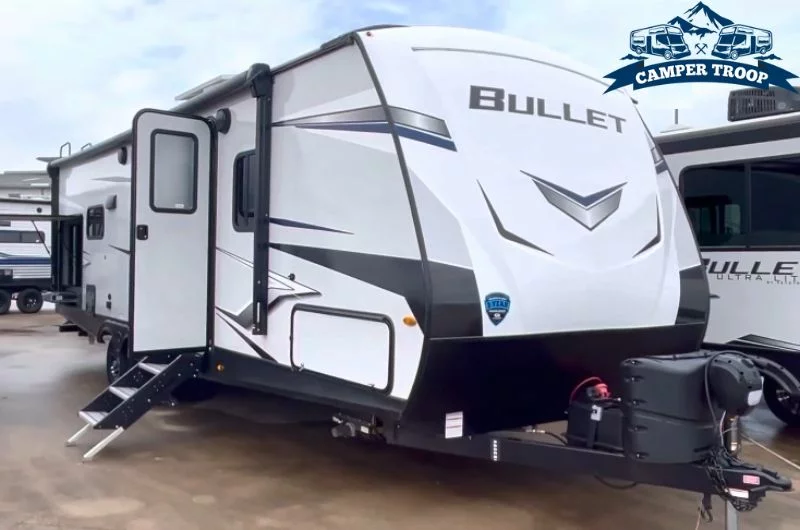
The Keystone Bullet is a line of towable travel trailers built by Keystone RV. Keystone is part of Thor Industries, the large RV maker that also owns several other brands. The Bullet comes in many floor plans, from smaller couples’ trailers to bunkhouse models with slide-outs.
The problems below are not tied to one model year. They are the kinds of wear and design issues owners report on many travel trailers, including the Bullet. Safety recalls are different. They apply only to specific trailers, so check your own VIN (see the recall section below).
What are the Common Problems With the Keystone Bullet?
These are the five issues owners run into most often. Knowing about them and learning a few fixes will save you time and money. Further down, we also list other parts of the trailer worth checking.
- Slide Out Seal Comes Off
- Ac is not Cooling Off
- Common Electrical Problems
- Leak Issues
- Bathroom Door and Tight Bed Space
5 Common Problems with Keystone Bullet and Ways to Deal with Them:
Troubleshooting RV issues takes a few steps. First, find the reason behind the issue. Then pick the simplest fix. Finally, solve the problem and check that it stays fixed.
Problem 1: Keystone Bullet Slide Out Seal Comes Off
The symptoms include sections of the rubber seal pulling away from the slide, often along the top or bottom edge. You may also see rust on the metal clip or trim that holds the seal. Light around the slide edges or water inside after rain are other signs.
If you have faced this issue and tried other fixes without luck, the steps below should help.
What Caused the Keystone Bullet Slide Out Seals to Come Off Issue?
There are many reasons why a slide-out seal comes off. Drying out is probably the main culprit. Sun and heat make rubber shrink and crack. Water damage also plays a big role. Moisture seeps in behind the seal and corrodes the metal clips that hold it.
How to Fix the Keystone Bullet Slide Out Seal Coming Off Issue?
Water does the most damage when the seal is already loose or open. Fix small gaps early, before water reaches the clips and the wall behind them. Avoid smearing silicone over the seal. It can trap water, and many RV sealants will not stick to silicone later, which makes the real repair harder.
Replace the Slide Out Seal:
The seal on the slide-out is held to the trim by clips or adhesive. The seal pulls away from the trim if the clips are damaged or rusted out. To replace it:
- Pull off the old seal and any broken or rusted clips.
- If the trim stays in place, clean all old adhesive off the trim.
- Press the new seal firmly into place, using the adhesive or clips the seal maker specifies.
- Run the slide in and out to make sure the seal does not fold or bunch up.
How Do I Stop My RV Slide-Out From Leaking?
Most slide-out leaks come from dried, torn or loose seals. Prevention is simple:
- Treat the rubber seals with a seal conditioner made for RV slide-outs a few times per season. This keeps them soft so they do not crack or shrink.
- Clear leaves, sticks and debris off the slide roof before you retract it.
- Check that the slide pulls in fully and sits evenly. A slide that closes crooked will not seal.
- Inspect the corners, where seals tend to fail first.
If the slide moves slowly, stops partway, or goes in crooked, the problem may be the slide mechanism, not the seal. Look for low battery voltage, debris in the track, or a misadjusted mechanism. Do not force a stuck slide. Check your owner’s manual for the manual override, and have a dealer adjust or repair the mechanism.
How Much Does it Cost to Fix the Seals Coming Off Issue?
If you replace the slide-out seal yourself, your main costs are the new seal, clips and adhesive. If water has already damaged the wall or floor behind the seal, the repair can cost much more. That is why early fixes pay off.
Read Also: Common Keystone Cougar Problems & Solutions
Problem 2: KeyStone Bullet AC is not Cooling Off
One owner complained that the camper would not cool down even though the AC was on and set to 83 degrees. A common mistake is judging the AC by the vent temperature alone. That number depends on how hot the air going into the unit is.
Other problems Keystone owners report include a broken air conditioner or dust coming out of the vents. Each problem needs its own fix. Here we focus on why the Keystone Bullet AC runs but does not cool well.
How Many Degrees Should an RV AC Cool the Air?
Use the temperature drop, called delta-T. A healthy RV AC cools the return air by about 15–20°F, according to etrailer. For example, if 80°F air goes into the return grille, it should come out at about 60–65°F.
- Run the AC on high cool for at least 15 minutes.
- Hold a thermometer at the return air grille and note the temperature.
- Hold it at the nearest supply vent and note that temperature.
- Subtract. A drop of about 15–20°F means the unit is cooling normally. A much smaller drop points to a problem.
If the drop is normal but the trailer still feels hot, the AC may simply be outmatched by the heat. Park in shade, close blinds and start the AC early in the day.
What caused the Keystone Bullet cooling-off issue?
An AC that runs but does not cool has several possible causes. The most common are:
- Airflow problems: dirty filters, dirty coils, or closed or blocked vents.
- Open quick-cool dump vents: if these are open, cold air drops into the area right under the AC instead of moving through the ducts.
- Thermostat issues: a wrong setting or faulty thermostat can stop the compressor from turning on.
- Low campground voltage: weak power can make the compressor struggle.
- Low refrigerant: this is a less common cause, and a technician needs to diagnose it.
A note on refrigerant: RV rooftop units built before about 2010 often used R-22, which is no longer made in the US. Newer units, such as the Dometic Penguin II, use R-410A. Newer systems are moving to R-32, which is not backward compatible. Rooftop RV units are sealed systems, so this is not a DIY job.
How to Fix the Keystone Bullet Cooling Issue?
Start with the easy checks and work up:
- Clean or replace the AC filters behind the ceiling grille.
- Close the quick-cool dump vents and open all the ducted vents.
- Lower the set temperature and listen for the compressor to click on. If it never starts, the thermostat or power supply may be the problem.
- Check campground voltage with a meter or surge protector display. Low voltage makes the compressor labor.
- Measure delta-T as shown above. If airflow and power are fine but the drop is still low, call a technician to check the refrigerant and compressor.
A laboring or humming compressor does not automatically mean a refrigerant leak. Weak power and poor airflow are more common reasons. Also note that a compressor’s startup surge is often 2–3 times its running amps. A soft-start module reduces that surge. It helps the AC start on weak campground power or a small generator.
How Much Does It Cost to Fix the Cooling Issue?
Filter cleaning and vent fixes cost little or nothing. Sealed-system repairs on rooftop RV units are hard and often not worth it, especially on older R-22 units. If a technician finds a failed compressor or refrigerant leak, replacing the whole rooftop unit is often the better choice. Get a quote before deciding.
Read Also: Common Keystone Hideout Problems & Solutions
Problem 3: Keystone Bullet Common Electrical Problems
Common symptoms include the AC not working, the refrigerator not working, dim lights, or no power at all. Take electrical problems seriously. Simple checks are safe to do yourself, but anything inside a 120V panel or wiring should be left to a qualified technician.
What are the causes of the Keystone Bullet electrical issue?
A weak or bad battery is a very common cause of 12V problems, such as dim lights or a slide that will not move. The converter is also important. It turns shore power into 12V power and charges the battery. If it fails, the battery slowly drains. Blown fuses, tripped breakers, a tripped GFCI outlet, or a damaged shore power cord can also cut power.
How to Fix the Keystone Bullet Electrical Issue?
First, find the root cause. A multimeter helps you test each part. If the AC or outlets are not getting power, work through these steps in order:
- Check the pedestal. Make sure the campground breaker is on and matches your trailer (30A or 50A). Use the correct adapter if needed.
- Inspect the shore power cord. Look for burned, melted or loose plug ends. Do not use a damaged cord.
- Check the main panel. Look for tripped breakers, including the converter breaker. Reset any that are tripped.
- Reset the GFCI. One tripped GFCI outlet can kill power to several other outlets, including outside ones.
- Check 12V fuses. Replace blown fuses with the same amp rating.
- Test the battery. Check its voltage with a multimeter, and clean corroded terminals.
Safety warning: Unplug from shore power and turn off the generator and inverter before touching wiring. Never open the 120V panel cover while power is connected. If a breaker trips again right after a reset, stop and call a technician. That points to a real fault.
How Much Does it Cost to Fix the Keystone Bullet Electricity Issue?
Costs depend on the cause. Fuses and GFCI resets cost little or nothing. A new deep-cycle RV battery costs more than a standard car battery. A failed converter or damaged shore power cord costs more still.
If the trailer is still under warranty, ask your dealer whether the repair is covered before paying a mechanic. Otherwise, you will pay the shop’s labor rate plus parts.
Read Also: Common FR3 RV Problems & Solutions
Problem 4: Keystone Bullet Leaking Issues
Leaks include roof leaks, plumbing leaks, gas (propane) leaks, and slide-out leaks. Any leak is bad for your Bullet. Water leaks rot wood, cause mold and can lead to delamination. Propane leaks are a safety emergency and are covered separately below.
Water leak symptoms are usually easy to spot. Look for a wet floor, damp or stained walls, soft spots, or a musty smell. Even a small leak should be fixed soon, before the damage spreads.
What caused the leak issue in the keystone bullet?
If the leak is on the roof, cracked or worn sealant is the usual culprit. Check around vents, the AC, skylights and roof edges. Age and physical damage, such as tree branches, also cause roof leaks.
If the leak is in the plumbing, a loose fitting or damaged water line is the most likely reason. Keystone Bullet owners most often complain about slide-out and roof leaks.
How To Fix The Leak Issue in the Keystone Bullet?
Different leaks need different fixes.
Simple Fix 1: Use the Right Roof Sealant
For EPDM or TPO rubber roofs, use a self-leveling lap sealant, such as Dicor, on horizontal seams and around roof fixtures. Do not use silicone. Lap sealant reportedly does not stick to silicone, so silicone residue makes future repairs harder. Check your owner’s manual to confirm your roof type and the sealant Keystone recommends.
- Clean the area and let it dry.
- Remove loose or cracked old sealant. Leave well-bonded sealant in place.
- Apply new lap sealant over the seam so it fully covers the gap and overlaps the old sealant.
- Inspect the whole roof every 6 months for cracks and gaps.
Simple Fix 2: Inspect the Leaky Pipe
If the leak is in the water line, find the leaky pipe or fitting. Tighten loose fittings, and repair or replace damaged lines. Turn off the water pump and city water before you start.
What Should You Do If You Smell Propane?
A propane leak is not a DIY repair. If you smell gas or your LP detector alarms:
- Put out all flames and do not use light switches, the starter or anything that can spark.
- Shut off the propane at the tank valve.
- Open doors and windows, and get everyone out of the trailer.
- Do not turn the propane back on until a qualified RV technician finds and fixes the leak.
Test your LP detector regularly and replace it when it reaches its expiration date.
How Much Does it Cost to Fix the Issue?
Roof leaks caught early can often be fixed yourself with a tube of the right sealant. Simple plumbing fixes, like a loose fitting, are also DIY jobs. Hidden or hard-to-reach plumbing leaks may need an RV tech. Leaks that have already caused rot or delamination cost much more to repair.
Read Also: Common Oliver Trailer Problems And Solutions
Problem 5: Keystone Bullet Bathroom Door and Tight Bed Space
In some floor plans, space is tight. You may find it hard to open and close the bathroom door all the way, especially in models with more than one bathroom.
The bed may also feel cramped due to a lack of room. These are layout issues built in at the factory, but you can work around them.
What Caused the Door and Bed Issues in the Keystone Bullet?
These problems come from the floor plan design, not from wear or damage. Travel trailers fit a lot into a small space, so some rooms end up tight.
How to Fix Door and Bed Issue in the Keystone Bullet?
Remove extra items around the bed so you can extend it a little more. For the door, you can trim it so it opens and closes without rubbing. Before cutting, check whether a simple hinge adjustment fixes it. Measure carefully, and remember that cutting a door may affect warranty coverage on it.
How Much Does it Cost To Fix the Door and the Bed Issue?
These fixes cost very little. If the door has to be cut, you will need a hand saw and some sandpaper.
What Other Parts of a Keystone Bullet Should You Inspect?
Beyond the five issues above, these parts wear out on any travel trailer, including the Bullet. Check them before each season and before long trips:
- Tires: check pressure cold before every trip, and look for cracks, bulges and uneven wear.
- Axles and suspension: uneven tire wear can point to bent axles or worn suspension parts. Have bearings and brakes serviced on the schedule in your manual.
- Water heater: drain and flush it, and check the anode rod if your model uses one.
- Black tank: a stuck valve or faulty sensor readings are common. Flush the tank regularly and use plenty of water.
- Frame and walls: look for rust on the frame and bubbles or soft spots on the outside walls. Bubbling can signal delamination from water getting in.
Are There Any Recalls on the Keystone Bullet?
Yes. Keystone Bullet trailers have been part of several NHTSA safety recalls. Two examples:
- Recall 22V195000 (2022): covers about 1,155 Keystone Bullet, Outback and Passport trailers. The coupler hitch may have been welded improperly, and the trailer could separate from the tow vehicle. Recall details.
- Recall 21V250000 (filed April 9, 2021): covers about 216 2020–2021 Bullet 34BIPR trailers. The bedroom egress window may have the wrong crank handle. Recall details.
Other recalls exist for Bullet trailers, and new ones can be issued at any time. Recall repairs are done free of charge at an authorized dealer.
How Do You Check Your Bullet’s VIN for Recalls?
- Find your 17-character VIN on the trailer’s VIN label, title or registration.
- Enter it at NHTSA.gov/recalls.
- If an open recall shows up, contact a Keystone dealer to schedule the repair.
- Make sure Keystone has your current address so you get future recall notices by mail. This matters if you bought the trailer used.
What Does the Keystone RV Warranty Cover?
Keystone’s warranty terms can change by model year, so read the warranty booklet that came with your trailer. It lists what is covered, for how long, and what is excluded. Appliances such as the AC, refrigerator and water heater are often covered by their own makers’ warranties, not by Keystone.
Normal wear items and damage from skipped maintenance, such as dried seals or neglected roof sealant, are often not covered. Keep records of your maintenance to support any claim.
How Do You File a Warranty Claim?
- Document the problem with clear photos and notes, including when it started.
- Have your VIN, purchase date and maintenance records ready.
- Contact an authorized Keystone dealer, usually the one that sold you the trailer. Dealers typically submit claims to the manufacturer.
- For appliances, contact the appliance maker’s service network as listed in your manual.
- Do not do major repairs yourself before the claim is reviewed. DIY work can affect coverage.
When Should You DIY and When Should You Go to a Dealer?
Use these simple rules:
- DIY is fine for: cleaning AC filters, closing dump vents, resetting breakers and GFCIs, replacing fuses, cleaning battery terminals, conditioning slide seals, resealing roof seams with the right sealant, and tightening plumbing fittings.
- Go to a dealer or certified RV tech for: any propane leak, 120V wiring or panel work, refrigerant or compressor problems, slide mechanism repairs, hitch and frame issues, and anything under warranty or recall.
- Stop and call a pro if: a breaker keeps tripping, you smell gas or burning, you find soft floors or walls, or a fix does not hold.
Is the Keystone Bullet a Good Travel Trailer?
The Bullet can be a good choice if you stay on top of maintenance. Most of the common problems in this article are wear and upkeep issues that affect many travel trailers, not unique flaws. Before buying, especially used, check the VIN for open recalls, inspect the roof and slide seals, and look for signs of water damage. Walk through the floor plan to make sure the bathroom and bed space work for you.
Conclusion
Now you know the common Keystone Bullet problems and how to fix them. Keep up with seals and roof sealant, test your AC with delta-T, and work through electrical checks in order.
Basic repair skills are always useful. They let you handle many issues yourself. Leave propane, 120V wiring, refrigerant and recall work to professionals.
We hope this guide to common Keystone Bullet problems and solutions helps you get your RV back on the road.
Read Also: Common Bighorn RV Problems & Solutions
Frequently Asked Questions
What sealant should I use on an RV rubber roof?
For EPDM or TPO rubber roofs, use a self-leveling lap sealant, such as Dicor, on horizontal seams and around roof fixtures. Do not use silicone, because lap sealant reportedly does not stick to it and the residue makes later repairs harder. Check your owner’s manual to confirm your roof type and the sealant Keystone recommends.
Can I use silicone to fix a loose slide-out seal?
No. Smearing silicone over a slide-out seal can trap water behind it. Many RV sealants will not stick to silicone later, which makes the real repair harder. Instead, remove the old seal and any rusted clips, clean the trim, and install a new seal with the clips or adhesive the seal maker specifies.
What does a soft-start module do for an RV AC?
A soft-start module reduces the surge an AC compressor draws when it starts. That startup surge is often 2–3 times the compressor’s running amps. Lowering it helps the rooftop AC start on weak campground power or a small generator. It does not fix airflow or refrigerant problems, so check those separately.
Is it worth repairing a rooftop RV AC compressor?
Often, no. Sealed-system repairs on rooftop RV units are hard and frequently not worth the cost, especially on older units that use R-22, which is no longer made in the US. If a technician finds a failed compressor or refrigerant leak, replacing the whole unit is often better. Get a quote before deciding.
Why would several RV outlets lose power at once?
A tripped GFCI outlet is a common reason several RV outlets lose power at once. One GFCI can control other outlets, including outside ones. Find the GFCI, press reset, and test the outlets. Also check the main panel for tripped breakers. If a breaker trips again right after a reset, call a technician.