A Norcold fridge that won’t cool while the freezer does usually has frost on the cooling fins, an unlevel RV, leaky door seals, a faulty thermistor or poor airflow at the outside vent. Check these in that order. If none fixes it, or you smell ammonia, the cooling unit may be failing and needs a technician.
Most of these checks take only a few minutes. You don’t need special tools for any of them.
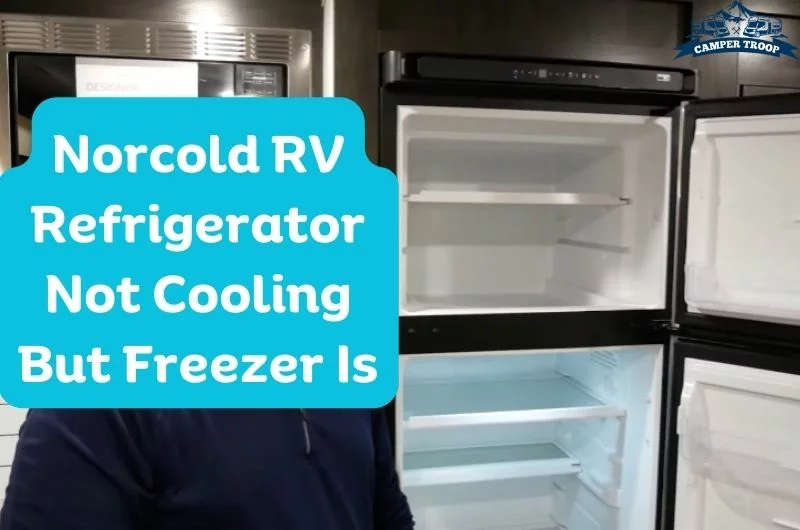
Why Is My Norcold Fridge Not Cooling but the Freezer Is?
This guide covers Norcold absorption fridges, the kind that run on LP gas or AC power. These fridges have no compressor. Instead, an LP flame or an AC heating element heats a part called the boiler. That heat moves an ammonia, hydrogen and water solution through the sealed cooling unit. Nothing inside the cooling unit burns.
Various users report the same few causes. Here they are, starting with the most likely:
Problem 01: Improper Leveling
An absorption fridge needs the RV to be level when it’s parked. On uneven ground, the coolant can’t circulate properly, so cooling drops.
Driving is a different story. Norcold says cooling is usually not affected while you travel, as long as the fridge is level when the vehicle is stopped. Level the RV every time you park. Then give the fridge time to recover.
Problem 02: Frost Buildup on the Fins
The fresh-food section is cooled by metal fins at the back of the compartment. When ice forms on these fins, it blocks the airflow. The freezer keeps working, but the fridge section warms up.
The Fix: Defrost the Fins
- Turn the fridge off.
- Move the food to a cooler.
- Prop both doors open and lay towels down to catch the water.
- Let the ice melt on its own. Don’t chip at it with sharp tools, because you could damage the fins.
- Dry the compartment, then turn the fridge back on.
Also leave space around the fins and shelves when you load food. Packing the fridge too full blocks the same airflow that frost does.
Problem 03: Defective Door Seals
Worn or torn seals stop the fridge door from closing tightly. Warm, moist air then leaks in. That lowers cooling and can also speed up frost on the fins.
The Fix: Test and Replace Door Seals
Close the door on a sheet of paper, then pull the paper out. You should feel the seal grip it. Repeat this at several spots around the door. If the paper slides out easily anywhere, replace the seal. Use the right part for your model and follow its instructions.
Read Also: Why Is Norcold RV Refrigerator Not Cooling? (Causes & Fixes)
Problem 04: Malfunctioning Thermistor
The thermistor is a temperature sensor in the fresh-food compartment. It sends readings to the control board. If those readings are wrong, the board can’t hold the fridge at the right temperature, even while the freezer stays cold.
If the board detects a bad thermistor, it switches to a backup control mode. You’ll see the snowflake lights flash when you touch the temperature setting.
The Fix: Replace the Thermistor
Flashing snowflakes point to a thermistor problem. The thermistor wires connect to the control board, so replacing it means working on the board’s wiring. Use the exact part for your model and follow its instructions. If you’re not comfortable working with the wiring, have an RV technician do it.
Problem 05: Clogged Vents or a Faulty Circulation Fan
An absorption fridge has to get rid of heat through the vents on the outside of the RV. Leaves, nests or dust in that area trap hot air behind the fridge, and cooling drops. Some setups have a circulation fan that helps push this heat out of the vent area. When the fan stops, heat builds up faster, especially on hot days.
The Fix: Clear the Vent Area and Check the Fan
First, turn the fridge off and let the burner area cool down. Open the outside access panel. Clear out any debris, dust or nests you can see. If your RV has a vent fan, check that it spins while the fridge is working hard. If it doesn’t, have the fan checked or replaced.
Read Also: Norcold RV Refrigerator Not Working On Electric or Gas
Read Also: RV Refrigerators Not Cooling In Hot Weather – How To Fix?
How Do You Fix a Norcold Fridge That Won’t Cool? (Step by Step)
- Level the RV.
- Check the temperature setting. Make sure more snowflakes are lit for a colder fridge.
- Look for flashing snowflakes or flashing red lights on the control panel.
- Defrost the fins if you see ice on them.
- Test the door seals with the paper test.
- Clear the outside vent area and check the fan.
- Put a thermometer in the fresh-food section and check the reading after several hours.
What Do the Lights on a Norcold Control Panel Mean?
The snowflakes show the temperature setting. One lit snowflake is the warmest setting, and five lit snowflakes is the coldest.
Flashing snowflakes when you touch the setting mean the thermistor has failed and the fridge is in backup mode.
Fault codes show up as flashing red patterns. Flash code 1 means there’s a problem with the AC heater. It is not owner-serviceable, so call a technician. Check your owner’s manual for the other codes on your model.
How Long Does a Norcold RV Fridge Take to Get Cold?
A Norcold fridge should start cooling within about 2 hours after you turn it on. If it hasn’t started cooling by then, Norcold says to contact a dealer or a Norcold authorized service center (Norcold owner’s manual).
Let it run for at least 8 hours before you load food. For food safety, the fridge should stay at or below 40°F (FDA).
Is My Norcold Refrigerator Part of a Recall?
Norcold recall 10E-049 is for a high temperature sensor. It covers 1200LR, 1200LRIM, 1201LRIM, 1210 and 1211 units built from January 1, 2003 to October 6, 2010.
Your unit is included only if both serial numbers fall in range:
- Refrigerator serial number: 315525 to 13088811
- Cooling unit serial number: 700000 to 13085759
To confirm your status, use the contact form on Thetford’s recall page.
When Should You Call an RV Technician?
- You smell ammonia near the fridge or the outside vent. Turn the fridge off, air out the RV and don’t use it until it has been inspected.
- The control shows flash code 1 or another fault code you can’t clear.
- The fridge hasn’t started cooling after about 2 hours, even though the RV is level.
- Your model and serial numbers fall within the recall range.
Final Thoughts
When the freezer works but the fridge doesn’t, start with a thermometer reading. Then go through the steps above in order. Leveling, frost and door seals cause most cases, and you can fix them yourself.
Read Also: 7 Common Residential RV Refrigerator Problems [Solved]
Frequently Asked Questions
Where is the thermistor on a Norcold refrigerator?
The thermistor is in the fresh-food compartment of a Norcold fridge. It’s a temperature sensor that sends readings to the control board, and its wires connect to that board. If the board detects a bad thermistor, the snowflake lights flash when you touch the temperature setting, and the fridge runs in backup mode.
How level does an RV need to be for the fridge to work?
Your RV needs to be level whenever it’s parked for a Norcold absorption fridge to cool well. On uneven ground, the coolant can’t circulate properly. Norcold says cooling usually isn’t affected while driving, as long as the fridge is level when the vehicle is stopped. Level the RV each time you park.
How do I know if my RV fridge cooling unit is bad?
Signs of a failing cooling unit include an ammonia smell near the fridge or outside vent, or a fridge that hasn’t started cooling within about 2 hours while the RV is level. If leveling, defrosting, seal checks and vent cleaning don’t help, have an RV technician inspect the cooling unit.
Can overpacking a Norcold fridge stop it from cooling?
Yes. Packing the fridge too full blocks airflow around the cooling fins at the back of the fresh-food compartment, the same way frost does. The freezer can stay cold while the fridge section warms up. Leave space around the fins and shelves when you load food so cold air can move freely.
What temperature should the fresh-food section of an RV fridge be?
The fresh-food section should stay at or below 40°F for food safety, according to the FDA. Put a thermometer in the fresh-food section and check the reading after several hours. More lit snowflakes means a colder setting, and five lit snowflakes is the coldest setting on a Norcold control panel.