Quick answer: An RV water heater anode rod is a sacrificial metal rod that corrodes in place of a steel storage tank. Inspect it regularly and replace it when more than 75% has dissolved. Many rods use a 1-1/16 inch socket. Some aluminum tanks don’t use one, so check your manual first.
RV water heaters are popular among users. Many are storage-tank models, such as 10-gallon units, that hold a limited supply of heated water. Only tankless models heat water on demand. If your heater has a steel tank, it will likely have an anode rod, and it is common to wonder what this rod does.
Anode rods are made of metal and help prevent rust inside the tank. But choosing and servicing one isn’t always simple. The right approach depends on your heater, your water, and the condition of the old rod.
This guide explains which heaters need an anode, how to choose one, how to replace it, and what to do about smelly or discolored water.
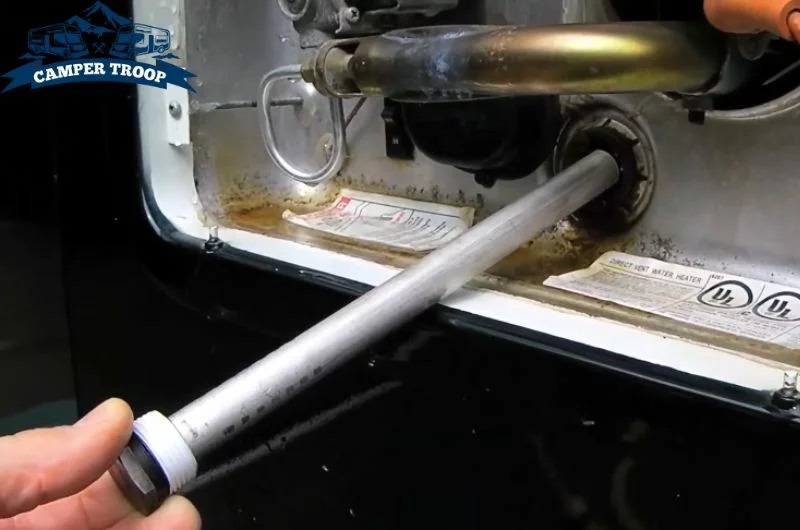
Things you should know about RV Anode Rod
Before you find a suitable anode rod for your RV water heater, you will need to know a few things about them.
What does an anode rod do in water tank?
An anode rod protects the tank by corroding first. It is made of a more reactive metal than the tank, so an electrochemical process attacks the rod instead of the tank wall. Anode rods “sacrifice” themselves in this process. They do not filter silt or pull debris out of the water.
What type of metal is used for metal for anode rod?
Sacrificial anode rods are usually made of magnesium, aluminum, or zinc. Zinc is commonly sold as an aluminum-zinc alloy. The best choice depends on what your heater maker allows and whether your water has an odor problem.
If your hot water has begun to stink, a zinc rod is one option. However, a new rod cannot restore metal that has already corroded away. It can only help protect the metal that remains.
| Anode type | Main point | Consider it when |
|---|---|---|
| Magnesium | Active anode, but it can help convert sulfate into hydrogen sulfide | Your manual calls for it and odor is not a problem |
| Aluminum | May protect against corrosion without producing the gas | A magnesium rod is linked to odor and your manual allows aluminum |
| Zinc or aluminum-zinc alloy | A less-active option used to address foul-smelling water | You want an odor-focused replacement and it fits your heater |
How Do I Know If My Rv Water Heater Anode Is Bad?
The only reliable way to know is to remove the rod and look at it. Anode rods wear out over time, and smell or discoloration can only tell you that an inspection is worth doing.
- Bad Smell
A rotten-egg smell does not reliably mean the anode is depleted. It usually points to sulfates reacting with the anode, especially a magnesium anode. This means it can happen with an active rod, even one that still has plenty of metal left.
- Discoloration in water
Rusty or cloudy water is a warning sign. Look for debris or rust in the draining water. If you find either one, inspect the anode. Discolored water alone does not prove that the rod is damaged.
- Anode Rod dissolved
More than 75% of the rod dissolving will indicate a faulty RV anode. Simply inspect the rod. If the bulk of it appears to have dissolved, replace it.
Read Also: What Size Socket Is The Best For Water Heater Element
Does Every RV Water Heater Need an Anode Rod?
No. Anode rods are mainly used to protect steel storage tanks. Your heater’s manual and model number are the best way to confirm what yours needs.
| Heater type | Anode rod? | What to do |
|---|---|---|
| Suburban and other steel-tank models | Generally yes | Inspect the rod and replace it with the correct part |
| Dometic or Atwood aluminum-tank models | Generally no | Confirm in the manual before buying a rod |
| Tankless models | No storage tank for this type of rod to protect | Follow the maintenance section of the manual |
Do Atwood RV water heaters have an anode rod?
Atwood aluminum-tank heaters generally do not need one. Check the manual for your exact model, since the fitting at the bottom of the tank may look similar to an anode fitting on another brand.
Is it OK to install an anode rod in a heater that does not have one?
Not unless the heater maker specifically approves it. If your manual does not list an anode rod, do not add one just because the threads appear to fit. Contact the manufacturer if the manual is unclear.
How Do You Find the Right Anode Rod for Your RV?
Match the rod to your heater’s make and model, then confirm the thread size, thread count, and length. Use the manual or the data plate on the heater. If you still have the old rod, compare it with the product listing.
For example, RecPro listed a magnesium anode for Suburban and Mor-Flo tanks at $20.95 when checked on November 10, 2026. It was 9-1/2 inches long with 3/4 inch NPT, 14 threads-per-inch threads. Prices change, and you should still confirm that any rod fits your exact heater.
How To Replace Rv Water Heater Anode Rod?
Shut the heater down, let the water cool, relieve the pressure, drain the tank, and swap the rod. Then refill the tank and check for leaks before you restart the heater. If the rod is worn out, replace it soon to help protect the tank from corrosion.
Step 1: Gathering Equipment
The first step is gathering all the equipment you will need during the Rv anode rod replacement process.
- Teflon thread tape
- Replacement RV water heater anode rod. Make sure that the rod you are getting is compatible with your water heater model.
- 1-1/16 inch socket wrench.
Step 2: Turn Off all the connections
Before you start, turn off the heater’s propane and electric modes. Shut off the water pump and disconnect the outside water supply. Then wait until the water in the tank has cooled.
Step 3: Empty the tank
Once the water has cooled, open the pressure relief valve to release any pressure in the tank. Stand clear of the valve opening. You can reach the drain plug by removing the access panel for the external RV water heater.
Look for a large hexagonal fitting near the bottom of the tank. With a 1-1/16 inch socket wrench, turn the drain plug counterclockwise and remove it. Opening a hot water faucet can help the tank drain smoothly.
Check your manual to see whether the drain plug and anode are separate fittings or one part. If they are one part, removing it drains the tank, and Steps 3 and 4 become one job.
Step 4: Time to remove the Anode rod
You must be aware of where to search. Follow the manual for your RV water heater’s anode location. On many heaters, you will look for a hex head toward the bottom of the tank. Unscrew it and check the rod.
Access varies by model. If you cannot see the fitting from the outside panel, use the manual to find the correct access point. You will need a socket to remove the anode from the tank.
If the old rod is seized, use steady pressure on a socket that fits fully over the hex head. Stop if the fitting or tank starts to flex. Too much force can damage the tank, so a seized rod is a good reason to call an RV service technician.
Step 5: Replacing the Anode rod
With the old rod out, you can install the new one. Use Teflon tape on the threads if your heater manual or the rod’s instructions call for it.
Start the rod by hand so that the threads do not cross. If it does not turn smoothly, back it out and try again.
Then, using a socket wrench, tighten the new anode until it is snug. Follow any torque value in your manual. Do not put too much pressure on it, since overtightening can damage the threads or fitting.
Step 6: Refill the tank and check for leaks
Refill the tank before you turn the heater back on. This matters most on heaters with an electric element, because powering a dry element can burn it out.
- Close the pressure relief valve and any drain fitting.
- Turn on the water supply or pump.
- Open a hot water faucet until the water flows steadily with no sputtering.
- Check the anode fitting for drips while the system is under pressure.
- Restart the heater only after the tank is full and the fitting is dry.
Read Also: How to Know Your RV Water Heater Switch On or Off?
How Often Should You Replace An Rv Water Heater Anode Rod?
Replace the rod based on its condition, not the calendar. Anode lifespan varies with water quality, including hardness, and with how much you use the heater. Follow your manual’s inspection schedule. If it does not give one, a yearly check is an easy rule of thumb.
Inspect sooner if you use a water softener, change water sources often, or notice rust or odor. Campground water can vary from site to site, so past wear may not predict how the next rod will last.
Leaving a depleted anode rod in place can lead to early tank deterioration and leaks. Check your warranty terms for any maintenance requirements.
Should you check the anode when winterizing?
Yes, winterizing is a convenient time to check it because you are already draining the tank. Follow your manual on whether the anode should stay in or come out during storage. Before the next trip, make sure the fitting is sealed and the tank is full before you restart the heater.
Why Does My RV Water Heater Smell Like Rotten Eggs?
The smell usually comes from hydrogen sulfide gas. Sulfates in the water can react with the anode, especially magnesium. Sulfate-reducing bacteria can add to the problem by turning sulfate into hydrogen sulfide. That is why a brand-new magnesium rod can sometimes cause or worsen the odor.
The Minnesota Department of Health says the smell usually does not indicate unsanitary water, and sulfur bacteria are not considered harmful. However, hydrogen sulfide gas in the air can be harmful at high levels. Vent the RV if the odor is strong. If you use private well water, test it for coliform bacteria and nitrate.
How do you rule out other causes of the smell?
- Only the hot water smells: The water heater is the likely source.
- Hot and cold water both smell: Look at the water source, fresh tank, or plumbing.
- The smell follows a change in campground: Try a different water source, then compare.
How do you fix a rotten-egg smell?
Start with the anode material. The Minnesota Department of Health says an aluminum replacement may protect against corrosion without producing the gas. For home water heaters, GE Appliances says a less-active anode material can often fix the odor. Check that your RV heater’s maker allows the material you choose.
Some cases also require chlorinating the heater and all hot water lines. GE also says raising the tank to 140°F can help in some cases, but it increases the need for scald protection.
Do not simply remove the anode to stop the odor. The Minnesota Department of Health warns that removing it may significantly shorten a water heater’s life.
What Else Causes Rusty or Discolored Water?
A failing anode is only one possible cause. Sediment in the tank, the campground’s water supply, or corrosion elsewhere in the plumbing can also change the color of your water.
- Run the cold water. If it is also discolored, check the water source and plumbing first.
- If only the hot water is affected, drain the tank and look at what comes out.
- Inspect the anode and, on a steel tank, look through the opening for signs of rust.
- Flush the tank and see whether the problem returns.
How Do You Flush or Sanitize an RV Water Heater Tank?
Flushing removes loose sediment, while sanitizing targets odor-causing bacteria. Flushing is the simpler job, so start there unless the odor keeps coming back.
To flush: Turn the heater off, let the water cool, relieve the pressure, and drain the tank. Rinse clean water through the tank until the water leaving it runs clear. Then reinstall the fitting and refill the tank before restarting the heater.
To sanitize: Follow the bleach amount, contact time, and rinsing steps from your heater or RV manual. Treat the heater and all hot water lines, since treating only the tank may leave the source of the odor in the lines.
What Happens If You Don’t Replace The Anode Rod In The Water Heater?
A depleted rod leaves a steel tank exposed to corrosion, which can lead to leaks and early tank failure. Here is what that means in practice.
The water tank will be damaged quickly
The anode helps prevent corrosion by corroding in place of the tank. Once the rod is used up, the tank has lost that protection and can suffer rust damage, reducing its life.
Read Also: 5 Common Reasons Why Your RV Water Heater Won’t Shut Off
The tank can leak or fail early
Without a working anode, the metal tank is left vulnerable. As corrosion continues, it can lead to leaks and early tank failure. Check for water around the heater, especially after the tank has been refilled.
Will a bad anode clog your faucets?
A clogged aerator is not a reliable sign of a bad anode. Remove and clean the aerator, then look at the material you find. If you see rust or sediment, drain the heater and inspect the anode.
Will the water smell bad?
Not necessarily. Rotten-egg odor is more closely tied to sulfates reacting with an active anode than to a depleted one. The smell can be irritating, but it usually does not indicate unsanitary water.
Debris in the water
If an unprotected tank begins to rust, you may see rust-colored water or small particles when it drains. Since debris can have other causes, inspect the anode and tank before deciding what to replace.
Read Also: All About RV Water Heater (9 Things You Should Know)
How To Maintain RV anode Rod To Last Long?
An anode is designed to wear away, so no routine will make it last forever. These habits can help you get the right rod, catch wear early, and protect the tank.
- Inspect the rod on the schedule in your manual, and sooner if your water source or water quality changes.
- Regularly clean and maintain your water tank so that no dirt can accumulate in the tank for very long.
- Choose an approved anode material that suits your water, especially if you have had odor problems.
Conclusion
RV water heater anode rods cost far less than a replacement water tank. If your heater uses one, replace it once more than 75% of the rod has dissolved.
Check your anode on the schedule in your manual, or about once a year if the manual gives no interval. Also, keep the tank clean and flushed so you can spot rust and sediment early.
If you leave a depleted anode in place, the tank can corrode and start to leak. At that point, a new rod will not repair the damage, and you may need to replace the tank.
Read Also: Common Jayco Water Heater Problems & Solutions
Frequently Asked Questions About RV Water Heater Anode Rods
What size socket do I need for an RV water heater anode rod?
Many RV water heater anode rods use a 1-1/16 inch socket, but check your manual first. Use a socket that fits fully over the hex head, and apply steady pressure. If the rod is seized and the fitting or tank starts to flex, stop and call an RV service technician.
What anode rod fits a Suburban RV water heater?
The right rod depends on your exact Suburban model. Check the manual or data plate, then confirm the thread size, thread count, and length. As one example, a magnesium rod listed for Suburban and Mor-Flo tanks was 9-1/2 inches long, with 3/4 inch NPT threads and 14 threads per inch.
Does a tankless RV water heater need an anode rod?
No. A tankless RV water heater has no storage tank for this type of rod to protect. Anode rods are mainly used to protect steel storage tanks, such as those in many Suburban models. For upkeep on a tankless unit, follow the maintenance section of your heater’s manual.
Can a new anode rod fix a tank that has already rusted?
No. A new anode rod cannot restore metal that has already corroded away. It can only help protect the metal that remains. If a depleted rod has stayed in place long enough for the tank to corrode and leak, a new rod will not repair the damage, and you may need a new tank.
Should you use Teflon tape on an RV water heater anode rod?
Use Teflon tape on the threads if your heater manual or the rod’s instructions call for it. Start the rod by hand so the threads do not cross. Then tighten it with a socket wrench until snug, following any torque value in your manual and avoiding overtightening.
Can you remove the anode rod to stop a rotten-egg smell?
No, removing the anode is not a good way to stop the odor. The Minnesota Department of Health warns that doing so may significantly shorten a water heater’s life. Consider an aluminum or other less-active replacement instead, as long as your RV heater’s maker allows that material.