An RV water heater igniter that won’t click usually has a 12V power problem. The switch may be off, the battery may be low, a fuse may be blown, the ground may be loose, or a tripped ECO or thermal fuse may be cutting power. Check those first. If it clicks but won’t light, look at the propane supply or the igniter electrode.
Hot water matters when you’re RVing in cold weather, so a silent igniter is frustrating. The good news is that you can check most of the causes yourself with a multimeter and basic hand tools.
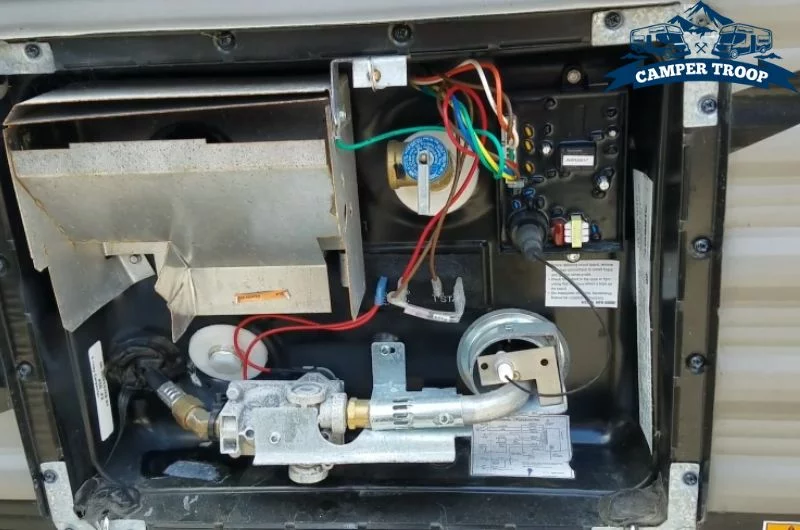
What Kind of Ignition Does Your Water Heater Have?
The right fix depends on how your heater lights. Find your type before you start.
| Type | How it lights | Which fixes apply |
|---|---|---|
| Pilot light | You light a small pilot by hand, often with a push-button spark igniter | Propane supply, igniter button, electrode and spark wire. There is no control board. |
| DSI (direct spark ignition) | A wall switch sends 12V to a control board. The board sparks the burner and locks out if no flame is detected. | All of the steps below |
| Electric-only | A 120V heating element heats the water | The igniter steps don’t apply. Check the breaker and the element. |
Many RVs have gas/electric combo units. The electric element and the gas burner run on separate circuits. So if the heater works on electric but not propane, the problem is on the gas side: the 12V ignition circuit, the igniter or the propane supply.
Is It “No Click” or “Clicks but No Flame”?
These are two different problems:
- No click at all: The spark circuit isn’t getting power, or the spark can’t jump. Start with the fixes in the next section.
- Clicks but no flame: The spark works, but gas isn’t reaching the burner or the electrode is out of position. On DSI units, the board clicks a few times, then locks out and turns on the fault light.
Read Also: 8 Common Causes of a DSI Fault Light on RV Water Heater
What Safety Checks Should You Do First?
- Smell propane? Close the tank valve. Don’t use switches or open flames. Air out the RV, and call a technician.
- Shut things off. Turn off the water heater switch and close the propane valve before you work on the burner, igniter or wiring.
- Fill the tank first. Suburban’s manual says the heater must be full of water before you turn the power on. Running it even for a moment without water can burn out the electric element. To get air out of the tank, open both the hot and cold faucets while you fill the water system. Let them run until water flows steadily. Don’t use the pressure relief valve for this. It is a safety device.
How to Fix RV Water Heater Igniter Not Clicking?
Work through these checks in order, and test the heater after each one.
1. Check the Switch and 12V Power
First, make sure the water heater’s gas switch inside the RV is on. Then check your battery. A low battery can cause a weak spark or no spark at all.
The ignition and control board run on 12V DC from the RV battery and converter. The converter changes 120V AC shore power into 12V DC. It does not boost voltage for the water heater. If your battery is low, charge it, or check the converter if it isn’t charging.
Next, turn the switch on and use a multimeter to measure DC voltage at the control board’s power terminals. The reading should be close to your battery reading. If the battery is fine but the board gets little or no voltage, the problem is in the switch, fuse or wiring between them.
2. Check for a Blown Fuse
A blown fuse is a common reason an RV water heater igniter won’t click. It cuts power to the circuit, so the igniter can’t work. Check the water heater fuse in your RV’s 12V fuse panel. Some control boards also have their own fuse.
Before you replace the fuse, look for a short, such as a pinched or bare wire. Then install a new fuse of the same amperage. If the new fuse blows too, there is still a short. Have it traced before you keep replacing fuses.
3. Check the Ground Connection
A loose or corroded ground is a common cause of no spark. The spark needs a good ground path to jump. Find the ground wire on the control board and igniter, then clean any corrosion and tighten the connection.
4. Examine the Circuit Board and Power Switch
If the board gets 12V and has a good ground but still won’t click, check the board and the switch. A switch that is cracked or burnt is likely faulty. So is a board with burn marks or a damaged connector. Replace the part that is damaged.
If the board is in lockout, reset it by turning the water heater switch off and back on.
Read Also: Where is the RV Water Heater Reset Button and How To Use It?
5. Check the ECO or Thermal Fuse
An overheat safety device can cut power to the igniter. How you handle it depends on the brand:
- Suburban: These heaters have a manual reset button (ECO). It trips when the water goes above about 180°F and shuts down the burner. Pushing the reset only works after the water cools below 100°F, or 110°F in some manuals (Suburban manual).
- Atwood (now Dometic): These heaters use a one-time thermal fuse instead of a reset button. Once it blows, replace it with the correct part for your model.
Never bypass the ECO or thermal fuse. The main risk is runaway overheating. That can mean scalding water, high tank pressure and temperature, and possible fire. GE Appliances says a qualified technician should reset a tripped high-limit control. The cause of the overheating must be fixed before the heater goes back into service. If it trips again, stop and call a technician.
6. Clean and Adjust the Igniter Electrode
Dirt, soot or corrosion on the electrode can stop the spark. Remove the electrode and clean it with a small brush and rubbing alcohol. Let it dry fully, then reinstall it.
While it’s out, check the electrode’s gap and position. The spark has to jump from the electrode tip to the burner. Set the gap to the spec in your heater’s manual. Also inspect the high-voltage spark wire for cracks, burn marks or loose ends. A damaged wire can leak the spark before it reaches the tip.
7. Test and Replace a Worn Igniter
Igniters wear out over time, especially without regular service. To test a DSI igniter, close the propane valve, turn the water heater switch on, and look and listen for a spark at the electrode. If the board has 12V and a good ground but there is no spark, the electrode or the board’s spark output has failed. Replace the faulty part.
On pilot-style units, you can check this by turning on the gas and igniting the heater manually. If it lights by hand, the igniter has failed.
Read Also: Why Does My Rv Water Heater Sound Like A Jet Engine?
Why Does My RV Water Heater Click but Not Light?
If you hear clicking but the burner never lights, the spark works but gas isn’t getting through. Check these in order:
- Make sure the propane tank valve is open and the tank isn’t empty.
- Purge air from the gas line, especially after a tank refill. Run your RV’s stove burners for 10-20 seconds, then try the water heater again.
- Check that the electrode is in the right position, as described in step 6.
- Reset the board after a lockout by turning the switch off and back on.
When Should You Call an RV Technician?
- You smell propane near the heater or inside the RV.
- A new fuse blows right away.
- The ECO trips again or the thermal fuse blows again.
- The board has 12V and a good ground but still won’t spark, and you aren’t comfortable replacing parts.
- You see heavy soot, scorch marks or melted wiring around the burner.
Read Also: RV Water Heater Drain Plug Size: Everything you need to know
Frequently Asked Questions
Below, I have answered some of the most commonly asked questions about RV water heater igniters not clicking.
How do I know if my RV water heater igniter isn’t working?
If you’re using your RV water heater and it doesn’t light up, there are several things to check. Is the thermostat working? Is there electricity going into the device? If you have them working properly, then it’s likely that your igniter may have the issues outlined above.
How do I reset my RV water heater igniter?
The igniter has no reset button of its own. To reset a DSI board after a lockout, turn the water heater switch off and back on. The reset button on Suburban units resets the ECO high-limit switch, and it only works after the water cools below about 100-110°F. Atwood units use a one-time thermal fuse that must be replaced, not reset.
How much does it cost to fix an RV water heater igniter?
This depends on the part that failed and your RV type. A fuse costs little, while a control board or igniter costs more. Labor rates also vary by area, so price the exact part for your model before you choose DIY or a shop.
Is it safe to use voltage boosters for RV water heater igniters?
You usually don’t need one. RV water heater ignition and control boards run on 12V DC from the battery and converter. If the voltage is low, charge the battery and check the converter, fuse and wiring instead.
Read Also: Why Is The Dometic RV Water Heater Not Working On Electric?
Conclusion
An RV water heater igniter that won’t click is annoying, but it’s seldom serious. Start with power, fuses and the ground before you buy parts. Never bypass a safety device. Routine inspection and cleaning of the burner area will help your water heater work well and last longer.
Read Also: What Size Socket Is The Best For Water Heater Element