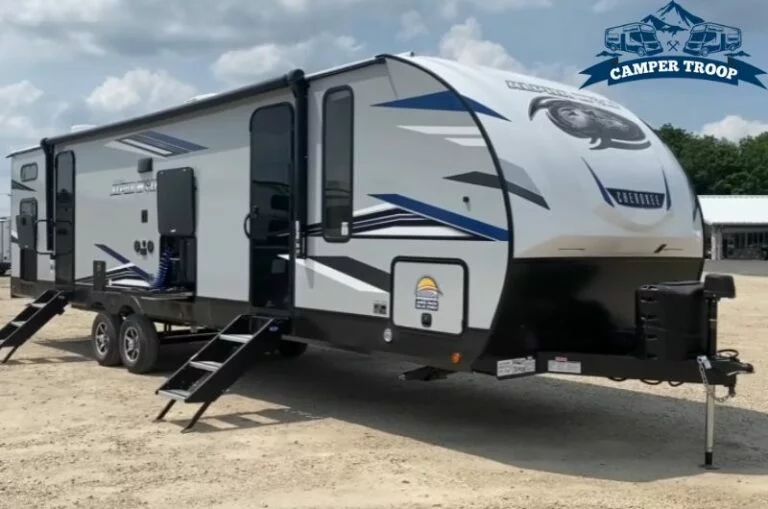
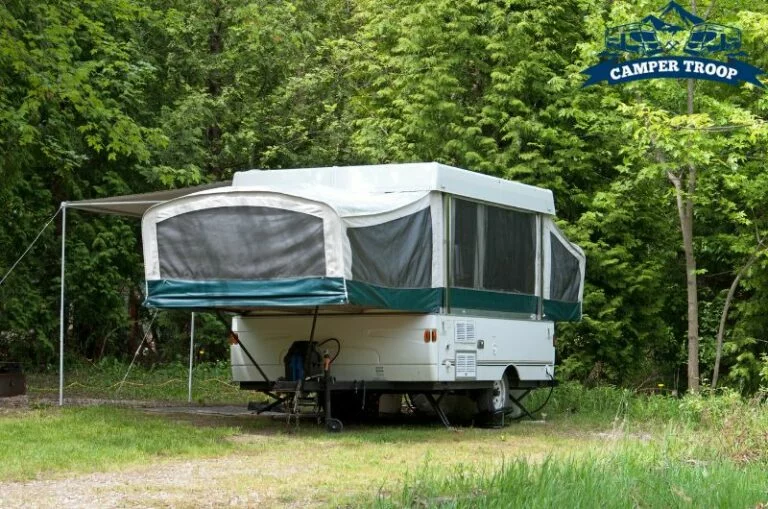
Quick answer: The most common Winnebago Micro Minnie problems are trailer problems, not engine problems. Owners report trouble with water heaters, house batteries and charging, tires and axles, roof sealant, furnaces and air conditioners, slide-outs, stabilizer jacks and black tank valves. Two official recalls also apply: undersized axles on some 2021 models and spare tire carriers on 2021–2023 FLX models.
The Winnebago Micro Minnie is a great choice of RV for anyone who wants to experience minimalistic living while traveling. Not only are they known for their mobility, but they also offer a great user experience.
Like any travel trailer, the Micro Minnie has its share of problems. The most common ones involve the water heater, the house battery and 12V system, tires and axles, roof seals, the furnace and air conditioner, and hardware such as slide-outs, stabilizer jacks and tank valves. Frozen water lines are also a risk in cold winters if the trailer isn’t winterized.
Do not start panicking so soon. Most of these problems have clear causes and simple first checks. Below, you’ll learn what causes each problem, how to fix it, and when to hand the job to a dealer or RV service center.
What Is the Winnebago Micro Minnie?
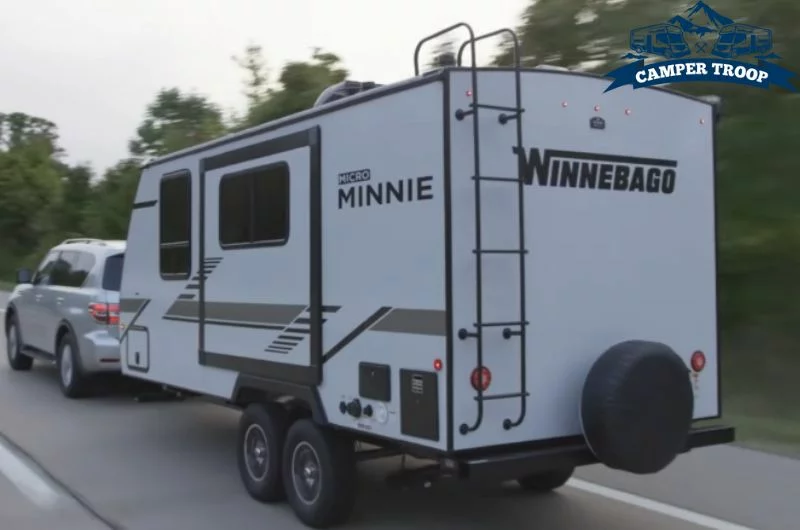
The Winnebago Micro Minnie is a compact towable travel trailer. It has no engine, no ignition and no powertrain control module (PCM). If your truck or SUV won’t start, that is a tow vehicle problem, not a Micro Minnie problem.
The trailer has its own house systems: a 12V house battery, a converter/charger, propane appliances, water tanks, a water heater, a furnace and an air conditioner. That’s where nearly all Micro Minnie problems start.
Floor plans have included the 2108TB, 1800BH, 2100BH and 2200MBH, plus the off-road-focused Micro Minnie FLX. Equipment differs by floor plan and model year, so always check your owner’s manual for your exact unit.
Example Specs: Micro Minnie 2108TB
Here are Winnebago’s published specs for the 2108TB. They help you size your tow vehicle and know your tank and appliance limits.
| Spec | 2108TB |
|---|---|
| Length | 22’5″ |
| Width | 7′ |
| Height | 10’5″ |
| GVWR | 5,500 lb |
| Fresh water tank | 31 gal |
| Black tank | 25 gal |
| Gray tank | 25 gal |
| LP (propane) capacity | 40 lb |
| Furnace | 18,000 BTU |
| Air conditioner | 13,500 BTU |
What Are the Common Problems With The Winnebago Micro Minnie?
The Winnebago Micro Minnie is a solid trailer, but like any RV it has weak spots. Owners in Winnebago owner groups and RV forums most often report issues with stabilizer jacks, black tank valves, poorly fitting window screens, air conditioners and slide-outs. Water heater, battery, tire and roof problems are also common across travel trailers. While you can resolve most of these issues, you will need to first understand what they are.
- Inconsistent Water Heating
- Tire and Axle Issues
- Electricity Problems
- Hardware Problems (Slide-Outs, Jacks, Tank Valves, Screens)
- Furnace and Air Conditioner Issues
- Battery Issues
- Leaky Roofs
Quick Troubleshooting Table: Symptom, Cause, Fix
| Symptom | Likely cause | DIY fix | Call a pro when… |
|---|---|---|---|
| No hot water | Bypass valve still on, propane off, heater switch off, no 12V power | Close bypass, open propane, check switches, fuses and battery | Igniter or control board keeps failing |
| Hot water on gas only (or electric only) | Tripped breaker, no shore power, empty propane tank | Reset breaker, confirm shore power, refill propane | Heating element or gas valve is faulty |
| Lights dim, 12V items quit | Low house battery, converter not charging, loose connection | Charge on shore power, check disconnect switch, fuses, terminals | Converter or wiring is faulty |
| 120V outlets dead | Tripped GFCI or breaker, no shore power, inverter off | Reset GFCI and breakers, check pedestal and cord | Breaker keeps tripping |
| Furnace fan runs, no heat | Low battery, empty propane, blocked airflow, igniter fault | Charge battery, check propane, clear vents | Igniter or sail switch fails |
| Uneven or fast tire wear | Wrong pressure, overloading, bent axle or alignment | Set pressure, check load | Wear continues after pressure is corrected |
| Water stains on ceiling | Cracked sealant at vents, skylights or roof edges | Clean and reseal with TPO-compatible lap sealant | Soft spots or damage under the membrane |
| Black tank won’t drain or close | Stuck or worn gate valve | Flush tank, work the handle gently | Valve leaks or handle breaks |
How Do You Troubleshoot and Fix Winnebago Micro Minnie Problems?
There could be several problems that are associated with the Winnebago Micro Minnie. We have compiled some of the more common ones and the procedures you can use to resolve them.
Problem 1: Inconsistent Water Heating
Hot water that comes and goes usually points to a fuel, power or valve problem, not a broken heater. The fix depends on which water heater your Micro Minnie has.
While this is not much of a problem during the summer, it can prove to be an immense issue during winter, when lines can freeze.
What Kind of Water Heater Does the Micro Minnie Have?
It depends on the model year and floor plan:
- Current floor plans: a tankless water heater.
- Older units (such as the 2022 2108TB and the 1800BH): a 6-gallon gas/electric tank heater with DSI (direct spark ignition).
- Micro Minnie FLX: a Truma AquaGo tankless unit.
These heaters are serviced through an outside access panel on the trailer’s sidewall, not through a panel under the sink. Check your manual for your unit’s exact model.
What Causes Inconsistent Water Heating In A Winnebago Micro Minnie?
We can attribute several points to the main reason behind this problem. These common points have been listed below so you can further understand them.
- The bypass valve is still set to bypass (common after de-winterizing)
- Propane is off, low or empty, so the gas side won’t light
- No shore power or a tripped breaker, so the electric side won’t heat
- Low 12V battery voltage, which can stop the DSI igniter and controls
- Loose connectors and wiring
- The pipes can freeze in the winter if the trailer isn’t winterized
How To Fix Inconsistent Water Heating On A Winnebago Micro Minnie?
Depending on the situation, you might be required to take different measures to resolve the issue.
Strategy 1: Check the basics first
- Make sure the water heater bypass valve is set to normal (not bypass).
- Confirm the propane tank has gas and its valve is open.
- Check that the gas and/or electric water heater switches are on.
- For electric mode, confirm you have shore power and the breaker isn’t tripped.
- Check the house battery. A weak battery can keep a DSI igniter from lighting.
- On a tank heater, the tank must be full of water before you turn on electric mode. Running the element dry can burn it out.
Strategy 2: Inspect at the outside access panel
Turn off power and propane first. Open the outside access panel and look for loose wires, corroded connectors and debris such as spider webs or insect nests. Some tank heaters use an anode rod that wears down over time; your manual will tell you if yours has one and how often to check it.
Strategy 3: Deal with frozen lines safely
If lines are frozen, thaw them with gentle heat, such as warming the trailer interior. Never use an open flame. The best fix is prevention: winterize the trailer before freezing weather (see the winterizing steps below).
How Much Does It Cost To Fix Inconsistent Water Heating On A Winnebago Micro Minnie?
Many fixes cost nothing: closing the bypass valve, refilling propane or resetting a breaker. Parts such as an igniter, control board or heating element vary in price by heater brand and model. Get a quote from your dealer, and check your warranty first if the trailer is still covered.
Read Also: How To Fix Winnebago Slide Out Problems
How Do You Winterize a Winnebago Micro Minnie?
Winterizing means removing water from the plumbing and protecting it with RV antifreeze so nothing freezes and cracks. Follow your owner’s manual for valve locations. The general steps are:
- Dump and flush the black and gray tanks.
- Drain the fresh water tank and open the low-point drains.
- Turn off the water heater. Drain it if it’s a tank model, once it’s cool and not under pressure. For tankless units, follow the maker’s draining steps.
- Set the water heater bypass valve to bypass so antifreeze doesn’t fill the heater.
- Close the drains and pump non-toxic RV antifreeze through the lines. Open each faucet (hot and cold) and the toilet valve until antifreeze flows.
- Pour a little RV antifreeze into each drain to protect the P-traps.
Use RV antifreeze only. Never use automotive antifreeze in drinking water lines. In spring, flush the antifreeze out and set the bypass valve back to normal before using the water heater.
Problem 2: Tire and Axle Issues
Trailer tires carry heavy loads and can’t steer around trouble the way a tow vehicle can. That makes them prone to wear, blowouts and damage from road debris.
It is always frustrating when your tires go on top of debris only to get a bad puncture. Some 2021 Micro Minnies also had an axle recall (see the recalls section below).
What Causes Tire Issues On The Winnebago Micro Minnie?
Several reasons could cause your trailer’s tires to tear, lose pressure, or simply puncture. You can take a glance at some of these points below.
- Wrong tire pressure, especially underinflation
- Passing through sharp debris
- Using tires of the wrong size or load rating
- Old tires with dry-rot or sidewall cracks, even if tread looks fine
- Overloading the trailer past its GVWR
- A bent axle or alignment problem causing uneven wear
- Worn or dry wheel bearings
How To Fix Tire Issues On A Winnebago Micro Minnie?
If you fix your tires, you might face different scenarios. These different scenarios will require you to address them differently.
Strategy 1: Replace a damaged tire with the spare
You might not always be able to patch up your old tire. Keep a properly inflated spare and the right tools in your RV. To swap it:
- Park on firm, level ground, away from traffic, and keep the trailer hitched.
- Chock the wheels on the side you aren’t lifting.
- Loosen the lug nuts slightly while the tire is still on the ground.
- Lift at the jacking point shown in your manual. Don’t use the stabilizer jacks to lift the trailer.
- Mount the spare and snug the lug nuts in a star pattern.
- Lower the trailer and torque the lug nuts to the manufacturer’s spec. Recheck torque after the first miles of driving, as your manual directs.
Strategy 2: Get alignment and axle problems checked by a shop
Loosening and retightening lug nuts does not align a wheel. If you see uneven wear on one edge of a tire, the cause may be a bent axle or an alignment problem. Take the trailer to an alignment shop or RV service center.
Trailer Tire Basics Every Micro Minnie Owner Should Know
- Use ST tires: “ST” means Special Trailer. Replace with the size and load rating listed on your trailer’s tire placard.
- Set pressure cold: Check before each trip, before driving, using the pressure on the placard or tire sidewall.
- Read the date code: The last four digits of the DOT code show the week and year the tire was made. “2321” means week 23 of 2021. Trailer tires can age out before the tread wears down.
- Service wheel bearings: Inspect and repack them on the schedule in your manual. A hot hub after driving is a warning sign.
How Much Does It Cost To Fix Tire Issues On Winnebago Micro Minnie?
Tire prices depend on the brand, size and load rating, and shop labor rates vary by area. Get quotes from a tire shop or RV service center. If your trailer is covered by the axle recall, the axle replacement is free at a dealer.
Read Also: Common Winnebago Paseo Problems And Solutions
Problem 3: Electricity Problems
The Micro Minnie has two electrical systems, and knowing which one failed is the first step:
- 12V system: Lights, fans, water pump, 12V outlets and appliance controls run on the house battery. The battery is charged by shore power through the converter and, on many models, by a roof solar panel.
- 120V system: The household-style outlets, air conditioner and microwave work on shore power, or on an inverter where one is installed. The FLX has a 3,000-watt inverter.
In addition, if the components get exposed to fluids or dirt from the outside, they can stop working quite easily.
What Causes Electricity Problems On Winnebago Micro Minnie?
When it comes to electrical issues, you will need first to understand the exact points that are causing the problem. Only then would you be able to take the necessary steps to resolve them.
- Fluid or dust particles fall onto the sockets or ports
- Running too many high-draw appliances at once, which trips a breaker
- A tripped GFCI outlet, which can cut power to other outlets on the same circuit
- A blown 12V fuse
- A discharged house battery or a converter that isn’t charging
- A bad shore power pedestal, cord or adapter
How Do You Fix Electricity Problems On The Winnebago Micro Minnie?
When working with electricity problems, you might face different scenarios. These different scenarios will require you to resolve them in different ways.
Strategy 1: If 120V outlets are dead
- Confirm the campground pedestal breaker is on and the cord is fully seated at both ends.
- Press the reset button on any GFCI outlets in the trailer.
- Check the breakers in the trailer’s distribution panel.
- If you’re off-grid on a unit with an inverter, make sure the inverter is switched on and the battery is charged.
- Run fewer high-draw items at once, such as the AC and microwave together.
Strategy 2: If 12V items are dead or dim
Check the 12V fuses in the distribution panel and the house battery charge. Most 12V problems trace back to the battery or charging system (see Problem 6). If a fuse blows again right after you replace it, there is a short. Stop and have it checked.
Strategy 3: Replace faulty sockets
In the case that the sockets or ports are faulty, you can install new ones in their places. For 120V outlets, unplug from shore power and turn off the inverter first. If you aren’t comfortable with 120V wiring, hire an RV technician or electrician.
How Much Does It Cost To Fix Electricity Problems On A Winnebago Micro Minnie?
Resetting a GFCI or breaker costs nothing. Fuses and outlets are low-cost parts at RV and hardware stores. Labor rates vary by shop and region, so ask for a quote before work starts.
Read Also: Common Winnebago Trend Problems And Solutions
Problem 4: Hardware Problems (Slide-Outs, Jacks, Tank Valves, Screens)
Owners report a cluster of hardware problems on the Micro Minnie: stabilizer jacks, black tank valves, poorly fitting window screens and slide-outs. Doors, latches and awnings are also common wear points on any travel trailer.
What Causes Hardware Problems On The Winnebago Micro Minnie?
While it is impossible to list every cause, these are some of the more common ones:
- Stabilizer jacks: used to lift or level the trailer instead of just steadying it, or left dirty and dry
- Black tank valves: waste and debris stuck in the gate, or worn seals
- Window screens: loose fit from the factory or bent frames, letting bugs in
- Slide-outs: low battery voltage, debris on the slide, misadjustment or worn seals
- Doors, latches and awnings: loose screws and hinges from road vibration
How To Fix Hardware Problems On The Winnebago Micro Minnie?
- Stabilizer jacks: Level the trailer with leveling blocks first, then lower the jacks just to firm contact. Clean and lubricate them as your manual directs.
- Black tank valve: Flush the tank thoroughly and work the handle gently. Don’t force it. If the valve leaks or the handle breaks, replace the valve or have the dealer do it.
- Window screens: Check that the screen frame is seated in its track. If it doesn’t fit, ask the dealer for an adjustment or replacement, especially if you’re still under warranty.
- Slide-out: Charge the battery fully, clear debris from the slide floor and roof, and check the slide fuse or breaker. If it still binds or moves unevenly, stop and call the dealer. Forcing a slide can damage it.
- Doors and awnings: Tighten loose hardware regularly. Retract the awning in wind.
How Much Does It Cost To Fix Hardware Problems On Winnebago Micro Minnie?
Cleaning, lubricating and tightening hardware costs little beyond basic supplies. Replacement valves, jacks and slide-out parts vary by model. If the problem shows up while you’re under warranty, take it to the dealer before paying for a repair yourself.
Problem 5: Furnace and Air Conditioner Issues
The Micro Minnie has no engine or ignition switch. Any “ignition” problem on the trailer itself is really an igniter problem in a propane appliance, most often the furnace or water heater. If your tow vehicle won’t start, that’s a separate issue for the vehicle.
Air conditioners are also among the problems owners report most often.
What Causes Furnace and AC Issues On Winnebago Micro Minnie?
There could be several causes. Some of the most common causes have been listed below:
- Empty propane tank or closed propane valve
- Low 12V battery voltage, which can keep the furnace fan and igniter from working right
- A sail switch that doesn’t close because of weak fan airflow or blocked vents
- A faulty igniter or control board
- Thermostat set wrong or wrong mode selected
- For the AC: no shore power, a tripped breaker, or dirty filters
How To Fix Furnace and AC Issues On The Winnebago Micro Minnie?
- Check the thermostat mode and set temperature.
- Confirm propane is on. If the tank was just refilled or swapped, light the stove burner first to purge air from the line.
- Charge the house battery. Furnace problems often clear up once voltage is back up.
- Make sure floor vents and the outside furnace vent aren’t blocked.
- For the AC, confirm shore power, reset the breaker and clean the return-air filters.
Visit a dealer or RV technician if the furnace keeps failing to light, or if the AC runs but doesn’t cool. Igniters, sail switches, gas valves and refrigerant work are best left to a pro.
How Much Does It Cost To Fix Furnace and AC Issues On Winnebago Micro Minnie?
Checking propane, the thermostat, the battery and filters costs nothing. Part and labor costs for igniters, boards or AC repair depend on the appliance brand and the shop. Check your warranty before paying out of pocket.
Read Also: Common Winnebago Lesharo Problems and Solutions
Problem 6: Battery Issues
The Micro Minnie’s house systems run on a 12V house battery. When it’s low, lights dim, the water pump slows, and the furnace, slide-out and water heater igniter may stop working. You can use a multimeter (voltmeter) to check whether the battery is low.
Battery type varies. Many trailers use a 12V deep-cycle lead-acid battery. The FLX comes with a 320Ah lithium-ion battery. Lithium and lead-acid batteries need different charge settings, so check that your converter/charger matches your battery type.
Why Is My Micro Minnie Battery Not Charging?
Battery problems on a trailer usually come from one of these causes:
- The battery disconnect switch is off, so the charger can’t reach the battery
- The converter/charger is faulty, or its breaker or fuse has tripped
- Loose or corroded battery terminals and cables
- Parasitic draw: small loads such as detectors and control panels draining the battery in storage
- Low electrolyte levels in a flooded lead-acid battery
- An old battery that no longer holds a charge
- Solar panel output blocked by shade or dirt (on models with solar)
How To Fix Battery Issues On The Winnebago Micro Minnie?
You can take certain strategies depending on the situation to resolve your problem.
Strategy 1: Find and test the battery. The house battery is a trailer component, not part of an engine. Check your owner’s manual or ask your dealer where it’s mounted on your floor plan. Use a multimeter to read the voltage and compare it with the battery maker’s state-of-charge chart.
Strategy 2: Recharge and check the charging system. If voltage is low:
- Make sure the battery disconnect switch is on.
- Plug into shore power and check the converter’s breaker and fuses.
- Measure battery voltage again while plugged in. If it doesn’t rise, the converter or wiring may be at fault.
- Clean and tighten the battery terminals.
- For flooded lead-acid batteries, top off with distilled water if the plates are exposed.
- In storage, use the disconnect switch or keep the trailer on a charger to prevent parasitic drain.
Strategy 3: Replace the battery. If the battery won’t hold a charge after a full recharge, replace it with the same type and voltage. Disconnect the negative cable first and reconnect it last. Wear eye protection around lead-acid batteries.
How Much Does It Cost To Fix Battery Issues On A Winnebago Micro Minnie?
If you are going to follow the first two strategies, you usually won’t need to pay any extra money.
Replacement costs depend on the battery type and capacity. A 12V lead-acid deep-cycle battery and a lithium battery like the FLX’s 320Ah unit are very different purchases. Price out the exact type your trailer uses before buying.
Problem 7: Leaky Roofs
Roof leaks on travel trailers usually start where something passes through the roof: vents, skylights, the AC unit and the roof edges. Sealant around these spots cracks and shrinks over time, letting water in. Regular inspections catch leaks before they cause damage.
What Kind of Roof Does a Winnebago Micro Minnie Have?
Current Micro Minnie models have a one-piece TPO roof membrane. TPO is a single-ply rubber-like roofing sheet. It needs sealants that are compatible with TPO, so check the label before you buy.
Troubleshooting Leaky Roofs on the Winnebago Micro Minnie
In order to fix the leaking roof, you need first to find where the water gets in. Below are the most common sources of roof leaks on a travel trailer.
- Cracked or missing lap sealant around vents, skylights and the AC
- Gaps in the sealant along the roof edges and end caps
- Tears or punctures in the roof membrane from branches or debris
How To Fix Leaky Roofs On Winnebago Micro Minnie?
- Inspect the roof on a regular schedule and after rough weather. Look for cracks, gaps and lifting sealant.
- Clean the area with a cleaner safe for TPO and let it dry.
- Remove loose or failed sealant.
- Apply a self-leveling lap sealant made for TPO around vents and skylights. Use a non-sag lap sealant on edges and vertical surfaces.
- Let it cure fully per the label before rain or travel.
Don’t use scotch tape or plaster. They won’t seal a TPO roof and can trap water. If you find soft spots, stains that keep spreading, or damage under the membrane, take the trailer to a dealer or RV service center.
Roof safety: only walk on the roof if your manual says it’s walkable, use a sturdy ladder, and stay off wet surfaces.
Cost Of Fixing Leaking Rooftops On Winnebago Micro Minnie?
Resealing is a common DIY job, and the main cost is TPO-compatible sealant and a cleaner. Structural water damage costs far more to fix, which is why routine resealing pays off. Get a quote from a service center for anything beyond surface sealant.
Are There Any Recalls on the Winnebago Micro Minnie?
Yes. Two NHTSA recalls apply to some Micro Minnie trailers:
- Recall 20V695000 (undersized axles): This recall covers 106 model-year 2021 Micro Minnie trailers built with undersized axles that could break. Dealers replace the 2,500 lb axle with a 4,000 lb axle for free. The recall began December 18, 2020.
- Recall 23V891000 (spare tire carrier): This recall covers 2021–2023 Micro Minnie FLX trailers. The spare tire carrier may fail with certain off-road tires.
How Do You Check Your Micro Minnie for Recalls?
- Find your 17-character VIN on the trailer’s VIN label or your registration.
- Enter it in the recall lookup tool at NHTSA.gov.
- If an open recall shows up, contact a Winnebago dealer to schedule the free repair.
You can also call Winnebago Towable customer service at 1-574-825-5250.
What Is the Warranty on a Winnebago Micro Minnie, and When Should You Use the Dealer?
Winnebago trailers come with a limited warranty, and some appliances (such as the water heater, furnace and AC) carry their own maker’s warranty. Coverage terms vary by model year, so read the warranty booklet that came with your trailer or ask your dealer.
Use the dealer instead of DIY when:
- The trailer is still under warranty. DIY repairs on covered parts can complicate a claim.
- The repair involves propane lines, gas valves or burners.
- The job involves 120V wiring and you aren’t trained.
- There’s an open recall, axle damage, alignment trouble or a slide-out that binds.
- You find water damage under the roof membrane or in the walls.
What Safety Rules Should You Follow When Fixing a Micro Minnie?
- Propane: If you smell gas, turn off the tank valve, don’t light anything or flip switches, open doors and move away. Have a technician find the leak.
- 120V electrical: Unplug from shore power and turn off the inverter before touching outlets or wiring.
- 12V battery: Remove rings and watches, wear eye protection, and don’t let tools bridge the terminals.
- Jacking: Chock the wheels, lift only at the points in your manual, and never crawl under a trailer held up only by a jack or stabilizer jacks.
Is the Winnebago Micro Minnie a Good Travel Trailer?
For many campers, yes. It’s a compact trailer with full house systems, and models like the 2108TB have a 5,500 lb GVWR, so it suits many mid-size tow vehicles. Always confirm your vehicle’s towing capacity first.
The problems in this guide are mostly routine maintenance items that affect most travel trailers. Before you buy, especially a used unit, check for open recalls by VIN, inspect the roof sealant, test the slide-out, stabilizer jacks, black tank valve, water heater, furnace and AC, and check tire date codes.
Conclusion
The Winnebago Micro Minnie is a towable trailer, so its problems are house-system problems: water heater, battery and charging, tires and axles, roof seals, furnace and AC, and hardware like slide-outs and tank valves. Hopefully, this guide will be able to provide ample help for you.
Before you leave for your journey, make sure that you know the basics: how to check your battery, reset breakers and GFCIs, switch water heater modes, change a tire safely and inspect your roof. This is because you might not get the chance to reach a service center while on the road.
If you know the basics yourself, you will be able to resolve certain issues on your own without delay. For propane, 120V wiring, recalls and warranty work, go to your dealer.
Read Also: Common Winnebago Adventurer Problems & Solutions
Frequently Asked Questions
Why does my Micro Minnie furnace run but not heat?
A furnace fan that runs without heat usually means low battery voltage, an empty or closed propane tank, blocked airflow or an igniter fault. Charge the house battery, check the propane and clear the floor and outside vents. If the furnace still won’t light, have a dealer or RV technician check the igniter and sail switch.
Why are the 120V outlets dead in my Micro Minnie?
Dead 120V outlets usually mean a tripped GFCI or breaker, no shore power, or an inverter that is switched off. Check the campground pedestal breaker and cord, press the GFCI reset buttons and check the trailer’s breaker panel. If a breaker keeps tripping, run fewer high-draw items at once or call a technician.
What tires does a Winnebago Micro Minnie need?
A Micro Minnie needs ST (Special Trailer) tires in the size and load rating listed on the trailer’s tire placard. Set the pressure cold before each trip using the placard or sidewall number. Check the DOT date code too, because trailer tires can age out and crack before the tread wears down.
What sealant should I use on a Micro Minnie roof?
Use lap sealant made for TPO, because current Micro Minnie roofs use a one-piece TPO membrane. Apply a self-leveling lap sealant around vents and skylights and a non-sag lap sealant on edges and vertical surfaces. Clean the area first, remove failed sealant and let it cure fully before rain or travel.
Why won’t my Micro Minnie black tank valve close or drain?
A stuck black tank valve is usually caused by waste and debris caught in the gate or by worn seals. Flush the tank thoroughly and work the handle gently without forcing it. If the valve leaks or the handle breaks, replace the valve or have your dealer do it, especially if the trailer is under warranty.