Quick answer: The most common Oliver trailer problems are limited storage, a wet bathroom floor, frame damage, and water line or water pump failures. Most have simple fixes. Also check for open recalls. Oliver recalled 1,304 Legacy Elite II trailers from model years 2009–2024 for a coupler that could break. Use Oliver’s warranty before paying for repairs.
The Oliver Trailer is a great recreational vehicle because of its features and user flexibility. It has some of the best traits among RVs. But you can still run into problems while having fun in your Oliver trailer, and some of them need quick attention.
The most common Oliver Trailer problems include a wet bathroom, frame damage, a damaged water pump or water line, and limited storage. Owners may also deal with furnace blower, tire, and hardware issues, which come up on many travel trailers.
You can fix most of these problems by dealing with their causes before they get worse. If you don’t know the causes, this guide will help you find them and fix them fast.
Which Oliver Trailer Models Exist?
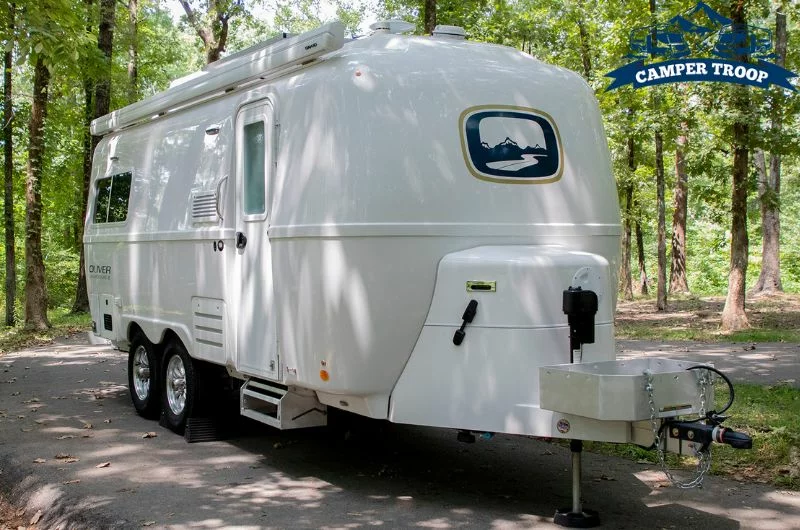
Oliver Travel Trailers builds only towable fiberglass travel trailers. It does not build motorhomes. Oliver’s current lineup has three models:
| Model | Length | Build |
|---|---|---|
| Legacy Elite | 18’5″ | Aircraft-grade aluminum frame, fiberglass shell |
| Legacy Elite II | 24′ | Aircraft-grade aluminum frame, fiberglass shell |
| Apex X23 | 24′ | Aircraft-grade aluminum frame, fiberglass shell |
Legacy Elite vs. Legacy Elite II: The main difference is size. The Legacy Elite is 18’5″ long. The Legacy Elite II is 24′ long, so it gives you more interior room. Both use the same aluminum-frame and fiberglass-shell construction.
Oliver uses a double-hull fiberglass shell. The company says it uses no wood in the roof, exterior walls or floor. That matters when you read about “rotting floors” in other RV problem guides. Those wood-rot issues don’t apply to an Oliver body.
What Are The Common Problems With The Oliver Trailer?
Oliver’s Trailer has the same type of problems as most RVs. It’s not hard to detect the trailer’s issues. Some issues can be quickly fixed, and some will need expert attention. Knowing about these common problems beforehand will help you solve them fast.
- Limited Storage in the Vehicle
- Soaked Bathroom
- Frame Damage or Cracks
- Broken Water Line/ Defective Water Pump
Are There Any Recalls on Oliver Trailers?
Yes. Oliver recalled 1,304 Legacy Elite II trailers from model years 2009–2024. The towing coupler may be underrated for the trailer’s weight rating, and it could break. Dealers replace the coupler free of charge.
If you own or plan to buy a Legacy Elite II from those years, do this:
- Find your trailer’s VIN.
- Contact Oliver to ask if the recall applies and whether the coupler has already been replaced.
- Schedule the free coupler replacement if it hasn’t been done.
- If you’re buying used, ask the seller for proof the recall work was completed.
4 Common Problems with Oliver Trailer And Their Solutions:
Most Oliver Trailer problems are easy to solve. Resolving easy problems is pretty painless, but fixing complex problems is challenging. You’ll find better solutions if you read the owner’s manual for your Oliver Trailer.
We’ll discuss each problem’s causes, fixes, and what affects the repair cost. Knowing how serious a problem is and what its symptoms look like helps you find solutions faster.
Read Also: Common Keystone Hideout Problems & Solutions
Problem 1: Limited Storage
Storage space is tight in an Oliver. That’s a trade-off of a compact, molded fiberglass trailer, not a defect. The living area and bathroom are small, too. It can be a real problem for large families or couples who carry a lot of gear.
Because of this, you can’t bring regular furniture or as many household items as you might in a larger trailer. If space matters most, compare the 18’5″ Legacy Elite with the 24′ Legacy Elite II or Apex X23 before you buy.
What Causes Limited Storage Problems On Oliver Trailer?
The storage limits come from the trailer’s design. They show up on every model, though the 24′ models give you more room than the 18’5″ model.
We’ve pointed out the major causes.
- The rounded shape of the molded shell
- The compact overall size
- Not enough square corner space
How To Fix Limited Storage Issues On The Oliver Trailer?
You can’t change the size of the shell. But you can use the space you have much better. Take a quick look at these solutions.
- Use round-shaped or soft storage that fits against the curved walls.
- Utilize the mid-section of the walls to put the stands and essential kits.
- Use under-bed and under-seat space for bulky, rarely used items.
- Use collapsible bins, buckets and cookware so they pack flat.
- Carry outdoor gear in your tow vehicle’s bed or cargo area instead of the trailer.
- Do a gear check after each trip and leave behind anything you didn’t use.
Warning: Before adding any bumper rack or external carrier, check with Oliver. Extra weight at the back of the trailer can change how it tows, and changes to the frame may affect your warranty.
How Much Does It Cost To Fix The Storage Issue On The Oliver Trailer?
Most storage fixes cost little. Bins, organizers and smarter packing are cheap compared to any modification. Custom cabinet work in a curved fiberglass trailer is a tough job, and the price depends on the shop and the scope.
If you keep running out of room, the real fix may be choosing a larger Oliver model, such as the 24′ Legacy Elite II instead of the 18’5″ Legacy Elite.
Read Also: Common FR3 RV Problems & Solutions
Problem 2: Soaked Bathroom
Bathrooms are one of the essential parts of the Oliver Trailer. But a bathroom that stays wet only brings more problems. You wouldn’t want to clean water from your RV’s bathroom every day.
Standing water helps mold grow and leaves white mineral spots. It can also work its way into sealant and seams over time. Oliver’s floor has no wood, so you don’t have to worry about a rotting wooden floor frame. Still, leaks waste water and can damage fixtures and finishes.
Is the Bathroom a Wet Bath or a Dry Bath?
Check the floor plan of the exact model and year you own or want to buy. In a wet bath, the shower and toilet share one space, so a wet floor after a shower is normal, not a defect. In that case, the goal is managing shower water, not finding a leak.
- Squeegee the walls and floor right after each shower.
- Keep a microfiber towel handy to wipe the toilet and fixtures.
- Move toilet paper and towels out of the bathroom before showering, or use a waterproof holder.
- Run the roof vent fan during and after the shower.
If the floor is wet when nobody has showered, you likely have a leak. Use the steps below.
What Causes Wet Bathroom Issues In The Oliver Trailer?
The reasons behind a wet bathroom are pretty simple. You don’t have to be a certified plumber to find the causes. Learn about the causes behind a wet bathroom in an Oliver Trailer.
- Water line leakages
- Faucet leakages
- Leaving the tap open
- Less airflow in the bathroom
- Not cross-checking the taps and water lines regularly
How To Fix Wet Bathroom Problems On An Oliver Trailer?
You just have to fix the causes to resolve the bathroom issue. These are easy to fix if you have plumbing knowledge. Otherwise, it’s best to call Oliver or a plumber, especially if the trailer is still under warranty.
- Replace leaking water lines with new ones
- Close the tap properly after using it
- Change the defective faucets
- Run the vent fan or a small dehumidifier to reduce moisture in the bathroom
- Perform a routine check of fittings and seals to reduce the chances
How Much Does It Cost To Fix A Dampened Bathroom Of Oliver Trailer?
Check your warranty first. Oliver covers all components for 1 year from the purchase date, and components Oliver makes and installs for 2 years. A leaking faucet or fitting in a newer trailer may cost you nothing.
Outside warranty, the cost depends on the parts you replace and who does the work. Replacing a damaged water line is usually better than patching it. Branded, more durable parts cost more than basic ones.
Using mid-priced parts will save you some money. Labor charges vary. They depend on the technician’s rates and how hard it is to reach the leak.
Read Also: Common Keystone Bullet Problems and Solutions
Problem 3: Frame Damage or Cracks
Oliver builds every model on an aircraft-grade aluminum frame. The frame gives the trailer its strength. A cracked or bent frame can’t support the structure safely for long. It’s a severe problem, even if it’s not a common one.
Aluminum frames are lighter than steel and don’t rot like wood. Still, any frame can be damaged. Finding problems early keeps repairs smaller and keeps you safe on the road.
What Causes Frame Damage On An Oliver Trailer?
Several things can stress a trailer frame. These are the main ones to watch for.
- Driving on rough and uneven surfaces
- Hitting potholes, curbs or deep dips at speed
- Overloading the trailer or loading it unevenly
When Should You Stop Towing?
Stop towing and get the trailer inspected if you see any of these:
- A visible crack in the frame, tongue or coupler area
- A frame member that looks bent or out of line
- New clunks, sway or a hitch that feels loose
- A Legacy Elite II from 2009–2024 with the recalled coupler not yet replaced
How To Fix A Cracked Aluminum Frame On An Oliver Trailer?
A cracked frame is not a DIY job. Contact Oliver first. The aluminum chassis undercarriage is covered for 5 years from the purchase date, so Oliver may need to inspect it. Don’t weld the frame yourself. Ask Oliver before anyone repairs it.
You can lower the risk of damage with these habits:
- Inspect the frame, tongue and coupler before each trip
- Stay within the trailer’s weight ratings and balance your load
- Drive carefully on bumpy roads
- Get any damage looked at by Oliver or a qualified shop right away
How Much Does It Cost To Fix The Cracked Aluminum Frame Of An Oliver Trailer?
Most ways to prevent frame damage won’t cost you a penny. If a repair is needed, there’s no set price. It depends on where the damage is and how bad it is.
If your trailer is within 5 years of the original purchase date and you are the original buyer, the frame may be covered by Oliver’s warranty. Call Oliver before paying for any frame repair.
Read Also: Common Bighorn RV Problems & Solutions
Problem 4: Broken Water Line/Water Pump Problems
A faulty water pump is worse than a broken water line. If the water pump in your RV is broken, you can’t use the faucets, shower or toilet when you’re not on city water.
It helps to understand the causes of pump problems, how to solve them, and what affects the cost, so you can fix them for good.
What Causes Broken Water Line/Water Pump Problems On Oliver Trailer?
Water pump and line problems have many causes. Some are easy to find, but the technical ones are harder to detect. Here’s a short list of the causes behind a broken water line or water pump.
- Insufficient power supply
- Not enough water in the tank
- Dirt or debris inside the pump or its strainer
- Leakage in the water line
- Water left in the lines or pump during freezing weather
How To Fix Broken Water Line/Water Pump Problems On Oliver Trailer?
The pump issue is a pretty critical problem in the Oliver Trailer. Here’s how to fix and avoid water line and water pump problems.
- Keeping the batteries charged
- Fixing the faulty wiring
- Replace the damaged water lines
- Cleaning the pump regularly
- Keep enough water in the tank so the pump doesn’t run dry
How Do You Winterize to Prevent Line and Pump Damage?
Freezing water expands and can split lines and crack pump housings. Winterize before temperatures drop below freezing. Follow your Oliver owner’s manual for the exact steps on your model. A typical process looks like this:
- Turn off the water pump and water heater.
- Drain the fresh, gray and black tanks.
- Drain the water heater and bypass it.
- Open all faucets and low-point drains to empty the lines.
- Blow out the lines with low-pressure air or pump RV antifreeze through them, as your manual directs.
How Much Does It Cost To Fix A Broken Water Line/Water Pump Problem In An Oliver Trailer?
First, check whether the pump is still under warranty. All components are covered for 1 year from purchase. Outside warranty, the cost depends on the pump model in your trailer and whether a line or the pump itself failed.
A simple fix, like cleaning a clogged strainer or tightening a fitting, may cost nothing. A full pump replacement costs more, and technician labor rates vary by shop and region.
What Other Problems Do Oliver Owners Run Into?
Beyond the four main problems, owners may deal with issues common to most travel trailers. Here’s what to check.
Furnace Blower and AC Problems
A furnace that won’t light or a blower that runs weak is often a power issue. Low battery voltage can keep a furnace blower from reaching full speed. Charge the batteries, check fuses and clean any vents or filters. If the AC or furnace still fails, contact Oliver while the unit is under the 1-year component warranty.
Tire, Axle and Wheel Bearing Problems
- Check tire pressure cold before every trip, using the rating on the tire sidewall or trailer placard.
- Look for uneven wear, which can point to alignment or axle problems.
- Feel the hubs at stops. A hub much hotter than the others can signal a bearing problem.
- Service the wheel bearings on the schedule in your owner’s manual.
- Replace tires based on age as well as tread, since trailer tires often age out before they wear out.
Electrical, Battery and Solar Issues
Many pump, furnace and light problems trace back to the 12-volt system. Check battery charge, loose terminals and blown fuses first. If your trailer has a solar or lithium battery setup, follow the maker’s charging settings in your manual. Call Oliver before changing system settings or adding components.
Hardware and Loose Fittings
Road vibration can loosen screws, latches and cabinet hardware on any trailer. Do a quick walk-through after each trip and tighten anything that’s loose before it breaks.
How Do You Care for the Fiberglass Shell?
Oliver’s double-hull fiberglass shell has no wood in the roof, walls or floor. That removes a major cause of rot in other trailers. Still, water can get in through failed sealant around windows, vents and fixtures. Inspect the shell at least before and after each camping season.
- Wash the shell so you can see small cracks and stains clearly.
- Check the gelcoat for spider cracks, chips or impact marks.
- Inspect sealant around windows, roof vents, the door and every fixture. Look for gaps, cracks or peeling.
- Look inside cabinets and corners for water stains after rain.
- Report any cracks in the body to Oliver. The fiberglass body is covered for 5 years.
What Does the Oliver Warranty Cover?
Oliver’s warranty has three parts. All three start on the purchase date.
| Coverage | Length |
|---|---|
| Fiberglass body and aluminum chassis undercarriage | 5 years |
| Components Oliver makes and installs | 2 years |
| All components | 1 year |
The warranty covers the original buyer only. It does not transfer to a second owner. If you buy a used Oliver, plan to pay for repairs yourself.
Before you do any DIY repair, welding or modification on a trailer still under warranty, contact Oliver first. Ask how the work could affect your coverage.
Where Can You Get an Oliver Trailer Serviced?
Start with Oliver. You can send a service request through Oliver’s support portal or call 1-888-526-3978. The company is based at 228 Industrial Ave, Hohenwald, Tennessee.
For warranty work and recall repairs, Oliver will tell you where the work can be done. For routine work outside warranty, a qualified RV shop can handle tires, bearings, batteries and basic plumbing.
Should You Repair It Yourself or Call a Pro?
Use this simple rule: if it’s under warranty, involves the frame, or affects towing safety, call Oliver first.
| Problem | DIY? | Who to call |
|---|---|---|
| Storage organizing | Yes | No one needed |
| Wet bath cleanup and ventilation | Yes | No one needed |
| Loose fitting or dripping faucet | Yes, if out of warranty | Oliver if under warranty |
| Water pump failure | Maybe, if out of warranty and you know 12-volt systems | Oliver or an RV technician |
| Tire pressure and visual checks | Yes | RV shop for bearings and axle work |
| Frame crack or bent frame | No | Oliver |
| Coupler recall (Legacy Elite II, 2009–2024) | No | Oliver or dealer, free of charge |
| Cracks in the fiberglass body | No, if under warranty | Oliver |
How Does Oliver Compare to Casita, Escape and Scamp?
All four brands make molded fiberglass travel trailers. When you compare them, focus on the points that drive long-term problems and repair costs:
- Frame material: Oliver uses an aircraft-grade aluminum frame. Check what each other brand uses.
- Wood in the structure: Oliver says it uses no wood in the roof, exterior walls or floor. Ask other brands the same question.
- Shell construction: Oliver uses a double-hull fiberglass shell.
- Warranty: Compare Oliver’s 5-year body and chassis coverage against each brand’s published terms.
- Service access: Check how far you live from each maker’s service options.
Is an Oliver Trailer Worth the Money?
It depends on what you value. An Oliver may be a good fit if you want:
- A structure with no wood to rot in the roof, walls or floor
- An aluminum frame under a double-hull fiberglass shell
- 5-year coverage on the body and chassis as the original buyer
It may not be the right fit if you need lots of storage, travel as a large family, or plan to buy used and rely on warranty coverage. The warranty does not transfer.
Conclusion
The Oliver is a practical fiberglass travel trailer built on an aluminum frame. Most of its common problems, like tight storage, a wet bathroom and pump trouble, have simple fixes. Check for the Legacy Elite II coupler recall, use your warranty when you can, and call Oliver before any frame repair. Reading the owner’s manual helps you avoid many problems in the first place.
Read Also: Common Roadtrek SS Agile Problems & Solutions
Frequently Asked Questions About Oliver Trailers
What is the difference between the Oliver Legacy Elite and Legacy Elite II?
The main difference is size. The Legacy Elite is 18’5" long. The Legacy Elite II is 24′ long and gives you more interior room. Both use the same build: an aircraft-grade aluminum frame under a fiberglass shell. If storage matters most to you, the 24′ Legacy Elite II is the roomier choice.
Do Oliver trailers have wood rot problems?
No, wood rot is not a typical Oliver problem. Oliver says it uses no wood in the roof, exterior walls or floor of its double-hull fiberglass shell. Water can still get in through failed sealant around windows, vents and fixtures. Inspect the sealant before and after each camping season.
Does Oliver make motorhomes?
No. Oliver Travel Trailers builds only towable fiberglass travel trailers. Its current lineup has three models: the 18’5" Legacy Elite, the 24′ Legacy Elite II and the 24′ Apex X23. All three use an aircraft-grade aluminum frame and a fiberglass shell, so you need a tow vehicle to use one.
Does the Oliver warranty transfer to a second owner?
No. Oliver’s warranty covers the original buyer only and does not transfer to a second owner. If you buy a used Oliver, plan to pay for repairs yourself. If it’s a Legacy Elite II from 2009–2024, also ask the seller for proof that the free coupler recall work was completed.
How can you tell if an Oliver bathroom floor is leaking?
If the bathroom floor is wet when nobody has showered, you likely have a leak. A wet floor right after a shower is normal in a wet bath. To find the leak, check the water lines, faucets and fittings, and make sure the taps are fully closed. Call Oliver if it’s under warranty.