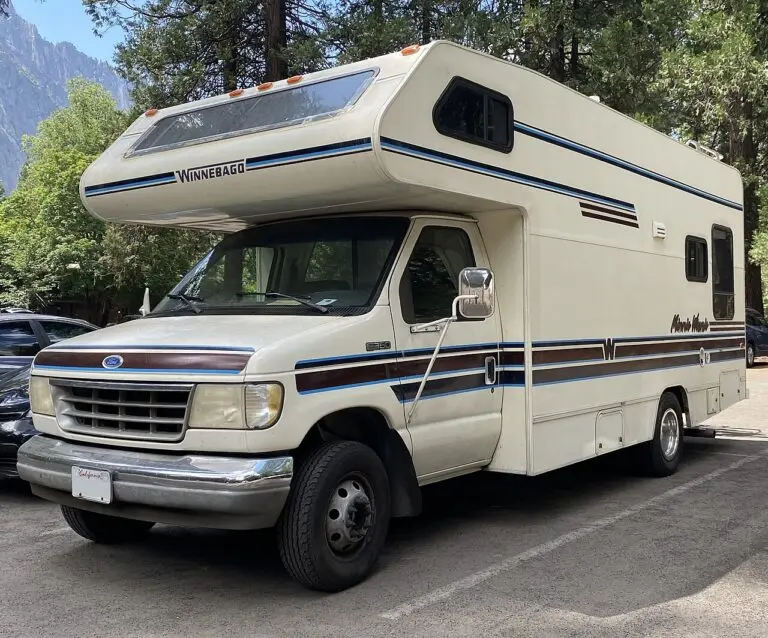
Quick answer: Winnebago Via problems owners may run into include a draining battery, an engine that clicks but won’t start, electrical faults such as blown fuses, and propane (gas) leaks. Most battery and connection issues are simple DIY fixes. Gas leaks are an emergency: leave the RV, call 911, and have a qualified RV technician repair the leak.
An RV is like your actual home. Wherever you go, it goes. It lets you enjoy nature up close and make good memories with your family. So it goes without saying that we hate it when our favorite vehicle has problems, especially on long trips.
This guide covers four Winnebago Via issues: the battery draining, the engine not starting, electrical issues, and gas leaks.
The following guide walks you through each issue, including the causes, symptoms, and simple fixes. It also explains how to check for recalls, how to tell your two batteries apart, and when to call a pro. Keep reading to find out more.
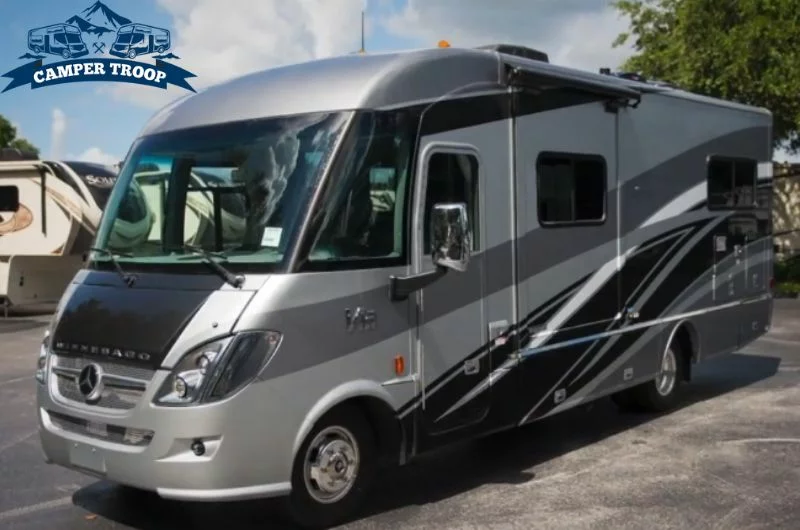
What Are The Common Problems With Winnebago Via RV?
Like any motorhome, the Winnebago Via can run into a range of issues. Here is a list of the problems this guide covers. Later in this article, we’ll discuss simple solutions for each one.
- Winnebago Via Battery Started Draining
- Winnebago Via Engine Won’t Start
- Winnebago Via Electrical Issue
- Winnebago Via Gas Leak
Which Winnebago Via Model Year and Chassis Do You Have?
Confirm your exact model year and chassis before you troubleshoot. Many fixes, parts, and recalls depend on them. Engine and starting problems also depend on the chassis maker, not just on Winnebago.
Here is how to find this information on your own unit:
- Check the VIN. It is on the registration, the title, and a plate visible through the windshield. The VIN identifies the model year and chassis maker.
- Read the labels. Look for the chassis and coach labels, usually near the driver’s door or entry door.
- Use two manuals. The Winnebago owner’s manual covers the coach (house) systems. The chassis maker’s manual covers the engine, starting system, and dash.
Tip: If you are not sure which manual applies, Winnebago owner support can confirm your model details from your VIN.
4 Common Problems with Winnebago Via RV and Their Solutions:
Troubleshooting means getting to the root of the issue and figuring out the best course of action. When a problem appears, you can either fix it yourself (DIY) or get professional help.
If you take the DIY approach, read the service manual first so you understand the system and choose the right fix. If you hire a mechanic, choose one with strong reviews and RV experience.
Read Also: Common Winnebago Lesharo Problems and Solutions
Problem 1: Winnebago Via Battery Keeps Draining
If the battery has a drain issue, you may see a dash icon light up and hear a beep. You may not be able to start the engine after turning the key. The issue is moderately severe. Deal with it as soon as possible.
Chassis Battery vs. House Battery: Which One Is Dying?
Your Via has two separate battery systems. Find out which one is dying before you pick a fix.
- Chassis (starting) battery: Starts the engine and runs the dash, headlights, and dash radio. If the engine clicks or won’t crank, this is usually the battery at fault.
- House (coach) battery: Runs the 12V living-area systems, such as interior lights, the water pump, fans, and the LP/CO detector. If the lights dim or the pump stops while the engine still starts, this is the battery at fault.
The disconnect switch below can apply to either battery, depending on how your unit is wired. The boost switch in Problem 2 is for starting the engine.
Why Does My Winnebago Via Battery Keep Dying?
Self-discharge and overcharging are common reasons for battery problems. Other causes include the following:
- Lack of maintenance (loose or corroded terminals, low water in flooded batteries)
- Parasitic loads (devices that draw power while everything seems off)
- Lack of charge (short drives, no shore power, or a converter/charger that isn’t working)
- An old battery that can no longer hold a charge
How to Fix Winnebago Via RV Battery Drain?
Parasitic drain means power keeps being used even when the Via engine is off. It is a major cause of battery drain. The dash radio, clocks, and the propane detector can all draw small amounts of power around the clock.
Simple Fix 1: Install Battery Disconnect Switch
A battery disconnect or 12V house disconnect stops parasitic drain while the RV is parked. When the switch is off, the battery is cut off from those loads.
Note: Turning off the house disconnect also turns off the LP/CO detector. Turn it back on whenever people are inside the RV.
Winnebago Via: How to Disconnect the Chassis Battery
Like other Winnebagos, the Winnebago Via may come with a battery disconnect switch. Check your owner’s manual to confirm. The switch cuts off 12V power when you store the RV or do electrical maintenance.
Why Do You Need a Disconnect Switch?
The disconnect switch is usually close to the battery or in the maintenance bay. As the name implies, it cuts the battery off from the Winnebago Via’s 12V circuits. This stops parasitic drain and makes 12V work safer.
Important: A battery disconnect switch cuts 12V battery power only. It does not cut 120V shore power, generator, or inverter circuits. A shock risk can remain while the switch is off. Before working on any 120V wiring, unplug shore power, shut off the generator, and turn off the inverter.
How To Fix or Install the Winnebago Via Disconnect Switch?
Installing a disconnect switch works much the same way on most Winnebago models with a similar wiring layout. Your manual lists the exact steps for your unit. Here is a quick overview of the process.
Step 1: Take the key out of the ignition. Then wait a few minutes (up to 5 minutes).
Step 2: Press and hold the connector’s release button in the direction of the arrow.
Step 3: Pull the connector away from the ground pin. Push it outward until it cannot touch the ground pin. Make sure battery power is cut off to every component.
If your connector or switch looks different from this description, follow the manual. If you are adding a new switch, a qualified RV technician can wire it in.
Simple Fix 2: Measure Parasitic Draw With a Multimeter
If the battery still dies, find out what is pulling power. A digital multimeter can do this.
- Check resting voltage first. Let the battery sit for a few hours with no charging. Set the meter to DC volts and touch the probes to the terminals. Compare the reading with your battery maker’s state-of-charge chart.
- Turn everything off. Unplug shore power, turn off lights and accessories, and close the doors.
- Set up the meter for current. Set it to DC amps and move the red lead to the amps jack.
- Connect the meter in series. Remove the negative battery cable. Connect one probe to the cable and the other to the negative post.
- Pull fuses one at a time. Watch the reading as you pull each fuse. When the reading drops a lot, that circuit holds the drain.
Warning: Do not try to start the engine or turn on large loads while the meter is connected. That can blow the meter’s fuse.
Simple Fix 3: Keep the Batteries Charged
- Shore power: When plugged in, the converter/charger charges the house battery. Make sure its setting matches your battery type (lead-acid, AGM, or lithium).
- Solar: A solar panel with a charge controller can top up the batteries while you are parked off-grid.
- Storage: For long storage, either use a battery maintainer or fully charge the battery and turn the disconnect switch off. Check the voltage now and then.
How Much Does it Cost to Disconnect the Chassis Battery?
If your Via already has a disconnect switch, using it costs nothing. If you need to add one, check current prices on Amazon or at an RV parts store, since prices vary by brand and amp rating. Many owners can install one themselves. If you are not comfortable with wiring, a mechanic can do it.
Read Also: Common Winnebago Adventurer Problems & Solutions
Problem 2: Winnebago Via Engine Won’t Start
You turn the key, but the engine won’t start. All you get is a couple of clicks. Maybe you have already cleaned the cables or changed the battery, but the issue remains.
Why Does My RV Click but Not Start?
A click with no crank usually means the starter is not getting enough power. A dead or faulty chassis battery is the main cause. Other causes include the following:
- Starter motor problems
- Lack of fuel (the engine cranks but won’t fire)
- Corroded wires or loose battery terminals
- Other electrical issues, such as a bad ground or a blown fuse
- Engine problems
How to Fix a Winnebago Via Engine That Won’t Start?
Start with the chassis battery whenever the engine refuses to start. It is the most likely cause.
Simple Fix 1: Use Boost Switch
Many motorhomes have a battery boost (auxiliary start) switch on the dash. It links the house battery to the chassis battery so you can start the engine. Check your owner’s manual to see if your Via has one and where it is.
How Do I Use the Battery Boost Switch?
- Turn off large 12V loads in the coach.
- Press and hold the boost switch.
- While holding it, turn the key to start the engine.
- Release the switch once the engine runs.
The boost only helps if the house battery is charged. If both batteries are low, use a jump starter or charger. Also remember the boost is a workaround. Find out why the chassis battery went flat.
Simple Fix 2: Inspect the Connections
If Simple Fix 1 does not work, inspect all the battery connections. Pay close attention to the cable that runs from the negative terminal to the frame. It may be badly rusted. Clean corroded terminals, tighten loose ones, and replace damaged cables.
How Much Does it Cost to Fix a Winnebago Via That Won’t Start?
If the boost switch or cleaning the terminals works, the fix costs nothing. If you need a new battery, replace it with one that matches the type and size in your manual. Check current prices, since they vary by brand and type. Deep cycle house batteries usually cost more than starting batteries. Also budget for cables and labor if a mechanic does the work.
Read Also: Common Winnebago Travato Problems & Solutions
Problem 3: Winnebago Via Electrical Issues
Electrical issues include blown fuses, a failed converter/charger, and blown DC blade fuses. As you can see, the term covers a wide variety of things. A fault at one key point can cause one or more components to fail. Electricity runs so much of the RV that the issue needs quick action.
What Causes Electrical Issues in the Winnebago Via?
The most common causes are a faulty battery, corroded wires, or blown fuses. Mistakes during battery replacement also cause problems. A battery with the wrong voltage, or cables hooked up wrong, will lead to electrical faults.
How to Fix Winnebago Via Electrical Issues?
Often, replacing a bad battery fixes the issue. Sometimes a fuse needs to be replaced. If the problem is a damaged wire or poor connection, repairing or replacing the wire fixes it.
Always replace a fuse with one of the same amp rating. If a new fuse blows again right away, stop. That circuit has a short, and a bigger fuse can start a fire.
Electrical issues can be complex and need tools like a digital multimeter. Simple jobs like swapping a fuse are fine for DIY. For anything beyond that, and for any 120V work, professional help is the best choice.
How Much Does it Cost to Fix the Electrical Issue?
A deep cycle battery costs more than a regular starting battery. Fuses and short pieces of wire cost little. Mechanic labor is usually the biggest part of the bill. Rates vary by region and shop, so ask for a written estimate before work starts.
Read Also: Common Winnebago Rialta Problems And Solutions
Problem 4: Winnebago Via Gas Leak
A propane leak is the most serious issue in this guide. It can lead to fire, explosion, and injury. Leaks can come from a cooktop, a loose fitting, a damaged hose, or a faulty valve.
Some Winnebago models have had cooktop recalls for leaking gas. However, no source we found names the Via in these recalls. See the recall section below for details and how to check your own VIN.
What Causes a Winnebago Via Gas Leak?
A damaged burner control valve or cracked burner tube can leak gas. Loose fittings, worn hoses, and a damaged regulator are other common sources. Any of these raises the risk of fire.
What Should I Do If I Smell Propane in My RV?
Propane smells like rotten eggs. If you smell it, act right away. Do not try to find the leak yourself.
- Get everyone out of the RV, including pets, and move well away from it.
- Do not use flames or switches. No lighters, cigarettes, light switches, or starting the engine. A spark can ignite the gas.
- Shut off the propane at the tank only if you can do it safely on your way out.
- Leave doors open as you exit if that is safe, so gas can vent.
- Call 911. Fire departments are trained to handle propane leaks.
- Schedule an inspection. Have a qualified RV technician find and repair the leak before you use the propane system again.
Source: Progressive Lifelanes, “What is an RV propane leak?”
How to Fix the Winnebago Via Gas Leak Issue?
Leave gas-leak repairs to a dealer or qualified RV technician. They can pressure-test the system and replace a faulty cooktop, valve, hose, or regulator. If your RV is covered by an open recall, the dealer will do the recall repair.
How Do You Test the LP/CO Detector and Check for Leaks?
- Test the detector: Press the test button and listen for the alarm. Do this before each trip.
- Check the date: Detectors wear out. Replace yours by the date printed on its label.
- Keep it powered: The detector runs on the house battery. A dead battery or an “off” disconnect switch leaves you unprotected.
- Basic leak check: With no gas smell present, brush soapy water on fittings and hose connections. Growing bubbles mean a leak. Shut off the tank and call a technician. Never use a flame to check for leaks.
How Much Does it Cost To Fix the Winnebago Via Gas Leak Issue?
Recall repairs are free at authorized dealers. Outside a recall, the cost depends on the failed part and labor. Warranty or extended service coverage may help, so check your plan before booking the repair.
Is There a Recall on the Winnebago Via?
We found no recall source that names the Winnebago Via in the Winnebago cooktop gas-leak recalls. Two cooktop recalls cover other Winnebago models:
- NHTSA 22V-393 (2022): A two-burner cooktop’s burner control valve could leak gas. It covers certain 2020 Winnebago ERA motorhomes. Dealers do the repair free of charge. (source)
- NHTSA 23V-049 (February 2023): Covers 2020–2023 Solis, 2021–2023 Travato, and 2022–2023 Ekko motorhomes with Suburban SDS2 cooktops. Internal aluminum burner tubes may crack and leak gas. The cooktop is repaired free of charge. (NHTSA recall report)
Recalls can also be issued by the chassis maker. Always check by VIN rather than relying on model name alone.
How Do I Check for Open Recalls on My RV by VIN?
- Find your 17-character VIN on the registration, title, or windshield plate.
- Go to nhtsa.gov/recalls and enter the VIN.
- Also contact Winnebago owner support or a Winnebago dealer. Ask about recalls and service campaigns on the coach.
- Ask a dealer for the chassis brand to check chassis recalls too.
- If a recall is open, book the free repair with an authorized dealer.
What Other Areas Should Winnebago Via Owners Check?
Beyond the four problems above, these motorhome systems are worth checking regularly. Catching problems early keeps repairs small.
- Slide-outs (if equipped): Listen for grinding or slow movement. Keep seals and tracks clean. Low battery voltage can make slides run poorly.
- Leveling jacks (if equipped): Watch for jacks that won’t retract or warning lights. Check fluid levels as your manual directs.
- Water leaks and roof seals: Inspect roof, window, and vent sealant for cracks. Look for stains or soft spots inside. Water damage spreads fast if ignored.
- Generator: Run it under load on a regular schedule and follow the maintenance intervals in its manual.
- Refrigerator: If it stops cooling, check power, fuses, and (on gas models) the propane supply. Keep the vents clear.
- Chassis: Engine, brakes, and transmission follow the chassis maker’s service schedule. Use a shop that services that chassis brand.
Should You Fix It Yourself or Call a Pro?
Use DIY for simple, low-risk jobs. Call a professional for propane, 120V wiring, and anything covered by warranty or a recall.
| Problem | DIY-friendly? | Typical DIY cost | When to call a pro |
|---|---|---|---|
| Battery drain | Yes | Low (multimeter, disconnect switch) | You can’t find the drain circuit |
| Engine won’t start | Partly | Free to low (boost switch, cleaning terminals, new battery) | Battery and cables are good but it still won’t crank |
| Blown fuse | Yes | Low | The new fuse blows again |
| 120V or wiring faults | No | Not recommended | Always |
| Propane leak | No | Not recommended | Always; call 911 first if you smell gas |
| Recall item | No | Free at dealer | Always use an authorized dealer |
Decision rules:
- Check for open recalls first. A recall repair is free.
- If your RV is under warranty or extended service coverage, call the provider before doing DIY work. Some DIY repairs can affect coverage.
- If the job involves gas or 120V power, use a qualified technician.
- If you need a special tool you don’t own and won’t use again, a shop may cost less overall.
- Get a written estimate before any shop work begins.
Conclusion
Just like other vehicles, RVs run into issues. As an owner, you are responsible for taking care of yours. Learning about common problems and simple fixes before you face them lowers your costs and helps you avoid accidents.
You can fix many battery and connection problems on your own. Leave propane leaks, 120V wiring, recall work, and major mechanical issues to a dealer or qualified technician.
This guide covered some Winnebago Via issues and how to handle them. For problems specific to your unit, check your owner’s manual, run your VIN through the NHTSA recall lookup, and contact Winnebago owner support.
Read Also: Common Winnebago soils problem and solution
Winnebago Via Problems: Frequently Asked Questions
How do I find out which chassis my Winnebago Via is built on?
Check your VIN, which identifies the model year and chassis maker. The VIN is on the registration, the title, and a plate visible through the windshield. You can also read the chassis and coach labels near the driver’s door or entry door. Winnebago owner support can confirm your model details from your VIN.
Does a battery disconnect switch turn off all power in the RV?
No. A battery disconnect switch cuts 12V battery power only. It does not cut 120V shore power, generator, or inverter circuits, so a shock risk can remain while the switch is off. Before working on any 120V wiring, unplug shore power, shut off the generator, and turn off the inverter.
Does turning off the battery disconnect affect the propane detector?
Yes. The LP/CO detector runs on the house battery. Turning off the house disconnect also turns off the detector, and a dead battery has the same effect. Either way, you are left unprotected. Turn the disconnect back on whenever people are inside the RV, and keep the house battery charged.
What should I do if a new fuse blows right away?
Stop and do not install a bigger fuse. A fuse that blows again right away means that circuit has a short. A larger fuse can start a fire. Always replace a fuse with one of the same amp rating. If the problem continues, have a professional trace the fault, especially on 120V circuits.
Can DIY repairs affect my Winnebago Via warranty?
They can. If your RV is under warranty or extended service coverage, call the provider before doing DIY work, because some DIY repairs can affect coverage. Check for open recalls first too, since recall repairs are free at authorized dealers. Use a qualified technician for propane and 120V work.