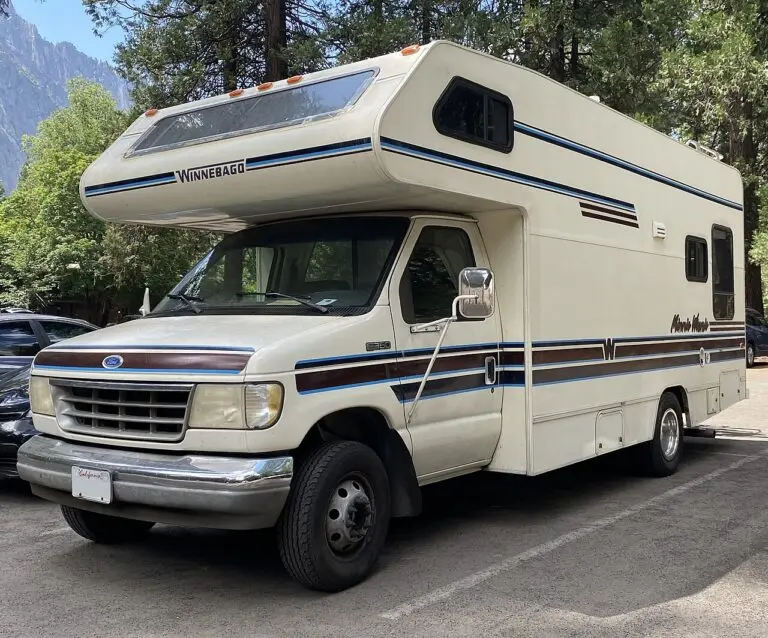
Quick answer: The most common Winnebago Rialta problems are a generator that cranks but won’t start, an absorption fridge that stops cooling, dash AC compressor failures, roof leaks at seams and fittings, and toilet flush trouble. Most come down to age. The Rialta was built from 1995 to 2005, so worn seals, stale fuel and tired parts are common.
Like any other RV, the Winnebago Rialta has issues and shortcomings. Some are easy to handle and have several fixes. Others need special attention. A few are built-in design limits that you can only work around, not fully fix.
The most common Winnebago Rialta problems include, but are not limited to, a hard-to-start generator, refrigerator issues, dash AC compressor failure, a leaky roof, and toilet flush issues.
Below, we cover each of these problems with symptoms, causes and fixes. We also cover drivetrain checks, safety warnings, recalls, parts and what to inspect before you buy a used Rialta.
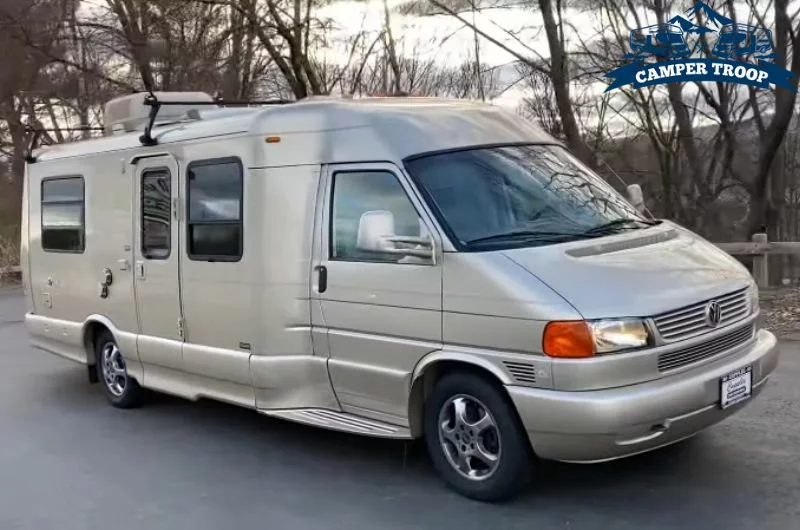
What Is the Winnebago Rialta, and What Years Was It Made?
The Winnebago Rialta is a small Class C motorhome built on the Volkswagen EuroVan (T4) chassis. Winnebago built it from 1995 to 2005 in four floor plans. VW stopped importing the EuroVan to the US in 2003. Production ended in 2005, when Winnebago’s stock of 2003 chassis ran out.
Key facts at a glance:
- Years built: 1995 to 2005
- Chassis: Volkswagen EuroVan (T4)
- Floor plans: four
- Size: about 21 ft 8 in long, 8 ft 10 in tall and 7 ft 4 in wide
- Fuel economy: Winnebago claimed 18 to 22 mpg
What engine does the Winnebago Rialta have?
The Rialta uses the engine and drivetrain from the VW EuroVan chassis it was built on. The engine changed over the production run, so the right answer depends on the model year. Check your VIN or the chassis paperwork to confirm which engine yours has before you order parts.
How do the Rialta floor plans differ?
All four floor plans share the same body and chassis. They differ mainly in the layout of the bed, dinette and bath. The floor plan code is part of the model name. When you shop or order interior parts, match the exact model code and year, since cabinets, beds and plumbing runs are not always the same.
Is the Winnebago Rialta a Reliable RV?
A well-kept Rialta can be a dependable small motorhome. But every Rialta is now more than 20 years old. Its reliability today depends far more on past care than on the original design. Expect age-related wear in seals, rubber parts, the generator and the fridge.
Use this simple decision rule. If a Rialta has service records, a dry floor and a sound drivetrain, it is worth a closer look. If it has soft spots, water stains or an unknown drivetrain history, budget for major repairs or walk away.
What Are the Common Problems With the Winnebago Rialta?
These are the five problems Rialta owners run into most often. There can be more, and we cover other common checks further down. Below is a detailed look at each one.
- Generator Hard-to-Start Issue
- Refrigerator Issues
- Dash air conditioning compressor failure
- Roof Leak
- Toilet Flush Issue
5 Common Problems with Winnebago Rialta and Their Solutions:
Some Rialta issues are built-in limits, such as the small living space. You can only work around these with smart storage or small changes to the layout.
For electrical, propane and drivetrain issues, the safest choice is help from a qualified RV tech or a mechanic who knows VW. Common issues like wet floors or leaky roofs can often be handled on your own.
Problem 1: Winnebago Rialta Generator Hard to Start Issue
The most common generator complaint on the Rialta is that it is hard to start. In other words, the generator turns over but will not start or will not keep running.
The generator is your power source when you are not plugged in. So a faulty generator affects more of your RV than almost anything else. Here is a closer look at the problem.
What causes the Winnebago Rialta Generator to be difficult to start?
The primary cause of the generator problem is a malfunction in the carburetor and fuel system, which makes it difficult or impossible for the generator to run continuously. Varnish in the carburetor develops, especially when you leave the Rialta idle for many days.
Other common causes are a weak starting battery, low oil and low fuel. On many motorhomes, the generator draws fuel from the main tank through a shorter pickup tube. This means the generator can stop or refuse to start when the tank is low, even if the engine still runs. Check your owner’s manual for the exact level on your Rialta.
How FIx Generator Hard to Start Issue In the Winnebago Rialta?
Most hard-start problems come from the carburetor or fuel system, often from varnish that builds up over time. Work through these steps in order:
- If your coach’s battery is weak, you might try turning on the engine before turning on the generator.
- Check the gas tank. If the fuel is low, fill up before you try again, since the generator may not be able to draw fuel. Also, check the oil level. Insufficient oil levels prevent the generator from starting.
- If the RV sat for a long time, suspect old fuel and a varnished carburetor. Cleaning or rebuilding the carburetor often fixes this.
Why won’t my Rialta generator start?
If it does not crank at all, check the battery and connections first. If it cranks but will not start, the most likely causes are low fuel, low oil, or a carburetor gummed up by old fuel. If it starts and then dies, suspect fuel delivery or a dirty carburetor.
What size generator is in a Winnebago Rialta, and how do you maintain it?
Generator make and output can vary by year and by later owner swaps. Read the data plate on the generator itself. It lists the make, model and wattage you need for parts and service manuals.
To prevent hard starts:
- Add fuel stabilizer to the main tank before storage.
- Run the generator under a load on a regular schedule, such as once a month. Follow the interval in your generator manual.
- Check the oil before each trip and change it on schedule.
- Have the carburetor cleaned if the generator surges, dies or will not start after storage.
How Much Does it Cost to Fix The Generator Issue?
It depends on the severity of the issue. A low oil level or empty tank costs almost nothing to fix. A carburetor cleaning costs more, and major repairs cost the most.
For bigger jobs, you pay for both parts and labor. Labor rates vary by shop and region, so ask for a written estimate before work starts.
Read Also: Common Winnebago Lesharo Problems and Solutions
Problem 2: Winnebago Rialta Refrigerator Issues
Refrigerator issues are common in the Winnebago Rialta. A typical symptom is a fridge that stops cooling. It may seem to run but not cool at all.
Sometimes the refrigerator does not work at all. The Rialta fridge can run on 3 power sources: AC mode, LP mode, and DC mode.
What Causes the Refrigerator Issues in Winnebago Rialta
An electrical or propane supply problem can stop the fridge from working. A failed cooling unit can also cause it. According to Escapees, absorption cooling units usually fail from boiler overheating, leaks in the sealed system, or running off-level. Common causes include:
- Boiler overheating that blocks or clogs the cooling unit
- A leak in the sealed cooling system
- Running the fridge while the RV is off-level
- Burner fails to light on propane
- Wrong mode or control setting
- Poor electrical connection
Why is my RV refrigerator not cooling on propane or electric?
Start by testing each power mode. This tells you where to look.
- Fails on propane only: check the LP supply, the burner and the igniter.
- Fails on electric only: check shore power, the breaker, fuses and the heating element.
- Fails on every mode: the cooling unit itself has likely failed.
Signs of a failed cooling unit include a strong ammonia smell, yellow residue at the back of the fridge, or an absorber coil that stays cool while the heat source is on.
How to Fix a Winnebago Rialta Refrigerator Issue?
First rule out simple causes. Keep the RV level when the fridge runs, since running off-level can overheat the boiler and ruin the cooling unit. If you smell ammonia or see yellow residue, the sealed system has likely failed and needs a new cooling unit or a new fridge.
If the RV refrigerator issue is due to some electrical problem, you may have to do the following.
- Check the regulator
- Though it is a bit silly, make sure the refrigerator is plugged in
- Make sure the breaker is working properly. If not, reset the breaker.
How Much Does it Cost to Fix the Winnebago Rialta Refrigerator Issues?
There is no set cost to fix a Rialta refrigerator issue. It depends on the cause. A tripped breaker or loose wire costs little. A failed cooling unit costs much more.
If the cooling unit has failed, replacing just the cooling unit is often cheaper than replacing the whole fridge. When you get a quote, ask whether there is a core charge for the old unit.
Read Also: Common Winnebago Adventurer Problems & Solutions
Problem 3: Winnebago Rialta Dash Air Conditioning Compressor Failure
The Rialta can have two separate air conditioners. It is important to know which one has the problem.
- Dash (chassis) AC: part of the VW EuroVan. Its compressor is a VW part driven by the engine. It cools the cab while you drive.
- House or roof AC: a separate RV unit that runs on shore power or the generator. It cools the living area when parked.
Compressor complaints usually refer to the dash AC, since that compressor is a VW component. A VW mechanic or auto AC shop handles that one. An RV tech handles the roof unit.
What Causes the Rialta AC issues?
Some owners blame dash AC compressor failures on a wrong refrigerant charge. We could not verify the exact factory figures, so do not rely on a number from a forum. Have a shop check the charge against the spec for your vehicle. Too much or too little refrigerant can strain a compressor.
You may also read that a VW compressor redesign in 2011 caused Rialta failures. That cannot apply to factory Rialtas. The Rialta was built from 1995 to 2005, and VW stopped importing the EuroVan to the US in 2003.
Age is the bigger factor today. Seals, hoses and compressors on a vehicle this old wear out. Besides compressor failure, you may face more common problems. For example, the AC does not cool, or too much dust comes out of the vents.
How to fix the Winnebago Rialta AC issue?
Start with the cheap checks before you assume the compressor is bad:
- Confirm which unit is failing: the dash AC or the roof AC.
- Check and replace a dirty filter. This fixes weak airflow and dusty air.
- For the dash AC, have a shop check for leaks and confirm the refrigerant charge matches spec.
- Replace the compressor only after the shop confirms it has failed.
If the AC is not cooling well or blows dust, first look for low refrigerant and a dirty filter.
How Much Does it Cost To Fix the Issue?
A new filter is a cheap fix. A compressor replacement costs far more, since it includes the part, labor and a refrigerant recharge. Prices vary a lot by shop and by how easy the part is to find for a vehicle this old. Get a written quote before you approve the work.
Read Also: Common Winnebago Travato Problems & Solutions
Problem 4: Winnebago Rialta Roof Leak
A leaky roof is a common event for RV owners. Though it is considered a minor issue, it should be solved as soon as possible. Water gets in and damages other important elements when there is a leak in your RV.
What Caused the Roof Leak Issue in the Winnebago Rialta?
The most common reason for a roof leak is poor maintenance. Check the roof for possible leaks at least every six months. As the Rialta ages, the sealant around seams and fittings dries out and cracks, so leaks become more likely.
How do you find a roof leak on a Rialta?
- Look inside for water stains, soft ceiling spots or musty smells. Note where they are.
- On the roof, inspect the sealant around vents, the AC unit, antennas, lights and every seam above that area.
- Look for cracks, gaps, lifting edges or missing sealant.
- Remember that water can travel before it drips. The leak may be higher up than the stain.
How to Fix the Roof Leak on the Winnebago Rialta?
Most Rialta roof leaks are simple to fix once you find them. Clean the area, remove loose old sealant and reseal the leak. Use an RV roof sealant matched to your roof material. For flat, horizontal seams on a compatible roof, a self-leveling lap sealant is a common choice. Avoid silicone unless the roof maker approves it, because many RV sealants will not stick to it later.
However, as stated earlier, maintenance is essential. After the resealing, there is a chance that the leak will reappear. So you must inspect the leak area after a reasonable amount of time.
How Much Does It Cost To Fix the Leaky Roof Issue?
A small leak caught early is a low-cost fix. You mainly need a tube of compatible RV roof sealant and some time. The cost rises fast if water has already rotted the wood or damaged the walls, so fix leaks as soon as you find them.
Read Also: Common Winnebago Via RV Problems & Solutions
Problem 5: Winnebago Rialta Toilet Flush Issue
You press the flush control, but the toilet does not flush at all or flushes very slowly. This is the typical Winnebago Rialta toilet flush issue.
What causes the Winnebago Rialta Toilet Flashing Issue?
Flush water comes from your water supply. When there is no water in the tank, or the water pump is off, no water reaches the bowl. If the toilet flushes slowly, the water level or pressure may be low. Sometimes a foreign object clogs the line, which also causes flushing problems.
How Do You Fix the Water Flash Issue in the Winnebago Rialta?
Fixing it is usually easy. Check these things:
- Refill the water tank and make sure the water pump is on.
- Make sure no foreign object is stuck in the line.
- Check which flush control your toilet uses. Some RV toilets have a foot pedal, some a lever and some a push button. Your owner’s manual shows the right one for your model.
Then use the pedal, lever or button to open the valve and let water into the bowl. Only use RV-safe toilet paper to lower the risk of clogs in the black tank.
How Much Does it Cost to Fix the Issue?
Often there is no cost at all. You just refill the water tank or clear the clog. If the flush valve or seal itself is worn out, you will need a replacement part.
What Other Rialta Problems Should You Check?
Beyond the five common problems, these areas deserve attention on any Rialta, especially before you buy one.
Engine, transmission and cooling system
The drivetrain is a VW EuroVan drivetrain carrying a full motorhome body. That means it works hard. Have a mechanic who knows VW check:
- Automatic transmission shifting, slipping and fluid condition
- The cooling system, hoses, radiator and any signs of past overheating
- Engine noises at startup and oil leaks
- Records of timing and other major engine service for your engine type
Drivetrain repairs are usually the most expensive Rialta repairs. Ask for service records before you buy.
Suspension, alignment and front-end wear
Watch for uneven tire wear, clunks over bumps, loose steering or a rear end that sags. These point to worn suspension parts, alignment problems or tired springs. If your Rialta has a rear air suspension, check that it holds air and keeps the coach level. Have a shop inspect the front end and alignment.
Water heater, furnace, propane and plumbing
Test every appliance before a trip and before you buy. Run the water heater and furnace. Look under sinks and around the water heater for drips. Check propane lines and fittings for damage. Plumbing that froze in past winters may crack and leak, so look for water stains near pipes.
Water damage, delamination and floor rot
Water damage is the biggest hidden risk on an old Rialta. Check for:
- Soft spots in the floor, especially near the door, bath and under windows
- Bubbles, waves or loose spots in the outside wall panels (delamination)
- Stains, swollen wood or musty smells inside cabinets and corners
Any of these can mean costly structural repairs. Treat them as a reason to lower your offer or walk away.
What Safety Checks Does a Rialta Need?
Older RVs need extra safety attention. Before each season:
- CO and LP detectors: test them and replace them if they are past their date. Detectors in a 20-year-old RV are likely out of date.
- Propane leaks: if you smell propane, turn off the tank, put out flames, open doors and get out. Do not use switches until a tech checks the system.
- Ammonia leaks: a strong ammonia smell or yellow residue at the fridge means the cooling unit is leaking. Turn the fridge off, air out the RV and have it replaced.
- Smoke detector and fire extinguisher: test and replace as needed.
How Do You Check a Rialta for Recalls?
Look up open recalls by VIN on the NHTSA recall site (nhtsa.gov/recalls). Because the Rialta is a VW chassis with a Winnebago body, recalls can come from either maker. Search the VIN, then also contact a Winnebago dealer and a VW dealer to ask about service bulletins for your model year.
Where Can You Find Parts for a Rialta?
The Rialta has been out of production since 2005, so some parts take effort to find. Split your search in two:
- Chassis and drivetrain parts: search as VW EuroVan (T4) parts. Use VW specialists and VW parts suppliers.
- Body and interior parts: ask a Winnebago dealer, RV salvage yards and Rialta owner groups.
- Appliances: use the brand and model number on each appliance’s data plate to order parts.
What Should You Inspect Before Buying a Used Rialta?
Use this checklist when you look at a used Rialta:
- Run the VIN for open recalls on the NHTSA site.
- Ask for service records, especially for the transmission and cooling system.
- Take a test drive. Note shifting, steering, noises and engine temperature.
- Check the roof sealant, ceiling and walls for leaks and stains.
- Press on the floor for soft spots and look for delamination outside.
- Start the generator cold and let it run under a load.
- Test the fridge on every power mode.
- Test both the dash AC and the roof AC.
- Run the water heater, furnace, pump, faucets and toilet.
- Check the dates on CO, LP and smoke detectors.
- Pay for a pre-purchase inspection by an RV tech and a VW mechanic.
Conclusion
There you have it. We have covered the common Rialta problems and their solutions, plus what to check on the drivetrain, safety gear and used models. Most Rialta problems come from age and missed maintenance, so regular checks prevent the bulk of them.
If you want to solve these common issues, never forget to check the user manual. If an issue seems risky or beyond your skills, contact your dealer, a qualified RV tech or someone with hands-on experience.
Finally, if you have an RV but lack basic repair knowledge, you are in trouble. Make sure you know some basic tips so that mechanics won’t get the opportunity to charge you a lot for fixing common issues.
Read Also: Common Winnebago soils problem and solution
Winnebago Rialta FAQs
How many miles per gallon does a Winnebago Rialta get?
Winnebago claimed the Rialta gets 18 to 22 miles per gallon. That figure comes from the maker, not from independent tests. Your own mileage will depend on the condition of the engine and transmission, the load you carry, tire pressure and how you drive.
Why did Winnebago stop making the Rialta?
Winnebago stopped making the Rialta because its chassis was no longer available. The Rialta was built on the Volkswagen EuroVan, and VW stopped importing the EuroVan to the US in 2003. Winnebago kept building Rialtas until its stock of 2003 chassis ran out in 2005. Because of this, some parts now take effort to find.
How often should you check a Rialta roof for leaks?
Check a Rialta roof for leaks at least every six months. Look at the sealant around vents, the AC unit, antennas, lights and seams for cracks, gaps or lifting edges. Sealant dries out and cracks as the coach ages. Catching a leak early keeps the repair cheap and helps prevent rot in the walls and floor.
Can you use silicone to seal a Rialta roof?
Avoid silicone on a Rialta roof unless the roof maker approves it. Many RV sealants will not stick to silicone later, which makes future repairs harder. Use an RV roof sealant matched to your roof material instead. For flat, horizontal seams on a compatible roof, a self-leveling lap sealant is a common choice.
Who should repair the air conditioner on a Winnebago Rialta?
It depends on which air conditioner has failed. The dash AC is part of the VW EuroVan chassis, so a VW mechanic or auto AC shop should repair it. The roof AC is a separate RV unit that runs on shore power or the generator, so an RV tech handles it. Confirm which unit is failing first.
Does a Rialta refrigerator need to be level?
Yes. Keep the Rialta level whenever the absorption fridge is running. Running it off-level can overheat the boiler, which can block the cooling unit and ruin it. A failed cooling unit often means a costly replacement. If you smell ammonia or see yellow residue at the back, turn the fridge off and air out the RV.