When an RV compartment door won’t open, the cause is usually the lock, a latch that won’t release, ice or a door knocked out of line. Start with the easy checks: the right key, a clean and lubed lock cylinder, and nothing pressing against the door. Never force it open. The fixes below go from most to least likely.
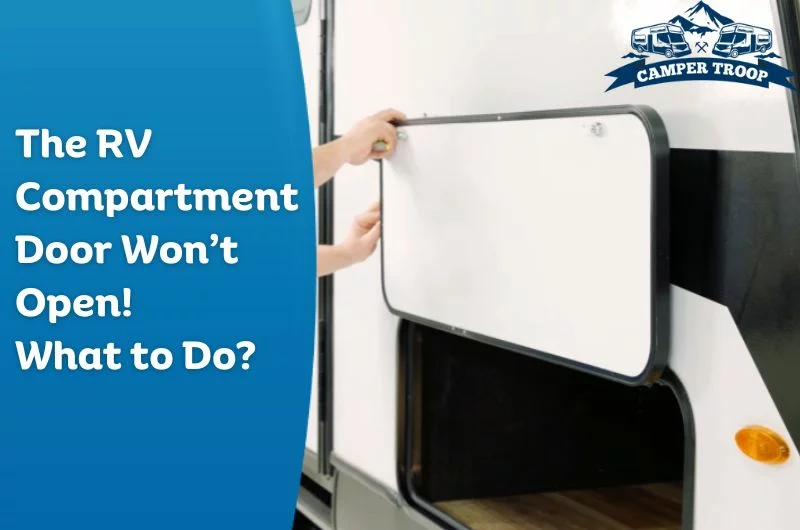
Why Won’t My RV Compartment Door Open?
Work through these causes in order. The first ones are the most common and the easiest to fix.
- Wrong or worn key. Many compartment keys look alike. A worn key may not turn the cylinder fully.
- Dirt or corrosion in the lock. Road grime and moisture can jam the cylinder or the cam (the metal arm behind the lock).
- Frozen lock or latch. Water gets into the lock and freezes. Seals and grease also stiffen in the cold.
- Latch won’t release. On wide bay doors, a latch or latch rod can bind. Cargo leaning on the inside of the door adds pressure and makes this worse.
- Misalignment. Swaying and rocking on the road can shift the door, so its edges or corners catch on the frame.
- Broken latch or handle. The handle turns, but nothing moves inside.
Also confirm the door is actually unlocked. If your compartments lock with a fob or keypad, try unlocking them again with the fob before taking anything apart.
| Symptom | Likely cause | Fix |
|---|---|---|
| Key won’t go in or won’t turn | Wrong key, worn key, dirty cylinder | Try a spare key, clean the cylinder, apply graphite lube |
| Key turns, door stays shut | Stuck cam or latch, cargo pressing on the door | Push the door in, twist it slightly, then open it from behind |
| Stuck only in cold weather | Ice in the lock or latch | Use lock de-icer spray, then dry graphite lube |
| Door catches on the frame | Misalignment | Adjust the striker plate |
| Handle moves freely, nothing happens | Broken latch or handle | Replace the failed latch |
What Type of Lock Does My RV Compartment Door Have?
Most round, keyed locks on RV compartment doors are “751” cam locks. They are named for the number stamped on the key. That is also why one common key often opens many RVs. Behind the lock is a cam arm that turns to hold the door shut.
Many doors also have a paddle or push-button handle that releases a latch. On these, the key locks the handle, and the latch does the holding.
If your key is worn or you bought a used RV, consider replacing the locks. Harvest Hosts recommends replacing all of them at once so one key fits every door.
How Do You Open a Stuck RV Compartment Door?
Take the pressure off the latch first, then work from behind the door if needed. Forcing it can damage the door or the center lock assembly, according to Lippert.
- Unlock the door with the key or fob.
- Push the door inward with one hand while you work the handle. This relieves pressure from cargo leaning on it.
- On a wide bay door, twist the door slightly while you pull the handle to free the latch.
- If it still won’t open, reach the back of the door through a pass-through bay or a neighboring compartment.
- Remove the latch screws from behind so the door can open.
How to Fix an RV Compartment Door That Won’t Open?
Once the door is open, or you know the cause, use the matching fix below.
Solution #01: Re-align the Door
Start by finding the misaligned area. It can be on one side, one corner or several spots. Look for rub marks where the door catches the frame.
Required Items:
- Philips screwdriver
Step 01: Loosen the screws on the striker plate, but don’t remove them.
Step 02: Shift the striker in the direction your inspection showed.
Step 03: Tighten the screws firmly. Don’t overtighten, or you may strip them.
Step 04: Close and open the door to check whether the problem is gone.
Solution #02: Replace the Lock
A jammed or worn 751 cam lock is a simple swap. Measure the old lock before you order. CH751 cam locks come in several cylinder lengths (5/8″, 7/8″ and 1-1/8″) and different cam arm styles, per EasyKeys.
Required Items:
- New RV lock (same size and cam style)
- Philips screwdriver
- Flathead screwdriver
Step 01: Open the door and find the back of the lock.
Step 02: Remove the cam (locking arm). Note which way it faces.
Step 03: Loosen the retention nut that holds the lock in the door.
Step 04: Pull the old lock out from the front.
Step 05: Insert the new lock, tighten the nut and reinstall the cam in the same orientation.
Step 06: Test the key with the door open, then close the door and test again.
Solution #03: Check the Lock Setting
Don’t forget to check whether a safety lock or the main lock is still engaged. This is an easy fix. Unlock it, then try the handle again.
Solution #04: Thaw a Frozen Lock and Winterize Your RV
Frozen doors happen in cold areas. Metal actually shrinks slightly in the cold. A door that sticks in winter is more often caused by ice in the lock or latch, stiff seals or thickened lubricant.
Don’t pour hot or warm water on a frozen lock. The water can refreeze quickly and make the problem worse. Spray a lock de-icer into the cylinder instead. Once it thaws, apply a dry graphite lubricant, as Homes & Gardens advises.
A blow dryer can also help. To protect the paint, place a cloth over the area and blow warm air on the cloth instead of heating the metal directly.
Before cold weather, winterize your RV and treat the locks so moisture can’t get in and freeze.
Solution #05: Replace the Door Handles or Latch
The handle releases the locking mechanism. If it moves but the door stays shut, the latch is likely broken or worn out.
RV compartment door latches are most likely to break when they are roughly slammed shut. A broken latch can let a door fly open on the road, so don’t ignore it. A broken latch is usually replaced as a unit. Often you only need to replace the side that failed, not both. Lippert offers repair kits for some latch types.
Solution #06: Replace a Worn Lift Strut
On top-hinged doors, a weak gas strut makes the door hard to lift or hold open. When you replace one, measure its fully extended length and match its weight rating.
Read Also: How to Troubleshoot & Fix RV Tankless Water Heater Problems?
RV Door Compartment Maintenance Tips
A little care prevents most stuck doors. Here is how to maintain your RV compartment doors.
Tips #01: Don’t Slam Your RV Compartment Doors Shut Roughly
Sadly, many RVers have this bad habit. RV doors are easy to shut, and a gentle push is enough.
Constant slamming puts extra stress on the latches and panels. Over time, the panels loosen and the door frame and edges get damaged.
Tip #02: Use the Right Lubricant
Hinges, springs and latches can jam, corrode or rust from moisture. Keep them lubricated. For the lock cylinders, use a dry graphite lubricant. Oily sprays attract dirt that can gum up the lock.
Tip #03: If RV Compartment Rattles, Attend the Issue
Is your RV compartment rattling? Don’t ignore it. A rattle often means a loose latch, striker or panel. Fix it before it turns into a bigger problem.
Tip #04: Keep your RV Compartment Clean All the Time
Dust, dirt and road grime build up around the door, latch and lock. Left alone, they can block the mechanism. Clean these areas regularly, and pack cargo so it doesn’t lean against the doors.
Read Also: How Much Does It Cost to Replace an RV Front Cap?
How Much Does It Cost to Repair an RV Compartment Door?
Common lock and latch parts are inexpensive. Here are typical part prices. Labor is not included.
| Part | Typical part price |
|---|---|
| CH751 keyed cam lock | About $11–$17 (EasyKeys: $14.67–$15.07 for a 5/8″ Southco, $16.27 for a 7/8″ marine-grade version; Etrailer: $11.51 for a Lippert 751 lock) |
| Baggage door slam latch | About $33–$46 (Etrailer: $32.95 for a Global Link latch, $45.37 keyed-alike) |
Damage to the door itself, such as a bent or cracked panel, costs more and varies with the RV. Most compartment doors are made of aluminum or fiberglass.
Should You Fix It Yourself or Call a Pro?
Swapping a cam lock, adjusting a striker or replacing a strut are basic DIY jobs with a screwdriver. Call an RV dealer or mobile RV tech if the door won’t open after you try it from behind, if the center lock assembly on a wide bay door is damaged, or if the door or frame is bent. If your RV is still under warranty, check with the dealer before you remove any parts.
Read Also: Why Bottom of Slide Bowing Out in My Rv & How to Fix it?
Wrap Up
Most stuck compartment doors come down to the key, a dirty or frozen lock, or a latch that won’t release. Check those first, relieve pressure on the door and work from behind it instead of forcing it. Save the pro for bent doors, damaged center locks and warranty repairs.
Frequently Asked Questions
What key opens RV compartment doors?
Most round, keyed RV compartment locks use a 751 key, named for the number stamped on it. Because this key is so common, one 751 key often opens many RVs. If your key is worn or you bought a used RV, consider replacing all the locks so one new key fits every door.
How do you unlock an RV storage door without a key?
If your compartments use a fob or keypad, try unlocking them again with the fob first. Next, try a spare key. Many compartment locks take the common 751 key. If the door still won’t open, reach its back through a pass-through bay or a neighboring compartment. Then remove the latch screws so the door can open.
Why won’t my RV basement door latch release?
A basement door latch usually won’t release because the latch or latch rod is binding. Cargo leaning on the inside of the door often adds to the pressure. Push the door inward while you work the handle. On a wide bay door, twist the door slightly as you pull the handle to free the latch.
Can you use an oily spray on RV compartment locks?
It’s better to use a dry graphite lubricant on RV compartment lock cylinders. Oily sprays attract dirt and road grime, which can gum up the lock over time. You can still keep the hinges, springs and latches lubricated so moisture doesn’t make them jam, corrode or rust.
Is it safe to drive with a broken RV compartment latch?
No, don’t ignore a broken compartment latch. It can let the door fly open on the road. A broken latch is usually replaced as a unit. Often you only need to replace the side that failed. Until it’s fixed, make sure the door stays closed and secure before you drive.