Quick answer: The most common Winnebago Aspect problems are dead house or chassis batteries, stuck slide-outs, leaky doors and windows, roof cracks and leaks, and electrical faults. Owners also deal with storage compartment leaks and rust. Many issues trace back to missed maintenance, aging seals, and weather. Many are DIY fixes, but structural and chassis work needs a technician.
The Winnebago Aspect is built for comfortable weekends and longer trips. Like any motorhome, it needs regular care. If you own one or plan to buy one, you should know the common Winnebago Aspect problems and how to fix them.
Below, we cover each problem with its causes, a step-by-step fix, and when to call a pro. You will also find how to check recalls, what the warranty may cover, and a quick summary table.
What Is the Winnebago Aspect?
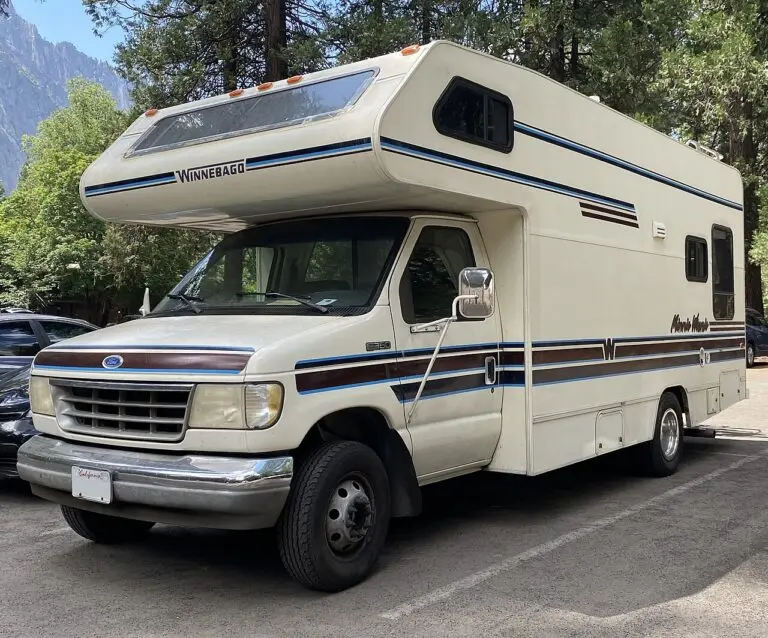
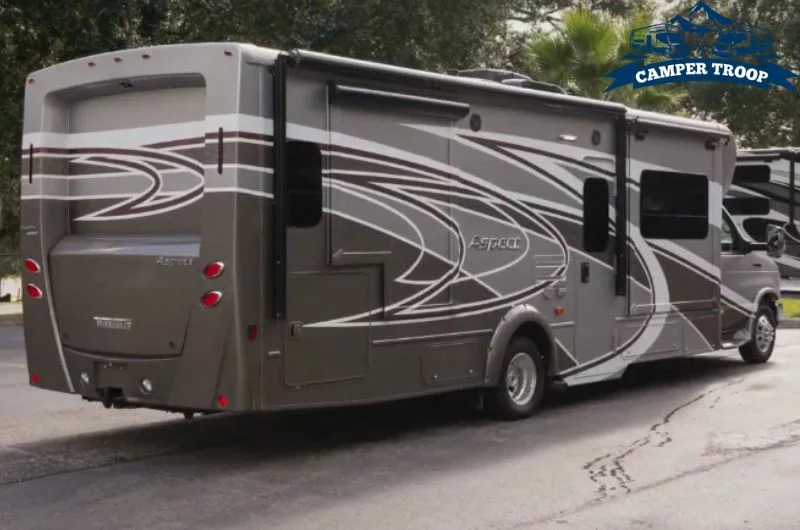
The Winnebago Aspect is a Class C motorhome built on a Ford cutaway chassis. A Class C has a cab up front and a living area built onto the frame behind it, often with a bed over the cab.
For example, the 2016 Aspect 27K is built on a Ford E-450 chassis with a 6.8L Triton V10 engine rated at 305 hp. It is about 29.4 feet (353 inches) long and has two power slide-outs.
According to General RV, the Aspect’s Ford chassis pairs the 6.8L V10 Triton with a TorqShift 5-speed automatic transmission and a 120-amp alternator. It also has:
- 4-wheel ABS brakes
- Rear auxiliary air springs
- A hitch rated for a 5,000-lb drawbar and 350-lb tongue weight
Floor plans, lengths, and equipment changed between model years. To confirm your exact model year and specs, check your VIN, the data plate, and your owner’s manual. A Winnebago dealer can also look up your unit.
What Are the Common Problems With The Winnebago Aspect?
Your trips are more fun when the Aspect works as it should. But one problem on the road can quickly spoil a weekend.
Here is a list of the most common problems you may face.
- Battery Issues
- Slide-out Issues
- Problems with Doors and Windows
- Electrical Problems
- Cracked Roof
Owners also deal with storage compartment leaks, rust, plumbing, appliance, and chassis issues. These are covered in their own section further down.
How Do You Troubleshoot and Fix Winnebago Aspect Problems?
Each issue needs its own fix. Take problems seriously and start troubleshooting right away. Every motorhome develops problems over time. A small leak or weak battery is cheap to fix early and costly to fix late.
Problem 1: Battery Issue
Your Winnebago Aspect has two separate battery systems. The Ford chassis battery starts the engine. The house (coach) batteries run the lights, water pump, fans, and other 12V items in the living area.
At least some model years have two deep-cycle Group 31 house batteries on a slide-out tray, plus the Ford chassis battery. These units also have automatic dual battery charge control, a coach battery disconnect switch, and an auxiliary start circuit (source). Check your own unit, since the battery setup can differ by year or if a past owner changed it.
Either battery system can go dead. The most common reasons are poor charging habits and battery age.
This is a serious issue. With dead house batteries, many accessories will not run at all. With a dead chassis battery, you can’t start the engine.
What Causes Battery Issue On Winnebago Aspect?
The living area of your Winnebago Aspect depends mainly on the house batteries. If your batteries keep dying, look at these common causes:
- Older battery
- Improper charging system
- Overcharging
- Lack of water (flooded lead-acid batteries only)
- Sulfation has occurred
- Parasitic draw during storage (small loads like detectors, radios, and control boards that drain the battery slowly)
Which Battery Type Does Your Aspect Use?
Battery type changes how you care for it. Check the label on each battery before you service or replace it.
- Flooded lead-acid: Needs distilled water topped up on a regular basis. Low water leads to plate damage and early failure.
- AGM: Sealed, so no water to add. Still sensitive to overcharging and deep drains.
- Lithium: Needs a converter or charger with a lithium charging profile. Don’t swap to lithium without confirming your charging gear supports it.
How To Fix The Battery Issue On The Winnebago Aspect?
Regular care prevents most battery problems. If a battery is truly dead or won’t hold a charge, you will usually need to replace it and then care for the new one correctly.
Fixing strategy 1:
Don’t overcharge the battery. Use a charger or converter that matches your battery type and switches to a lower float charge when the battery is full. This helps extend battery life.
Make sure the batteries are fully charged before storing your Winnebago Aspect. Try to keep them where the temperature stays about 10 to 25 degrees Celsius (50 to 77 degrees Fahrenheit).
Fixing strategy 2:
Use the coach battery disconnect switch when the RV is parked and not plugged in. This stops parasitic draw from slowly draining the house batteries. Check charge levels every few weeks during storage.
Fixing strategy 3:
If the chassis battery is too weak to start the engine, your Aspect may have an auxiliary start circuit that uses house battery power to help. Check your owner’s manual for how your unit’s system works before you use it.
How Much Does It Cost To Fix The Battery Issue On The Winnebago Aspect?
Cost depends on the battery type, size, and how many you replace. Group 31 lead-acid batteries cost less than AGM, and lithium costs the most. Since some Aspects use two house batteries, plan to replace them as a matched pair. Get current prices from a local battery or RV supply store before you buy.
Read Also: Common Winnebago Fuse Problems & Solutions
Problem 2: Slide-Out Issues
Some Aspect floor plans, like the 2016 27K, have two power slide-outs. Sometimes a slide won’t move out or in, moves unevenly, or stops partway. This is more likely if you skip regular maintenance.
Rust and corrosion can build up on the moving parts. As a result, the slide may stick or fail to extend fully.
What Causes Slide-Out Issue On Winnebago Aspect?
Rust is a main reason for this issue, but there are other causes too:
- Attack of corrosion
- Older moving parts
- Leaks in moving parts
- Dust and debris between slide components
- Malfunction of a particular part
- Low battery voltage, a blown fuse, or a tripped breaker (power slides need good 12V power)
How To Fix Slide-Out Issue On Winnebago Aspect?
Your slides must lock and unlock correctly to work. Before you start, check the house battery charge and the slide fuse or breaker. A weak battery is a common reason a power slide moves slowly or not at all.
Step 1: Remove Dust
Clean dust and debris from the moving parts and the slide seals. Check the roof of the slide for leaves or branches. Then try to move the slide again.
Step 2: Use Lubricant
Use lubricant on your Winnebago Aspect slide arms and gears. Lubricating helps protect against rust and keeps the slide moving smoothly. It does not remove rust that is already there. Existing rust needs cleaning, or the part may need to be replaced. Use the lubricant your owner’s manual recommends.
Step 3: Get Help From A Service Center
If you can’t solve the issue, take the Winnebago Aspect to a service center. A technician will diagnose the problem and repair it.
How Do You Bring In a Stuck Slide-Out?
Slide mechanisms vary by model year and floor plan. Your owner’s manual or the label near the slide motor explains the manual retract method for your unit. Follow it exactly. In general:
- Check battery charge, fuses, and breakers first.
- Make sure nothing is blocking the slide inside or outside.
- Find the manual override described in your manual.
- Bring the slide in slowly. Do not force it or use power tools unless the manual allows it.
- Have the system inspected before you use the slide again.
How Much Does It Cost To Fix The Slide-Out Issue On The Winnebago Aspect?
Cleaning, lubrication, and a fuse or seal fix cost much less than replacing a motor, gearbox, or other slide components. Labor time also adds up fast on slide work. Ask for a written estimate that lists parts and labor before you approve a repair.
Read Also: Common Winnebago Forza Problems & Solutions
Problem 3: Trouble with Doors And Windows
The doors and windows in the living area of your Winnebago Aspect can get damaged or start to leak. When that happens, the RV gets drafty and water can get inside.
Vent windows can also get damaged, and doors can start to squeak or rattle.
What Causes Trouble With Doors And Windows On Winnebago Aspect?
Doors and windows get used every day, so they wear out. These are the common problems and causes:
- Leak in windows
- Noise from doors
- Leaking window seal
- Attack of rust
How To Fix Trouble With Doors And Windows On Winnebago Aspect?
Don’t ignore door and window problems. A small leak can lead to hidden water damage in the walls. Fix them quickly.
Step 1: Replace the Doors
If a door is badly damaged or won’t seal, it may need to be replaced. Call a technician to replace the door.
Step 2: Repair Drafty Windows
To repair drafty windows, seal the window frame correctly. Foam gaskets can be used for this.
Step 3: Regular Maintenance
Regular care extends the life of doors and windows. Clean them often. Lubricate hinges, latches, and window tracks to keep them working smoothly.
How Much Does It Cost To Fix Trouble With Doors And Windows On Winnebago Aspect?
New gaskets, lubricant, and hinge or latch adjustments are usually low-cost DIY jobs. Replacing a full door, window, or frame costs much more, especially if there is water damage behind it. Get a quote that includes checking for hidden wall damage.
Read Also: Common Winnebago Revel Problems & Solutions
Problem 4: Cracked Roof
Roof cracks are a big problem for many RVs, and they can happen for many reasons. A cracked roof causes the most trouble in rainy and winter weather.
Water that gets in can rot wood, damage ceilings, and cause mold. So a small roof problem can quickly turn into a large one.
What Causes A Cracked Roof On A Winnebago Aspect?
An RV roof is not built like a house roof. It has to handle road vibration, flexing, and weather while you drive. Common causes of damage include:
- Poor maintenance
- Separation of parts
- Extreme sunlight
- Heavy awnings
- Storm
- Improper sealing
How To Fix A Cracked Roof On A Winnebago Aspect?
Roof repair can be costly and hard work. First, find the exact source of the leak. Water often travels before it drips, so the leak may not be right above the wet spot. Then repair it.
Step 1: Seal Minor Cracks With the Right Sealant
For a minor crack or leak, use a sealant or roof patch made for your roof’s material. Check your owner’s manual or ask a Winnebago dealer which product to use. Don’t use silicone caulk unless your manual says it’s OK. Silicone is often not compatible with RV roof membranes or self-leveling sealants, and new sealant may not stick over it later.
Step 2: Repair Cracks
For serious damage, hire an experienced RV technician. They can repair cracks and leaks and check for hidden water damage underneath.
Step 3: Regular Maintenance
Regular checks prevent most roof damage. Inspect the roof and all seams at least twice a year and after major storms. Look closely around vents, the A/C unit, antennas, and edge trim. Avoid parking under trees that drop branches. Use a breathable RV cover or covered storage when you can.
Is a Roof Leak Covered by Warranty?
It may be. The 2016 Aspect 27K lists a 10-year roof warranty. Warranties usually require proper roof maintenance, so keep dated records and photos of every inspection and reseal. Contact Winnebago before paying for a roof repair if your unit may still be covered.
How Much Does It Cost To Fix Cracked Roof On Winnebago Aspect?
Roof costs vary more than almost any other RV repair. A small sealant job is cheap. A full roof replacement is one of the most expensive repairs an RV owner can face. The final price depends on the roof material, the RV’s length, and how much wood under the roof is rotted. Get at least two written quotes, and ask each shop to note any water damage they find.
Read Also: How To Fix Winnebago Slide Out Problems
Problem 5: Electrical Problems
Electrical issues happen often. Damaged outlets and loose wires are common causes. You can handle minor electrical problems, but you need a technician for major ones.
Your Aspect has two electrical systems. The 120V AC system runs outlets, the microwave, and the A/C when you’re on shore power or the generator. The 12V DC system runs lights, fans, the water pump, and controls from the batteries.
What Causes Electrical Problems on the Winnebago Aspect?
Many things can cause an electrical issue on your Winnebago Aspect. Common causes are:
- Broken wires
- Malfunctioning outlets
- Aged components
- Improper electrical voltage
- Faulty indicators
- Tripped GFCI outlets, blown fuses, or tripped breakers
How To Fix Electrical Problems On Winnebago Aspect?
Start with the simple checks. Reset any tripped GFCI outlets and breakers, and check the 12V fuse panel. Many “dead” outlets are just a tripped GFCI somewhere else in the RV.
Fuses, breakers, indicators, and switches are usually easy to replace. Voltage problems, converter or inverter failures, and power supply issues need an expert.
For any major electrical problem, call a qualified RV technician to find the exact cause and fix it.
What Safety Steps Should You Follow Before Electrical Work?
- Unplug shore power and turn off the generator before you touch any 120V wiring. 120V can kill.
- Turn off the inverter, if you have one. It can make 120V from the batteries even when you’re unplugged.
- Use the coach battery disconnect, or disconnect the battery negative cable, before working on 12V wiring. Batteries can deliver enough current to cause burns or fires.
- Replace fuses and breakers only with the same rating. Never install a larger one to stop it from blowing.
- If you smell burning or see melted insulation, stop and call a technician.
How Much Does It Cost To Fix Electrical Problems On A Winnebago Aspect?
Fuses, breakers, and switches are cheap. Major parts such as a converter, inverter, or transfer switch cost much more, and diagnosis time adds to the bill. Ask for a quote before work begins.
What Other Problems Do Winnebago Aspect Owners Face?
Beyond the five main problems, owners commonly deal with storage leaks, rust, plumbing, appliances, and the chassis. Here is how to handle each.
Why Do Storage Compartments Leak, and How Do You Fix Them?
Outside storage bays leak mostly through worn door seals, loose latches, and failed sealant around the frame. Water sitting in a bay can ruin gear and rot the floor.
- Spray water around the closed door while a helper watches inside the bay.
- Replace cracked, flat, or torn door seals.
- Adjust latches so the door presses firmly against the seal.
- Reseal the frame with a sealant made for your RV’s exterior.
- Dry the bay fully and check for soft or stained flooring.
Where Does Rust Show Up, and How Do You Stop It?
Rust usually shows up on the chassis frame, slide-out mechanisms, steps, hitch, and hardware. Road salt, standing water, and coastal air speed it up.
- Wash the underside after driving on salted roads.
- Remove surface rust with a wire brush, then prime and paint the bare metal.
- Keep moving parts lubricated to protect them.
- Have a technician inspect deep rust on the frame, hitch, or suspension. These are safety parts.
What Water and Plumbing Problems Are Common?
- Water pump runs or cycles on its own: Usually a leak somewhere in the lines or a faucet. Check under sinks and behind panels.
- Freeze damage: Cracked lines and fittings happen when the system isn’t winterized. Drain and winterize before freezing weather.
- Water heater won’t heat: Check that the gas or electric switch is on, the breaker isn’t tripped, and the tank is full of water. If your heater uses an anode rod, inspect it as your manual directs.
- Wrong tank level readings: Fresh, gray, and black tank sensors often read wrong when waste or residue sticks to them. Flush the black tank well after dumping.
What About the Generator, A/C, and Refrigerator?
- Generator won’t start or surges: Often caused by sitting unused. Check your generator manual for how often to run it under load, and keep up with oil changes.
- A/C blows warm or trips the breaker: Clean the filters, check that you have enough shore power or generator power, and avoid running the A/C and microwave at the same time on a small hookup.
- Refrigerator not cooling: Check that the RV is level if you have a gas/electric absorption fridge, check the power source settings, and keep the outside vents clear.
How Do You Check Propane Safety?
The generator, water heater, furnace, stove, and fridge may all use propane. If you smell gas (a rotten egg smell), shut off the propane at the tank, get everyone out, and don’t use switches or flames. Test your propane leak detector on a regular basis. Have a qualified RV technician test the system for leaks if you suspect a problem.
What Chassis and Engine Issues Should You Watch For?
The engine, transmission, brakes, and suspension come from Ford, not Winnebago. Ford dealers that service large trucks can handle most chassis work. Follow the maintenance schedule in your Ford chassis manual, not just the Winnebago manual.
- Check engine oil, coolant, and transmission fluid before long trips.
- Inspect the rear auxiliary air springs for cracks and proper pressure.
- Check tire age and pressure. Old tires can fail even with plenty of tread.
- Stay within the hitch ratings (5,000-lb drawbar and 350-lb tongue weight on models with that hitch) when towing.
Are There Recalls on the Winnebago Aspect?
Recalls can affect the Winnebago-built living area, the Ford chassis, or both. The fastest way to check is by VIN:
- Find your 17-character VIN on the dashboard, driver’s door jamb, or registration.
- Enter it on the NHTSA recall lookup.
- Ask a Winnebago dealer to check for open coach recalls, and a Ford dealer to check the chassis.
Recall repairs are done free by an authorized dealer. You can also search owner complaints on the NHTSA site to see what problems other owners of your model year report.
Does the Winnebago Warranty Cover These Repairs?
Only if your unit is still within its coverage period. As an example, the 2016 Aspect 27K lists these warranties:
| Coverage | Term (2016 Aspect 27K) |
|---|---|
| Basic | 12 months / 15,000 miles |
| Structure | 36 months / 36,000 miles |
| Chassis | 36 months / 36,000 miles |
| Powertrain | 60 months / 60,000 miles |
| Roof | 10 years |
Terms differ by model year, so check your own warranty papers. Before paying for a big repair, call Winnebago or a dealer with your VIN. Keep dated maintenance records, since a missed inspection can affect a claim.
Winnebago Aspect Problems at a Glance
| Problem | Common causes | First fix to try | Call a pro when |
|---|---|---|---|
| Dead batteries | Age, poor charging, parasitic draw, low water | Charge, test, use battery disconnect in storage | Batteries keep dying after replacement |
| Stuck slide-out | Low voltage, debris, rust, worn parts | Check power, clean, lubricate | Motor or gears fail, or slide is uneven |
| Door and window leaks | Worn seals, rust, loose hardware | New gaskets, adjust and lubricate | Door or frame needs replacing, or walls are soft |
| Roof cracks and leaks | Sun, storms, failed sealant, poor upkeep | Reseal with a roof-compatible sealant | Large cracks, soft spots, or ceiling damage |
| Electrical faults | Loose wires, bad outlets, voltage issues | Reset GFCI and breakers, check fuses | Converter, inverter, or wiring problems |
| Storage bay leaks | Worn seals, loose latches | Replace seals, adjust latches | Floor rot found |
| Chassis and engine | Missed service, worn air springs, old tires | Follow Ford maintenance schedule | Any brake, steering, or transmission issue |
Should You Fix It Yourself or Call a Technician?
Use this simple rule:
- DIY: Cleaning, lubricating, replacing seals and gaskets, small sealant touch-ups, resetting breakers, and swapping fuses or 12V bulbs.
- Call a technician: Anything involving 120V wiring, propane, brakes, steering, the frame, a large roof repair, or a slide motor or gearbox.
- Call the dealer first: Any repair that might be covered by warranty or a recall. A DIY fix could affect coverage.
Is the Winnebago Aspect a Good RV?
It can be a solid choice if the unit has been well maintained. The Aspect offers a Ford V10 chassis, 4-wheel ABS, rear auxiliary air springs, and a towing hitch, plus features like dual house batteries on some model years. The problems in this article are common across many Class C motorhomes, not unique to the Aspect.
Condition matters more than brand on a used RV. Before you buy, check the roof and walls for water damage, test every slide and appliance, check recalls by VIN, and get a professional inspection.
Conclusion
Winnebago Aspect models come in different lengths and floor plans. But the problems above are common to most of them.
Take your time and work carefully when you fix a specific issue. For bigger or riskier jobs, a qualified technician can do it better and safer. So don’t hesitate to call an expert.
Most importantly, keep up with regular maintenance to avoid major repairs. Never ignore a problem after you notice it, because it can cause more serious damage within days. Check recalls and warranty coverage first, then fix what you safely can.
Read Also: Common Winnebago Paseo Problems And Solutions
Frequently Asked Questions
How many batteries does a Winnebago Aspect have?
Many Winnebago Aspect units have two deep-cycle Group 31 house batteries on a slide-out tray, plus one Ford chassis battery that starts the engine. The setup can differ by model year, or if a past owner changed it. Check your own unit and your owner’s manual to confirm.
What sealant should I use on a Winnebago Aspect roof?
Use a sealant or roof patch made for your roof’s specific material. Your owner’s manual or a Winnebago dealer can confirm the right product. Avoid silicone caulk unless the manual allows it. Silicone often doesn’t work with RV roof membranes or self-leveling sealants, and new sealant may not stick over it later.
How often should you inspect a Winnebago Aspect roof?
Inspect the roof and all seams at least twice a year and after major storms. Look closely around vents, the A/C unit, antennas, and edge trim. Keep dated records and photos of each inspection, because roof warranties usually require proper maintenance.
Why do the outlets in a Winnebago Aspect stop working?
Many dead outlets in a Winnebago Aspect are caused by a tripped GFCI outlet somewhere else in the RV. Reset any GFCI outlets and breakers, then check the 12V fuse panel. If power is still out, a converter, inverter, or wiring fault may need a qualified RV technician.
How should you store Winnebago Aspect batteries?
Fully charge the house batteries before storage and keep them at about 50 to 77°F (10 to 25°C). Use the coach battery disconnect switch when the RV is parked and not plugged in, which stops parasitic draw. Check charge levels every few weeks while the RV sits.