The most common Arctic Fox fifth wheel problems are roof seal leaks, electrical faults, exterior wall delamination, interior water leaks, and tire and brake wear. Most start with water getting past aging seals or with skipped maintenance. Regular roof, tire, and plumbing checks catch them early. Also check the trailer’s VIN for open safety recalls.
Most of these issues are cheap to fix when caught early. They get expensive when water damage or worn tires are left alone. Some jobs, like wall delamination and 120V electrical work, are best left to an RV technician.
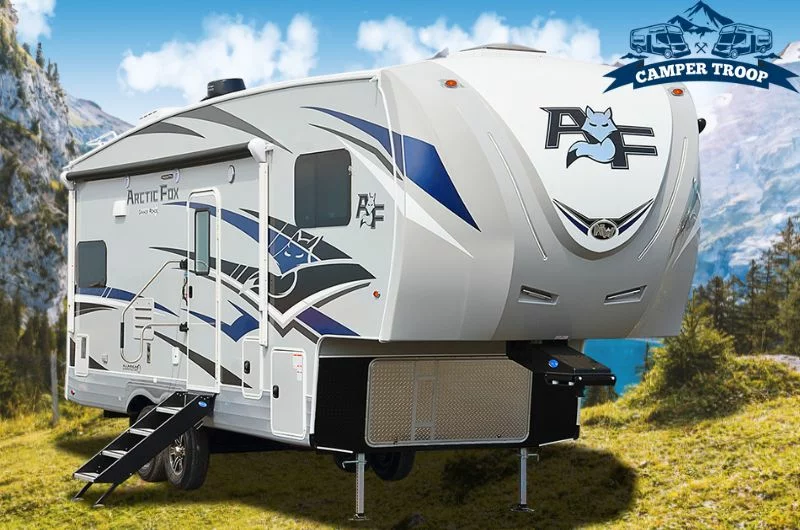
Who Makes the Arctic Fox Fifth Wheel, and Is It Still Made?
Northwood Manufacturing builds Arctic Fox fifth wheels, and it still makes them. Current lines include the 2026 Arctic Fox Edge and NXT models (such as the 275LE) and the 2025 Grande Ronde and Rapid models. That means factory parts and dealer support are still available, even for older units.
If your unit is still under warranty, call your dealer or Northwood before paying for a repair. Check your warranty paperwork for what is covered and for how long.
What Are The Common Arctic Fox Fifth Wheel Problems?
The problems below show up most often as these trailers age. Each section covers the signs, the likely cause, and the fix.
1. Damaged Roof and Roof Leaks
Sun, heat, and weather break down roof sealant over time. Once the sealant cracks around vents, skylights, the AC, and roof edges, water gets in. You may not see the leak until it stains a ceiling or softens a wall.
To keep the roof healthy:
- Inspect the roof at least twice a year and before long trips.
- Look for cracked, lifted, or missing sealant around every seam and fixture.
- Check your owner’s manual for your roof membrane type, then buy a sealant made for that membrane.
- Clean the area and apply new sealant over damaged spots.
- Park in shade or use a breathable RV cover when the trailer sits for long periods.
If the roof is bubbling, torn, or soft underfoot, have an RV shop inspect it. Soft spots can mean the decking underneath is already wet, and that needs more than new sealant.
Read Also: Common Propride Hitch Problems: 3 Key Issues & Fixes
2. Electrical Issues
Electrical problems in an Arctic Fox can range from a blown fuse to a failing appliance. The fridge, microwave, and AC are the parts owners notice first, because they stop working.
Most power problems come from a weak battery, loose or damaged wiring, or a bad shore power connection. Check them in this order:
- Confirm shore power or the generator is on and the cord is fully plugged in.
- Reset any tripped GFCI outlets and circuit breakers.
- Check the 12V fuses and replace any that are blown with the same rating.
- Test the battery charge and clean any corroded terminals.
- If one appliance still won’t run while others work, the fault is likely in that appliance.
Leave 120V wiring, inverter, and appliance repairs to a qualified RV technician. Mistakes here can cause shocks or fires.
Read Also: Common Recurve R6 Hitch Problems – Symptoms & Solutions
3. Weak Exterior Wall (Delamination)
Bubbles, waves, or raised spots in the outer wall are a red flag. This is delamination: the outer skin is pulling away from the layers behind it.
Northwood builds Arctic Fox sidewalls on a fully welded aluminum frame. The walls are hot polyurethane-laminated and multi-layered, with high-density block foam insulation and a one-piece fiberglass outer skin. Water getting past window, door, or trim seals is the usual cause of delamination. Long sun exposure and damaged fiberglass can make it worse.
Press on the area. If it feels soft or moves, the bond has failed. Fix the leak source first, then have an RV body shop assess the wall. Small spots can sometimes be injected with adhesive. Large areas may need panel work, which is not a DIY job.
4. Interior Water Leaks
Constant travel shakes plumbing fittings loose. A sudden pressure change when the water pump runs can also open a leak in the water line, soaking walls and floors.
Sometimes, water can flood the RV’s basement. Left alone, it rots cabinets and furniture and damages the weather sealing.
Check under sinks, behind the toilet, and around the water heater for drips after each fill. Use a pressure regulator on city water. Tighten or reseal leaking fittings, and have a shop repair any water-damaged walls or floors.
Before freezing weather, winterize the water system. Drain the fresh tank, water heater, and lines. Bypass the water heater, then either blow out the lines with air or pump RV antifreeze through them. Frozen lines are a common source of spring leaks.
Read Also: Common Recurve R3 Hitch Problems – Causes & Solutions
5. Toilet and Black Tank Problems
Clogs, odors, and stuck tank sensors are common in any RV toilet system. Most come from too little water in the black tank or using regular toilet paper.
- Add a few gallons of water to the black tank after each dump.
- Use RV-safe toilet paper and a tank treatment.
- Keep the black valve closed until the tank is at least two-thirds full, so solids flush out.
- Flush the tank with a tank rinser or wand if sensors read full when the tank is empty.
Sewer odor inside the trailer can mean a clogged roof vent or a bad toilet seal. Check both.
6. Tire and Brake Problems
Tire issues are common because these trailers are heavy. Arctic Fox fifth wheels have dry weights from about 10,059 lbs (29-5K) to about 14,520 lbs (Grande Ronde 36-5VS). GVWRs reach about 16,300 lbs. Underinflated or overloaded tires wear fast and can blow out.
Check tire pressure with a gauge when the tires are cold, at least monthly and before every trip. Use the cold inflation pressure on the trailer’s tire placard, not the number on the tire sidewall (per NHTSA). If pressure is low, inflate to the placard value. Never let air out of hot tires. Replace a tire only if it is damaged, worn, or too old. Check the DOT date code on the sidewall for age.
To change a fifth wheel tire safely:
- Park on firm, level ground and keep the trailer hitched.
- Chock the wheels on the opposite side.
- Loosen the lug nuts slightly while the tire is still on the ground.
- Place the jack at the frame or axle point listed in your owner’s manual.
- Lift the tire just off the ground and remove the lug nuts.
- Mount the spare and hand-tighten the lug nuts in a star pattern.
- Lower the trailer and torque the lug nuts to the spec in your manual.
- Re-check lug nut torque after a short drive, as your manual directs.
Slow braking or pulling to one side points to the electric brakes. Test them at low speed by using the manual lever on your brake controller. If the trailer doesn’t slow firmly, adjust the controller gain. If that doesn’t help, have the brakes, magnets, and wiring inspected.
Read Also: 7 Common Wolfpack Toy Hauler Problems with Quick Solutions!
Are There Any Recalls on Arctic Fox Fifth Wheels?
Yes. NHTSA recall 13V-510, begun in December 2013, covers about 19,106 model year 2007-2014 Northwood Arctic Fox, Nash, and Desert Fox trailers and fifth wheels for latch and lock cylinder problems. Inspection and replacement are free.
Recall 13V-059 covered about 152 model year 2013 Northwood units, including Arctic Fox 29-5K and 29-5T fifth wheels, for wrong weight information on the federal ID label. Owners got corrected labels free.
To check any unit, enter its VIN at nhtsa.gov/recalls. Do this before buying a used Arctic Fox.
What Should You Check Before Buying a Used Arctic Fox?
None of these problems is unique to Arctic Fox, and the brand is still in production with dealer support. A used unit is a good buy if it passes these checks:
- Roof sealant intact, with no soft spots.
- No bubbles or soft areas in exterior walls.
- No water stains on ceilings, floors, or inside cabinets.
- All slide-outs and leveling jacks working smoothly.
- Tires within their age limit, with even wear (uneven wear can mean axle or suspension issues).
- Every appliance runs on shore power and battery.
- No open recalls on the VIN.
For a big purchase, pay for an inspection by a certified RV inspector.
Frequently Asked Questions
Here are answers to a few more common questions about the Arctic Fox Fifth Wheel.
What is the fixing cost of an arctic fox power inverter?
Inverter repair or replacement cost depends on the inverter’s brand, size, and quality, plus local labor rates. Get a written quote from an RV technician, and check your warranty first if the unit is newer.
Can I park my Arctic Fox Fifth Wheel under a tree?
Parking the fifth wheel under a tree is better than parking in extreme heat. Parking the RV under a tree will reduce the bubble formation rate. Your Arctic Fox Fifth Wheel’s roof top will last longer if you park it under a shade.
Does a tool wrench help to change tires quickly?
A tool wrench eases the tire’s changing process. Hence, you can quickly install new tires. You should use a set of wrenches if you know what you’re doing. Otherwise, a tool wrench is an ideal tool for the task.
Should I apply a clog buster in the toilet vent of my Arctic Fox Fifth Wheel?
A clog buster melts the debris inside the vent quickly. It’ll help you to clean the toilet and sink line in 30 minutes. However, it would help to inspect leakages in your Arctic Fox Fifth Wheel plumbing before applying the clog buster.
Conclusion
Fix Arctic Fox problems as soon as you spot them. A small roof or plumbing leak can damage walls, floors, and wiring if you wait.
Inspect the roof seals, check tire pressure cold before every trip, winterize before freezing weather, and check your VIN for recalls. Call an RV technician for delamination and 120V electrical work.