When an Atwood RV water heater won’t heat on electric, the cause is usually a lost 120V supply, an electric switch left off, a tripped ECO (energy cutoff) or a burned-out heating element. Check those in that order. Pilot lights, thermocouples and the electronic igniter only affect propane mode, so you can skip them for this problem.
Why is My Atwood RV Water Heater not Working on Electric?
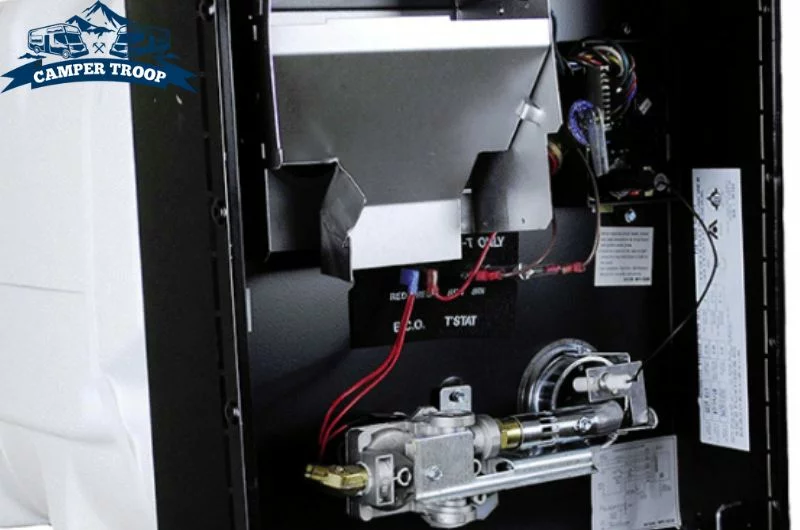
In electric mode, a 120VAC relay closes and sends power straight to an immersion heating element in the tank. A thermostat turns the element on and off. An ECO switch shuts everything down if the water gets too hot. Any break in that chain stops the heat.
Here are the likely causes, from most to least likely:
- No 120V power: You are unplugged, the generator is off, the water heater’s AC breaker has tripped, or a GFCI outlet on that circuit has tripped.
- Electric switch off: The switch for electric mode is separate from the gas switch. It is easy to leave it off.
- Tripped ECO or high-limit switch: If the thermostat fails, the ECO opens and locks out the system.
- Failed thermostat: A bad thermostat, or one that has lost good contact with the tank, can stop heating.
- Burned-out heating element: This often happens after the heater was switched to electric with an empty tank.
- Loose, frayed or wrong wiring: Worn wires or loose terminals can cut power to the relay or element.
- Bypass valves left in bypass: The heater may work fine, but water never flows through it.
Why does my Atwood water heater work on gas but not electric?
Gas and electric modes share the tank, but they heat it in different ways. If gas works, the tank, water supply and burner are fine. The fault is somewhere on the 120V side: power, the electric switch, the ECO, the thermostat, the element or its wiring. The ECO and thermostat can also cause problems in gas mode, so check them first if both modes fail.
Read Also: All About RV Water Heater (9 Things You Should Know)
What Safety Steps Should You Take First?
The element runs on 120V AC, which can cause a serious shock. Before you open the unit or touch any wires:
- Turn off the water heater’s electric switch.
- Switch off the water heater breaker, or unplug from shore power and shut down the generator.
- Turn off propane at the tank.
- Let the water cool before draining or removing any parts.
Never turn on electric mode with an empty tank. With no water around it, the element overheats and burns out within a short time. This is called dry-firing. Always open a hot faucet first and wait for a steady flow of water, with no sputtering air.
Solution for Atwood RV Water Heater Not Working on Electric:
Work through these steps in order. Each one rules out a cause before you move to the next.
Solution 01: Refer to the Atwood RV Water Heater Manual
Your manual lists troubleshooting steps and part locations for your exact model. Atwood is now part of Dometic, so manuals and service documents are hosted by Dometic, for example on media.dometic.com and support.dometic.com.
To find the right manual or order parts, get the model and serial number from the rating label on the heater. It is often visible behind the outside access door.
Read Also: Where is the RV Water Heater Reset Button and How To Use It?
Solution 02: Check 120V Power, the Breaker and the GFCI
- Confirm the RV is plugged into a live pedestal or the generator is running.
- Test another 120V outlet in the RV to make sure AC power is reaching the coach.
- Open the AC breaker panel and find the water heater breaker. Turn it fully off, then back on.
- Press the reset button on any tripped GFCI outlet, since some RVs route the water heater through one.
If the breaker trips again right away, stop. That points to a short in the element or wiring.
Solution 03: Find and Turn On the Electric Switch
Where is the electric switch? It depends on the RV. It is usually on the inside control or monitor panel, near the gas water heater switch. On some units, it is on the water heater itself, behind the outside access door. Your manual will show the exact spot.
Make sure the electric switch is on, not just the gas switch. Then wait 30 to 60 minutes and check whether the water is warming.
Solution 04: Reset the ECO (Energy Cutoff)
If the thermostat fails, the ECO opens and locks out the heater. Dometic’s fix is in two parts. First, check that the thermostat makes good contact with the tank. Then reset the system by turning the electric switch off and back on (Dometic support).
Some models also have a manual reset button on the ECO/thermostat assembly behind the outside access door. Our reset button guide linked above shows where to look. If the ECO keeps tripping, the thermostat is likely faulty and should be replaced.
Solution 05: Test the Thermostat
Turn off all 120V power first. Disconnect the thermostat wires, then set a multimeter to continuity and check across the thermostat terminals with the water cool. No continuity means the thermostat may be faulty and needs replacement.
Read Also: RV Water Heater Drain Plug Size: Everything you need to know
Solution 06: Test and Replace the Heating Element
Test the element with a multimeter. A burned-out element is very common after dry-firing.
- Turn off all 120V power and confirm there is no voltage at the element.
- Disconnect the two wires from the element terminals.
- Set the multimeter to resistance (ohms) and touch one probe to each terminal.
- Compare the reading to the spec in your manual. An open reading (“OL” or no reading) means the element is burned out.
- Touch one probe to a terminal and the other to the metal tank. Any reading here means the element is shorted to ground and must be replaced.
To replace it, turn off the water pump and city water, open a hot faucet to release pressure, and drain the tank. Then remove the old element and install a matching replacement for your model. Refill the tank completely before you turn electric mode back on.
Solution 07: Check the Wiring and Relay
With power off, look for loose terminals, burned spots and frayed or broken wires on the electric side. Tighten loose connections and replace damaged wiring. When power comes on, the 120VAC relay must close to send power to the element. If you have power at the relay but none reaches the element, the relay or control board may be at fault. This is a good point to call a technician if you are not comfortable with AC testing.
Read Also: How To Tell If Your RV Tank Heaters Are Working?
Solution 08: Check the Bypass Valve
Did you recently sanitize or winterize the RV? Bypass valves are usually set to route water around the water heater during those jobs.
If they are still in bypass, the tank may not fill, and you won’t get hot water. Valve layouts and handle positions vary by RV, so check your RV’s manual and set them for normal use. Make sure the tank is full before you turn on electric mode.
Solution 09: Check the RV Water Heater Check Valve
The check valve keeps water flowing one way and stops cold water from flowing back. A stuck or leaking check valve can cause low hot water flow or lukewarm water. It won’t stop the element from heating, though. If you suspect it, replace it:
Step 01: Turn off the water supply and drain water from the hot water tank.
Step 02: Pull off the defective valve by unscrewing it.
Step 03: Finally, install the new one.
Do the Pilot Light, Thermocouple or Igniter Matter in Electric Mode?
No. The pilot light, thermocouple, electronic ignition (DSI) and combustion air intake are all part of the propane system. Relighting a pilot, replacing a thermocouple or clearing the air intake will not fix a heater that fails on electric. Only troubleshoot those parts if propane mode also fails.
Read Also: 7 Easy Solutions For RV Water Heater Igniter Not Clicking
Does an Atwood Water Heater Need an Anode Rod?
No. Dometic says Atwood and Dometic water heaters do not use anode rods. It also warns that aftermarket anode rods can damage the tank (Dometic support). Atwood tanks are made of high-strength aluminum, which resists corrosion. Still, flush the tank regularly to clear out sediment, and inspect the electrical terminals for corrosion.
When Should You Call a Certified RV Technician?
- The breaker trips again as soon as you reset it.
- You see burned or melted wires or scorch marks.
- The ECO keeps tripping after you reset it.
- You have power at the relay but none at the element, and you are not comfortable testing 120V circuits.
- The tank leaks after you replace the element.
FAQs
How can I determine if the thermostat’s fault is causing the electric mode to malfunction on my Atwood water heater?
Turn off all 120V power, disconnect the thermostat wires, and use a multimeter to check for continuity across the thermostat terminals. If there is no continuity, the thermostat may be faulty and need replacement. A thermostat that keeps tripping the ECO is also a sign it has failed.
Can an improper voltage supply impact the electric functionality of my Atwood RV water heater?
It can. The element is designed for a 120V AC supply. Weak campground power or an undersized extension cord can slow heating, and unstable power can stress electrical parts. If heating is slow, check the voltage at an outlet and consider a surge protector with a voltage display.
Can I convert my Atwood water heater from electric to propane mode if the electric functionality cannot be restored?
No conversion is needed. Atwood gas/electric combo units already have both modes. If electric fails, switch the unit to gas (propane) mode and use it while you repair the electric side. If your heater is gas-only, it has no electric element to restore.
Last Words
Most electric-mode failures come down to power, the electric switch, the ECO/thermostat or the element. Check them in that order. Keep the tank full before you switch on electric mode, flush it regularly, and keep the electrical connections clean and tight. If the problem involves repeated breaker trips or damaged wiring, get a certified RV technician to look at it.
Read Also: RV Water Heater Works On Propane But Not On Electric – Why?