Quick answer: Forest River RV electrical problems can include a dead microwave, an AC or refrigerator that won’t run, dead outlets, and total power loss. Start with the simple checks: shore power, tripped breakers, the GFCI outlet, fuses, and battery voltage. Call an RV technician for loose wiring, repeat trips, or battery odors.
I know how much Forest River RV electrical problems can bother you. When something stops working, you want a clear guide that tells you what to check first. This guide covers nine problems, the steps for each one, and when to stop and call a technician.
What Is the Difference Between 120V AC and 12V DC in an RV?
Your RV has two electrical systems. The 120-volt AC system runs larger appliances, and the 12-volt DC system runs many basic coach functions. RV microwaves and air conditioners usually require AC power, while water pumps, refrigerators, and vent fans can run on 12-volt DC power. Knowing which system feeds the failed item tells you where to start.
| System | Where the power comes from | What it usually runs |
|---|---|---|
| 120-volt AC | Shore power, a generator, or an inverter | Roof AC, microwave, and wall outlets |
| 12-volt DC | Coach battery, or the converter when the RV has 120-volt power | Water pump, vent fans, lights, and refrigerators that can use 12-volt power |
What Do the Converter, Inverter, and Transfer Switch Do?
A converter changes 120-volt AC to 12-volt DC. An inverter does the opposite. A transfer switch selects which 120-volt source feeds the RV. Not every RV has an inverter or an automatic transfer switch, so check your model’s manual.
| Part | What it does | A clue that it may be involved |
|---|---|---|
| Converter | Changes 120-volt AC to 12-volt DC | 12-volt items act weak even when the RV is plugged in |
| Inverter | Changes 12-volt DC to 120-volt AC | 120-volt items fail only when running on battery power |
| Transfer switch | Switches between shore and generator power | One 120-volt source works, but the other does not |
How Do I Stay Safe Before Checking RV Wiring?
Remove every power source before you touch wiring. Resetting a breaker or GFCI does not require this, but opening a panel or handling wires does.
- Turn off the pedestal breaker and unplug shore power.
- Shut off the generator and make sure it cannot auto-start.
- Turn off the inverter and disconnect any solar input.
- Disconnect the coach batteries. A battery disconnect switch may not cut every circuit.
- Confirm the circuit is dead with a working meter before you touch it.
How Do I Troubleshoot Electrical Problems On Forest River RV?
Start at the power source and work toward the item that failed. Check shore power or the generator first, then breakers and the GFCI. After that, check 12-volt items such as the battery and fuses.
Here are nine problems you may run into, with quick and practical steps for each one. Let’s get started.
1. Why won’t the microwave oven turn on? Check the breakers of the power converter
A microwave oven with no display may not be getting power. Follow these steps:
- Check whether the roof AC works. If it does not, 120-volt power may not be reaching either appliance.
- Check the breakers in the converter panel. Reset any breaker that supplies the microwave and has tripped.
- Make sure the microwave is fully plugged in.
A propane range or oven is a separate system, so these steps do not apply to its gas supply.
2. Why is the oven on but not heating food? It may need repair or replacing
If an electric microwave oven lights up but does not heat food, it is probably broken. An internal defect or an internal trip can leave the display working while the oven cannot heat.
That’s the time you may need a repair or a replacement. Don’t open the unit yourself. Microwaves can hold a dangerous charge even after they are unplugged, so take the help of the experts.
If you have a propane oven that won’t heat, check that the propane supply is on and follow the lighting steps in its manual. If you smell gas, stop and follow the propane steps in section 9.
Read Also: 6 Common Problems with Forest River RV Roof [Get To Know All]
3. Why is the refrigerator not working? Inspect the 120V power system
Find out which power source your refrigerator is using, then test that source. Some RV refrigerators run on electricity only, while others can also run on propane. Many gas and electric models still need 12-volt power for their controls.
While facing the issue, what you need to do is:
- First, check that the refrigerator is set to the right mode and that its connection is snug.
- When the connection is good, see whether other 120-volt appliances, like the microwave oven, are working properly.
- If yes, the 120V power system is working fine. Otherwise, check the 120V power system and the breaker of the converter.
- If your refrigerator uses 12-volt power, also check its fuse and the coach battery.
4. Why is the RV air conditioner not turning on? Check the 120V power system
One cause to check is that 120-volt power is not reaching the rooftop unit. The microwave shares the AC’s power supply, so use it as your first test.
- Check whether the microwave works.
- If it works, check the converter breaker that feeds the AC.
- If it does not work, troubleshoot the 120-volt system, starting with the shore power checks in section 5.
5. Why does my Forest River RV have no power when plugged in? Check the supply, then the converter panel
If the RV is plugged in but has no 120-volt power, check the external supply’s breaker first. Then check the breakers in the RV’s converter panel.
- Pedestal: Make sure the campground breaker is on and you are using the correct 30-amp or 50-amp outlet.
- Cord and adapters: Look for loose connections, damage, or scorch marks. Stop using any damaged part. An adapter lets you connect to a smaller outlet, but it does not add capacity.
- Surge protector or energy management system: Check its display or error code. These devices can cut power when they detect a problem, so don’t bypass one just to get power back.
- Converter panel: Check the main breaker and branch breakers for a trip.
The converter changes 120-volt AC to 12-volt DC, so 12-volt failures need separate checks. If your lights, fans, or water pump are dead, check the coach battery, the battery disconnect, and the 12-volt fuses.
6. Why are my RV outlets not working but my appliances are? Check the GFCI
Dead outlets with working appliances can come from a tripped GFCI or tripped converter breakers. Reset the GFCI first. One GFCI outlet can protect several other outlets, so the one with the buttons may be in a different room.
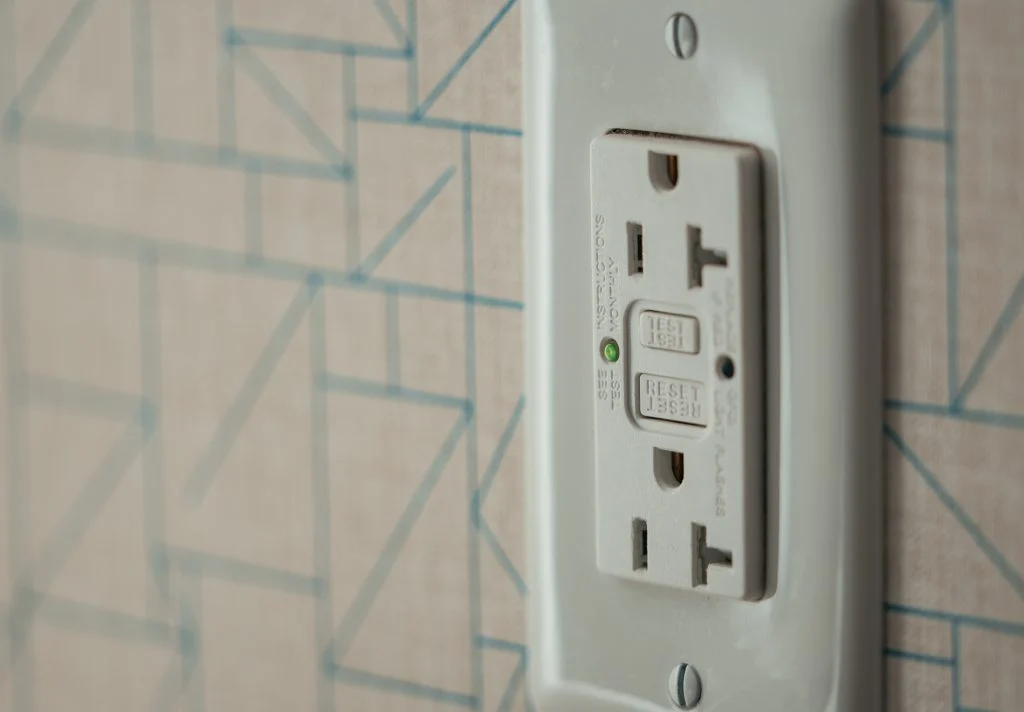
To reset the GFCI outlet in your RV:
- Unplug items from the affected outlets.
- Find the outlet with TEST and RESET buttons. Bathrooms, kitchens, and exterior outlets are good places to look.
- Press RESET firmly until it stays in.
- If the GFCI won’t reset, inspect the breakers of the converter and reset any that have tripped.
- If the GFCI trips again right away, stop and have the circuit checked.
Read Also: 9 Common Forest River XLR Nitro Problems & How to Fix Them?
7. What if the circuit breaker panel isn’t working? Try resetting the breaker
A circuit breaker protects a circuit by opening it when too much current flows. It can be reset after tripping. A short circuit can trip it with no intentional delay, but a mild overload may take some time to trip it.
Turn off the large loads on that circuit. Move the tripped breaker fully off, then back on, and try it once. If it trips again, leave it off and call a technician. If the whole panel is dead, go back to the shore power checks in section 5.
8. What should I do about loose wires? Call the experts
Wires carry power to every appliance in your RV, and you know how dangerous a faulty wire can be. A loose connection can also make a problem come and go, which makes it harder to trace.
If you see loose electrical cables, the safest choice is to shut off power to that circuit and call an RV technician or qualified electrician. This matters most with 120-volt wiring or any wire that shows heat damage.
9. Why does my RV smell like rotten eggs? Check for propane, then the coach battery
A rotten-egg smell may come from a shorted or overcharged coach battery. A shorted or overcharged lead-acid battery can release sulfur fumes, including toxic hydrogen sulfide gas. Propane can smell similar, so treat the odor as a possible gas leak until you know the source.
| Possible source | Clues | What to do right now |
|---|---|---|
| Propane | Odor near the stove, refrigerator, water heater, or propane lines, or an LP detector alarm | Get everyone out. Avoid flames and switches. Shut off the tank only if it is safe. Call for help from a safe distance. |
| Battery | Odor strongest near the battery compartment, or a hot or swollen battery | Turn off the charger, ventilate the area, and stay outside until the odor clears. |
| Not sure | You can’t tell where the odor is coming from | Follow the propane steps. |
Hydrogen sulfide is heavier than air and can dull your sense of smell over time, so a fading odor does not prove the area is safe. After the area clears, call a technician to check the battery and charging system. Troubleshooting it yourself can be risky.
Read Also: Forest River RV Power Converter Location [Possible 7 Places]
How Do I Know If My RV Converter Is Bad?
Signs of a failing RV converter include dimming lights, slower vent fans, and batteries that struggle to hold a charge. A worn-out battery can cause similar symptoms, so test the battery before you replace the converter.
One simple check is to measure battery voltage with shore power disconnected, then again with it connected. If the voltage does not rise when the RV is plugged in, the converter may not be charging. Have a technician confirm the cause.
What If the Power Problem Only Happens on the Generator?
If the RV works on shore power but not on the generator, focus on the generator and transfer switch. The coach’s appliances and branch circuits are less likely to be the issue when they work on another source.
- Check the generator’s own breaker.
- Check the fuel level. Some built-in generators stop running before the fuel tank is empty.
- Turn off large loads, then add them back one at a time.
- Leave transfer switch repairs to a technician because the switch handles 120-volt power.
How Do I Check the Coach Battery and Disconnect Switch?
First make sure the battery disconnect switch is in the on position. Then test the battery with a multimeter. A switch left off can look like a dead 12-volt system.
- Unplug shore power and turn off any charging source you can.
- Set the multimeter to DC volts.
- Touch the red lead to the positive terminal and the black lead to the negative terminal.
- Compare the reading with the voltage chart from your battery’s maker.
What changes with lithium batteries or solar?
Lithium batteries have a built-in management system that can shut the battery off to protect it. Their voltage readings also differ from lead-acid batteries, so use the maker’s chart. Confirm that your converter or charger is compatible with your battery type.
Solar panels can keep sending power to the system after you unplug from shore power. Disconnect solar input before working on the wiring, using the steps in your solar system’s manual.
Where Is the 12V Fuse Panel and How Do I Replace a Fuse?
The 12-volt fuses are often in or near the converter panel, but the location varies by model. Your owner’s manual or the fuse panel label should show which fuse protects each circuit.
- Turn off the affected item and remove the fuse.
- Use a multimeter’s continuity mode to test it. A good fuse should show continuity.
- Replace a bad fuse with one of the same type and amp rating. Never use a higher rating.
- If the new fuse blows, stop replacing fuses and look for the cause.
How Do You Find a Short Circuit in an RV?
You can trace a short by using a DC clamp meter along the wires. Clamp around one wire at a time, not a whole bundle. Work along the circuit section by section and compare your readings to narrow down the problem area.
One reading does not prove where the fault is. If you can’t isolate it safely, or if the wiring is hidden behind walls, call an RV technician.
How Do I Reset My RV Inverter?
The reset method depends on the inverter, so there is no universal procedure. On Magnum MS Series inverters, hold Power ON/OFF for about 15 seconds until the status LED flashes rapidly, then release. Some older Magnum models do not allow this reset, so check the manual for your inverter.
How Do I Check Forest River Recalls and Warranty Coverage?
Search your RV’s VIN with the National Highway Traffic Safety Administration (NHTSA) recall lookup before paying for a repair. For warranty questions, contact your dealer or Forest River with your VIN and model details. Ask about coverage before work starts, since coverage can depend on the part, the RV’s age, and who does the repair.
Where Can I Find My RV’s Manual and Wiring Diagram?
Start with the paperwork that came with your RV. If it is missing, ask Forest River or your dealer for documents that match your exact model and year. Wiring and panel locations can differ between floor plans. Appliances, converters, and inverters often have their own separate manuals.
When Should I Call an RV Technician Instead of Fixing It Myself?
Handle simple checks yourself. Call a technician when a fault returns, when you see damage, or when the job means opening up live or high-voltage parts.
| Usually fine to do yourself | Call an RV technician |
|---|---|
| Check the pedestal, cord, and adapters | Burn marks, melted plugs, or loose wiring |
| Reset a tripped breaker once | A breaker that trips again |
| Reset a GFCI outlet | A GFCI that won’t reset or keeps tripping |
| Replace a fuse with the same rating | A replacement fuse that also blows |
| Check the disconnect switch and battery voltage | Battery odor, swelling, or heat |
| Read error codes on a surge protector | Converter, transfer switch, or microwave repairs |
Repair prices vary by part, RV model, and shop. Check recall and warranty coverage first, then ask for a written estimate before work begins.
FAQs.
Now at this point of our article, we’re going to answer a few more questions about Forest River RV power problems.
Have a glance for quick knowledge.
How do I reset my Forest River RV power?
There is no single reset for every Forest River RV. Turn off large loads, then check the power source, the breakers in the converter panel, and any tripped GFCI outlet. Reset one item at a time. If a breaker trips again, leave it off and call an RV technician.
How do you find an electrical short in an RV?
You can find an electrical short in an RV by using a DC clamp meter along the wires. Work one section at a time and compare readings to narrow down the problem area. If you can’t isolate it safely, call an RV technician.
Is there a reset button for the inverter on an RV?
It depends on the inverter. On Magnum MS Series inverters, hold Power ON/OFF for about 15 seconds until the status LED flashes rapidly, then release. Some older Magnum models do not allow this reset, so check the manual for your inverter.
How do I know if a fuse is blown in my RV?
Remove the fuse and test it with a multimeter in continuity mode. A good fuse should show continuity. If it does not, replace it with a fuse of the same type and amp rating.
Read Also: How to Find Water Pump Location on Your Forest River RV?
Ending Thoughts
Most Forest River RV electrical problems are easier to sort out when you check one thing at a time. Find out which system failed, start at the power source, and work toward the item that stopped working.
Whenever an electrical problem pops up on your Forest River, don’t rush to solve it yourself. Without proper electrical knowledge, you may put yourself at risk of injuries or even death. If a fix goes beyond the simple checks above, it’s always a good idea to call a professional to handle the job.
That’s all to say. Thank you for staying with us till the end of our discussion.
Read Also: How to Find Fuse Panel Location on Your Forest River RV?