Quick answer: The most common Keystone Cougar problems are slide-outs that stop moving, water leaks from the roof, seals and plumbing, electrical faults, AC trouble, refrigerator failures, toilet flush issues, and furnaces that blow but won’t light. Many start with simple causes like low battery voltage, loose connections or worn sealant, and many can be fixed at home.
You call yourself a travel lover and have never heard of Keystone Cougars? It’s nearly impossible. But you also need to know about the issues your Keystone Cougar may run into during a trip.
Some problems come up often in a Keystone Cougar. These include problem slides, water leaks, electrical issues, AC problems, toilet flushing problems, furnace and refrigerator problems, and frustrating customer service.
Don’t let these problems stop you. There are plenty of ways to fix each one. Read on, and get your Keystone Cougar ready for the road.
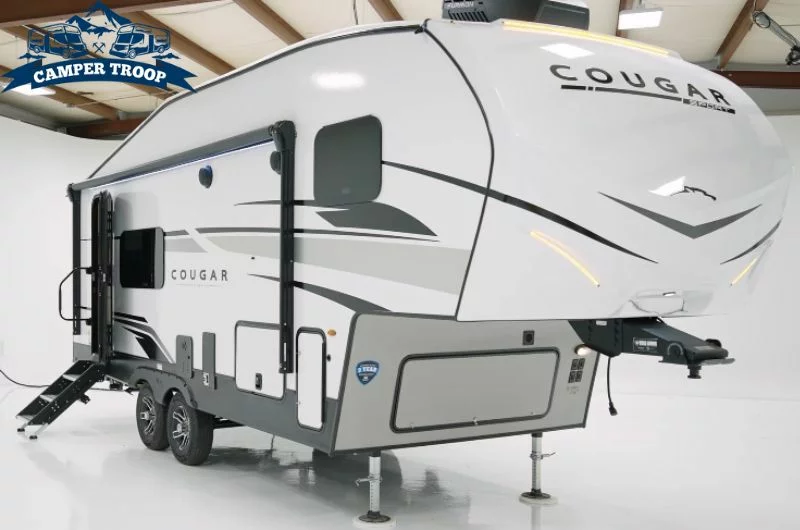
What are the Most Common Problems with Keystone Cougars?
A Cougar feels like home while you travel, but it is not built the way a house is built. It shakes down the road, sits through heat and cold, and packs many systems into a small space. So you will run into some common problems. These include:
- Problems with Slides
- Water Leaks
- Electrical Problems
- Problems with AC
- Problems with Refrigerator
- Problems with Flushing
- Problems in Furnace
Which Keystone Cougar Models Do These Problems Affect?
The Cougar line includes fifth wheels and travel trailers, plus the lighter Half-Ton series built for half-ton pickups. The problems in this guide are not tied to one model year or floor plan. They come from systems that almost every Cougar has: slide-outs, a roof and seals, 12V and 120V power, a rooftop AC, a fridge, a toilet and a propane furnace.
What changes from unit to unit is the brand of each part. One Cougar may have a different slide system, fridge or furnace than another. Before you order parts or watch a repair video, check the label on the part itself or your owner’s manual. That one step saves a lot of wrong orders.
7 Common Problems with Keystone Cougar and Their Solutions:
Each problem has its own fix. Be careful when you work on them. Without the right knowledge, you may cause new problems.
Below are the major problems with the Keystone Cougar, the reasons behind them, and the steps to fix them.
Problem 1: Problematic Slides
Problem slides are one of the biggest Keystone Cougar problems. If your slides don’t work correctly, or stop before they fully open or close, you have a slide problem.
What Causes Slide-Related Problems in the Keystone Cougar?
The slides are what make your RV feel like a home. When they don’t work, it becomes a real headache.
Often, the problem starts when the sensor that tells the slide to open or close stops working. Then the slides don’t move the way they should.
Also, the motors power the slides. When a motor burns out, the slide won’t move at all.
What Slide-Out Systems Do Cougars Use?
RVs like the Cougar can use different slide systems depending on the floor plan and size of the slide. Check the label on the slide controller or your manual to know which one you have. The three main types are:
- In-wall systems (such as Lippert Schwintek): Motors sit inside the slide walls and drive the room in and out. If one side moves faster than the other, the slide can bind or go crooked.
- Electric rack-and-pinion: A motor turns gears that run along a toothed rack under the slide. Worn gears, loose mounts or debris on the rack can cause grinding or stalling.
- Hydraulic: A pump pushes fluid to rams that move the slide. Low fluid, air in the lines or a leaking fitting can make the slide slow or stop.
Why Won’t My Keystone Cougar Slide-Out Move?
Most slide motors run on 12V power, so a weak battery is the first thing to rule out. Work through these checks in order:
- Check battery voltage. A low or weak battery is a common reason a slide motor won’t run. Charge the battery or plug into shore power so the converter can charge it.
- Check the fuse or breaker for the slide circuit.
- Look for blockages. Remove anything in the slide’s path inside and outside, including ice, branches or a stuck item on the floor.
- Listen at the switch. A click with no movement points to a motor, wiring or controller problem. Grinding points to a gear or rack problem.
- Check for fault codes on the slide controller if your system has one, and look them up in the manual.
How to Fix Problematic Slides in Keystone Cougars?
First, clean the slide sensors regularly, before a problem starts. If a sensor is damaged, replace it with a new one.
Second, if the motor is the problem, replace the motor right away. Don’t keep forcing a slide that binds or grinds. That can bend parts and turn a small repair into a big one.
How Much Does it Cost to Fix the Slides?
Sensors and slide hardware come in many prices. Small parts like slide sensors and door latches cost around 10 to 36 dollars. Motors and labor cost more, so get a quote if the motor needs replacing.
Read Also: Common Arctic Fox Truck Camper Problems & Solutions
Problem 2: Water Leaks
You can spot water leaks in a few ways. With a bad leak, you may find water on the floor. Sometimes you may see water dripping from your Cougar’s roof. Leaks are a big problem because they can damage the floor, walls and your belongings, and they can ruin a trip.
What Causes Water Leaks in the Keystone Cougar?
Keystone Cougars shake and move for long stretches on the road. Because of that, it is not uncommon for pipes and fittings to work loose. Loose fittings are where plumbing leaks start.
The roof can also get damaged over time, and rain can get inside through it. Worn sealant around vents, skylights and the AC, and worn slide seals, are other common entry points. Your belongings can get soaked, which is a big hassle.
How to Fix Water Leakage in Keystone Cougars?
For plumbing leaks, loose pipes and fittings are the usual cause. Repair the lines as early as possible. Checking the pipes often can also save you trouble.
Tightening the fittings may stop the leak. But if the leak is severe, replace the whole pipe to avoid more damage.
For roof and slide leaks, find where the water gets in, not just where it drips. Water can travel along the ceiling before it shows up. See the roof and seal maintenance section below for how to prevent these leaks.
How Much Does it Cost to Fix a Water Leak?
If the leak is in a hose or fitting, you may need a replacement kit. Hose kit prices vary, and a new one may cost $8 to $60. Roof or floor damage from a long-term leak costs much more, which is why catching leaks early matters.
Problem 3: Electrical Problems
An RV like the Keystone Cougar has a lot of electrical equipment, like TVs, fans and ceiling lights. So electrical trouble is not unusual. It matters because a power problem can cause other systems to fail too, including slides and the furnace.
How Does the Cougar’s Electrical System Work?
Your Cougar has two electrical systems. Knowing which one has the problem tells you where to look.
- 12V DC system: Runs from the battery. It powers lights, fans, the water pump, slide motors and furnace controls. It is protected by fuses.
- 120V AC system: Runs from shore power or a generator. It powers outlets, the AC and the microwave. It is protected by breakers and GFCI outlets.
- Converter: Turns 120V shore power into 12V and charges the battery. If the battery keeps going flat while you are plugged in, the converter may be at fault.
- Inverter (if equipped): Does the opposite. It turns battery power into 120V so outlets work off-grid.
- 30A vs. 50A service: Cougar floor plans come with either 30-amp or 50-amp shore power, depending on the unit. A 30A rig has less power to share, so running the AC, microwave and other big loads at once is more likely to trip a breaker. Check your power cord plug to see which you have.
What Causes Electrical Problems in the Keystone Cougar?
Big electrical problems can start with something as simple as a loose wire. A loose connection can stop equipment from working correctly.
Also check the battery often. It powers all the 12V needs of the Keystone Cougar. If the battery is weak or damaged, the ceiling lights, fans and other 12V items won’t run.
How to Fix the Electrical Problems in Keystone Cougars?
Start with the simple checks:
- If only 12V items fail, check the battery and the fuses.
- If only outlets or 120V items fail, check the breakers, reset any tripped GFCI outlets, and confirm the campground pedestal has power.
- Tighten loose wires and connections. You may need to replace damaged cables.
- If the battery won’t hold a charge, replace it. If a new battery still goes flat on shore power, have the converter checked.
If you need help with the battery or wiring, contact an expert first. 120V wiring can shock you, so leave anything past breakers and outlets to a qualified tech.
How Much Does it Cost to Fix the Electrical Problem?
RV batteries come in many setups. They cost around $78 to $350. Pick the one that fits your Keystone Cougar.
Read Also: Common Tiffin Allegro Breeze Problems & Solutions
Problem 4: Cougar AC Problems
A common Keystone Cougar problem is an AC that doesn’t work right. Signs include the AC not turning on, dust blowing out of the vents, or the AC running but not cooling.
What Brand of Air Conditioner Comes on a Keystone Cougar?
Many Keystone Cougar owners report factory Dometic rooftop units, such as the Dometic 59516-711 on a 2015 Cougar. Furrion units are often recommended as replacements. The brand can vary by year and floor plan, so check the label on your own unit before you buy parts.
What Causes AC Problems in the Keystone Cougar?
The compressor that cools the air can struggle when it is very hot outside. If it stops working, the inside of the Cougar quickly gets stuffy.
Dirty AC filters are another common cause. They block airflow and make the unit work harder.
How to Fix the AC Problem in Keystone Cougars?
In hot weather, you can turn off your AC for an hour to let the compressor cool down. That may help keep it from being damaged.
Cleaning the AC filter helps air flow well inside the Cougar. Also check that the AC breaker hasn’t tripped, especially on a 30A rig running other big loads.
Is It Worth Replacing the Compressor on an RV Air Conditioner?
A failed compressor can be replaced by a technician. But that repair often costs close to the price of a new rooftop unit, so replacing the whole AC is often the better value, especially on older units.
Decision rule: If the AC is old and the compressor quote is near the cost of a new unit, replace the whole unit. If the unit is fairly new and the quote is much lower, a compressor repair may make sense.
How Much Does it Cost to Fix the AC Problem?
Filter cleaning costs nothing. A compressor job usually costs near the price of a new rooftop AC, so get a written quote for both a repair and a full replacement before you decide.
Problem 5: Refrigerator Problems
The refrigerator is another major part of the Keystone Cougar. Sometimes the fridge stops cooling or doesn’t get power at all. Then you need to troubleshoot it.
Is Your Cougar Fridge Absorption or Residential?
Troubleshooting depends on which type of fridge you have. Check the label inside the fridge door.
- Absorption fridge: Runs on propane or 120V power and uses heat to move coolant through a sealed cooling unit. It needs the RV to be fairly level and needs good airflow at the back vent. If it fails on both propane and electric, the cooling unit is a likely suspect.
- Residential or 12V compressor fridge: Works like a home fridge. It has no propane burner. If it stops, check its power first: the outlet or breaker for a 120V model, or the battery, fuse and wiring for a 12V model.
What Causes Refrigerator Problems in Keystone Cougar?
On an absorption fridge, a common cause of trouble is a failed cooling unit (sometimes called the cooler coil). On any fridge, the cause may also be a lack of power from a broken circuit board or switch.
How to Fix the Refrigerator Problem in Keystone Cougars?
On an absorption fridge, open the outside access panel behind the fridge and look at the cooling unit. If it is damaged, it has to be replaced.
Also check the switch and circuit board that power the fridge. The board might have a circuit problem that needs fixing.
Keep in mind that cooling unit and circuit board work is delicate, and the propane side carries safety risks. If you have no experience, call a service professional.
How Much Does it Cost to Fix the Refrigerator Problem?
A replacement cooling unit for an absorption RV fridge usually costs about $800 to $1,200 for the part alone. Once labor is added, the total is often well over $1,000. At that price, compare the quote with the cost of a whole new fridge before you decide.
Read Also: Common Roadtrek Zion Problems & Solutions
Problem 6: Toilet Flushing Problem
Toilet flushing trouble is another common issue in Keystone Cougars. It is easy to spot. When you flush, no water flows into the bowl.
What Causes Toilet Flushing Problem in Keystone Cougar?
Two main things cause the flushing problem. First, the water line might be blocked or damaged, so water can’t reach the bowl. Second, the valve that lets water into the bowl might be damaged.
How to Fix the Toilet Flushing Problem in Keystone Cougars?
First, make sure the RV has water: city water is connected, or the fresh tank has water and the pump is on. If the water line is blocked, clear it. If the water line is fine but the valve is damaged, replace the valve.
What About Black Tank and Sensor Problems?
Toilet trouble often ties back to the holding tanks. Tank level sensors can read “full” when the tank is empty because waste or paper sticks to them. Rinse the black tank well after dumping, use plenty of water when you flush, and keep the black valve closed until the tank is ready to dump so solids don’t pile up.
How Much Does it Cost to Fix a Toilet Flushing Problem?
A toilet flush and shut-off valve costs around $110–250. If your valve is damaged, buy one that fits your toilet model.
Read Also: Common Keystone Hideout Problems & Solutions
Problem 7: Furnace Problems
The furnace keeps your Keystone Cougar warm. If the RV doesn’t warm up after the furnace has run for a while, you have a furnace problem.
How Does a Cougar’s Furnace Light?
Modern RV furnaces, such as Suburban and Dometic/Atwood models, use direct spark ignition (DSI). They have no pilot light. Here is the order of events:
- The thermostat calls for heat.
- The blower starts.
- Airflow from the blower closes the sail switch.
- The control board opens the gas valve and sparks the burner directly.
- The spark electrode also senses the flame (called flame rectification), so the board knows to keep the gas on.
Because the sail switch needs strong airflow, low battery voltage or blocked ducts can stop ignition. They slow the blower and weaken the airflow.
What Causes Furnace Problems in the Keystone Cougar?
Likely causes include:
- Low 12V battery voltage
- Blocked or crushed heat ducts
- A sail switch that won’t close
- An open limit switch
- An empty propane tank or a closed propane valve
- A dirty or badly gapped spark electrode
Why Is My RV Furnace Blowing but Not Igniting?
Current Suburban furnace control boards make three ignition attempts. After a failed attempt, the blower keeps running for about three minutes. If the blower runs briefly and stops without any clicking, the problem is likely the sail switch or airflow.
If you hear clicking but the burner never lights, or it lights and then goes out, the cause is often no propane reaching the furnace or a dirty or badly gapped spark electrode.
How to Fix the Furnace Problem in Keystone Cougars?
First, check whether the whole Cougar is cold or just part of it. If heat comes out of some vents but not others, a blocked or crushed duct is a likely cause. Find the blockage and clear it.
If no heat comes out at all, work through these steps:
- Charge the battery or plug into shore power. Low voltage is a common cause.
- Confirm the propane tank has gas and the tank valve is open. Light a stove burner to check that propane is flowing.
- Make sure the return air vent and heat ducts are not blocked.
- Listen during startup. No clicking after the blower starts points to the sail switch or airflow. Clicking with no flame points to gas supply or the electrode.
- With the power and propane off, clean the spark electrode and check its gap against your furnace manual.
If the furnace still won’t light, the problem may be the gas valve, limit switch or control board. Gas valve and gas line work should be done by a qualified RV technician.
How Much Does it Cost to Fix a Furnace Problem?
Many furnace fixes cost little or nothing: charging the battery, refilling propane, clearing a duct or cleaning the electrode. Parts like a spark electrode, sail switch or control board cost more, and labor varies by shop. Get a written quote before you approve major furnace work.
What Other Problems Do Cougar Owners Report?
Beyond the seven main problems, watch for these issues. Most are linked to water or road wear.
- Delamination: Bubbles, waves or soft spots in the outside fiberglass walls. This usually means water has gotten into the wall and the outer skin is coming loose. Find and fix the leak first, or the damage will spread.
- Frame and suspension wear: Uneven tire wear, a trailer that leans, or worn shackles, bushings and equalizers. Check the suspension and tires before each long trip.
- Water heater problems: If you get no hot water, check that the water heater is switched on, the bypass valve is set for normal use, and the propane or electric side has power. Like the furnace, the propane side needs a working igniter and gas supply.
How Do You Prevent Water Damage on a Keystone Cougar?
Most water damage starts at the roof, seams and slide seals. Regular checks stop small leaks before they rot the floor or cause delamination.
- Inspect the roof before and after each camping season, and after hail, a hard storm or a tree strike. Check your owner’s manual for the interval Keystone recommends.
- Check the sealant around vents, skylights, the AC, antennas and roof edges. Look for cracks, gaps or sealant pulling away.
- Re-seal damaged spots with a sealant made for your roof material. Using the wrong product can damage the roof or fail to stick.
- Check slide seals. Look for torn, flat or missing rubber seals. Clean and treat them so they stay soft.
- Look inside too. Stains on the ceiling, soft floor spots near slides, or a musty smell can point to a hidden leak.
How Do You Stay Safe With Propane Appliances?
The furnace, water heater, stove and absorption fridge in many Cougars run on propane. Propane problems are a safety issue, not just a comfort issue.
- Test your LP detector and CO detector using the test button. Never disconnect a detector because it beeps. Find out why.
- If you smell gas or the LP alarm sounds: Shut off the propane at the tank, get everyone out, and don’t flip switches or use flames. Have a technician find the leak before you use propane again.
- Check fittings for leaks by brushing soapy water on connections. Bubbles mean gas is escaping.
- Keep furnace and fridge vents clear of nests, debris and snow.
How Much Do Keystone Cougar Repairs Cost?
The table below separates part cost from labor. Labor rates vary by shop and region, so always ask for a written quote.
| Repair | Part cost | Labor |
|---|---|---|
| Slide sensor or door latch | About $10–$36 | Often DIY |
| Hose or plumbing kit | About $8–$60 | Often DIY |
| RV battery | About $78–$350 | Often DIY |
| Toilet flush and shut-off valve | About $110–$250 | DIY or shop |
| Absorption fridge cooling unit | About $800–$1,200 | Shop; total often well over $1,000 |
| AC compressor | Often near the price of a new rooftop AC | Shop only |
| Furnace electrode, sail switch or board | Varies by model | DIY for cleaning; shop for gas work |
Should You Fix It Yourself or Go to a Dealer?
Use these rules to decide:
- DIY is reasonable for checking batteries, fuses and breakers, cleaning filters and sensors, tightening plumbing fittings, re-sealing small roof spots and cleaning a furnace electrode.
- Go to a pro for propane lines and gas valves, 120V wiring, AC compressors and refrigerant, fridge cooling units, and slides that bind or go crooked.
- Go to the dealer first if the RV is still under warranty. A DIY repair may affect your coverage.
- Check for recalls first before paying for any repair. A recall repair is done free by an authorized dealer.
How Do I Check for Recalls on My Keystone Cougar?
Look up open recalls using your Cougar’s 17-character VIN on the NHTSA recall lookup at nhtsa.gov/recalls. The VIN is on the vehicle ID label, often near the front of the trailer on the driver’s side, and on your title and registration.
- Find your VIN.
- Enter it in the NHTSA lookup to see open recalls for your exact unit.
- Check for Keystone recall notices sent by mail. Keep your address current with Keystone if you bought the RV used.
- Also check recalls for major parts like the furnace, fridge or AC, since those can come from the part maker.
- Call an authorized Keystone dealer to schedule recall repairs.
How Do You File a Keystone Warranty Claim?
Warranty terms vary by model year, so read the warranty booklet that came with your Cougar for the exact coverage and time limits. Then:
- Write down the problem, when it started, and take clear photos.
- Contact your selling dealer or an authorized Keystone dealer to start the claim.
- Keep copies of every work order, email and receipt.
- Note that parts like the AC, fridge and furnace may be covered by their own maker’s warranty, not just Keystone’s.
- If the dealer can’t resolve it, contact Keystone directly with your VIN and records.
Is the Keystone Cougar a Good Fifth Wheel?
The Cougar is a popular choice for families who want a mid-range fifth wheel or travel trailer, and the Half-Ton series lets more truck owners tow one. Its common problems are mostly the same ones seen across RVs in its class: slides, leaks, power and appliances.
How well a Cougar holds up depends a lot on the unit and on maintenance. A well-sealed, well-kept Cougar can serve for years. A neglected one can hide expensive water damage. That is why a careful inspection matters more than the brand name when you buy used.
What Should You Check Before Buying a Used Cougar?
Use this checklist, or hire an RV inspector to go through it:
- Roof: Cracked sealant, soft spots or patched areas.
- Walls: Bubbles or waves that suggest delamination.
- Inside: Ceiling stains, soft floors near slides and doors, and musty smells.
- Slides: Run every slide in and out. Listen for grinding and watch for crooked movement. Check the seals.
- Power: Test on shore power and on battery. Try every outlet, light and fan.
- Appliances: Run the AC, furnace, water heater and fridge. Test an absorption fridge on both propane and electric.
- Plumbing: Fill the fresh tank, run the pump, flush the toilet, and check under sinks for drips. Check the tank sensors.
- Safety: Test the LP, CO and smoke detectors, and check propane fittings for leaks.
- Chassis: Tire age and wear, suspension parts, and any rust or damage on the frame.
- Paperwork: Run the VIN for open recalls and ask for service records.
Conclusion
For a travel lover, an RV like the Keystone Cougar can be a dream come true. It gives you a homey feeling and a way to explore the world. But it can also suffer from some common problems.
Now you have a clear view of the main problems that can come up in your Keystone Cougar and how to fix them. You also have a better idea of what repairs cost, and when to call a pro.
So don’t let these problems take over. Keep up with roof and seal checks, watch your battery, and check for recalls. Enjoy your trips, and when one of these issues comes up, don’t panic. Fix it as soon as you can.
Read Also: Common FR3 RV Problems & Solutions
Frequently Asked Questions
Why does my Keystone Cougar battery keep dying while plugged in?
If the battery keeps going flat on shore power, the converter may be at fault. The converter turns 120V shore power into 12V and charges the battery. Replace the battery first if it won’t hold a charge. If a new battery still goes flat while plugged in, have the converter checked.
Why does my Keystone Cougar AC keep tripping the breaker?
A Cougar with 30-amp service has less power to share, so running the AC, microwave and other big loads at once can trip a breaker. Run fewer large appliances at the same time. Check your power cord plug to see whether your unit has 30A or 50A service.
What causes bubbles or soft spots on Keystone Cougar walls?
Bubbles, waves or soft spots in the outside fiberglass walls usually mean delamination. Water has gotten into the wall and the outer skin is coming loose. Find and fix the leak first, often at the roof, seams or slide seals. If you don’t, the damage will keep spreading.
Why does my RV black tank sensor read full when it is empty?
Tank level sensors often read full because waste or toilet paper sticks to them. Rinse the black tank well after each dump and use plenty of water when you flush. Keep the black valve closed until the tank is ready to dump so solids don’t pile up.
Do Keystone Cougar recall repairs cost anything?
No. An authorized dealer does recall repairs free. Check for open recalls before you pay for any repair. Enter your Cougar’s 17-character VIN in the NHTSA lookup at nhtsa.gov/recalls. Then call an authorized Keystone dealer to schedule the work. Also check recalls for major parts like the furnace, fridge or AC.